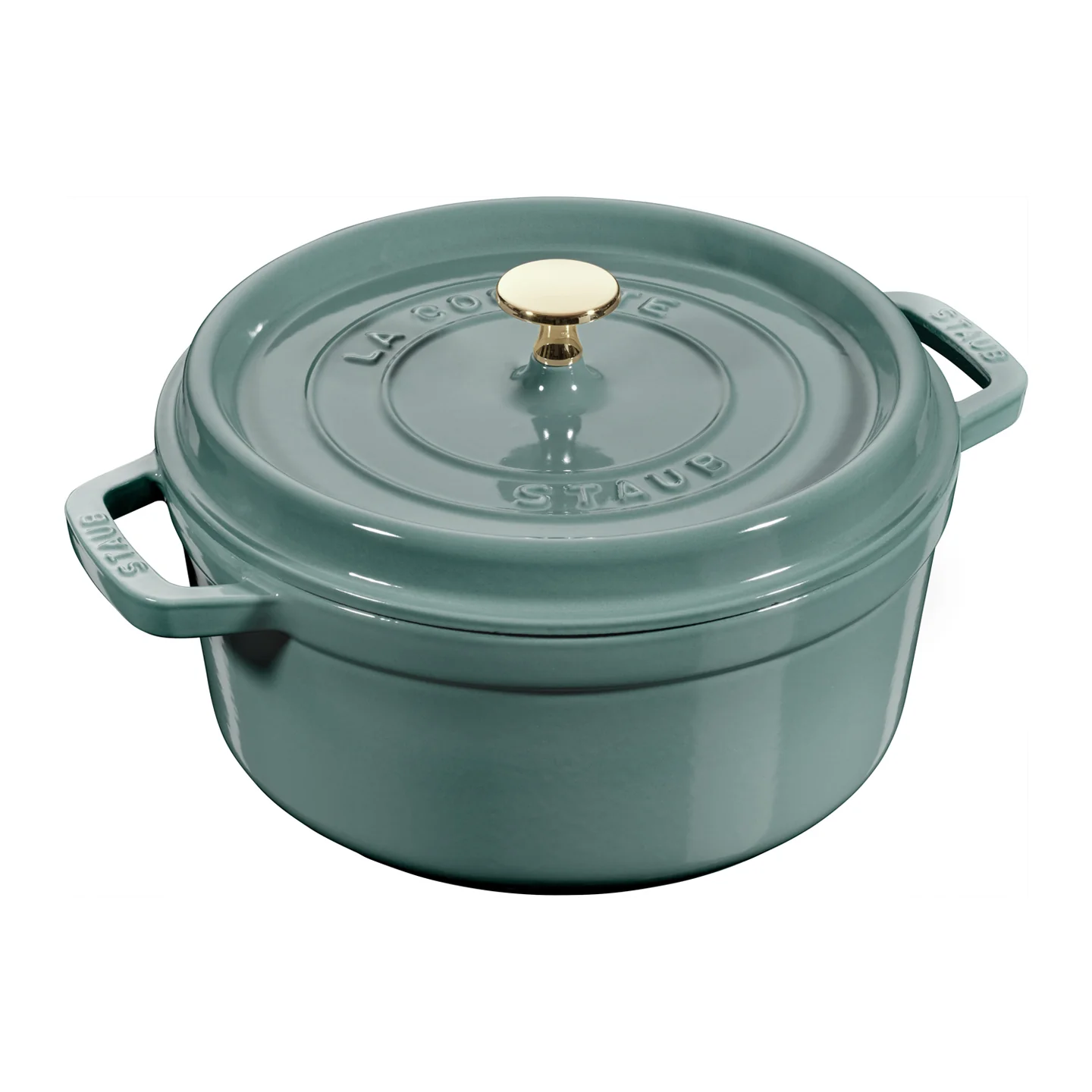
A premium enameled cast iron Dutch oven, the Staub Round Cocotte uses a signature matte black interior that resists scratches and stains better than competitors. Reviewers praised nonstick properties that build up over time, a self-basting lid with condensation-spiking design, and strong heat retention on both stovetop and in the oven. The 6-quart size was tested across bread baking, meat braising, and simmering soups, with reviewers reporting minimal evaporation and easy cleaning. The drawbacks: it weighs nearly 17 pounds and won't work on glass cooktops. Serious home cooks who want a durable, high-performing Dutch oven are the audience here; casual users and anyone short on storage space should look elsewhere.
Full review
Superior Enamel Durability
Staub's matte black enamel interior stands out as a key differentiator in the Dutch oven market, with reviewers noting its exceptional resistance to staining and scratching. Food & Wine's Christa Glennie emphasized that the Staub Cocotte's enamel interior 'is scratch- and stain-resistant in ways its competitors cannot match,' a claim supported by the brand's design philosophy that prioritizes long-term usability over aesthetic appeal. The enamel coating, which the company specifically developed for its cocottes, has been tested in real-world cooking scenarios and shown to maintain its integrity even under heavy use. According to The Spruce Eats reviewer Renu Dhar, the enamel is 'chip-resistant' and maintains its non-stick properties over time, though she recommended using wooden or silicone utensils to prolong its life. This durability is particularly important for home cooks who want a kitchen investment that will last decades, as opposed to budget models like Lodge Essentials that tend to chip after just a couple of years, according to Eater's Cody Reiss.
Self-Basting Lid Innovation
The Staub cocotte's lid features distinctive internal divots or spikes designed to create a self-basting effect, a feature that sets it apart from competitors like Le Creuset. As noted by Bon Appétit's Wilder Davies, the 'self-basting divots' on the underside of Staub lids redistribute condensation back into the pot during cooking, though he noted that in testing, 'we've yet to observe any noticeable impact these divots have had on the outcome of a dish.' Despite this lack of measurable effect, the design is still considered a premium feature by reviewers. The lid's tight-fitting construction and the condensation redistribution mechanism contribute to Staub's ability to retain moisture, which The Spruce Eats reviewer found particularly effective when cooking beans and soups for extended periods. This design element not only enhances flavor development but also ensures that dishes don't dry out during long braising or stewing processes, a critical factor for home cooks preparing family meals or meal-prepping for the week.
Heat Retention and Performance
Staub's cast iron construction delivers excellent heat retention and even heat distribution, which professional reviewers have confirmed through various cooking tests. The Spruce Eats reviewer Renu Dhar noted that the cocotte 'excels at cooking on the stovetop and in the oven,' and that food stayed 'really hot for a couple of hours after cooking when I didn’t uncover it often.' The ability to maintain temperature is crucial for slow-cooking techniques like braising, where consistent heat is essential for tenderizing tough cuts of meat. Bon Appétit's Wilder Davies also highlighted that Staub's performance in braising pork, searing chicken thighs, simmering soups, and baking no-knead sourdough was 'comparable' to other Dutch ovens, though the physical characteristics like size, weight, and handle shape played a more significant role in evaluation. The cocotte's oven-safe capability extends to 900°F without the lid, and up to 500°F with the lid, making it suitable for a wide range of cooking applications from roasting to bread baking.
Design and Usability
Staub's European-inspired design, including its distinctive 'Cochon' knob on the lid, contributes to both functionality and aesthetic appeal, according to The Spruce Eats reviewer. The lid's knob is described as 'very easy to grab even while wearing oven mitts,' a practical feature for busy home cooks. The cocotte's shallow depth (4.33 inches) and wider base (11 inches) allow for more food per batch, which Bon Appétit's Wilder Davies noted as a benefit for cooks who need to maximize their stovetop space. However, the 6-quart model weighs around 16 pounds, which The Spruce Eats reviewer noted as 'heavy' but also 'heavy-duty.' This weight, while potentially challenging for some users, is part of what contributes to the cocotte's superior heat retention and durability. The matte black interior, while not as visually inspectable as Le Creuset's glossy off-white, provides a more practical advantage in hiding stains and wear over time, a feature that Food & Wine's Christa Glennie praised for its 'nonstick with time' properties.
User Experience and Practicality
Home cooks and professional chefs alike have praised Staub's cocotte for its versatility in handling a wide range of cooking tasks, from braising and stewing to baking bread and roasting vegetables. Food & Wine's Christa Glennie noted that she uses her Staub 4-quart Cocotte for 'batch cooking for lunch, preparing food for friends and coworkers, and keeping my family fed,' and that it excels in 'baking cornbread, purée bisques, simmering hearty stews, make ragus or risottos, and join several other pots on the stove.' The cocotte's ability to handle both stovetop and oven cooking seamlessly, combined with its non-stick properties that develop over time, makes it a favorite among users who cook frequently. However, The Spruce Eats reviewer Renu Dhar did note that the pot's weight and size make it less ideal for those with limited storage space or for newer cooks who don't cook for crowds. Additionally, the cocotte is not recommended for glass cooktops, a limitation that some users may find restrictive, according to the same reviewer.
Despite its high price point of approximately $370 to $564, Staub's cocotte is considered a worthwhile investment by reviewers due to its longevity and performance. Food & Wine's Christa Glennie emphasized that 'Staub’s price point reflects its worth,' and that 'knowing you’ll never have to replace it increases its value.' Bon Appétit's Wilder Davies noted that while both Staub and Le Creuset are 'well-loved' brands, 'the differences between them are not as apparent in the quality of the food they produce,' but rather in 'physical characteristics like size, weight, handle shape, enamel interior and durability.' This focus on durability and performance over mere food quality makes Staub a preferred choice for those who prioritize kitchen tools that will last a lifetime.
Market Positioning and Competition
In the crowded Dutch oven market, Staub competes directly with established brands like Le Creuset, which has been a dominant player since 1925. Bon Appétit's Wilder Davies noted that while both brands are 'well-loved' and 'well-suited to the same range of cooking tasks,' there are distinct differences in their design philosophies and user experience. Le Creuset's light-colored interior allows for better visual monitoring of food, which can be helpful for beginners, whereas Staub's matte black interior hides stains and wear but makes it harder to detect when food is sticking or burning. The Spruce Eats reviewer Renu Dhar noted that the Staub Cocotte's weight and size make it less suitable for glass cooktops, a limitation that Le Creuset's lighter design avoids. However, Staub's superior enamel durability and self-basting lid design give it an edge in long-term performance. Eater's Cody Reiss emphasized that while Le Creuset is 'undoubtedly the most famous maker of Dutch ovens,' Staub is the pick for a cook who wants 'a high-quality Dutch oven that will last you years' and is not 'attached to the recognizability and legacy of Le Creuset' - with the trade-off that its 'dark interior can make it tricky to see if food is burning.'
The pricing of Staub's cocottes, ranging from $370 to $564, places them in the premium segment of the Dutch oven market, but reviewers consistently argue that the investment is justified by their longevity and performance. Food & Wine's Christa Glennie stated that 'I’ve known plenty of top-notch chefs who swear by Staub, but I didn’t believe its advantages could be significant enough to warrant its cost,' but after using one for years, she concluded that 'I’ll never go back.' The cocotte's ability to handle heavy-duty cooking tasks, combined with its non-stick properties that develop over time, makes it a favorite among serious home cooks and professionals alike. While some reviewers noted that the cocotte's weight and size may not be ideal for all users, particularly those with limited storage or newer cooks, the overall consensus is that Staub's cocotte is a worthwhile investment for anyone serious about long-term kitchen functionality and durability.
Not recommended for glass cooktops
Despite its many strengths, Staub's cocotte has notable drawbacks that potential buyers should consider. The most significant limitation is its weight, with the 6-quart model weighing around 16 pounds, which The Spruce Eats reviewer Renu Dhar noted as 'heavy' and potentially challenging for some users. This weight, while contributing to heat retention and durability, can make the cocotte difficult to maneuver for those with limited strength or mobility. Additionally, the cocotte is not recommended for glass cooktops, a restriction that limits its usability in certain kitchen setups, as noted by The Spruce Eats reviewer. The high price point of $370 to $564 also represents a significant financial commitment, which may not be feasible for budget-conscious consumers or those who cook infrequently. Bon Appétit's Wilder Davies pointed out that while Staub's performance is 'comparable' to other Dutch ovens, the differences are more about physical characteristics than food quality, suggesting that the premium price may not be justified for casual cooks. Furthermore, the matte black interior, while practical for hiding stains, can make it harder to detect when food is sticking or burning, a potential issue for newer cooks who are still developing their cooking instincts.
Another area of concern is the cocotte's storage requirements. The Spruce Eats reviewer Renu Dhar recommended using silicone pads between Staub cookware when storing to preserve the finish, which adds an extra step to kitchen maintenance. This is particularly important for users who plan to stack their cookware, as the enamel coating, while chip-resistant, still requires careful handling. Food & Wine's Christa Glennie noted that while the cocotte's exterior often chips easily on less expensive versions, Staub's construction is more robust, but the issue of storage and handling remains relevant for long-term care. Additionally, while the cocotte is oven-safe up to 900°F without the lid, the lid's temperature resistance is limited to 500°F, which may be a constraint for some advanced cooking techniques. These limitations, while not deal-breakers, should be weighed against the cocotte's strengths by potential buyers.
Built for batch cooking and meal prep
Staub's Round Cocotte is best suited for home cooks who are serious about their kitchen investments and plan to use it regularly for extended periods. Food & Wine's Christa Glennie emphasized that the cocotte is ideal for 'batch cooking for lunch, preparing food for friends and coworkers, and keeping my family fed,' making it particularly valuable for those who cook for crowds or engage in meal prep. The cocotte's durability and non-stick properties that develop over time make it a strong choice for frequent users who want a kitchen tool that will last decades. Bon Appétit's Wilder Davies noted that while both Staub and Le Creuset are 'well-loved' brands, the cocotte's superior enamel durability and self-basting lid design make it a preferred choice for those who prioritize long-term performance over visual aesthetics. The cocotte's ability to handle both stovetop and oven cooking seamlessly, combined with its excellent heat retention, makes it ideal for serious home cooks who engage in braising, stewing, and baking regularly.
The cocotte is also well-suited for professional cooks or those with extensive kitchen experience who appreciate the practical benefits of its matte black interior, which hides stains and wear effectively. The Spruce Eats reviewer Renu Dhar noted that the cocotte's non-stick properties develop with regular use, making it easier to clean and maintain over time. However, the cocotte may not be ideal for newer cooks who are still developing their cooking instincts, as the dark interior can make it harder to monitor food for sticking or burning. Additionally, those with limited storage space or glass cooktops should consider whether the cocotte's weight and design limitations are acceptable. The cocotte's price point of $370 to $564 also makes it a significant investment, so it's best for those who can justify the cost based on its longevity and performance rather than casual use.
Strengths
- +Matte black enamel interior is scratch- and stain-resistant
- +Nonstick properties develop with use and regular heating
- +Self-basting lid with spikes create ideal moisture retention
- +Excellent heat distribution and retention for both stovetop and oven use
- +Oven-safe up to 500°F with lid on and 900°F without lid
Watch-outs
- −Very heavy at nearly 17 pounds
- −Not recommended for glass cooktops
How it compares
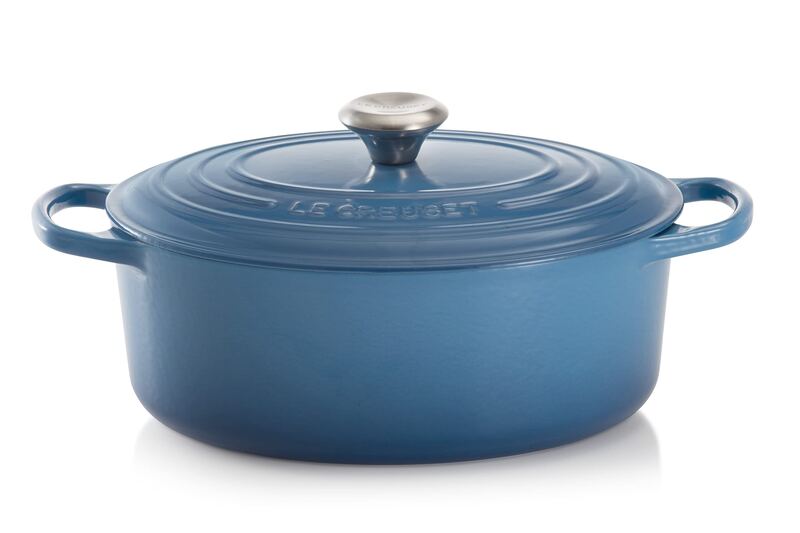
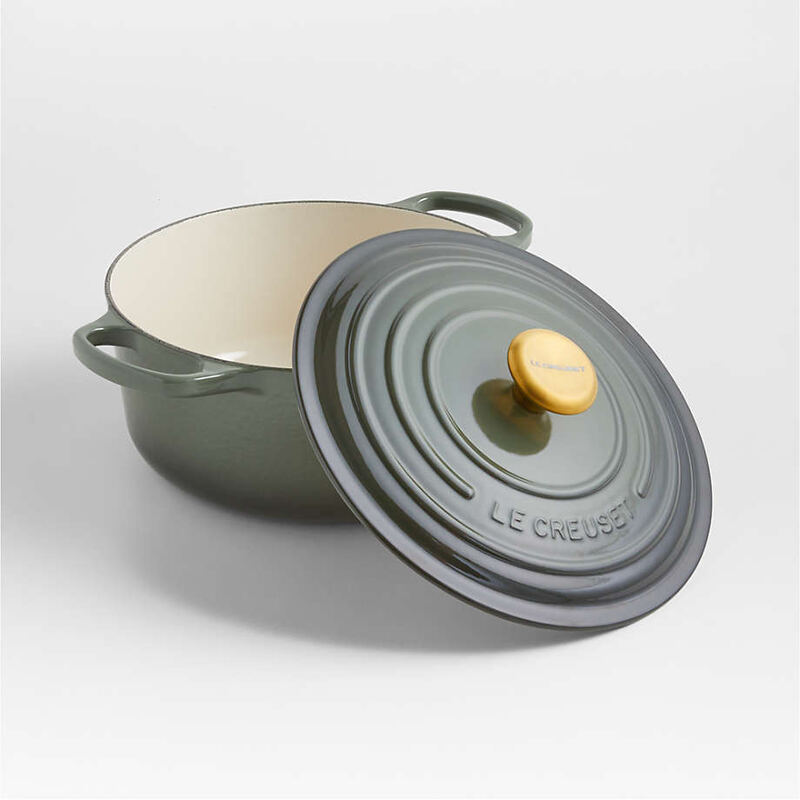
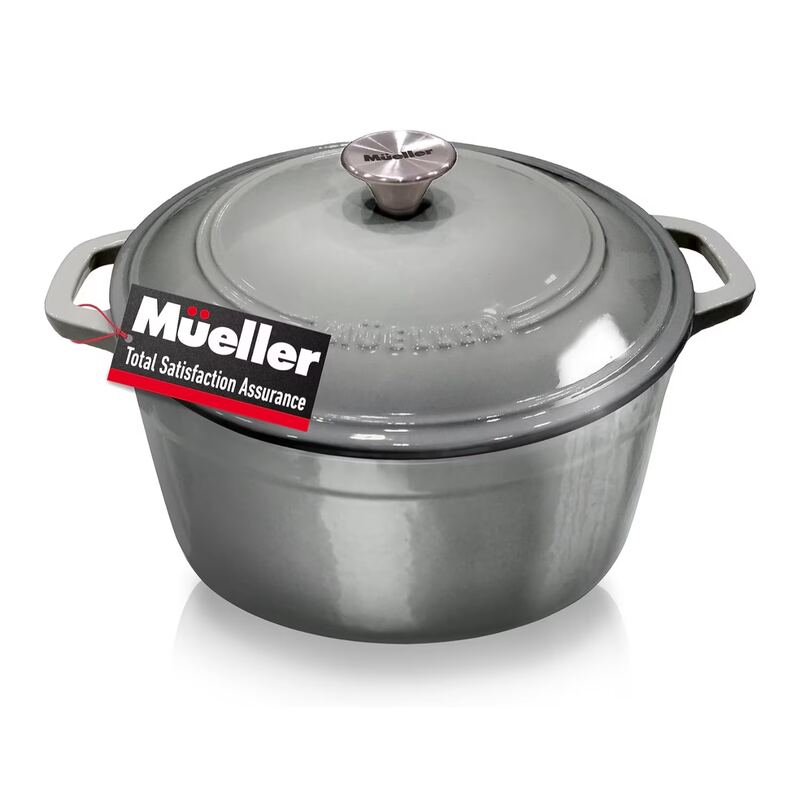
The Staub Round Cocotte stands out for its exceptional durability and self-basting lid design, which the Le Creuset Traditional Round Dutch Oven lacks. While it's heavier than the Mueller DuraCast and more expensive than the Lodge EC6D33, its scratch-resistant enamel interior and oven-safe limits make it ideal for serious cooks who want long-term performance over casual use.
Rating sources
“I’ll never go back. Trust me. I know it can be hard to commit to one pricey kitchen essential over another without having firsthand experience.”
“The Staub Cast Iron 6-Quart Round Cocotte is essentially a Dutch oven that can be used to bake, boil, stew, sear, or roast various kinds of foods. The Spruce Eats / Renu Dhar Design: Innovative, functional, and whimsical The very first thing I noticed about the Staub Cocotte was the lid.”
“After years of testing, the Dutch oven duel is a bit of a stalemate.”
“In general, there's nothing more that I could want out of a Dutch oven -- it offers plenty of room to cook for a crowd or meal prep for the week, and it looks absolutely adorable doing it.”
Our 4.5 score is the average of these published ratings. Ratings marked * were derived from the reviewer’s written analysis or video transcript — the publisher didn’t print an explicit numeric score, so we inferred one from their own words. Click through to verify. More about methodology.