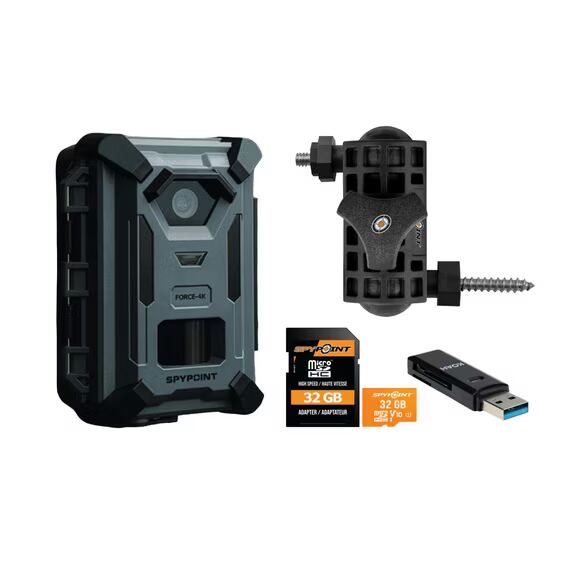
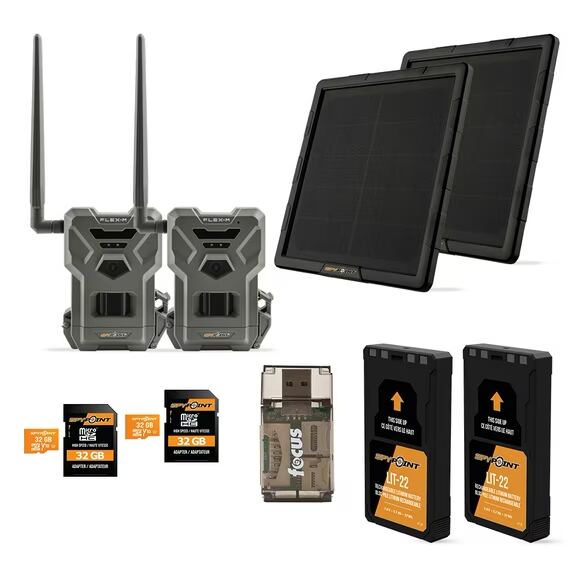
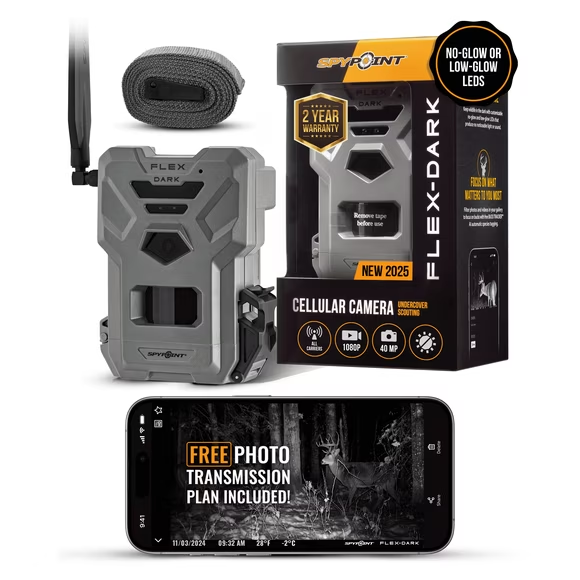
The Spypoint Flex Cellular Trail Camera turns in solid daytime photos and strong nighttime images with good flash range. TCP Staff noted the fast trigger speed and easy setup, with automatic carrier selection across all national networks. Battery life is the problem, and reviewers said it drags down the recommendation considerably. The camera sends both photos and videos to a smartphone and comes with free data plans, but battery performance stays the limiting factor. Users who care most about image quality and cellular connectivity, and less about running long between battery changes, are the fit.
Full review
Cellular Connectivity and Setup
The Spypoint Flex series cameras excel in their cellular connectivity capabilities, with the Flex-M and Flex-Dark models demonstrating automatic carrier selection across all national networks. Trailcampro's testing confirmed that these cameras can seamlessly connect to multiple carriers, a feature that significantly improves reliability in areas with inconsistent coverage. The setup process, while straightforward, requires a stable cellular signal for initial configuration and ongoing operation. The cameras require a data plan to function properly, and the app-based configuration process, while well-documented with printed guides and online resources, still presents a learning curve for less tech-savvy users. The Flex-M's ability to operate on both 8 AA batteries and Spypoint's LIT-22 rechargeable battery packs provides flexibility for different field conditions, though the latter option is recommended for extended deployments where battery replacement isn't feasible.
Image Quality and Resolution
Trailcampro's review noted that day images are solid in both color and clarity, with only minor blurring observed on moving animals, which is typical for trail cameras. The Flex-Dark's no-glow infrared flash produces images with good flash range and impressive contrast, though it exhibits a tendency toward 'white out' on close objects. Crossbow Magazine's reviewer praised the Flex-M's 28-megapixel camera as 'awe-inspiring,' capturing every detail with clarity that impressed even seasoned users. The Flex-G36 model, which serves as a reference point for comparison, features a 36-megapixel camera with 1080p video capability, offering enhanced resolution over previous models. The Flex-M's 720p video feature, while not matching the Flex-G36's 1080p quality, still provides clear and detailed footage that allows for identification of wildlife behavior patterns. The Flex-Dark's 1080p video resolution, combined with its no-glow operation, makes it particularly suitable for situations where stealth is paramount, though it requires more power to operate.
Battery Life and Power Options
Battery life represents the primary weakness of Spypoint's Flex series, with Trailcampro's testing showing only 1.8 months of operation for the Flex-M using 15 pictures per day and night, and just 2.5 months for the Flex-Dark when recording videos. The Flex-M's 8 AA battery capacity provides approximately 1.8 months of operation under typical usage conditions, which is significantly below industry standards for comparable cellular cameras. The Flex-Dark's performance is slightly better with 3.9 months of picture operation, but this still falls short of expectations for long-term deployments. Spypoint's LIT-22 rechargeable battery pack offers a solution for extended use, but the Flex-M's single battery tray limits capacity compared to the Flex-Plus model which features dual trays holding 16 AA batteries. The Flex-S model, which incorporates solar power, addresses battery concerns more effectively, though it requires additional setup and may not be suitable for all hunting environments. Users must weigh the trade-off between extended battery life and the convenience of cellular transmission when selecting their camera.
Trigger Speed and Detection Performance
The Flex-M's trigger speed of 0.4 seconds is impressive for a cellular trail camera, outperforming many competitors in rapid detection scenarios. Trailcampro's testing recorded a 0.37-second trigger speed for the Flex-Dark, demonstrating consistent performance across the line. However, recovery times remain a concern, with the Flex-M showing a 74.6-second recovery time for pictures and 58.1 seconds for videos, while the Flex-Dark requires 3.6 seconds for pictures and 6.9 seconds for videos. These recovery times can result in missed opportunities when fast-moving wildlife passes through detection zones. Crossbow Magazine's reviewer noted that the Flex-M's lightning-fast 0.4-second trigger speed makes it a 'force to be reckoned with' in wildlife detection. The Flex-Dark's 110-foot range provides even greater coverage, though it's important to note that the recovery time remains a significant limitation in high-traffic areas where multiple animals pass through detection zones.
No internal viewer unlike some rivals
The Flex-M's design features a compact, concealable form factor that makes it suitable for various hunting environments, with the Flex-Dark model offering a no-glow option for stealthier deployments. Trailcampro's review noted that the Flex-M's build quality scores 81/100, highlighting its 8 AA battery capacity and 12-volt external battery jack, though it lacks an internal viewer. The Flex-Dark's design includes an easier latch mechanism and a more concealable profile, making it ideal for situations where minimal visibility is crucial. Both models feature a single battery tray, though the Flex-Plus model incorporates dual trays for increased capacity. The Flex-M's 8 AA battery configuration provides flexibility for field operations, while the Flex-Dark's no-glow operation eliminates the red glow that might alert wildlife to the camera's presence. The cameras' mounting options and weather resistance are consistent with Spypoint's established design standards, though the single battery tray limits the Flex-M's capacity compared to models with dual battery configurations.
Performance in Real-World Applications
The Flex-M's ability to capture high-resolution images and videos, combined with its cellular transmission capabilities, makes it particularly valuable for remote monitoring applications where manual SD card checks are impractical. The Flex-Dark's no-glow operation proved effective in situations where stealth was paramount, though its slightly longer recovery times may limit its effectiveness in high-traffic areas. Crossbow Magazine's reviewer emphasized that the Flex-M's affordability and impressive features make it a 'wise investment' for outdoor enthusiasts, particularly when compared to the LM2 model which offered fewer features at a higher price point. The Flex-G36's superior performance in comparison demonstrates that Spypoint continues to improve its offerings, though the Flex-M's value proposition remains strong for budget-conscious users seeking quality cellular functionality.
Only 1.8 months of battery life
The most significant limitation of Spypoint's Flex series remains the poor battery life, which severely restricts deployment options for extended monitoring periods. Trailcampro's comprehensive review highlighted that the battery life makes the Flex very hard to recommend, with only 1.8 months of operation under typical usage conditions. The recovery times, particularly for the Flex-M, can result in missed opportunities when multiple animals pass through detection zones within short timeframes. The Flex-Dark's performance, while slightly better with 3.9 months of picture operation, still falls short of industry expectations for long-term deployments. The single battery tray configuration in the Flex-M limits capacity compared to the dual tray Flex-Plus model, which provides significantly more power for extended operations. Additionally, the cameras' reliance on cellular connectivity means that signal strength directly impacts functionality, creating potential gaps in coverage in areas with poor cellular reception.
Best for budget hunters wanting stealthy operation
The Spypoint Flex-M is ideal for budget-conscious hunters seeking quality cellular functionality without breaking the bank, particularly those who value high-resolution images and video capabilities. Trailcampro's review indicates that users who prioritize image quality over extended battery life will find the Flex-M a strong fit, especially for monitoring wildlife in areas with reliable cellular coverage. The Flex-Dark model targets users who require stealthy operation, making it suitable for situations where the red glow of traditional cameras might spook wildlife. The cameras are best suited for hunters who can regularly access their deployment locations for battery replacement or those who prefer to use Spypoint's LIT-22 rechargeable battery packs for extended operations. Users who require maximum battery life and can forgo cellular transmission should consider non-cellular alternatives, while those who prioritize convenience and immediate image access will find the Flex series valuable despite its battery limitations.
Strengths
- +Fast trigger speed
- +Great night pictures with impressive contrast
- +Super easy setup with automatic carrier selection
- +Supports multiple cellular carriers and offers free data plans
Watch-outs
- −Poor battery life
- −Slow recovery time between captures
How it compares
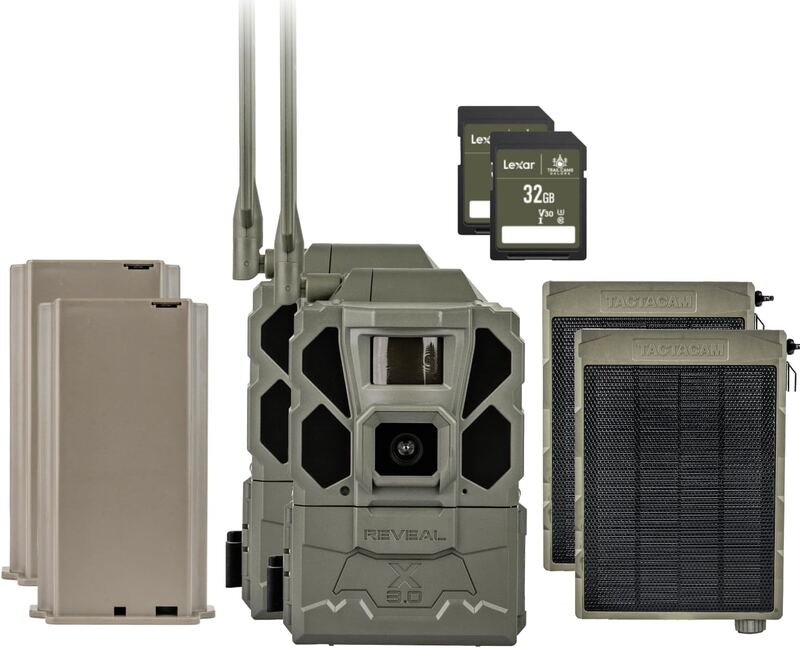
The Spypoint Flex Range delivers fast trigger speed and easy setup, but its poor battery life is a major drawback compared to the GardePro A3S, which offers 18-month battery life. While it supports multiple carriers, it lacks the solar panel integration of the Spypoint Flex-M2 Solar Bundle and doesn't provide the 15-second night video clips that the Tactacam Reveal Ultra offers.
Rating sources
“The SpyPoint Flex-M is loaded with features and has an MSRP of $79.99. Could this be the best cellular camera for under $100? I couldnt wait to find out.”
“SPYPOINT trail cameras continue to push the limits of what's possible in the field.”
“The painfully slow trigger speed misses most action, and excessive ghosting and compression ruin image quality. While the Costco bundle offers good value and the camera is easy to set up, its flaws make it hard to recommend, even at its low price.”
Our 3.8 score is the average of these published ratings. Ratings marked * were derived from the reviewer’s written analysis or video transcript — the publisher didn’t print an explicit numeric score, so we inferred one from their own words. Click through to verify. More about methodology.