The Solo Stove Steelfire griddle stands out in the sub-$1,000 market with its stainless steel construction and lack of seasoning requirements. Reviewers noted it heats evenly and reaches searing temperatures in seven minutes, making it suitable for fast cooking tasks like smash burgers. However, some users found low-temperature control limited, with only a narrow range working effectively. The oval design, while unique, can complicate food placement. It's best suited for those seeking a portable, easy-to-clean griddle that performs well at higher temperatures.
Full review
Innovative Design and Construction
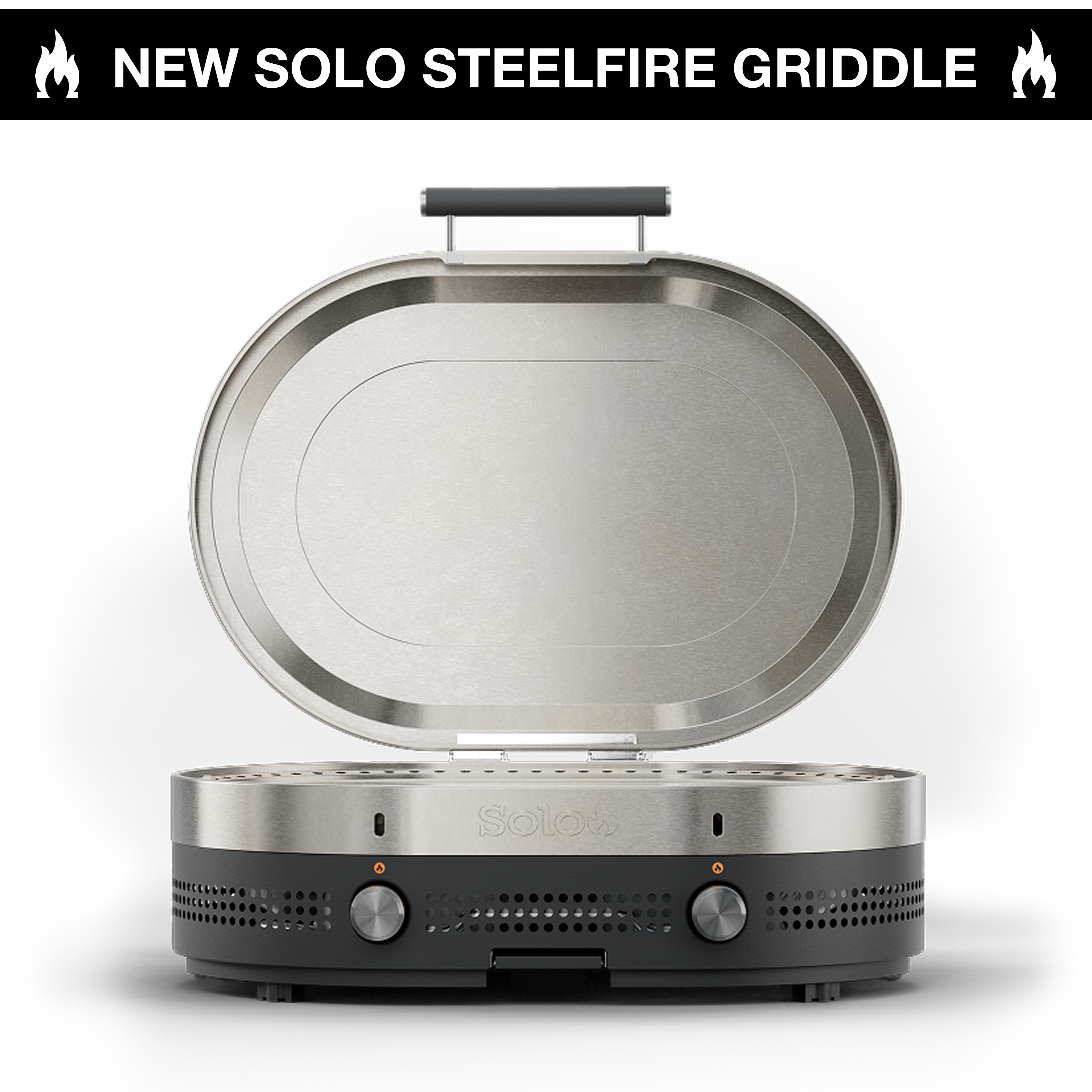
The Solo Stove Steelfire griddle introduces a bold departure from traditional rectangular griddle designs, featuring an oval shape that sets it apart in the crowded outdoor cooking market. According to The Barbecue Lab's Melissa Gafford, this oval form is not merely aesthetic but represents a genuine innovation, as it eliminates corners that typically result in uneven heating patterns. The griddle's cooking surface is constructed with a triple-layered clad stainless steel design, with 304 stainless steel as the top layer sandwiching a conductive aluminum core. This construction, as noted by Food & Wine's Greg Baker, provides a non-stick surface that requires no seasoning, unlike traditional cast iron or carbon steel griddles. The 30" Steelfire model weighs only 59 pounds, making it remarkably portable compared to other griddles in its class, and it can be used either as a standalone unit or with the optional wheeled cart that supports transport and storage.
Performance and Heat Distribution
Solo Stove claims that the Steelfire griddle can reach searing temperatures in just seven minutes, a claim that was tested by The Barbecue Lab. Using a Thermoworks Pro Surface Thermapen, they recorded surface temperatures reaching 460°F in the center, with edge temperatures ranging from 390°F to 410°F, confirming the griddle's rapid heating capabilities. Food & Wine's Greg Baker also verified the griddle's performance during a variety of cooking tests, including searing steaks and sautéing vegetables, noting that the dual racetrack burners deliver even heat distribution. However, some reviewers noted that the low-temperature control is limited, with the medium setting running quite hot, which can make precise temperature control difficult for delicate cooking tasks like eggs or hash browns.
Ease of Cleaning and Maintenance
One of the most significant advantages of the Solo Stove Steelfire griddle is its ease of cleaning and maintenance, a feature that was consistently praised by reviewers. The stainless steel surface eliminates the need for seasoning, which is a common requirement for cast iron or carbon steel griddles. The Barbecue Lab noted that the griddle can be cleaned using standard methods, including scraping with a scraper and wiping with a paper towel. Greg Baker from Food & Wine emphasized that the griddle's surface does develop a patina over time, which is harmless but can be restored with gentle abrasives like Bar Keeper's Friend if a pristine appearance is desired. The griddle's drip tray, positioned at the front edge, collects grease and debris, making cleanup more manageable. The design also allows for easy removal of the griddle from its stand, facilitating transport and storage.
Real-World Cooking Tests
Both The Barbecue Lab and Food & Wine conducted extensive real-world cooking tests to evaluate the Steelfire griddle's performance. The Barbecue Lab tested the griddle's edge-to-edge cooking capabilities by preparing smash burgers, which they found to be seared to perfection, with temperatures reaching 460°F in the center. They also tested pancake cooking, noting even heat distribution across the surface. Food & Wine's Greg Baker conducted a range of tests including steaks, vegetables, and breakfast items like hash browns and eggs. While he found the griddle suitable for most cooking tasks, he noted that the low-temperature control was limited, making it difficult to achieve the precise heat needed for delicate items such as eggs. The griddle's performance in searing and sautéing was consistently praised, with both reviewers agreeing that it delivers excellent results for high-heat cooking applications.
User Experience and Practical Considerations
User feedback from verified purchasers on Solo Stove's website and other platforms indicates a generally positive experience with the Steelfire griddle. Carlos T. from a verified purchase described it as 'one of the best' and noted its ease of use and cleaning compared to previous griddles. Keith M. appreciated the ease of maintenance but noted a design flaw with the propane tank access, which he felt could be improved. Stacy G. highlighted the griddle's quick heating and ease of cleaning, while Justin E. emphasized the quick cleanup process and overall satisfaction with the stainless surface. However, some users, particularly those who frequently cook at low temperatures, found the limited low-temperature control to be a drawback. The griddle's portability and lightweight design were consistently praised, with users noting that it can be easily moved and transported, especially when used with the optional cart.
Where It Falls Short
Despite its many strengths, the Solo Stove Steelfire griddle does have some notable shortcomings. The primary criticism comes from its limited low-temperature control, which was highlighted by both The Barbecue Lab and Food & Wine reviewers. Greg Baker from Food & Wine noted that the medium setting runs very hot, making it difficult to cook delicate items such as eggs or hash browns at precise temperatures. Additionally, the design of the propane tank access was criticized by some users, with one reviewer noting that the current design could be improved for easier access. The griddle's oval shape, while innovative, can also be a challenge for users accustomed to rectangular griddles, as it may be difficult to determine optimal placement for food items. The lack of a comprehensive cleaning guide in the product documentation, although not a major issue, was noted by some users who found the cleaning process more intuitive than the instructions provided.
Who It's Best For
The Solo Stove Steelfire griddle is best suited for outdoor cooking enthusiasts who value rapid heating, ease of cleaning, and a modern design. It is ideal for those who frequently prepare high-heat cooking tasks such as searing steaks, making smash burgers, or sautéing vegetables. The griddle's portability and lightweight design make it an excellent choice for campers or those with limited backyard space. However, it may not be the best option for users who frequently cook at low temperatures or require precise heat control for delicate items. The oval shape and lack of corners can also be a disadvantage for users accustomed to traditional rectangular griddles. For those seeking a griddle that prioritizes performance and ease of maintenance over low-temperature versatility, the Solo Stove Steelfire is a strong contender.
Value and Market Positioning
Priced at $899.99 for the 30" model and $399.99 for the 22" model, the Solo Stove Steelfire griddle sits in the premium segment of the outdoor griddle market. The Barbecue Lab and Food & Wine both noted its value proposition, with the griddle's innovative design, rapid heating, and ease of cleaning justifying its price point. The griddle's ability to heat up 35% faster than traditional cast iron, combined with its rust-resistant stainless steel surface, provides a compelling value for users who prioritize performance and maintenance. However, some users found the limited low-temperature control to be a drawback, especially when compared to more traditional griddles that offer a wider range of temperature settings. The optional accessories, including the cart, shelter, and various spatulas, add to the overall value but also increase the total cost of ownership. For users who value the unique features and performance of the Steelfire griddle, the price is justified; however, those seeking more versatile temperature control may find alternative options more cost-effective.
Strengths
- +Stainless steel cooking surface (304 grade) that doesn't require seasoning
- +Heats up quickly to searing temperature in just seven minutes
- +Edge-to-edge cooking performance with even heat distribution
- +Lightweight at 59 pounds, easy to transport and move
Watch-outs
- −Low-temperature cooking control is limited; only narrow band works well for low heat
- −Oval shape makes it difficult to determine optimal placement for food items
How it compares
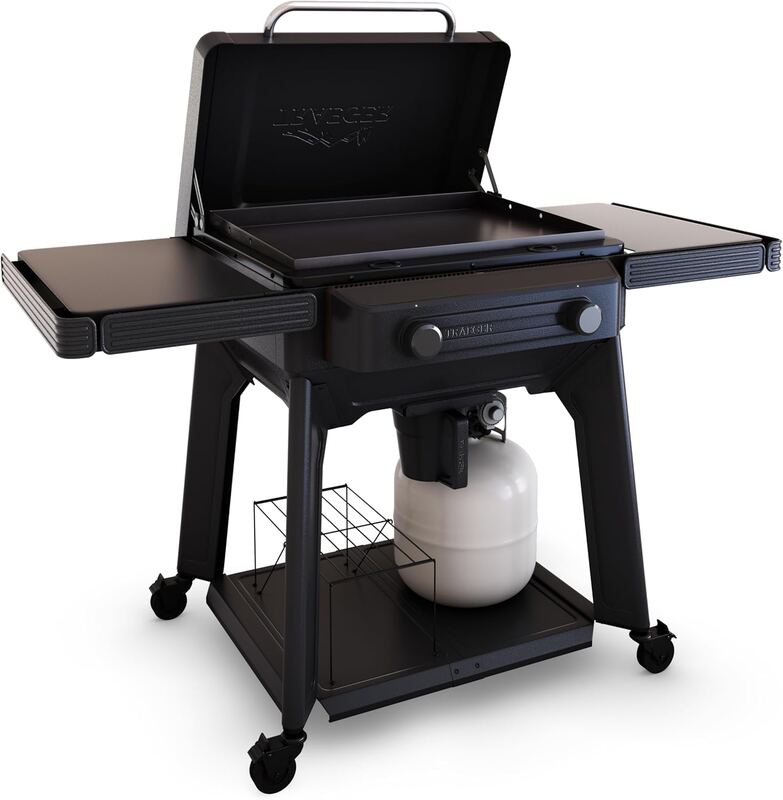
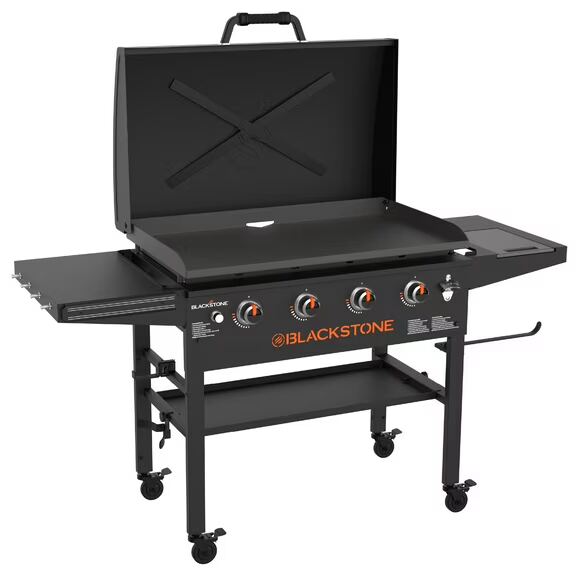
The Solo Stove Steel Fire Griddle heats up quickly and requires no seasoning, a major advantage over the Blackstone 1883 Original 28" Griddle and the Weber 36 Inch Gas Griddle. However, it lacks the even heat distribution and multiple cooking zones of the Traeger Flatrock 2 Zone Griddle and the large cooking surface of the Blackstone 1554 Cooking 4 Burner Flat Top Gas Grill.
Who this is for
At a glance: portable cooks needing fast heat.
Why you’d buy the Solo Stove Steel Fire Griddle
- Stainless steel cooking surface (304 grade) that doesn't require seasoning.
- Heats up quickly to searing temperature in just seven minutes.
- Edge-to-edge cooking performance with even heat distribution.
Why you’d skip it
- Low-temperature cooking control is limited; only narrow band works well for low heat.
- Oval shape makes it difficult to determine optimal placement for food items.
Rating sources
“This is a competitor's griddle, and you can see that the heat is oval and doesn't really cover the corners. With the new Steelfire, there aren't any corners, but that also means that it can be hard to figure out where to place things...”
“The dual burners sear steaks and sauté vegetables beautifully.”
“From zero to sear in just 7 minutes, the 3-ply clad stainless steel griddle surface heats up 35% faster than traditional cast iron, resists rust, and cleans up easily—perfect for smash burgers, eggs, pancakes, fried rice, sautéed veggies, and everything in between.”
“The Solo Stove Steelfire takes a different approach to griddles—and it pays off.”
Our 4.4 score is the average of these published ratings. Ratings marked * were derived from the reviewer’s written analysis or video transcript — the publisher didn’t print an explicit numeric score, so we inferred one from their own words. Click through to verify. More about methodology.