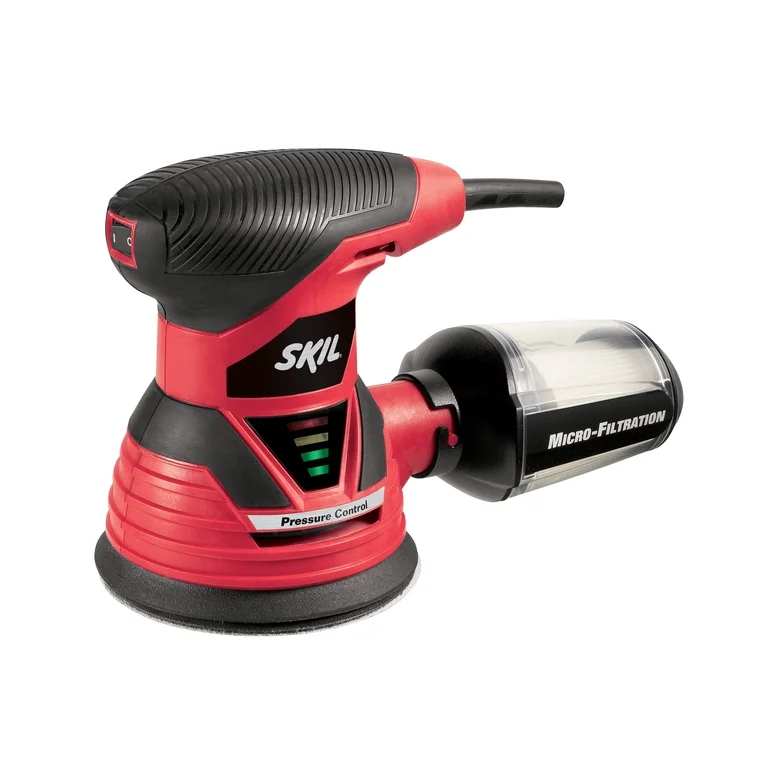
The Skil 5-Inch Random Orbital Sander features a 2.8-amp motor that delivers sufficient power for furniture and cabinet sanding, though it lacks variable speed control. Pro Tool Reviews found the integrated pressure sensor functions as an extended motor wear indicator rather than providing real-time feedback on downward force. The tool includes an ergonomic rubber overmold grip and a clear dust canister with microfiltration that captures fine particles effectively. However, the microfiltration filter is permanently attached to the canister, meaning the entire assembly must be purchased if it degrades. This model fits DIYers who value comfortable handling in tight spaces, while professional finishers requiring immediate pressure feedback or vacuum integration should look elsewhere.
Full review
2.8-amp motor power and variable speed limitations
The Skil 5-inch random orbital sander is powered by a 2.8-amp corded motor that delivers consistent torque for furniture refinishing and cabinet preparation tasks. Powertools.techreviewer.com reported the tool operates at a no-load speed of 7,000 to 13,000 orbits per minute (OPM), providing enough rotational force to handle softwoods like poplar efficiently. The high OPM range allows for faster material removal on large surface areas, though it generates more heat and noise compared to slower-running models. This power output is sufficient for general home improvement projects without the need for commercial-grade heavy-duty motors.
A significant operational limitation of this model is the absence of variable speed control, meaning users must rely entirely on physical pressure to modulate sanding aggressiveness. Pro Tool Reviews noted that pushing down hard on the sander does not immediately trigger a warning; instead, the tool relies on an extended motor wear indicator system to alert the user when excessive force is being applied for prolonged periods.
Pressure sensor functions as extended wear indicator
The integrated pressure control technology on this sander acts more as a cumulative stress monitor than an immediate tactile feedback system. Pro Tool Reviews found that the visual readout, consisting of two green bars, one yellow bar, and one red bar, remained in the twin green state during normal operation. The additional yellow and red indicators only illuminated after extended abusive use under high pressure, suggesting the feature tracks motor strain over time rather than measuring instantaneous downward force. This delayed feedback means users might not realize they are stressing the internal components until well after they have begun applying excessive weight to the tool.
This design choice forces operators to self-regulate their sanding technique without real-time mechanical resistance or immediate visual cues. The pressure sensor does not prevent damage in the moment but serves as a post-facto warning that the motor has been subjected to conditions likely to shorten its lifespan. For hobbyists who occasionally apply too much weight, this delayed alert may go unnoticed until performance drops, whereas professional finishers accustomed to variable-speed tools might find the lack of immediate pressure feedback frustrating during delicate detail work.
Microfiltration dust collection and clear canister design
Dust management is handled by an integrated impeller that pulls particulate matter through eight holes in the sanding pad into a transparent plastic canister. Pro Tool Reviews observed that this microfiltration system effectively captures most fine particles, keeping the immediate work area cleaner than open-disc sanders. The clear housing allows users to visually monitor fill levels without stopping to guess when maintenance is required, which streamlines workflow during extended sanding sessions on large projects like flooring or wall panels.
Filter replacement costs and vacuum compatibility gaps
A major drawback of the dust collection system is that the microfiltration filter is permanently bonded to the canister, preventing standalone replacement. Pro Tool Reviews confirmed that if the filter degrades or becomes clogged beyond cleaning, the entire assembly must be purchased as a single unit. This design increases long-term ownership costs compared to models where filters are sold separately, forcing users to replace functional plastic housing along with the consumable filtration media.
Ergonomic grip and maneuverability in tight spaces
The tool features a rubber overmold palm grip that provides secure handling and reduces vibration transmission during operation. The Spruce highlighted the ergonomic handle design as comfortable for prolonged use, noting that the compact overall size of the electric sander allows users to reach into corners and awkward spots with ease. This maneuverability is particularly valuable when sanding furniture edges or cabinet frames where larger pad sizes would obstruct access.
Surface finish quality on hardwood test boards
Pro Tool Reviews tested the sander on old heart pine flooring material, starting with 60-grit discs and progressing to 120-grit for a smoother finish. The tool left no visible marks or sanding patterns on the wood surface, producing a clean result comparable to more expensive competitors in terms of final finish quality. Tilting the orbit sander allowed for effective detail work in hard-to-reach spots, demonstrating that despite its entry-level positioning, the random orbital action successfully minimizes swirl marks when used with appropriate grit progression.
Noise levels during no-load and loaded operation
Acoustic performance varies significantly depending on whether the sander is running freely or under load. Pro Tool Reviews measured noise at 84 dB SPL with no load, which remains relatively quiet for indoor use. However, when actively sanding hardwood material, the decibel level ramped up to 96 dB SPL. This increase requires hearing protection during extended sessions on dense materials like cherry or pine, as the sound pressure exceeds safe exposure limits for unprotected ears over prolonged periods.
Comparison with professional shop vacuum integration
While the onboard dust collection is effective for light to moderate use, Finewoodworking noted that all random-orbit sanders perform significantly better when connected to a shop vacuum rather than relying solely on internal canisters. The absence of a dedicated vacuum hose adapter on this Skil model means users cannot easily integrate it into high-efficiency dust extraction systems used in professional workshops. This limitation restricts the tool's utility for finish carpenters who require pristine air quality and maximum stock removal rates, confining its ideal use case to DIY environments where occasional emptying of the clear canister is acceptable.
Strengths
- +2.8-amp motor delivers sufficient power for furniture and cabinet sanding projects
- +Ergonomic rubber overmold grip provides comfortable handling in tight spaces
- +Integrated microfiltration dust collector captures fine particles effectively
- +Clear dust canister allows users to monitor fill levels without guessing
Watch-outs
- −Pressure sensor functions as an extended motor wear indicator rather than real-time feedback
- −Microfiltration filter is permanently attached to the canister and cannot be replaced separately
How it compares
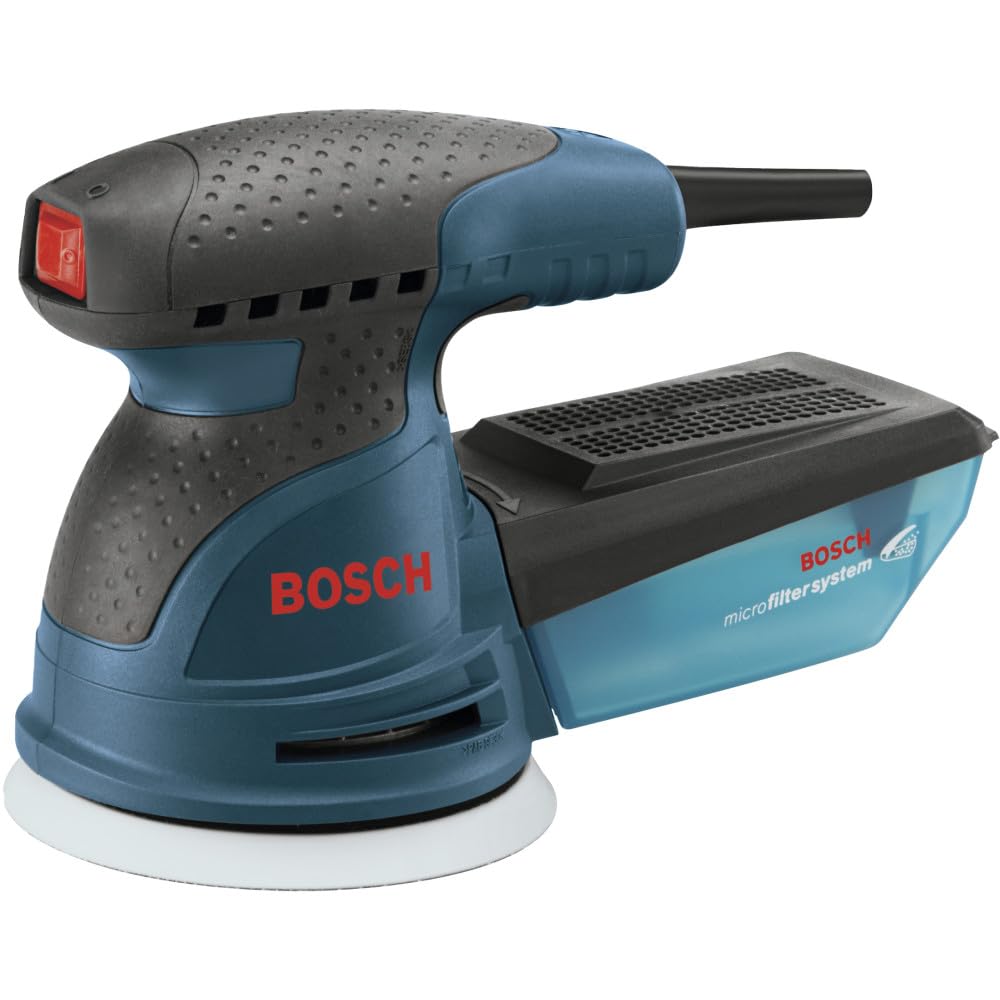
Its 2.8-amp motor provides sufficient power for furniture sanding, offering more raw output than the Bosch’s 2.5 amp unit.
Rating sources
Counts as 2.80/5 in our score — this publisher's 15 scores on the site average 4.43, so its scores are adjusted down to compare fairly with other publishers.
Our 2.8 score is the average of the 1 scored review above, each adjusted for how strictly its publisher scores; 4 more reviewed it without printing a score and are not in the average. More about methodology.