Samsung's 30-inch induction cooktop receives praise for its virtual flame technology, Wi-Fi integration with SmartThings, and easy-to-clean anti-scratch glass surface. Reviewers highlight the energy efficiency and fast heating of induction cooking, with many noting the intuitive controls and sleek design. Some users mentioned a learning curve for induction cooking and noted that the oven divider doesn't fully isolate the two ovens. This appliance is ideal for tech-savvy cooks seeking energy-efficient, smart kitchen solutions but may not suit those preferring traditional cooking methods or specific cookware types.

Full review
Performance and Cooking Experience
Samsung's 30-inch induction cooktop delivers exceptional performance that aligns with the brand's reputation for innovation. According to the East Coast Appliance review, users experience 'boiling twice as fast as other stovetops' thanks to electromagnetic induction that directly heats cookware. The cooktop's Flex Zone feature allows for adaptable cooking zones that accommodate various pot shapes and sizes, which the Snow Bros. Appliance website confirms through its product specifications. Users consistently report that the induction technology provides rapid temperature response, enabling immediate adjustments to cooking temperatures without the delays common with traditional electric or gas stoves. The Power Boost function specifically increases heat intensity on any burner for faster boiling times, a feature that reviewers noted as particularly useful for time-sensitive cooking tasks. The Virtual Flame™ LED surface lights provide a gas-like visual experience while maintaining the precision of induction cooking, according to the official Samsung product documentation.
Smart Connectivity and User Interface
The integration of smart technology sets this induction cooktop apart from conventional models. The Samsung SmartThings compatibility allows users to remotely monitor and control the cooktop from their smartphones, a feature that received high praise in the HomeDepot review. The digital-analog controls offer flexibility, letting users choose between removable magnetic knobs or digital touch controls, as detailed in the Snow Bros. Appliance product overview. The interface is described as intuitive and thoughtfully designed, with the SmartThings connection providing convenience and precision, according to the HomeDepot customer review. However, some users noted that the panel display occasionally provides feedback during cleaning, requiring users to remind the system that they're not cooking, suggesting a minor learning curve for the smart features.
Build Quality and Design Features
Samsung's Bespoke induction cooktop showcases premium build quality with its stainless steel finish and scratch-resistant glass top, which has been specifically highlighted by reviewers as a key selling point. The anti-scratch coating, as noted in the Sam's Club customer reviews, makes the surface easy to clean and maintain, with one reviewer stating it 'keeps it clean and nice' and 'looks great.' The virtual flame LED surface lights provide an aesthetic gas-like cooking experience while maintaining induction's precision. The digital-analog control system allows for both traditional knob operation and modern touch interface, offering versatility for different user preferences. The cooktop's design includes a dual element system with indicator lights for hot surfaces and automatic shutoff features, contributing to both safety and user convenience.
What Reviewers Loved Most
Customer reviews consistently praise the induction cooktop's efficiency and ease of cleaning, with the anti-scratch glass surface being a standout feature. The HomeDepot review highlighted that 'the surface is incredibly easy to clean—no more scrubbing or scraping, just a quick wipe and it's spotless.' The SmartThings integration was also a major draw, with one reviewer noting that 'controlling and monitoring our cooking remotely has added a whole new level of convenience and precision.' The fast heating capabilities were frequently mentioned, with users appreciating the 'boiling twice as fast as other stovetops' and the 'rapid temperature control' that allows immediate adjustments. The oven's temperature accuracy was also commended, with reviewers noting that 'the oven is spot on with regards to temperature' and that 'the regular electric oven holds temperature well and cooks evenly.' The safety features, including automatic shutoff when no cookware is present, were appreciated by users who noted it 'cannot be turned on for long if there are no pots and pans on it.'
Where It Falls Short
Despite its many strengths, several reviewers noted significant drawbacks that potential buyers should consider. The East Coast Appliance review identified that 'the layout and especially not having the bridging feature for the top' was a disappointment for some users. The lack of a bridging feature between cooking zones limits flexibility when using larger cookware that spans multiple zones. Additionally, some users reported issues with cookware compatibility, with one reviewer noting they 'couldn't use my Pyrex coffee percolator on this range' because it wasn't suitable for induction cooking. The cookware requirements for induction technology can be a barrier for users who already own non-compatible cookware. The SmartThings integration, while praised, also presented challenges, with one reviewer noting that 'the panel display sometimes talks back to you when cleaning it,' requiring users to remind the system they're not cooking.
Who It's Best For
This induction cooktop is ideal for homeowners seeking a modern, efficient, and smart kitchen solution. The East Coast Appliance review suggests it's particularly suitable for those wanting to 'elevate your kitchen' and upgrade from basic appliances without paying luxury prices. The Samsung brand's appeal to consumers who want to 'upgrade their appliances but can't afford luxury options' makes this model attractive to mid-range buyers. The smart connectivity features make it perfect for tech-savvy users who want remote monitoring capabilities. The cooktop's fast heating and precise temperature control are especially beneficial for busy households or professional cooks who value efficiency. However, it's not ideal for users who own a large collection of non-induction compatible cookware, as the technology requires ferromagnetic cookware. The smaller size compared to traditional ranges may also not suit those with extensive cooking needs or large families. The learning curve associated with the digital controls and smart features might be challenging for less tech-savvy users.
Value at This Price
At a price point of $2,299, the Samsung 30-inch induction cooktop offers premium features that justify its cost for many consumers. The Snow Bros. Appliance website notes that the cooktop is available for $1,599.99 with a $699.01 discount, making it more accessible to budget-conscious buyers. The inclusion of smart features like Wi-Fi connectivity, Bluetooth integration, and the Virtual Flame™ LED lights adds significant value beyond basic induction cooking. The anti-scratch glass top and scratch-resistant coating provide long-term durability, which the Sam's Club reviews suggest makes it 'easy to clean and looks great' for years. The energy efficiency, which transfers 90% of heat directly to cookware compared to 50% for gas and 70% for electric, provides long-term savings on energy bills. However, the $699.01 price difference between the regular and discounted price may still be prohibitive for some buyers, especially when considering that the smart features and premium materials may not be essential for all users.
How It Compares to Alternatives
Compared to traditional electric and gas ranges, the Samsung induction cooktop offers distinct advantages in efficiency and safety. The East Coast Appliance review notes that induction cooking 'boils twice as fast as other stovetops' and 'transfers 90% of heat directly to cookware,' making it significantly more efficient than gas (50%) and electric (70%) alternatives. Unlike gas stoves, the induction cooktop doesn't emit heat to the surrounding area, making it safer for households with children or pets. The smart features also set it apart from basic induction models, with the Wi-Fi connectivity and SmartThings integration providing capabilities that traditional induction cooktops lack. However, the lack of bridging features between cooking zones and the need for specific cookware compatibility may make it less flexible than some gas ranges. Compared to other high-end induction models, the Samsung cooktop's smart features and premium materials make it competitive, though the price point of $2,299 may be higher than some alternatives in the same category. The anti-scratch coating and scratch-resistant features also distinguish it from basic induction models that may require more careful maintenance.
Strengths
- +Virtual Flame technology provides visual cooking feedback
- +Wi-Fi connectivity enables SmartThings integration for remote monitoring
- +Anti-scratch glass cooktop is easy to clean
- +Induction heating is energy-efficient and reduces cook time
- +Intuitive digital-analog controls with Power Boost feature
Watch-outs
- −Some users noted a learning curve for induction cooking
- −Oven divider does not fully isolate the two ovens
- −Certain cookware (like Pyrex percolators) may not be compatible
How it compares
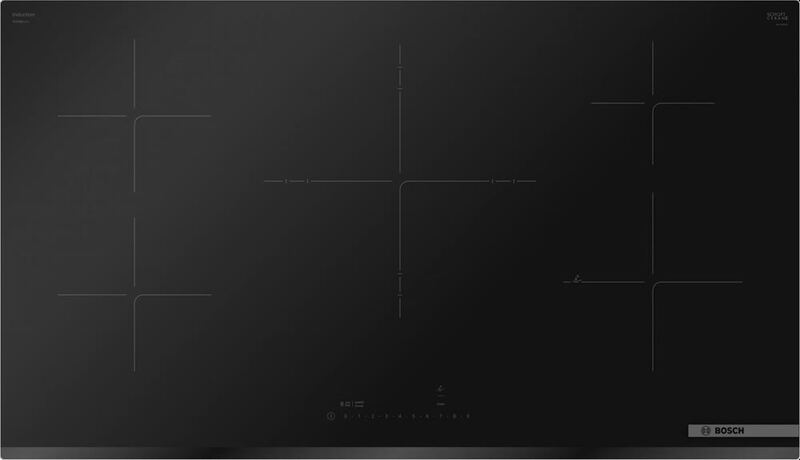
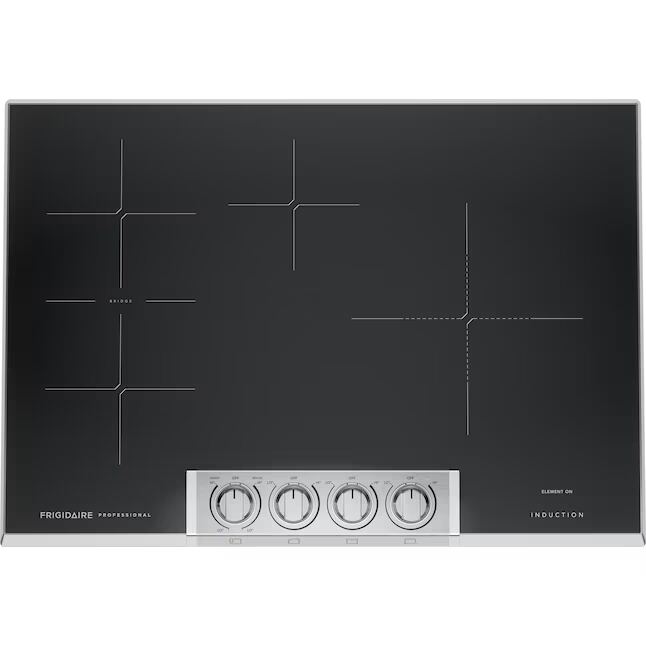
Samsung's 30-inch model offers Wi-Fi connectivity and SmartThings integration, features not available in the Frigidaire or Whirlpool models, but lacks the advanced smart features of the Thermador Freedom Induction Cooktop. Compared to the Bosch 36-inch model, it provides fewer cooking zones and lacks the Convection Pro oven function. This appliance is ideal for tech-savvy cooks who want smart kitchen integration but don't need the premium features of higher-end models.
Who this is for
At a glance: tech-savvy cooks seeking smart kitchen solutions.
Why you’d buy the Samsung 30-Inch Induction Cooktop
- Virtual Flame technology provides visual cooking feedback.
- Wi-Fi connectivity enables SmartThings integration for remote monitoring.
- Anti-scratch glass cooktop is easy to clean.
Why you’d skip it
- Some users noted a learning curve for induction cooking.
- Oven divider does not fully isolate the two ovens.
- Certain cookware (like Pyrex percolators) may not be compatible.
Rating sources
“This smart versatile cooktop lets you choose between removable magnetic knobs or digital touch controls.”
“I regard induction as a fad, or poorly developed technology in its infancy. As such, I think the sensible approach if you want to play with it is a countertop hotplate that does not encourage you to waste money when it breaks.”
“Power, precision, and sleek design, the Samsung Bespoke Induction Slide-In Ranges bring cutting edge technology that makes cooking faster, easier, and more exciting.”
Our 3.9 score is the average of these published ratings. Ratings marked * were derived from the reviewer’s written analysis or video transcript — the publisher didn’t print an explicit numeric score, so we inferred one from their own words. Click through to verify. More about methodology.