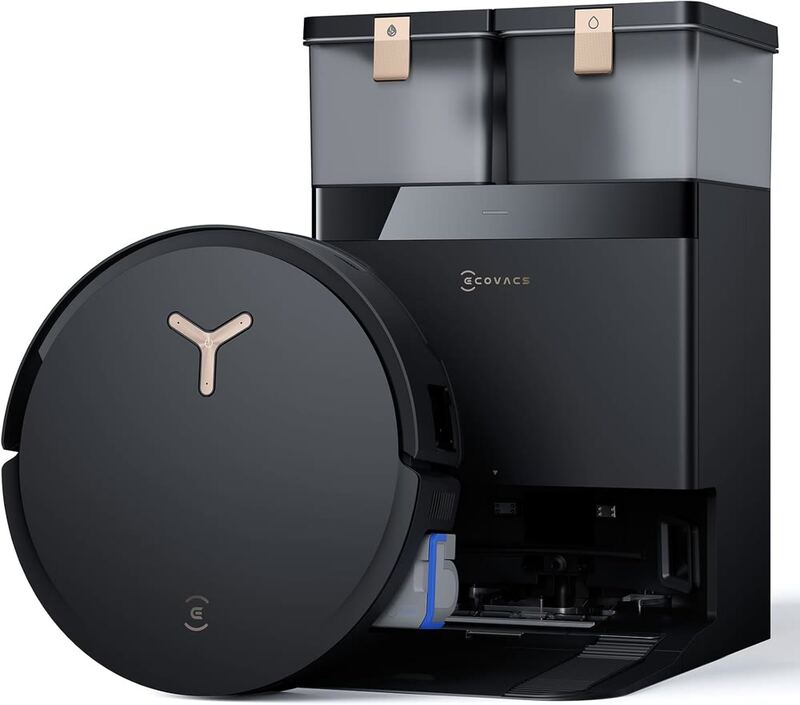
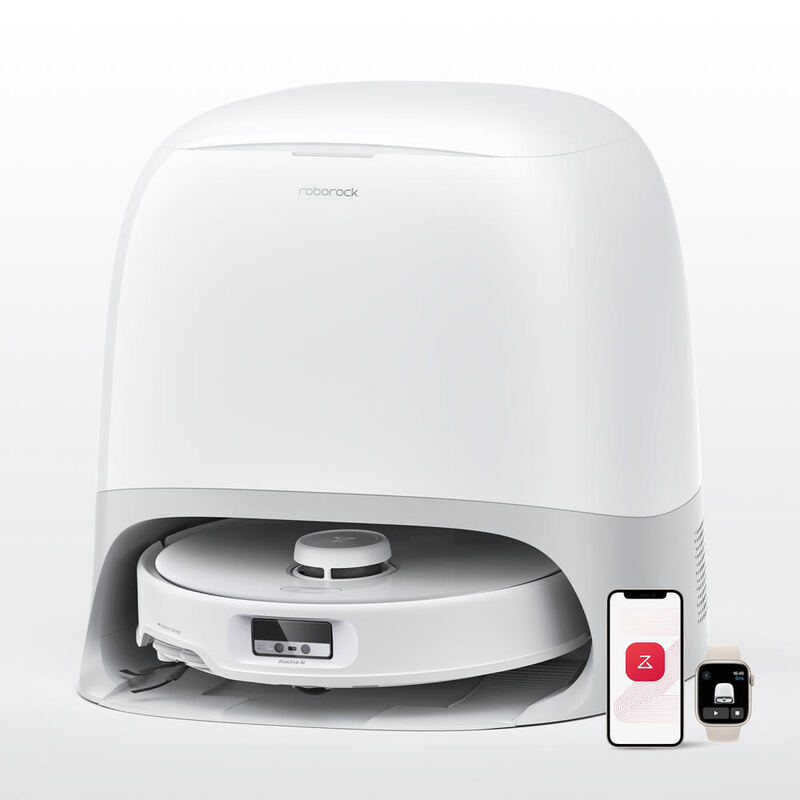
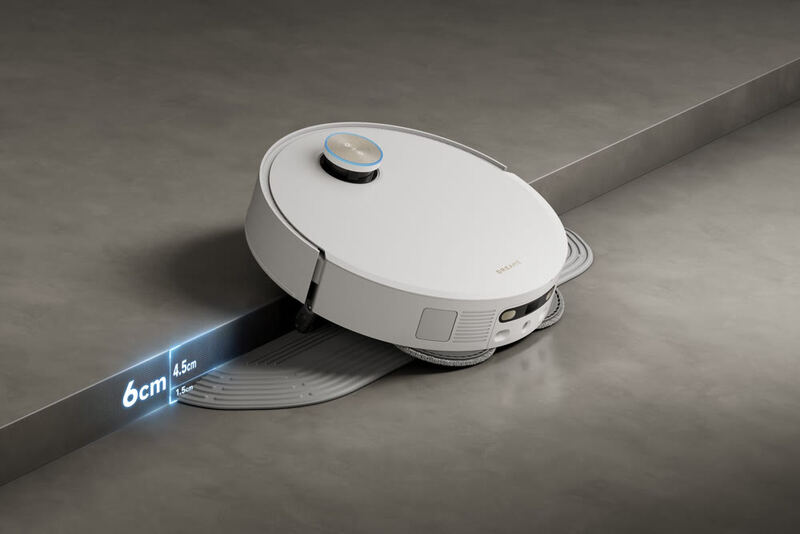
The Roborock Saros Z70 is the first robot vacuum with a real robotic arm, and it's a technology showcase rather than a mature product. PCMag 3/5 and TechRadar 3.5/5 both agree the core cleaning is excellent but the arm is a $1,000+ novelty over the Qrevo Curv. Buy it if you want to be first on your block with a robot-armed vac; otherwise save ~$1,500 and get the Qrevo Curv.
Full review
The OmniGrip Arm Reality
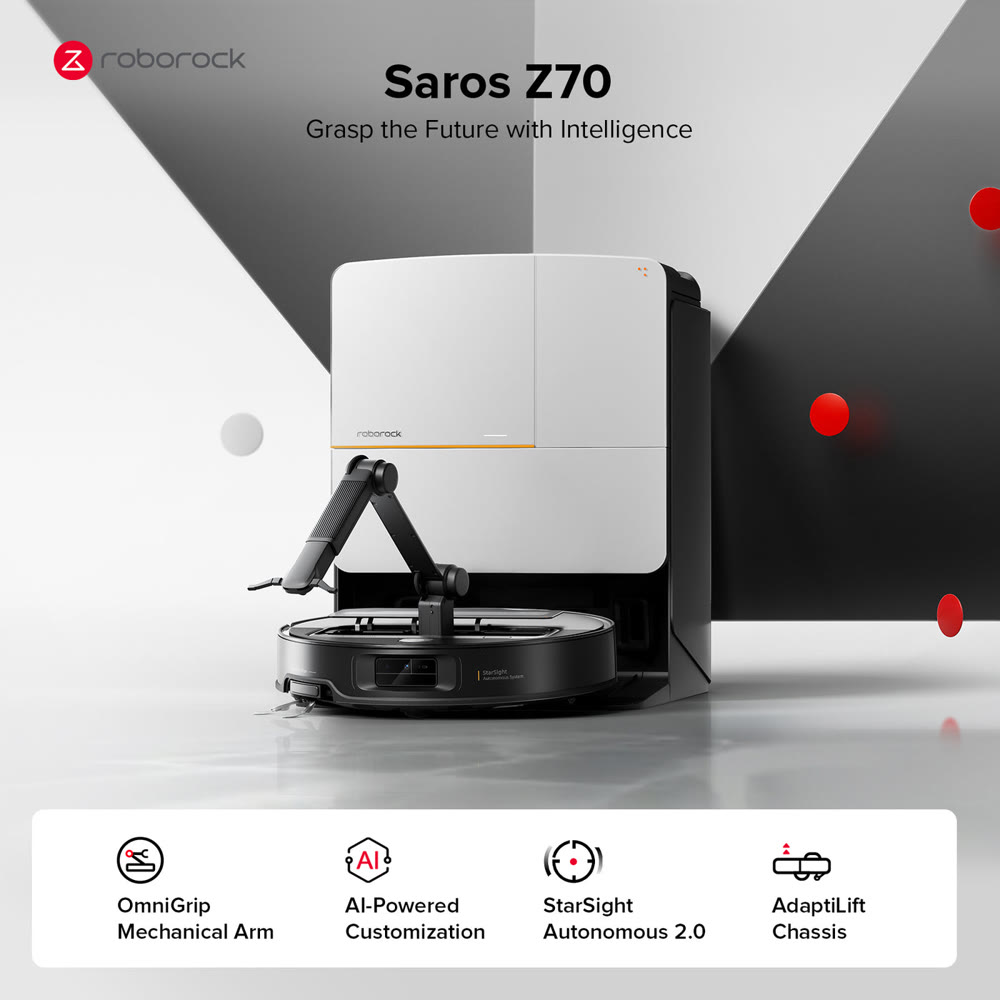
The defining feature of the Roborock Saros Z70 is its OmniGrip mechanical arm, a five-axis appendage designed to pick up stray socks, slippers, and tissues. While TechRadar acknowledged the engineering feat, they noted the arm is not yet all that handy in practical scenarios. New York Times Wirecutter reviewer Liam McCabe found the feature to be largely a gimmick, reporting that it works only about half the time even under ideal conditions. The system relies on a front-mounted camera to identify specific objects, but this vision system struggles significantly with contrast issues. For instance, a black sock on a navy blue rug often goes undetected, and in one documented case, the AI misidentified a sock on a wood floor as dog waste. Roborock representatives themselves admitted during testing that the vision system has trouble spotting objects on dark carpets, confirming that the technology is still a work in progress.
Even when the robot successfully identifies an item, the physical execution is inconsistent. Reddit users in r/Roborock and r/RobotVacuums have echoed these professional findings, with one long-term reviewer stating the arm is a nice gimmick with very little real utility after three months of daily use. The arm frequently fails to pick up items placed near furniture legs, as the robot is programmed to avoid snapping its own appendage. While the remote-control mode allows users to manually drive the bot and command the claw, the automated sorting process remains unreliable. PCMag described the innovation as spectacular but strictly for early adopters willing to beta-test a half-baked feature. The consensus across professional and community reviews is that unless you are comfortable paying a premium for a feature that fails more often than it succeeds, the arm does not yet justify the cost.
Core Cleaning Performance
Beyond the mechanical arm, the Saros Z70 functions as a highly capable vacuum and mop combo. PCMag noted that apart from the limb-shaped distraction, the device is actually an excellent robot cleaner with cutting-edge navigation upgrades. The navigation system represents some of the most meaningful improvements in the sector this decade, allowing the bot to map homes quickly and avoid obstacles with high precision. Reddit discussions highlight that the obstacle avoidance has improved significantly over time, with one user reporting the Z70 was almost flawless in this regard after firmware updates. The robot effectively handles standard debris and light grime, performing the core duties of a floor cleaner without the need for human intervention. However, some community members expressed concern that the focus on the arm may have come at the expense of core vacuuming performance, with one user on r/RobotVacuums suggesting the device is seemingly worse than previous generations at vacuuming in favor of gimmicks.
The mopping capabilities remain a strong suit for the Saros lineup, though specific water residue metrics have been debated. In r/RobotVacuums, a user noted that the exact amount of water left on the surface is often an irrelevant measure if the floor dries within a few minutes. The robot's ability to navigate complex floor plans and return to its dock for self-cleaning is robust. While the arm adds a layer of complexity, the fundamental cleaning algorithm continues to perform well on various floor types. Users who prioritize the basic function of keeping floors clean will likely find the Z70 effective, provided they can overlook the inconsistent behavior of the sorting arm. The device maintains the high standards expected from the Saros series, even if the new addition feels premature.
Setup and Software Quirks
Setting up the Saros Z70 involves a training run to map the home and a specific coaching process within the smartphone app to designate drop zones for sorted items. The process takes approximately ten minutes, during which users must define where the robot should place collected socks and slippers. The app allows for two modes: sorting items as they are found or performing a dedicated sorting run after the main cleaning cycle is complete. While the interface is generally intuitive, the reliance on the app to manage the arm's behavior adds a layer of complexity not present in standard robot vacuums. Users must actively manage the settings to ensure the robot attempts to pick up objects, and the manual override mode requires the user to watch through the camera feed to guide the claw, which can be tedious for daily use.
Software inconsistencies have been a point of contention in the community. A Reddit user in r/Roborock highlighted that testing results vary wildly depending on when the review was conducted, noting that firmware updates can drastically change the robot's behavior. This inconsistency makes it difficult for potential buyers to rely on early reviews, as the product evolves rapidly post-launch. Some users reported that the initial experience was fraught with issues that were later resolved through updates, while others felt the marketing materials were misleading regarding the reliability of the features. The need for constant firmware updates to achieve stable performance suggests that the software ecosystem is still maturing, which may frustrate users who expect a plug-and-play experience from a premium device.
Value and Market Position
At a price point around $1,300 to $1,400, the Saros Z70 occupies a contentious space in the robot vacuum market. New York Times Wirecutter explicitly advises against purchasing the Z70 unless the buyer is happy to pay thousands of dollars to beta-test a half-baked feature. Reddit users have frequently compared the Z70 to the cheaper Saros 10 and 10R models, with many concluding that the arm does not justify the significant price premium. One user in r/Roborock stated they would not pay the full price for the Z70, opting instead for the Saros 10R which offers similar core performance without the unreliable arm. The general sentiment is that while the Z70 is an impressive engineering showcase, it is not the best value proposition for the average consumer seeking a reliable cleaning solution.
Marketing practices surrounding the launch have also drawn criticism. A Reddit thread in r/Roborock detailed a misleading 'buy one get one free' promotion that turned out to be a coupon for a different product after a limited number of sales, leading to accusations of deceptive advertising. This has contributed to a perception of the brand as being overly aggressive in pushing the Z70 despite its limitations. While some users have reported excellent customer service experiences with warranty claims, others feel the company is prioritizing the sale of this high-end toy over product stability. For those considering the Z70, the consensus is to wait for further firmware improvements or consider alternative models that offer proven reliability at a lower cost.
Strengths
- +OmniGrip robotic arm is a genuine first — it can pick up socks, cables, and small toys up to 300g and move them aside before vacuuming
- +22,000 Pa suction with dual spinning mop pads that lift when transitioning onto carpet
- +StarSight 2.0 dual-eye vision + LiDAR navigation handles complex layouts with strong obstacle avoidance
- +Reactive AI 3.0 can identify 108 object types including pet waste
- +Full Omni dock: self-empty, hot-water mop wash with auto-drying, detergent dispensing, water refill
Watch-outs
- −At ~$2,600 it's the most expensive robot vac ever sold — reviewers consistently flag that 95% of its value is in standard Roborock features, not the novelty arm
- −Robotic arm is slow and gimmicky in practice — TechRadar 3.5/5 and PCMag 3/5 both note it's a proof-of-concept more than a mature feature
- −Arm can't actually tidy a room in any meaningful way — it picks one item at a time and places it at a designated drop zone
Who this is for
At a glance: Best for tech showcase — first robotic arm for object removal.
Why you’d buy the Roborock Saros Z70
- OmniGrip robotic arm is a genuine first — it can pick up socks, cables, and small toys up to 300g and move them aside before vacuuming.
- 22,000 Pa suction with dual spinning mop pads that lift when transitioning onto carpet.
- StarSight 2.0 dual-eye vision + LiDAR navigation handles complex layouts with strong obstacle avoidance.
Why you’d skip it
- At ~$2,600 it's the most expensive robot vac ever sold — reviewers consistently flag that 95% of its value is in standard Roborock features, not the novelty arm.
- Robotic arm is slow and gimmicky in practice — TechRadar 3.5/5 and PCMag 3/5 both note it's a proof-of-concept more than a mature feature.
- Arm can't actually tidy a room in any meaningful way — it picks one item at a time and places it at a designated drop zone.
Rating sources
Our 3.5 score is the average of these published ratings. More about methodology.