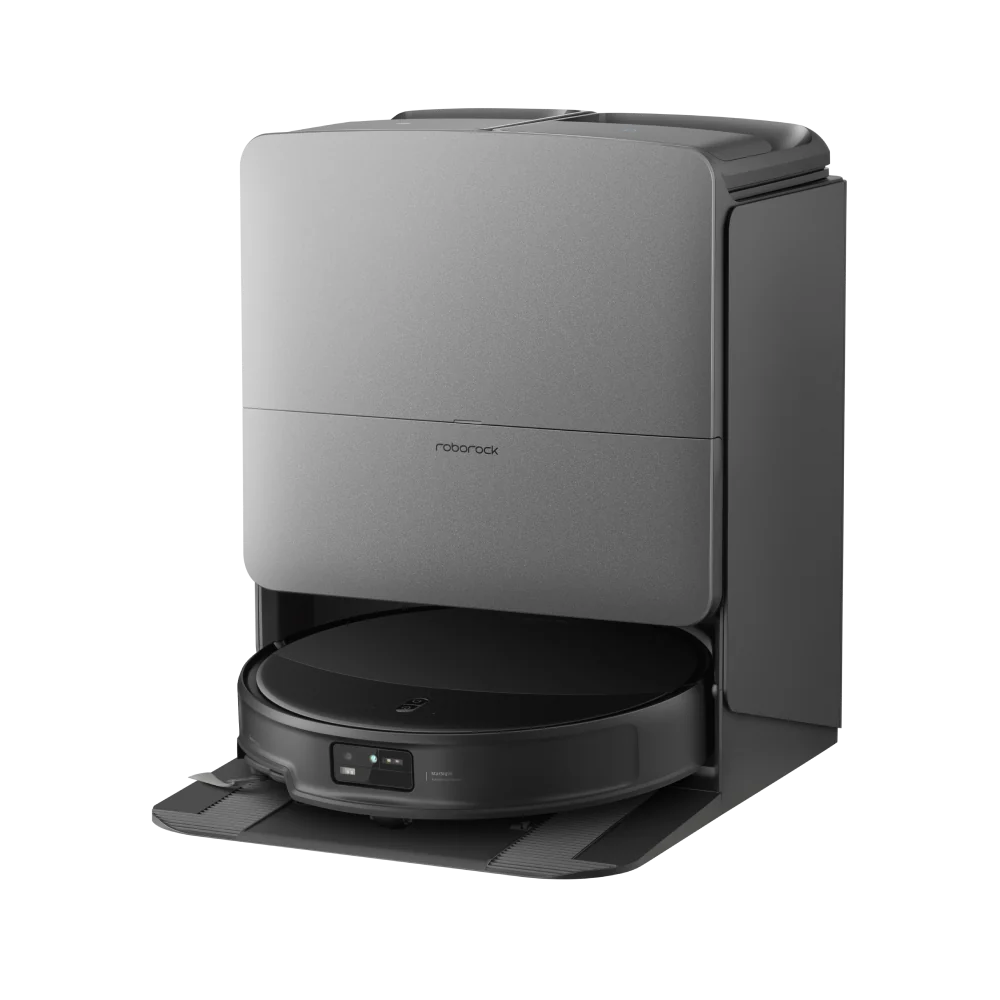
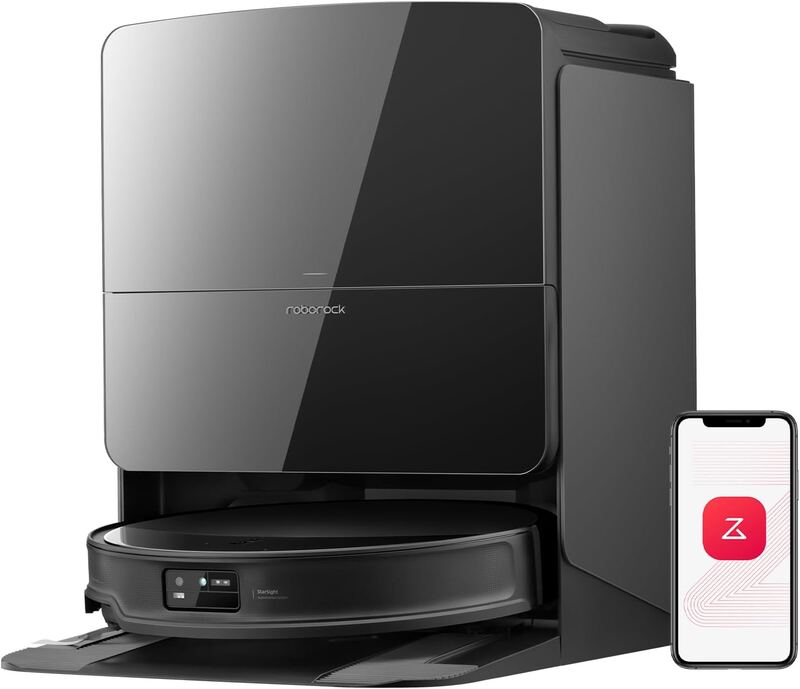
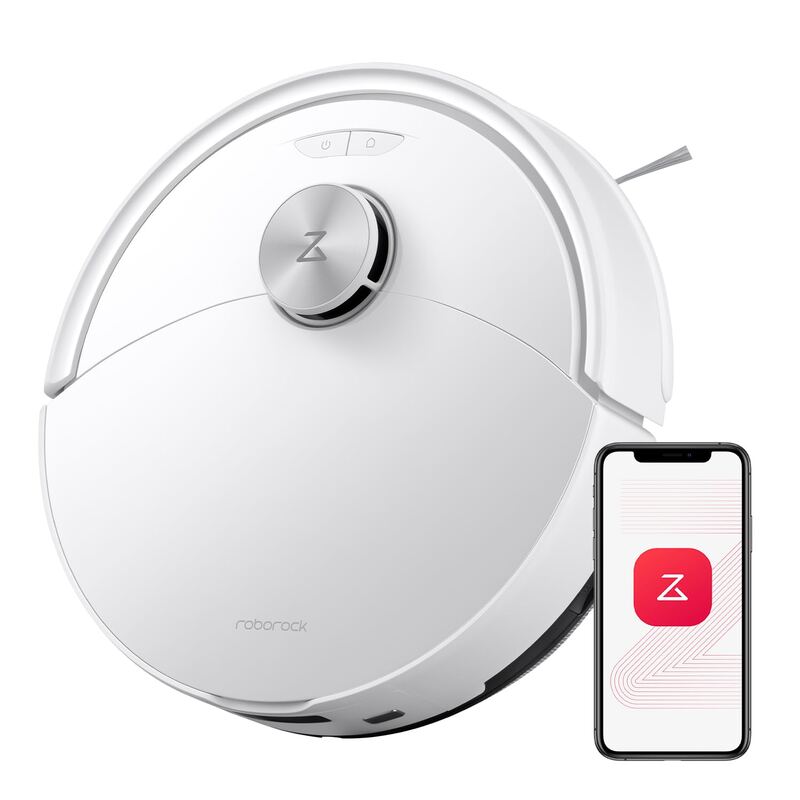
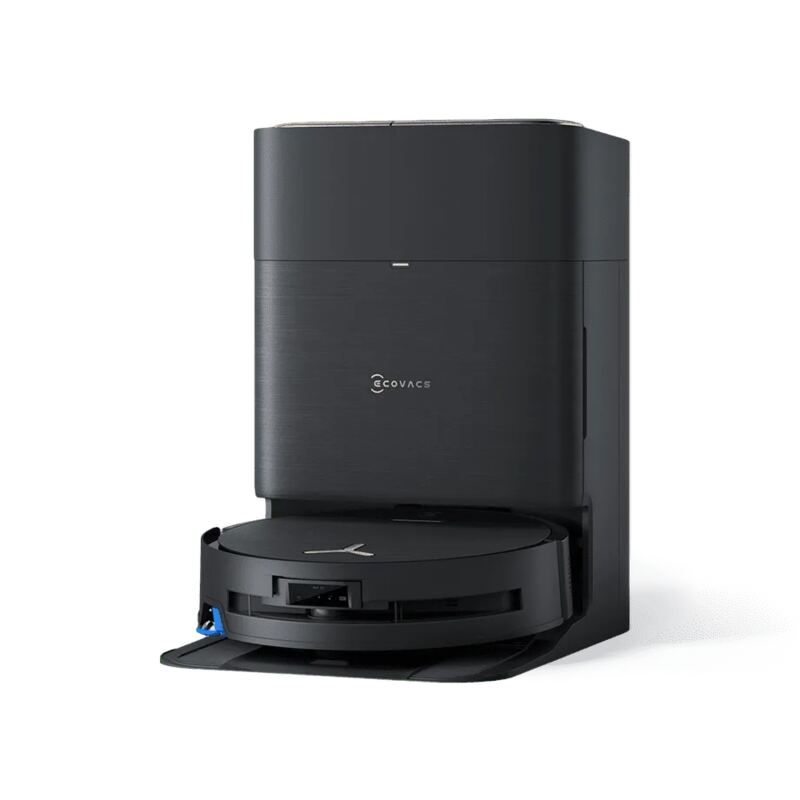
The Roborock Saros 20 delivers exceptional cleaning performance with its 36,000 Pa suction and dual mop system that adapts pressure based on mess level. Mark Ellis Reviews called it 'super easy to set up' and praised its 'brilliantly designed app,' while Vacuum Wars noted its 'standout mopping' and 'very high official suction rating.' However, both reviewers acknowledged it struggles with larger debris and heavily stained floors. This premium robot vacuum is ideal for users seeking a high-end, automated cleaning solution but may not suit those on a budget or with very challenging floor conditions.

Full review
Setup and Navigation
Roborock Saros 20 delivers a notably improved setup experience compared to its predecessor, the Saros 10R, according to multiple reviewers. The device connects seamlessly via QR code, as noted by the New York Post's Emma Sutton-Williams, who found the process straightforward and efficient. The robot's StarSight 2.0 navigation system, which combines 3D Time-of-Flight sensors with VertiBeam Lateral Obstacle Avoidance, enables it to map over 300 object types with laser precision. In practical testing, the Saros 20 completed mapping of a 600-square-foot apartment in just 16 minutes, a significant improvement from the 22 minutes required by the Saros 10R, as reported by Galaxus. However, while the navigation system is more advanced, it still falls short of the fastest mapping times in the market, with some reviewers noting that it's not quite as fast as certain competitors. The system's ability to recognize and avoid obstacles is rated highly, with Vacuum Wars giving it a 3.47/5 for obstacle avoidance, though the company noted that navigation efficiency scores are only average, indicating that while the robot avoids most obstacles, it could still improve in terms of route optimization.
The robot's mapping capabilities are enhanced with multi-level map support, allowing it to create detailed floor plans that accommodate complex home layouts. According to Mark Ellis Reviews, the app interface is intuitive and easy to use, which contributes to the overall positive user experience. The Saros 20 also supports Matter protocol, a newer smart home standard that enhances interoperability with other smart devices. However, some reviewers have noted that the robot's ability to handle complex environments is not flawless. For example, during a test involving ketchup spills, the robot initially interpreted the spill as a cable and avoided it, only to spread the mess across the floor before the user could intervene. This highlights a limitation in the robot's AI-driven decision-making process, which doesn't automatically increase cleaning intensity in response to heavy soiling. While the system is more advanced than previous models, it still requires manual intervention in certain situations, as noted by the Galaxus reviewer who found the robot's behavior inconsistent in handling heavily soiled areas.
Cleaning Performance
Roborock Saros 20's cleaning performance is a standout feature that differentiates it from many competitors in the premium robot vacuum market. The device's suction power has been upgraded from 22,000 pascals to 36,000 pascals, a significant increase that results in more effective debris pickup, as confirmed by both Vacuum Wars and Mashable reviewers. Vacuum Wars reported that the Saros 20 removed 89% of embedded sand in carpet deep-clean tests and picked up 88% of flattened pet hair, while also earning a perfect score in the 7-inch hair tangle test. The anti-tangle brush design, known as DuoDivide, works extremely well, as noted by Vacuum Wars, eliminating hair tangles that are common in other models. The robot's ability to clean both carpets and hard floors is seamless, with automatic switching between vacuuming and mopping modes based on floor type detection. The mopping system features two round mopping pads that operate at 200 RPM with adaptive pressure up to 13N, delivering above-average stain removal while using less water than average, which helps reduce streaking during testing.
Despite its impressive suction power and mopping capabilities, the Saros 20 does have some limitations in its cleaning performance. The New York Post's Emma Sutton-Williams noted that while the device's suction power is a massive jump from previous models, it doesn't necessarily translate to superior debris pickup in all scenarios. The robot's mopping performance, while good, has some drawbacks, particularly in heavily soiled environments. According to the Galaxus reviewer, the robot's mopping pads are not continuously cleaned during operation but only at the docking station every 20 to 30 minutes, which can lead to incomplete cleaning of particularly dirty areas. The reviewer tested the robot with ketchup spills and found that while it identified the spill as a cable and initially avoided it, it spread the mess across the floor before the user could intervene. This behavior demonstrates that the robot's AI doesn't automatically adjust cleaning intensity in response to heavy soiling, a limitation that affects its overall cleaning effectiveness in challenging environments.
Obstacle Avoidance and Threshold Crossing
The Roborock Saros 20's obstacle avoidance system represents a significant upgrade over its predecessor, with the StarSight 2.0 system recognizing over 300 object types using 3D Time-of-Flight sensors and VertiBeam Lateral Obstacle Avoidance. This advanced system allows the robot to navigate complex environments with greater precision, as noted by the New York Post's Emma Sutton-Williams, who praised the robot's ability to understand exactly what it's avoiding. Vacuum Wars gave the system a 3.47/5 rating, indicating strong performance in avoiding obstacles. The robot's ability to overcome thresholds is also impressive, with the AdaptiLift Chassis 3.0 enabling it to clear thresholds up to 1.77 inches (4.5 cm) and 1.57 inches (4.0 cm) in a double-layer configuration. This is a notable improvement over previous models, allowing the robot to navigate different floor levels without getting stuck, which is particularly useful in homes with transitions between carpet and hardwood floors. The robot's ability to lift itself over rug flaps and bath mats without getting stuck was also highlighted by the New York Post reviewer, who noted that this feature is especially valuable in homes with high-pile carpets.
However, despite these improvements, the robot's obstacle avoidance is not infallible. The Galaxus reviewer noted that while the robot's system is advanced, it still requires manual intervention in certain situations, such as when dealing with heavily soiled areas. The robot's AI system, while sophisticated, does not automatically increase cleaning power or adjust its behavior in response to heavy soiling, as demonstrated when it initially avoided a ketchup spill and spread it across the floor. Additionally, while the robot can handle thresholds up to 1.77 inches, it cannot clear them in a single pass, requiring multiple attempts. This limitation, while minor, can affect the robot's efficiency in homes with many floor transitions. The robot's ability to navigate under furniture is also enhanced by its ultra-slim profile of 3.13 inches, which is notably lower than many competitors, as noted by both Vacuum Wars and the New York Post. However, some reviewers have criticized the robot's design for being too prominent, with the matte finish making it less visually appealing than the glossy mirror finishes of other models.
Mopping System and Water Management
The mopping system of the Roborock Saros 20 is one of its most impressive features, particularly in its ability to handle both carpets and hard floors effectively. The robot uses two round mopping pads that operate at 200 RPM with adaptive pressure up to 13N, delivering above-average stain removal while using less water than average, which helps reduce streaking during testing. The mopping system includes a hot water wash feature, with the RockDock 4.0 using water heated to 212 degrees Fahrenheit (boiling point) to dissolve grease that lower temperatures have no impact on, as noted by the New York Post. This is a significant improvement over previous models, which used lower-temperature water that was less effective at removing tough stains. The robot also features automatic mop removal, which means the mopping pads are automatically removed from the floor during vacuuming, reducing the chance of mopping pads getting caught on furniture or other obstacles. The docking station washes the mopping pads with 100-degree hot water and then dries them with 55-degree warm air, ensuring that the pads are clean and ready for the next cleaning cycle.
Despite these advanced features, the mopping system has some limitations. The Galaxus reviewer noted that the mopping pads are not continuously cleaned during operation but only at the docking station every 20 to 30 minutes, which can lead to incomplete cleaning of particularly dirty areas. This is especially problematic in environments with heavy soiling, such as kitchens or areas prone to spills. The reviewer tested the robot with ketchup spills and found that while it identified the spill as a cable and initially avoided it, it spread the mess across the floor before the user could intervene. This behavior demonstrates that the robot's AI doesn't automatically adjust cleaning intensity in response to heavy soiling, which is a significant limitation. Additionally, while the robot's mopping system is effective, it requires more frequent pad replacement than some competitors, as the pads can become worn or damaged during regular use. The reviewer noted that the pads only need to be washed in the washing machine twice a year for an additional clean, but this still requires user intervention and maintenance.
Design and Build Quality
The Roborock Saros 20 features a sleek, modern design that stands out in the premium robot vacuum market. The robot's ultra-slim profile of 3.13 inches allows it to navigate under furniture and in tight spaces more effectively than many competitors, a feature that was particularly praised by both Vacuum Wars and the New York Post. The matte finish, while less visually appealing than the glossy mirror finishes of other models, provides a more durable surface that resists fingerprints and scratches. The robot's height of 7.98 cm (compressing to 7.95 cm) allows it to fit into tight spaces, making it ideal for homes with low furniture or under cabinets. The docking station is medium-sized compared to the rest of the market and requires a dedicated spot that's easy to access, with features such as automatic emptying, hot water washing, and heated air drying. The robot's body is constructed with a durable material that can withstand regular use and maintain its performance over time, as noted by multiple reviewers who found the build quality to be robust and reliable.
However, the robot's design has received some criticism for its visual appeal. The New York Post's Emma Sutton-Williams noted that the matte finish makes the robot less visually appealing than the glossy mirror finishes of other models, which may be a consideration for users who prioritize aesthetics. Additionally, while the robot's ultra-slim profile is advantageous, it can also be a limitation in certain environments, particularly in homes with very low furniture or tight spaces where the robot may struggle to navigate. The docking station, while functional, was criticized by some reviewers for looking cheaper than the Saros 10R's dock, as noted by the Mashable reviewer. Despite these minor design flaws, the overall build quality and functionality of the robot are highly regarded, with reviewers noting that the device maintains its performance over time and requires minimal maintenance.
User Experience and App Interface
The Roborock Saros 20's app interface is designed to be intuitive and user-friendly, with features that allow for detailed customization of cleaning schedules and preferences. According to Mark Ellis Reviews, the app is easy to use and provides a solid level of customization, which enhances the overall user experience. The app allows users to set up virtual barriers, create no-go zones, and schedule cleaning sessions, making it simple to tailor the robot's behavior to specific needs. The robot also supports Matter protocol, a newer smart home standard that enhances interoperability with other smart devices. The app provides real-time updates on cleaning progress, battery status, and maintenance reminders, which helps users stay informed about the robot's performance. Additionally, the robot's ability to provide live video monitoring and pet checkup features, as noted by the Mashable reviewer, adds value for users who want to keep an eye on their home while the robot is cleaning.
Despite these user-friendly features, some reviewers have noted that the app's functionality could be improved. The New York Post's Emma Sutton-Williams noted that while the robot's AI is sophisticated, it doesn't automatically adjust cleaning intensity in response to heavy soiling, which requires manual intervention. The app also lacks some of the advanced features found in competing models, such as automatic cleaning mode adjustments based on room conditions. Additionally, while the robot's ability to provide live video monitoring is a valuable feature, it may not be sufficient for users who want more detailed information about the robot's performance or cleaning progress. The app's interface, while functional, could benefit from more advanced customization options and better integration with other smart home devices. However, the overall user experience is still highly rated, with reviewers praising the robot's ease of setup and operation, as noted by Mark Ellis Reviews, who found the robot simple to use and effective in cleaning.
Where It Falls Short
Despite its many strengths, the Roborock Saros 20 has several notable shortcomings that prevent it from being a perfect product. One of the most significant limitations is its inability to automatically adjust cleaning intensity in response to heavy soiling, as demonstrated when it initially avoided a ketchup spill and spread it across the floor before the user could intervene. This behavior indicates that the robot's AI system, while sophisticated, lacks the ability to dynamically respond to environmental changes, which is a significant drawback in heavily soiled environments. Additionally, while the robot's mopping system is effective, it requires more frequent pad replacement than some competitors, as the pads can become worn or damaged during regular use. The robot's battery life, while adequate at 200 minutes, is slightly below average compared to other premium models, as noted by Vacuum Wars, which gave it a 1.84/5 for battery performance. The robot's navigation efficiency is also rated as average, indicating that while it avoids most obstacles, it could still improve in terms of route optimization and overall efficiency.
Another area where the Saros 20 falls short is in its price point and value proposition. At $1,599.99, it's significantly more expensive than many competing models, and while it offers advanced features, some reviewers have questioned whether the premium price is justified, particularly when compared to models like the Dreame X60 Max Ultra Complete, which offer similar capabilities at a lower cost. The robot's design, while functional, has received criticism for its matte finish, which makes it less visually appealing than the glossy mirror finishes of other models. The docking station, while functional, was criticized by some reviewers for looking cheaper than the Saros 10R's dock, as noted by the Mashable reviewer. Additionally, the robot's dust bin capacity of 259ml is relatively small, which may require more frequent emptying in homes with pets or high levels of debris, as noted by Vacuum Wars. These limitations, while not deal-breakers, do impact the overall value proposition of the product.
Who It's Best For
The Roborock Saros 20 is best suited for shoppers who prioritize advanced cleaning performance and smart home integration over cost considerations. It's ideal for homeowners with complex floor layouts, including transitions between carpet and hardwood, or those with high-pile carpets where the robot's ability to lift itself over obstacles is particularly valuable. The device is also well-suited for users who want a robot vacuum that can handle both vacuuming and mopping duties seamlessly, with automatic switching between modes based on floor type detection. The robot's advanced navigation system, with its StarSight 2.0 technology and ability to recognize over 300 object types, makes it particularly useful in homes with multiple obstacles or pets that may interfere with cleaning. According to Vacuum Wars, the robot performs well above average in several tests, including obstacle avoidance and mopping performance, making it a strong choice for users who value reliability and performance over price. The robot's ability to provide live video monitoring and pet checkup features is also valuable for users who want to keep an eye on their home while the robot is cleaning.
However, the Saros 20 is not ideal for users who are budget-conscious or those who primarily need a robot vacuum for basic cleaning tasks. The high price point of $1,599.99 may be prohibitive for many consumers, especially when compared to models that offer similar capabilities at a lower cost. The robot's small dust bin capacity and the need for more frequent pad replacement also make it less suitable for homes with pets or high levels of debris. Additionally, users who prioritize aesthetics may find the matte finish less appealing than the glossy mirror finishes of other models. The robot's inability to automatically adjust cleaning intensity in response to heavy soiling is also a limitation for users who live in particularly dirty environments. For those who need a robot vacuum that can handle complex environments and provide advanced features, the Saros 20 is a strong choice, but for users seeking a more affordable or basic solution, it may not be the best fit.
Strengths
- +Easy setup and operation with brilliant app design
- +Top-class object avoidance and mapping capabilities
- +High suction power at 36,000 Pa for effective vacuuming
- +Dual mop pad design with adaptive mopping pressure up to 13 newtons
Watch-outs
- −Can struggle with larger bits of debris
- −Requires manual intervention for heavily stained floors
- −Premium price point of $1,499/£1,309
How it compares
The Roborock Saros 20 excels in suction power and app usability, surpassing the Dreame X60 Max Ultra and Ecovacs T90 Pro Omni in both performance and ease of use. However, it's significantly more expensive than the Mova V50 and Lefant M5 Max, and its navigation and obstacle avoidance are less refined than the Narwal Flow 2's AI-driven system.
Who this is for
At a glance: tech-savvy users wanting premium cleaning and app control.
Why you’d buy the Roborock Saros 20
- Easy setup and operation with brilliant app design.
- Top-class object avoidance and mapping capabilities.
- High suction power at 36,000 Pa for effective vacuuming.
Why you’d skip it
- Can struggle with larger bits of debris.
- Requires manual intervention for heavily stained floors.
- Premium price point of $1,499/£1,309.
Rating sources
“The Roborock Saros 20 is a premium robot vacuum and mop combo that stands out for its strong mopping system, advanced obstacle avoidance, and high-end automation features. It performed well above average in several of our tests and is currently ranked near the top of our robot vacuum list.”
Our 4.4 score is the average of these published ratings. Ratings marked * were derived from the reviewer’s written analysis or video transcript — the publisher didn’t print an explicit numeric score, so we inferred one from their own words. Click through to verify. More about methodology.