The Raptor Gutter Guard uses a 30-mesh stainless steel screen to block fine debris like pine needles and grit while allowing water to flow through. ThisOldHouse found that the system successfully filtered leaves, seed pods, and twigs during real-world evaluations, maintaining strong drainage even under simulated heavy rain. Bob Vila identified the rigid aluminum frame with V-bend technology as a key strength, noting it prevents sagging and provides structural integrity superior to flimsier alternatives. However, the stainless steel construction is difficult to cut, often requiring a hacksaw or grinder rather than standard tin snips, and the lack of pre-drilled holes makes manual screw placement challenging from a ladder. This product fits budget-conscious homeowners willing to invest time in DIY installation with heavy-duty tools, while those seeking quick, hassle-free setups should look elsewhere.
Full review
Stainless steel micro-mesh blocks pine needles and grit
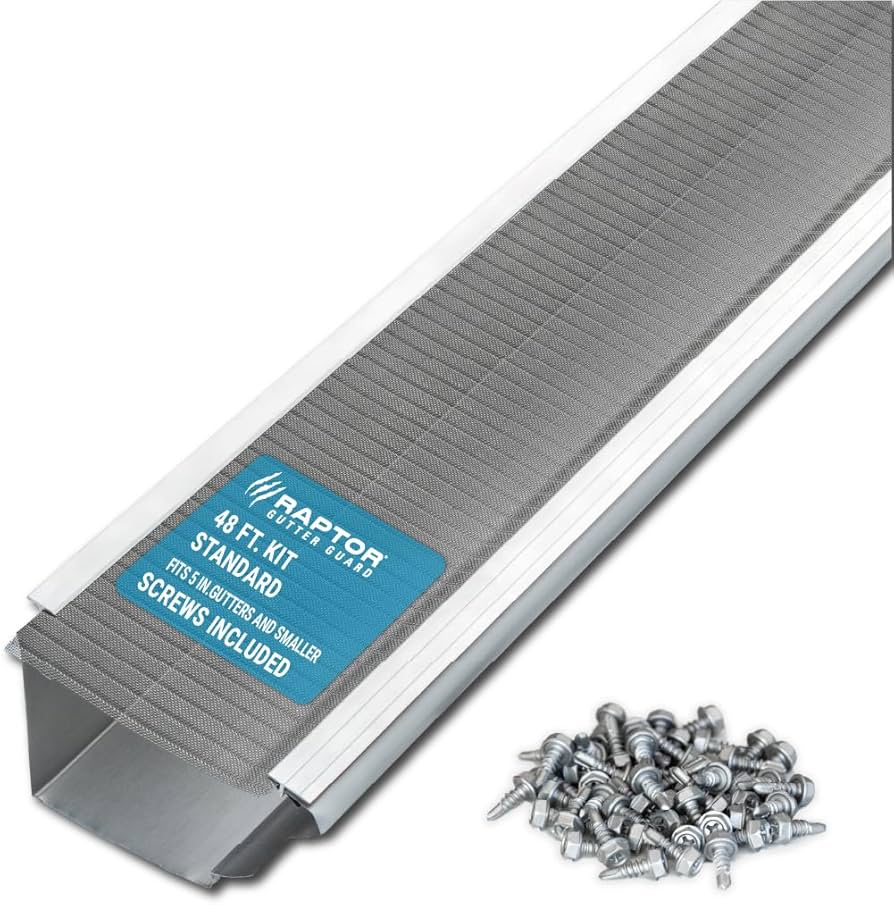
The core value proposition of the Raptor system lies in its filtration density, which addresses a common failure point for cheaper gutter guards. This specific product utilizes a 30-mesh stainless steel screen with openings of 540 microns, a specification confirmed by Sacramento Gutter Guard in their comparative analysis against national brands. While this mesh is wider than the finest available on the market, it remains tight enough to block the smallest particles that typically clog drainage systems.
Independent reviewers highlight how this density handles specific regional debris challenges better than standard screens or reverse-curve designs. This Old House recorded that the system successfully blocked pine needles, leaves, seed pods, and twigs during their evaluation of the product's performance in real-world conditions. Bob Vila found that material collected on top of the mesh rather than entering the gutter channel, maintaining strong water flow with minimal overflow even when subjected to simulated heavy rain. The stainless steel construction ensures these filters resist rust and corrosion over time, a durability factor Angi estimates can last 20 years or more compared to plastic alternatives.
Rigid aluminum frame resists sagging under debris loads
The structural integrity of the guard is maintained by a rigid aluminum frame that incorporates V-bend and trough technology. This design adds significant rigidity to the mesh, helping it withstand heavier debris without sagging or deforming over time. Bob Vila identified this durable build quality as one of the primary pros of the system, noting that the thick aluminum rails provide a solid foundation for the micro-mesh filtration surface. The V-bend shape is engineered to improve water handling by directing flow efficiently into the gutter while keeping the mesh taut and secure against wind uplift.
Long-term users confirm that this robust construction holds up well against environmental stressors over multiple seasons. A seven-year user review highlighted that the guards stood up remarkably well to sun, rain, and heavy debris accumulation without showing signs of structural failure or corrosion. The reviewer noted that even when dents occurred from falling branches, the mesh continued to shed debris effectively rather than trapping it. This durability contrasts sharply with cheaper plastic roll-out meshes that often degrade quickly under UV exposure or become brittle in cold weather.
Material costs offer significant DIY savings over pros
The financial advantage of the Raptor system is most apparent when compared to professionally installed micro-mesh competitors. Sacramento Gutter Guard reports that material-only pricing for Raptor ranges from $2.40 to $3.25 per linear foot, whereas national brands like LeafFilter charge between $15 and $35 per foot for full installation services. The Roofing Brief calculated that a typical 150-foot home would require approximately $360 to $488 in materials for Raptor, which is less than what some professional installers charge to cover just 15 feet of gutter run. This cost structure makes it an attractive option for budget-conscious homeowners who possess the tools and physical ability to work from a ladder.
While the upfront material cost is higher than foam or plastic guards, the long-term value proposition shifts when considering maintenance frequency. Sacramento Gutter Guard cites data indicating that 41% of homeowners who install micro-mesh guards reduce their cleaning frequency to once per year or less. For a homeowner with significant tree coverage, this reduction in labor and professional service costs can offset the initial material investment over time.
Cutting stainless mesh requires heavy-duty tools
The same durability that makes the Raptor guard effective also presents a significant challenge during installation, particularly when cutting the rigid materials. Bob Vila found that standard tin snips were insufficient for cutting through the thick aluminum rails supporting the mesh, describing the process as frustrating and physically demanding. The reviewer recommended using longer-handled snips specifically designed for heavy-gauge metal, along with a hacksaw or even an angle grinder to cut through the aluminum frame effectively. This requirement forces DIYers to invest in additional tools beyond what is included in the kit.
The stainless steel micro-mesh itself adds another layer of difficulty to the cutting process. A user review detailed struggling to cut the mesh with standard snips, ultimately resorting to a grinder with a cutting blade for the aluminum rails and finding the mesh cuts equally demanding. The lack of pre-drilled holes compounds this issue, as installers must manually mark screw locations while balancing on a ladder after performing these difficult cuts. This combination of stiff materials and manual fastening makes the installation process significantly more labor-intensive than sliding in pre-cut plastic guards.
Manual screw placement complicates ladder work
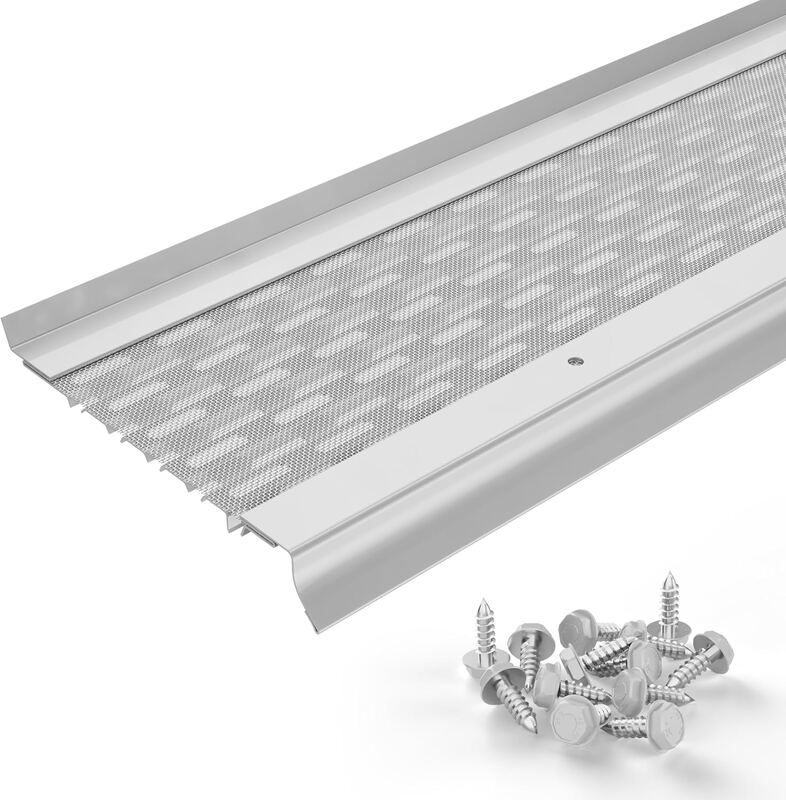
The absence of pre-drilled holes requires installers to manually align and drive self-tapping screws into the front lip of the gutter. This process can be awkward when working from a ladder, as both hands are needed to stabilize the guard while driving fasteners. Bob Vila noted that the system includes screws and a magnetic driver bit to assist with this task, but the lack of factory-drilled alignment points means precision relies entirely on the installer's steadiness. The front lip must sit perfectly flush against the gutter edge for proper water flow, requiring careful adjustment during the screwing process.
Reviewers suggest that securing sections before making subsequent cuts helps manage this challenge. A YouTube installation guide demonstrated a workflow where straight four-foot sections are slid into place and temporarily secured with three screws per section before moving to complex corners. This method prevents the guard from shifting while measuring and cutting 45-degree angles for outside corners. The included magnetic bit allows one-handed screw driving, but installers still need to maintain balance and control over the rigid aluminum frame while ensuring each fastener is driven deep enough into the gutter lip without stripping the metal.
Shingle tucking creates potential for bumps
The installation method requires sliding the back edge of the guard under the lowest course of roof shingles, which can create visible bumps or ridges in the roofing material. A seven-year user review observed that this process sometimes causes the shingles to raise up slightly, particularly if the angle of insertion is not perfectly aligned with the roof pitch. While the reviewer noted no major issues with water infiltration over seven years, they cautioned that these bumps could potentially cause shingle damage or create an uneven appearance on the roofline over time.
This installation technique also means the guard must be carefully maneuvered around existing gutter brackets and corners. Bob Vila found that homes with K-style brackets that strap to the roof require cutting the aluminum rails to fit around them, adding complexity to what is otherwise a straightforward slide-in design. The rigid nature of the frame makes it difficult to bend or contour around tight curves without specialized tools, forcing installers to make precise cuts and mitre joints that must be sealed or overlapped carefully to prevent debris from slipping underneath.
Long-term performance shows minor moss buildup
After years of exposure to the elements, users report that the micro-mesh surface remains largely self-cleaning but can accumulate organic matter in shaded or damp areas. A seven-year review noted that while most debris blows away during heavy rain, some residual staining from moss or algae buildup appeared on sections exposed to less direct sunlight and moisture. The reviewer found that a quick swipe with a broom or blowing off the roof was sufficient to clear this buildup, maintaining the guard's effectiveness without requiring ladder-based gutter cleaning.
The mesh design allows water to flow freely while shedding larger particles, but fine organic matter can occasionally adhere to the surface in humid climates. The same long-term user observed that areas with heavy pine needle drop required more frequent brushing, particularly where valleys collected debris from adjacent roof sections. Despite these minor maintenance needs, the guard continued to prevent clogs and overflow effectively, demonstrating that the stainless steel construction resists rust even when exposed to constant moisture and organic decay.
Overlap joints require careful sealing against pests
The 48-foot kits come in four-foot sections that must be overlapped during installation, creating seams where debris or insects could potentially enter the gutter system. A seven-year user noted that these overlaps are typically about an inch wide and can lift slightly if not secured properly, creating a gap where small animals might nest or wind-blown leaves could accumulate underneath. The reviewer mentioned having to tuck the ends of the guard into the gutter at termination points to close these gaps and prevent critters from living inside the drainage system.
Proper installation technique is critical to managing these joints effectively. Installers must ensure that each section overlaps the previous one in the direction of water flow, typically overlapping the downstream edge over the upstream edge to shed water correctly. The rigid aluminum frame makes it difficult to bend sections tightly together, so installers often need to trim or adjust the mesh at overlap points to minimize gaps. While no major failures were reported by long-term users, careful attention to these seams during installation is necessary to maintain the system's integrity against pests and wind-driven rain.
Strengths
- +Stainless steel micro-mesh effectively blocks fine debris like pine needles, shingle grit, and seeds while allowing water to flow through.
- +DIY-friendly installation with included self-tapping screws and magnetic bit allows homeowners to install without professional help.
- +Durable aluminum frame with V-bend design provides structural rigidity and improved water handling compared to flimsier alternatives.
- +Cost-effective material pricing of approximately $2.40 per linear foot offers significant savings over professionally installed systems.
Watch-outs
- −Rigid stainless steel construction makes cutting the mesh and aluminum rails difficult, often requiring a hacksaw or grinder rather than standard tin snips.
- −Lack of pre-drilled holes requires manual screw placement, which can be challenging when working from a ladder.
How it compares
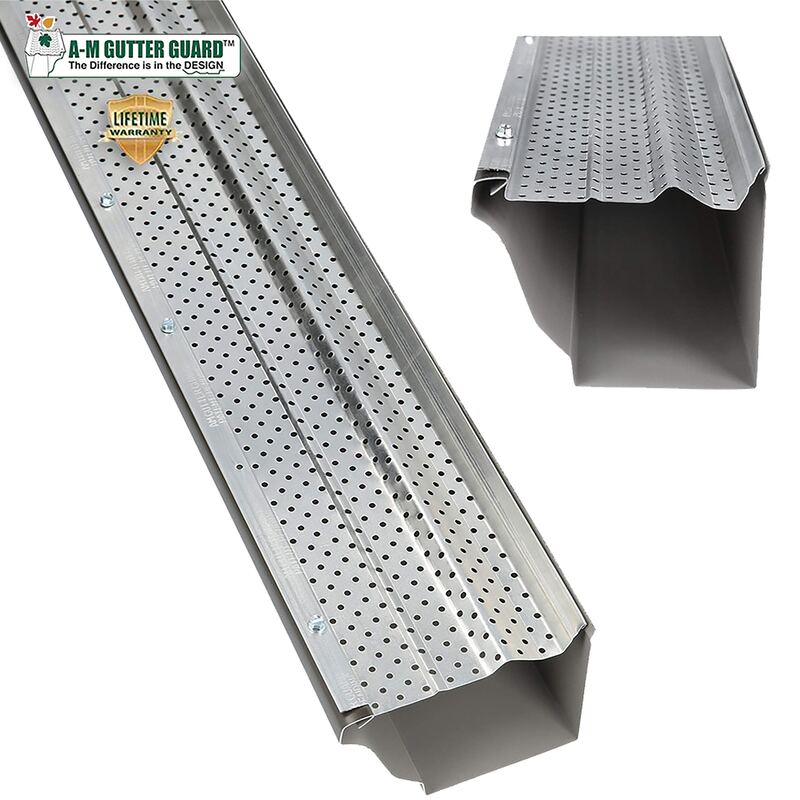
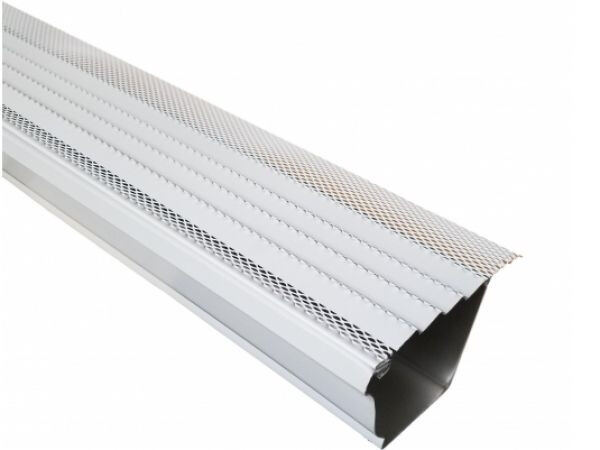
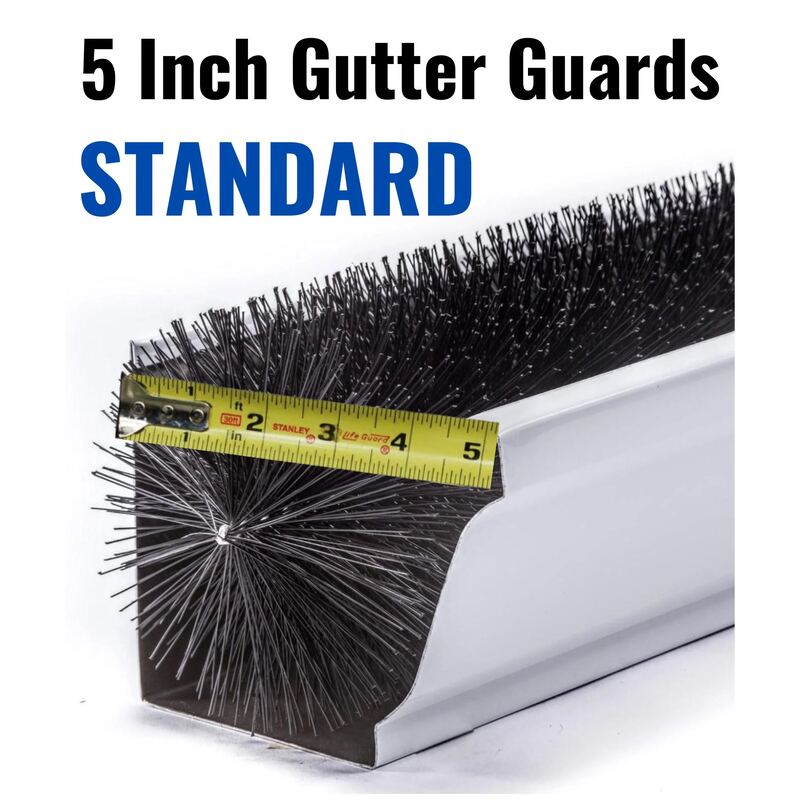
The Raptor Gutter Guard Stainless Steel Micro-Mesh uses a stainless steel micro-mesh screen like the Waterlock Micromesh 5-Inch Gutter Guard, where the A-M Gutter Guard 5-Inch Aluminum is a perforated aluminum panel and the GutterBrush 5-Inch Gutter Guard is a bristle insert. It includes self-tapping screws in the box, unlike the A-M guard, where fasteners must be purchased separately.
Rating sources
Counts as 4.19/5 in our score — this publisher's 9 scores on the site average 4.33, so its scores are adjusted down to compare fairly with other publishers.
Counts as 4.18/5 in our score — this publisher's 42 scores on the site average 4.53, so its scores are adjusted down to compare fairly with other publishers.
Our 4.2 score is the average of the 2 scored reviews above, each adjusted for how strictly its publisher scores; 4 more reviewed it without printing a score and are not in the average. More about methodology.