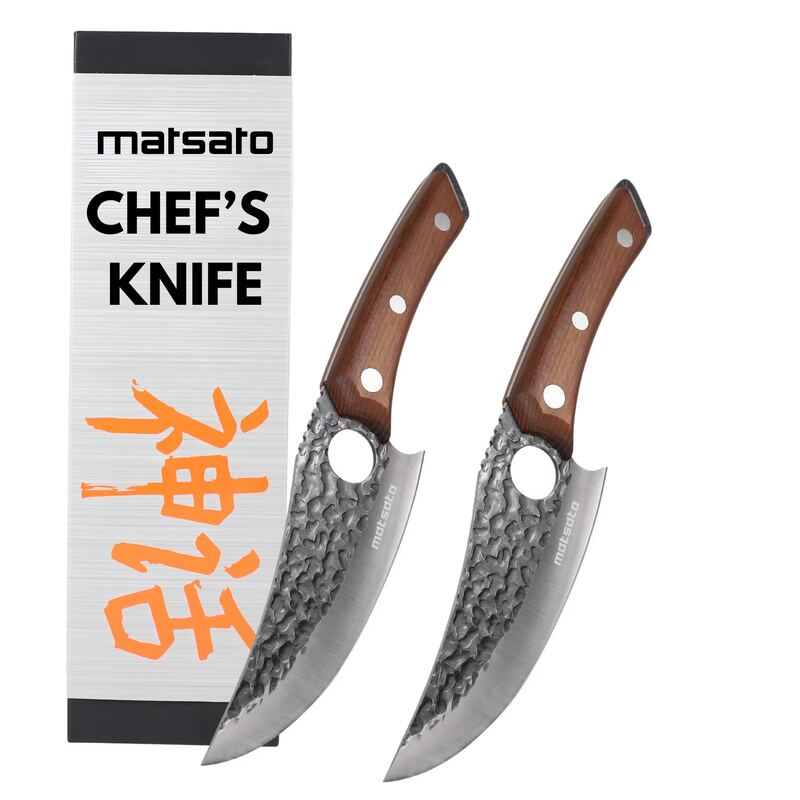
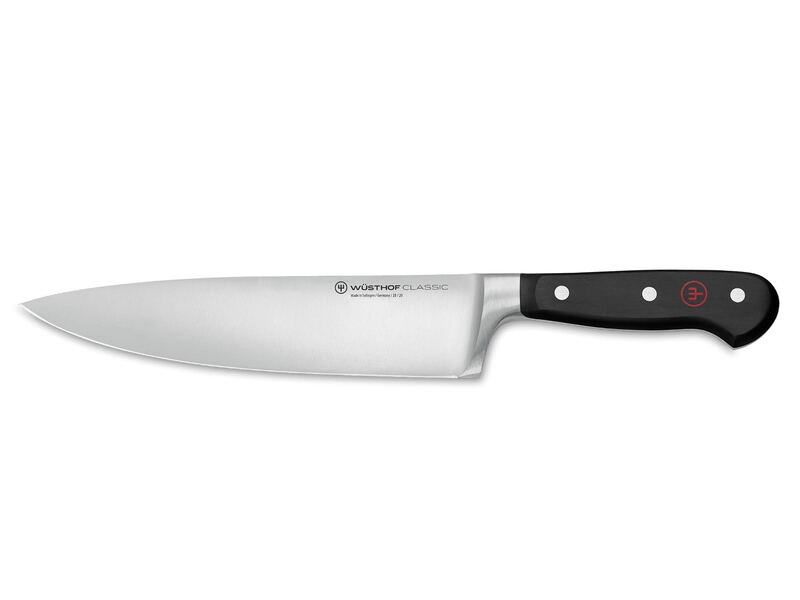
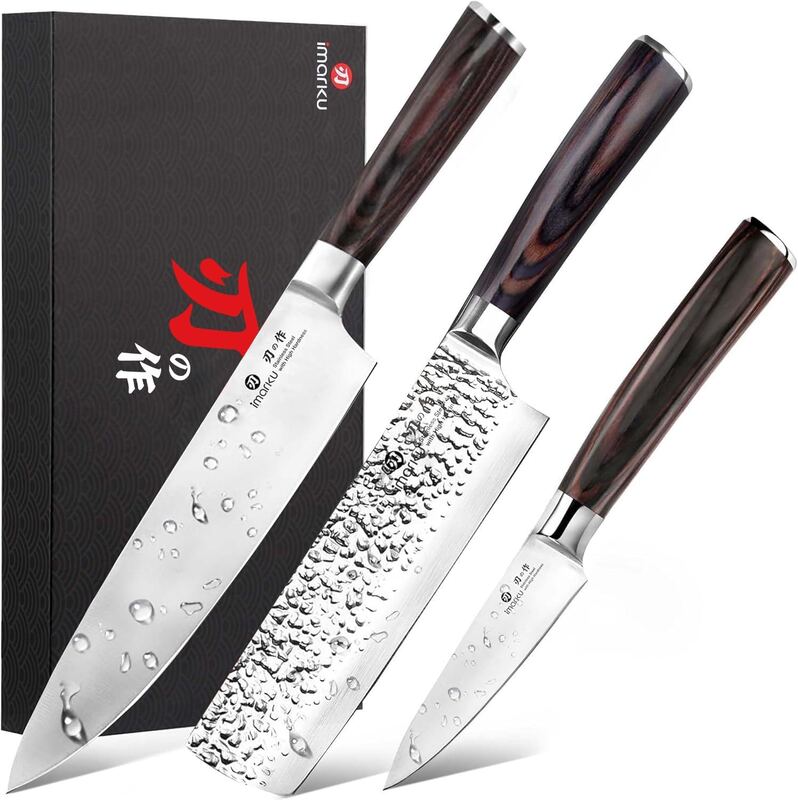
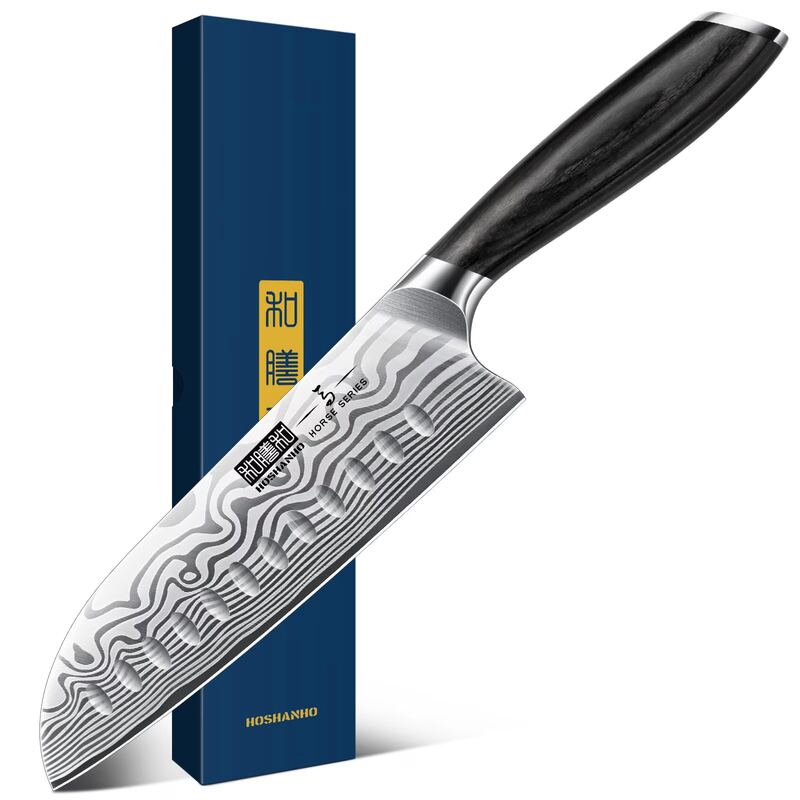
The Paudin 8" chef knife features a lightweight design with a well-shaped Pakkawood handle that offers good ergonomics and comfort. Reviewers noted its sharpness and durability, with the blade maintaining its edge well between sharpenings. However, the knife's edge grinding is inconsistent, and the spine can be uncomfortable during prolonged cutting sessions. The knife's geometry is described as somewhat awkward for complex cutting tasks, though it performs adequately for basic kitchen duties.
Full review
Blade construction and materials
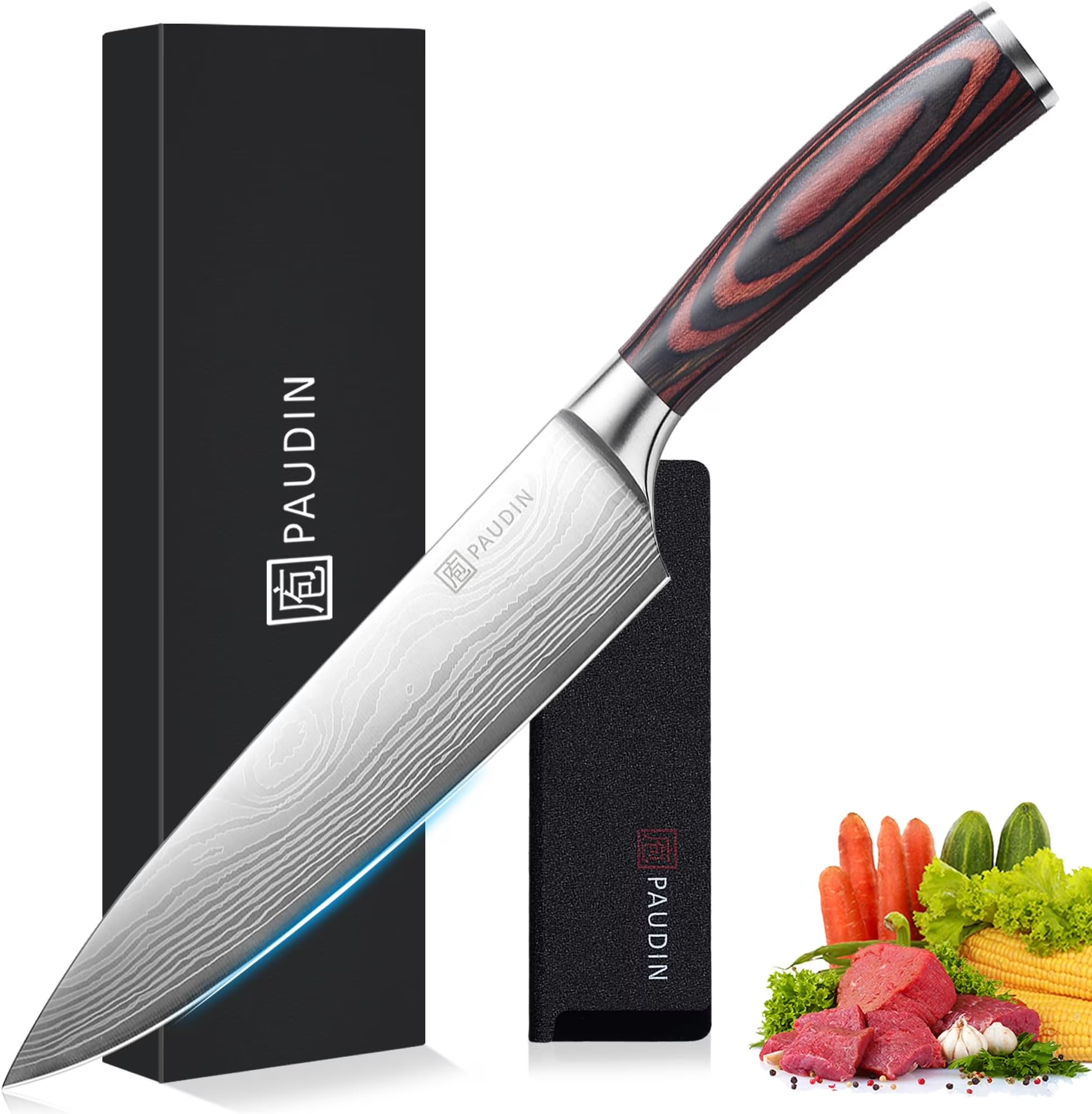
The Paudin 8-inch chef knife features a blade constructed from 5Cr15MoV steel, a high-carbon stainless steel that corresponds to the German standard X50CrMoV15. This material choice provides good corrosion resistance and durability, though it is not renowned for long-term edge retention. The knife's construction includes a full tang design that extends from the blade through the handle, contributing to its structural integrity and balance. The blade's surface displays a laser-etched Damascus pattern, which is purely aesthetic as the pattern is not real layered Damascus steel but rather etched into the surface. The knife's edge geometry is described as thin with a 14-degree flat grind, though some reviewers noted inconsistencies in edge grinding that can result in beards at the heel and unevenness in sharpening.
Handle design and ergonomics
The handle is crafted from Pakkawood, a resin-filled wood that resists bacteria and moisture, making it easy to grip even when wet. The ergonomic design features an oval shape that provides a neutral grip, and the transitions between wood, bolster, and pommel cap are seamless. Reviewers noted that the handle is comfortable and well-shaped, with some comparing it favorably to higher-end knife handles. However, the lack of a bolster means that the spine is sharp, which can be uncomfortable for certain gripping styles and may cause pinching during extended use. The knife's balance is described as blade-centric, which allows for a cutting style closer to Japanese techniques. The handle's texture and grip were praised by multiple reviewers, with one noting it feels better in hand than many other knives in its price class.
Cutting performance and edge quality
The knife's edge is reported to be very sharp out of the box, with one reviewer noting it was impressively sharp upon first use. The thin blade geometry allows for easy slicing, particularly on softer foods like tomatoes and onions, where it performs well in both straight cuts and rocking motions. However, some reviewers observed that the blade's thinness can be problematic when cutting harder or denser foods, such as potatoes, where it exhibited food sticking and difficulty with full-length cuts. The edge grinding was noted as inconsistent across the set, with beards at the heel affecting performance on larger items. The knife's ability to cut through paper and perform tasks like chifonade on basil was praised, indicating good edge quality for precision work.
Durability and long-term performance
Long-term durability was assessed through extended use over a 13-month period, with one reviewer noting that the knife maintained its sharpness and structural integrity. The full tang construction and high-carbon steel contribute to its longevity, though the steel's tendency to dull faster than premium alternatives was acknowledged. The knife's performance in tasks like slicing through dense foods and maintaining edge quality was generally positive. However, the lack of a bolster and the sharp spine were noted as potential drawbacks for users who prefer a more protective grip. The knife's ability to handle frequent use without significant wear or damage was considered acceptable for its price point, though the steel's limitations in edge retention were a recurring concern.
User experience and practical considerations
The knife's lightweight design and balanced feel make it comfortable for extended use, with one reviewer noting it feels lighter than expected. The handle's grip is described as secure and comfortable, even when wet, though the sharp spine can be a minor irritation for some users. The knife's versatility was praised, with it being suitable for various cutting tasks including slicing, dicing, and rocking motions. The lack of a bolster was noted as a potential issue for users who prefer a more protective grip, but the overall design was considered functional. The knife's performance in a 13-month test was generally positive, with one reviewer concluding it offers great value for its price class, though it may not be the absolute best option in its category.
Strengths
- +Well-balanced knife with a comfortable Pakkawood handle design
- +Sharp edge that holds up well between sharpenings
- +Full tang construction for durability
- +Good grip options including pinch grip compatibility
Watch-outs
- −Harsh spine can be uncomfortable during extended use
- −Sloppy edge grinding overall with inconsistent bearding at heel
How it compares
The Paudin 8" Chef Knife offers a well-balanced design and Pakkawood handle, but its inconsistent edge grinding and uncomfortable spine make it less appealing than the imarku Japanese Chef Knife, which provides better grip and durability. Unlike the Miyabi Kaizen, it lacks the Damascus pattern and wider blade belly for rock chopping, though it does offer a full tang construction that the Mercer Culinary Millennia lacks.
Rating sources
“This is a situation where things work well enough. The knives are sharp. They'll cut what you need, but the geometry is a little weird which means difficulty increases exponentially as foods get trickier to cut.”
“Solid value with a few rough edges”
“I'm not sure if that is real but I will say that the blade it is super sharp and upon first use very very sharp as well very impressed with the sharpness of this blade it has held up incredibly well”
Our 3.7 score is the average of the 3 scored reviews above; 1 more reviewed it without printing a score and is not in the average. Ratings marked * were derived from the reviewer’s written analysis or video transcript — the publisher didn’t print an explicit numeric score, so we inferred one from their own words. Click through to verify. More about methodology.