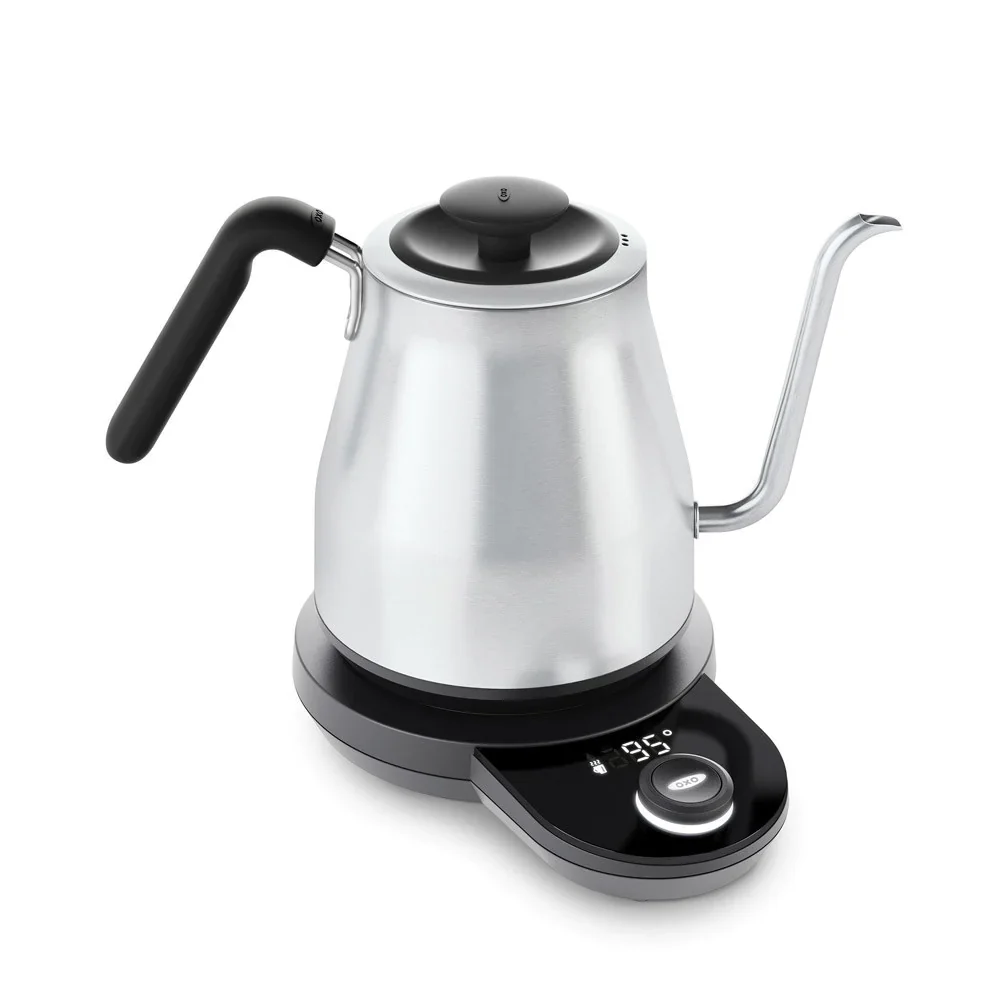
OXO's Variable Temperature Electric Kettle offers precise temperature control for pour-over coffee and tea, with a clear borosilicate glass body and one-dial interface. Reviews noted its fast heating time under five minutes and accurate keep-warm function. The kettle features a removable stainless steel filter and gradual lid opening to control steam, though some users found the dial adjustment too slow for quick changes. It's suited for coffee enthusiasts who value temperature precision but may not appeal to those seeking rapid adjustments.
Full review
Fast boiling performance
The kettle delivers rapid heating, bringing 500 mL of water from 57°F to boiling temperature in just under three minutes. This speed is achieved through a 1500 W heating element, which represents the maximum wattage typically supported by standard US household circuits. The efficiency translates to time savings that accumulate over daily use, potentially adding up to more than 13 hours annually for the average coffee drinker who brews multiple cups per weekday. The OXO Brew's boiling speed ranks it at the top of the pack among gooseneck kettles tested, making it particularly appealing for users who value quick preparation times.
In practical testing, the kettle consistently reached target temperatures within a few minutes, even when set to specific pour-over coffee temperatures like 200°F. Users noted that the kettle heats water quickly enough to rival microwave performance, which is significant for those who need hot water for tea or coffee but want to avoid the inconvenience of waiting for a microwave. The fast boil time is especially useful for those who brew multiple cups or prepare beverages on the fly, where every second counts in maintaining a consistent routine.
The kettle's performance in boiling speed is not just about raw time; it's about user experience. When preparing a full liter of water, the kettle completes the process in under five minutes, which is notably faster than many stovetop alternatives. This rapid heating capability is a standout feature for users who frequently prepare beverages and want to minimize wait times. The kettle's ability to maintain this speed while still providing precise temperature control makes it a strong choice for those who prioritize both efficiency and accuracy.
Temperature accuracy and consistency
For green tea brewing, the kettle consistently heated water to approximately 6.5°F warmer than the recommended 175°F target, which is a minor but noticeable offset. This slight variance, while not ideal for delicate teas, does not detract from the kettle's overall performance. The consistency in heating is what matters most, as users can easily compensate by setting the temperature a few degrees lower or allowing the water to cool briefly before pouring. The kettle's ability to maintain a stable temperature once the target is reached is a key strength, especially for those who rely on precise brewing temperatures.
In tests for pour-over coffee, the kettle maintained its set temperature effectively, reaching 200°F in a timely manner. The temperature accuracy is sufficient for most brewing applications, though it does not match the precision of some high-end competitors. For users who are particular about exact temperature control, this slight deviation may be a consideration. However, the kettle's consistency in maintaining the selected temperature makes it suitable for regular use, especially for those who don't require micro-precision in their brewing process.
The temperature memory resets upon unplugging the base, which means users must reselect their desired temperature each time. While this is a minor inconvenience, it does not significantly impact the kettle's usability. The kettle's temperature holding function lasts up to 30 minutes, as Crate & Barrel's listing notes, which is adequate for most users who need to prepare multiple cups or take brief breaks during brewing. This feature is particularly helpful for those who want to ensure their water stays at the right temperature without constant monitoring.
Pouring performance and design
The kettle's pour performance is one of its strongest features, with a well-designed gooseneck spout that allows for precise control during brewing. The handle is non-slip and stays cool to the touch, which is essential for safe handling during use. The lid opens slowly to prevent sudden steam bursts, which is a thoughtful design element that enhances user safety and prevents scalding. The spout's design is particularly effective for pour-over coffee, where the flow rate and direction are critical for optimal extraction.
The 360° swivel base allows for cord-free mobility, which is a practical advantage for users who need to move the kettle around their kitchen. The handle's ergonomics are well-suited for most hand sizes, though users with larger hands may find it slightly narrow. The overall design is functional rather than ornate, focusing on usability and performance. The kettle's clear borosilicate glass body allows users to monitor water levels and observe the boiling process, which is a helpful feature for those who want to ensure they have the right amount of water before brewing.
The kettle's design includes a removable stainless steel filter built into the spout, which effectively strains out any residual particles during pouring. This feature is particularly useful for those who want to avoid any impurities in their final beverage. The filter is easy to remove and clean, contributing to the kettle's overall ease of maintenance. The kettle's build quality is solid, with the borosilicate glass proving resistant to thermal shock and showing no signs of fogging or staining after extended use.
User interface and control simplicity
The kettle features a straightforward one-dial interface with a backlit screen that displays the selected temperature in either Fahrenheit or Celsius. The simplicity of the control system is a significant advantage for users who want a no-fuss approach to temperature control. Setup is plug-and-play, with no complicated instructions required. Users can quickly adjust the temperature and begin brewing without any confusion or delays.
While the dial interface is sleek and easy to use, it does not offer the quick adjustments that some users might prefer. The scrolling mechanism is smooth but not particularly snappy, which could be a minor drawback for those who frequently adjust temperatures. However, the interface's simplicity is a strength for users who value clarity and ease of use over advanced features. The kettle does not include programmable presets or app connectivity, which may be a limitation for tech-savvy users but is offset by its reliable performance and straightforward operation.
The temperature memory resets upon unplugging the base, which means users must reselect their desired temperature each time. This is a minor inconvenience but does not significantly impact the kettle's usability. The kettle's interface is intuitive enough that most users can quickly learn how to operate it without referring to instructions. The simplicity of the control system makes it accessible to a wide range of users, from beginners to experienced coffee enthusiasts.
Value and market positioning
Priced in the mid to upper tier for electric kettles, the OXO Brew sits close to competitors like the Breville IQ kettle and Quizinart Perfect Temp. The kettle's positioning is clear: it offers precision and ease without the complexity of advanced features. It focuses on reliability and clarity, making it a strong choice for users who prioritize straightforward controls and visual water levels. The kettle's value proposition is particularly strong for those who care about temperature consistency and brewing precision.
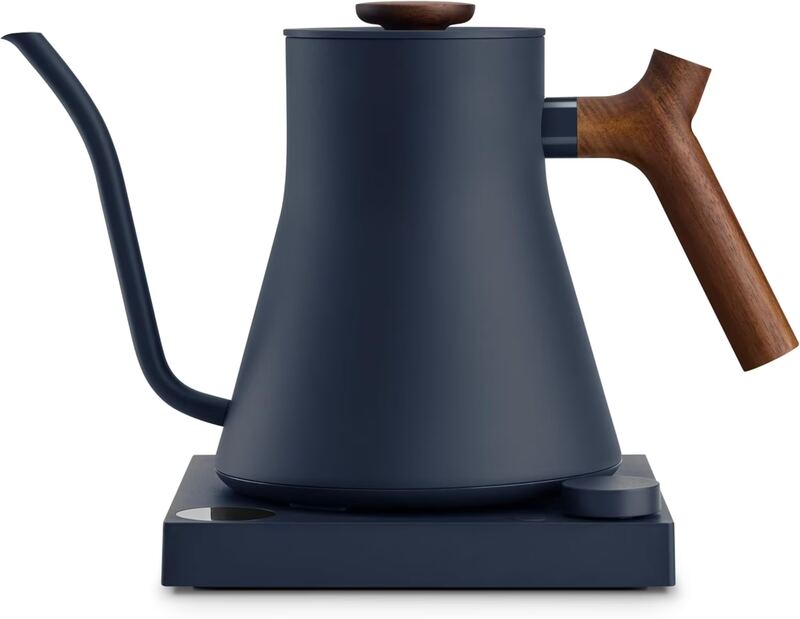
Compared to the Breville IQ, the OXO Brew offers similar temperature control but with a more minimalist approach. The Breville offers more presets and a premium design, but the OXO provides a simpler, more user-focused experience. The Fellow Stag EKG is another competitor that brings more design flair and gooseneck control, but it trades away volume and glass visibility. The OXO Brew strikes a balance between functionality and aesthetics, making it a solid choice for those who want clarity and straightforward controls without the added complexity.
The kettle's build quality is solid, with the borosilicate glass earning high marks for durability and resistance to thermal shock. The stainless steel filter is well-constructed and holds up to regular rinsing. While the plastic base feels slightly more functional than premium, there are no durability red flags. The kettle's overall design reflects OXO's reputation for thoughtful kitchen design, and it feels like it will last. Customer support is generally responsive, and the replacement policy is user-friendly, which adds to the kettle's appeal for those who want reliable service.
Strengths
- +One-dial interface with backlit screen for setting temperature between 170°F to 212°F
- +Keep warm function lasts 30 minutes with accurate temperature alerts
- +Removable stainless steel filter in the spout for straining particles during pouring
Watch-outs
- −Steam control opens lid gradually, which may slow down the pouring process
How it compares
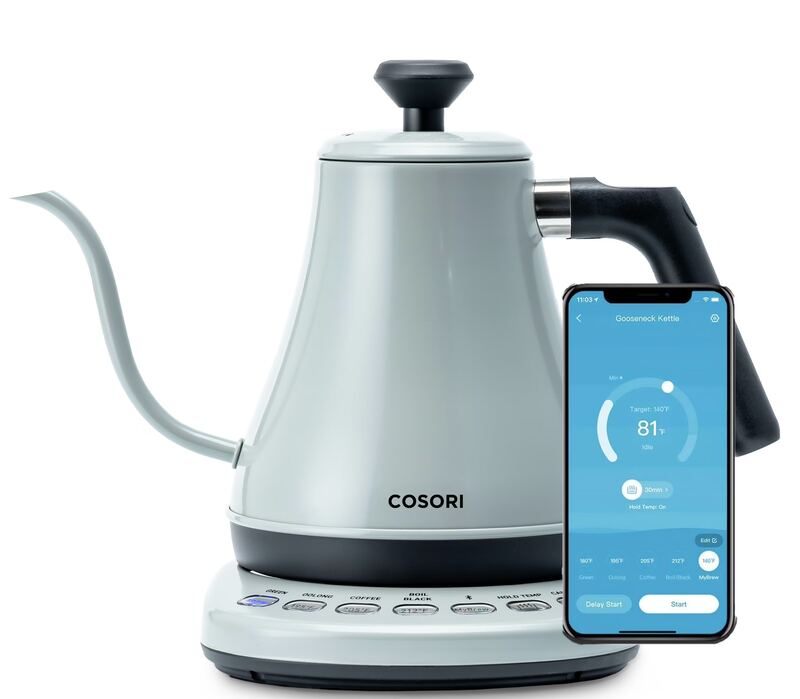
The Oxo Variable Temperature Electric Kettle provides a clear borosilicate glass body and one-dial interface with backlit screen, features not present in the Cuisinart CPK-17P1 which lacks a digital display. However, unlike the Fellow Stagg EKG Pro that offers precise temperature control to a single degree Fahrenheit, the Oxo's dial adjustment is slow for quick changes, and it doesn't have the scheduling feature of the Cosori.
Rating sources
Counts as 4.34/5 in our score — this publisher's 138 scores on the site average 3.66, so its scores are adjusted up to compare fairly with other publishers.
“This fast boiling gooseneck kettle delivers good results across the board and excels in comfort and pouring performance.”
Our 4.3 score is the average of the 1 scored review above, each adjusted for how strictly its publisher scores; 2 more reviewed it without printing a score and are not in the average. More about methodology.