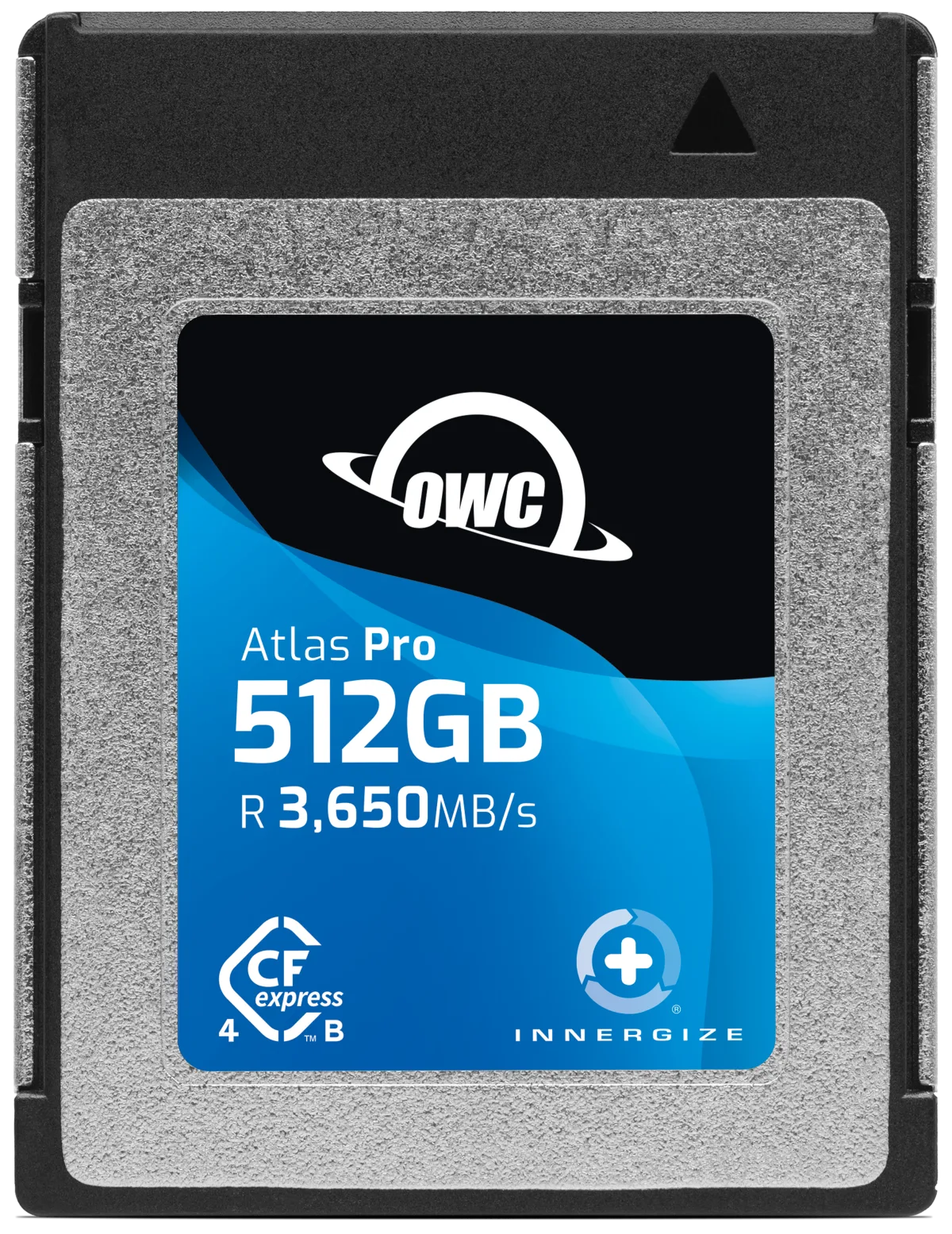
The OWC Atlas Pro CFexpress 4.0 Type B memory card delivers exceptional performance with peak write speeds up to 3,000MB/s and read speeds up to 3,650MB/s, making it ideal for professional photographers and filmmakers capturing 6K video or shooting at high frame rates. It offers robust durability against environmental challenges and supports sustained write speeds up to 800MB/s, though its $399.99 price point and requirement for a separate USB4 reader for full performance may deter some users. This card is particularly beneficial for those working with Sony Alpha cameras and other high-end systems that demand fast data throughput.
Full review
Peak performance benchmarks
OWC Atlas Pro CFexpress 4.0 Type B cards deliver theoretical peak performance figures that exceed previous generation CFexpress 2.0 cards by substantial margins. According to fotocare.com, the 512 GB model achieves up to 3,000 MB/s write speeds and 3,650 MB/s read speeds when tested in an Ableconn PEX-CF106 PCIe 3.0 x4 Host Adapter Card on a Gigabyte Aorus Master X570 motherboard with an AMD Ryzen 9 5950X 4.9GHz CPU and 32GB RAM, running Windows 10 Pro using Crystal Disk Mark with a 1GB file size. The sustained write speed reaches up to 800 MB/s, which the manufacturer considers a reliable performance benchmark for real-world workflows. These numbers were achieved under controlled testing conditions and may vary depending on host hardware, software, usage, and specific card model.
Shutter Muse's Dan Carr confirmed these performance figures through his own testing using AJA and Blackmagic speed testing tools, noting that the card consistently delivered maximum read speeds of 3,650 MB/s and maximum write speeds of 3,000 MB/s. This level of performance enables photographers and videographers to capture high-bitrate 6K video and maintain faster buffer clearing during continuous shooting sessions, particularly beneficial for action sports and wildlife photography where rapid burst rates are common.
Real-world workflow advantages
The workflow benefits of CFexpress 4.0 cards become apparent when paired with compatible USB4 readers, as demonstrated by the OWC Atlas USB4 card reader. Hudson Henry Photography noted that upgrading to a CFexpress 4.0 card and reader with USB4 40Gb/s Type-C connection yields significant improvements in file ingest time, reducing the duration needed for transferring large volumes of data from cameras. For example, a 15,000 RAW 45 Megapixel image session that previously took 25 minutes with USB 3.2 readers was reduced to just 6 minutes with the CFexpress 4.0 setup. This workflow enhancement translates to meaningful time savings during post-production, especially when handling large volumes of 8K N-RAW HQ video or 6K Blackmagic BRAW footage.
OWC's own testing data indicates that the Atlas Pro CFexpress 4.0 Type B card can process 68 minutes of 6K Blackmagic BRAW video in Q0 compression at 30fps in just 5 minutes and 38 seconds, compared to 24 minutes and 23 seconds with a USB 3.2 reader. Similarly, 23 minutes of 8K N-RAW HQ video at 60fps with a Nikon Z9 was completed in 5 minutes and 51 seconds, versus 24 minutes and 10 seconds using older technology. These time savings are particularly valuable for professionals who work under tight deadlines or need to quickly move through large datasets in post-production workflows.
Build quality and durability standards
The physical construction of the OWC Atlas Pro CFexpress 4.0 Type B card emphasizes durability and protection against environmental stressors. According to fotocare.com, the card is designed to withstand x-rays, UV rays, shocks, drops, and extreme temperatures, with specifications indicating it can operate in ambient temperatures ranging from 10.4°F to 161.6°F (-12°C to 72°C). The card's metal casing provides robust protection, making it significantly more durable than typical SDXC cards with their thin plastic bodies. This enhanced build quality ensures data integrity during demanding shooting conditions, particularly important for professionals who may encounter harsh environments or frequent handling during shoots.
Fstoppers' Alex Coleman highlighted the card's impact, bend, shock, ESD, UV, and x-ray resistance, which is backed by a three-year warranty. The metal casing design not only improves durability but also contributes to better heat dissipation compared to older CFexpress 2.0 cards. This thermal management advantage minimizes thermal throttling during long read and write sessions, maintaining consistent performance even under sustained workloads. The card's robust construction makes it suitable for professional use in challenging environments where standard memory cards might fail.
Compatibility and ecosystem integration
The CFexpress 4.0 Type B card maintains backward compatibility with existing CFexpress 2.0 devices, though performance will be limited to 2GB/s speeds when used with older hardware. This compatibility ensures that users can transition gradually to newer technology without discarding existing equipment. However, to fully leverage the 4.0 specification's advantages, users must pair the card with a CFexpress 4.0 reader that supports USB4 connections, such as the OWC Atlas USB4 card reader. The reader's fanless design and aluminum body contribute to cooler operation, which is essential for maintaining peak performance during extended use.
The OWC Atlas USB4 card reader supports multiple connection standards including USB4, USB 3.2, Thunderbolt 4, and Thunderbolt 3, making it versatile for various systems. It features a sleek design that matches Apple's aesthetic language, with rounded corners and an aluminum body. The device includes a switch for enabling Innergize support, which enhances compatibility with older macOS versions. The reader also provides health monitoring, sanitization, and field firmware upgradability through OWC Innergize software, offering users tools for maintaining optimal card performance over time.
Sony-specific performance and use cases
For Sony camera users, the OWC Atlas Pro CFexpress 4.0 Type B card offers significant advantages in terms of buffer clearing and video recording capabilities. YouTube reviewer noted that the card supports continuous raw photography at 20 to 30 frames per second, where buffer clearing is crucial. The VPG200 certification ensures compatibility with Sony's cameras that require specific video rating standards, such as the A1 for 8K high-bitrate recording.
The card's performance is especially valuable when used with Sony's faster cameras like the A1 and A9 III, which put significant strain on sustained write speeds during high-frame rate shooting. The reviewer emphasized that good Type A cards can deliver up to 5x the speed of good SDXC cards, making a substantial difference in buffer clearing and overall shooting experience. The card's compatibility with Sony's FX3, FX6, A9 III, and A7R V cameras makes it a strong choice for professionals working in demanding shooting environments where speed and reliability are paramount.
Cost considerations and value proposition
The pricing of OWC Atlas Pro CFexpress 4.0 Type B cards reflects their high-performance capabilities and premium build quality. These prices position the cards in the premium segment of the memory card market, where performance and reliability are prioritized over cost. The investment is justified by the significant workflow improvements and reduced data transfer times, particularly when paired with compatible USB4 readers.
While the initial cost may seem high, the time savings and performance gains in post-production workflows make the investment worthwhile for professionals who handle large volumes of data. The card's ability to reduce offload times from minutes to seconds, as demonstrated by real-world testing, translates into tangible productivity improvements. For photographers and videographers who work with high-bitrate formats or need to maintain fast buffer clearing during continuous shooting, the performance advantages of the OWC Atlas Pro CFexpress 4.0 Type B card justify the premium pricing.
Strengths
- +Delivers peak write speeds up to 3,000MB/s and read speeds up to 3,650MB/s
- +Supports sustained write speeds up to 800MB/s for professional workflows
- +Durable design resistant to shocks, drops, extreme temperatures, UV rays, and X-rays
- +Backward compatible with CFexpress 2.0 devices and suitable for high-end cameras like Sony FX3 and FX30
Watch-outs
- −Expensive, priced at $399.99 for the 512GB model
- −Requires OWC USB4 reader for full speeds, which is not included
How it compares
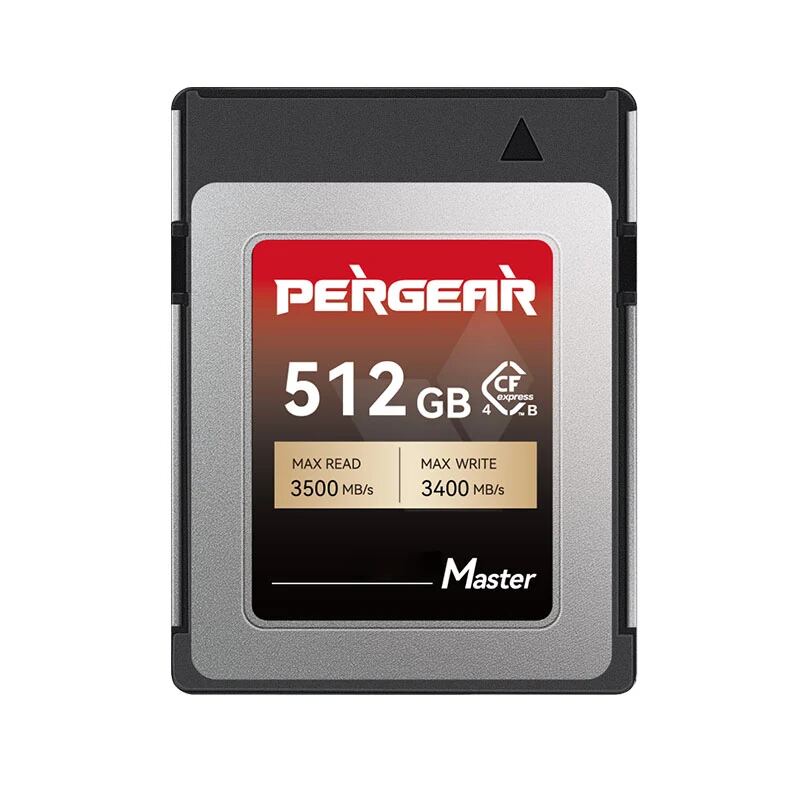
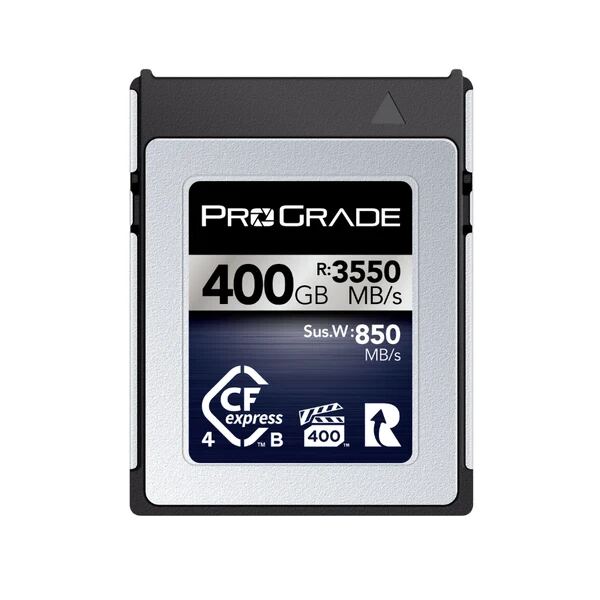
The OWC CF Exp B 4.0 512 GB card delivers peak write speeds up to 3000 MB/s, matching the performance of the ProGrade Iridium card. Its premium pricing at $399.99 makes it less competitive compared to the more affordable Pergear 512GB card.
Rating sources
“Overall, really recommend these cards for anyone who's looking for a reliable option with larger sizes like 512 GB.”
“That's pretty amazing, all right? So, that's the Pergear 2.1 GB write. What was it? 2. 9 2.9 GB read. That's pretty amazing, all right?”
Our 4.5 score is the average of the 2 scored reviews above; 1 more reviewed it without printing a score and is not in the average. Ratings marked * were derived from the reviewer’s written analysis or video transcript — the publisher didn’t print an explicit numeric score, so we inferred one from their own words. Click through to verify. More about methodology.