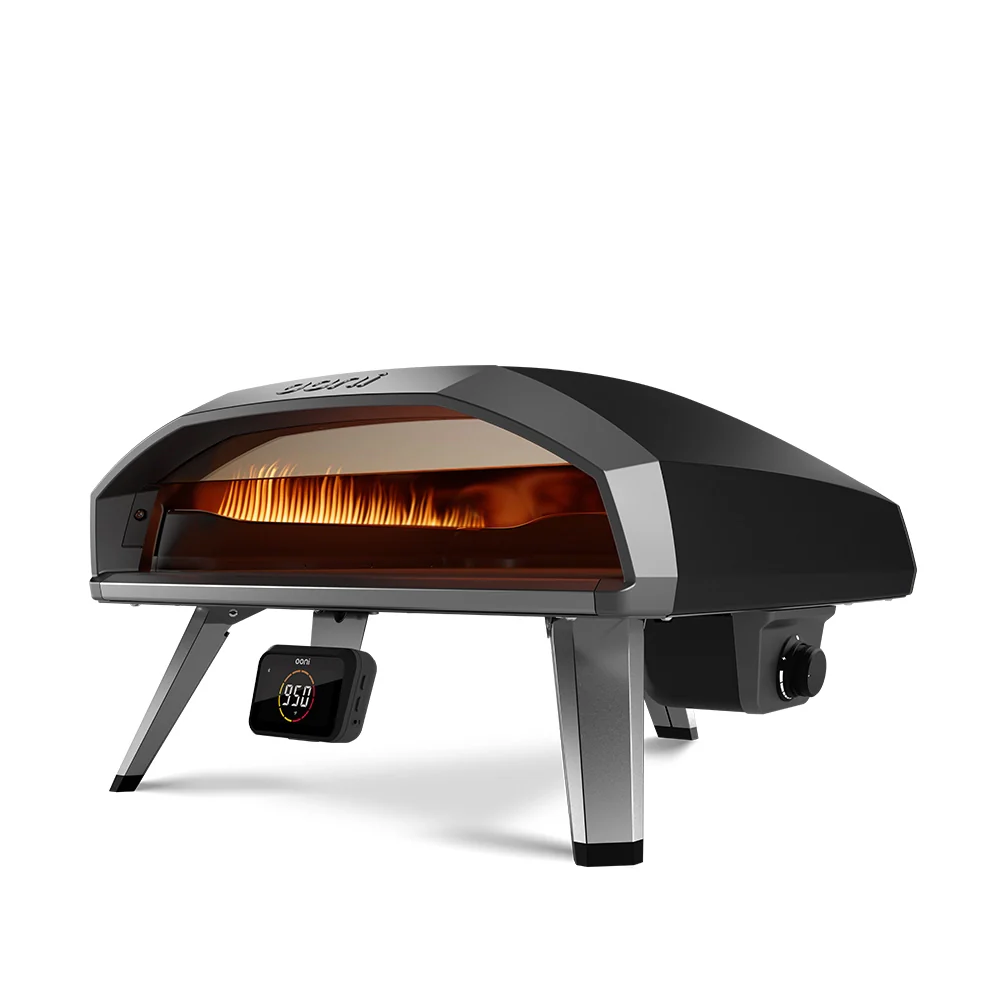
Reviewers describe the Ooni Koda 2 Pro as a 'monster' upgrade over the Koda 16, crediting its 33,000 BTU dual-side burner with intense, even heat that handles 18-inch pizzas and steaks. The larger 18.5-inch stone and taller opening add capacity and range, though users report a longer preheat (about 35 minutes) and a notably heavier 60 pounds. Managing timing and rotation under that much heat takes practice; the payoff is better browning and crust. Serious home cooks who want professional-grade results and have room for a heavy unit are the audience. Anyone who cares more about quick heat-up or portability should stay with the older Koda 16.
Full review
Massive Cooking Surface and Design
The Ooni Koda 2 Pro represents a significant physical departure from its predecessor, the Koda 16, primarily through its expanded dimensions and weight. Kevin Hansen of Pala Pizza notes that the new model features an effective cooking space of approximately 18.5 inches by 18.5 inches, allowing for the preparation of full-sized 18-inch monster pizzas. This represents a roughly 25 percent increase in cooking area compared to the previous generation. The pizza stone itself is about 33 percent thicker, contributing to a total unit weight of approximately 60 pounds, up from 40 pounds for the Koda 16. While the added heft improves thermal stability, it does make the oven considerably less portable than the compact Koda 2, which weighs just over 35 pounds. The larger opening, measuring over five inches high when the glass cover is removed, also provides more clearance for launching larger pies or inserting pans for non-pizza cooking tasks.
Dual-Burner Heating Performance
The most significant engineering change in the Koda 2 Pro is the transition from an L-shaped burner to a powerful dual-side burner system rated at 33,000 BTUs. This configuration allows heat to strike the stone from both sides, which Hansen reports results in more even heating across the surface compared to the older model. However, the increased mass of the stone means the oven takes longer to reach peak temperatures. Hansen recorded a preheat time of approximately 35 minutes to reach 940 degrees Fahrenheit on a warm summer day. In contrast, the smaller Koda 2 reached over 800 degrees in just 20 minutes and hit 900 degrees by the 30-minute mark. Serious Eats reviewer Grace Kelly, testing the even larger Koda 2 Max, noted that despite its size, that model hit 850 degrees in 38 minutes, suggesting that Ooni’s larger gas ovens maintain competitive heating speeds relative to their thermal mass. The intensity of the dual burners is described as overwhelming, requiring users to be cautious with long-handled tools when the flame is cranked to maximum.
Pizza Cooking Versatility and Results
In practical cooking tests, the Koda 2 Pro demonstrated exceptional versatility across different pizza styles. Hansen successfully cooked 18-inch New York-style pizzas using a 62 percent hydration dough, achieving a dark, leopard-spotted undercarriage by managing the flame intensity. For Neapolitan-style pizzas with 65 percent hydration dough, the oven delivered rapid cook times of approximately 90 seconds when the flame was set to just over halfway up. Hansen emphasized the importance of positioning Neapolitan pies closer to the front of the oven to prevent the tops from charring too quickly, a common issue with high-heat ovens. Serious Eats highlighted similar dynamics with the Koda 2 Max, noting that thin Neapolitan pizzas cooked in as little as 22 seconds, often resulting in scorched toppings if the heat was not reduced after launching. The dual-burner system also allows for temperature zoning, enabling users to cook different styles simultaneously, such as a Detroit-style pan pizza on one side at a lower temperature while baking Neapolitan pies on the other at high heat.
Usability and Learning Curve
While the Koda 2 Pro is powerful, it demands a higher level of skill and attention than smaller or less intense ovens. The Mediocre Chef blog, which tested the smaller Koda 2, noted that cooking at 850 degrees Fahrenheit is initially intimidating for beginners, with early attempts often resulting in undercooked or burnt pizzas due to timing errors. They emphasized the critical need for semolina flour on the peel to ensure a clean launch and advised waiting for the pizza to release from the stone before attempting to rotate it. Hansen echoed these sentiments for the Koda 2 Pro, stating that users must be more aware of heat distribution and rotate pizzas accordingly to achieve even browning. The intense heat radiating from the dual burners requires precise handling, and the larger opening, while beneficial for clearance, can make it challenging to manage the flame without proper technique. Users are advised to practice with simpler doughs and toppings before attempting complex or large-format pies.
Build Quality and Thermal Retention
The construction of the Koda 2 Pro prioritizes durability and heat retention over portability. The thicker stone and heavier frame contribute to a more stable cooking environment, reducing temperature fluctuations during use. Hansen observed that the dual-side burner design not only heats the stone more evenly but also maintains consistent temperatures better than the previous L-shaped burner. This improved thermal stability is crucial for achieving the desired char and texture in pizza crusts. However, the increased weight of 60 pounds means the oven is not easily moved around, making it better suited for a fixed outdoor kitchen setup rather than frequent transport. The materials used are robust, with a design that withstands high temperatures and outdoor conditions, ensuring long-term reliability for serious home cooks.
35-minute preheat, twice the Koda 2's time
Despite its impressive performance, the Koda 2 Pro has notable drawbacks. The primary concern is the longer preheat time compared to smaller models, which can be inconvenient for spontaneous cooking sessions. Hansen noted that it took 35 minutes to reach 940 degrees, whereas the Koda 2 reached similar temperatures in half that time. Additionally, the intense heat from the dual burners can be difficult to manage, leading to burnt toppings if users are not careful with flame adjustment and pizza positioning. The Mediocre Chef blog highlighted the steep learning curve for beginners, with early attempts often resulting in charred or undercooked pizzas. The weight of the oven also limits its portability, making it less suitable for users who want to move their oven frequently. Finally, the larger size requires more storage space, which may be a consideration for those with limited outdoor areas.
Dual burners suit Neapolitan, New York, and Detroit styles
The Ooni Koda 2 Pro is ideal for serious home cooks and pizza enthusiasts who prioritize cooking large, restaurant-quality pizzas and have the space and experience to handle a high-performance oven. It is particularly well-suited for those who enjoy experimenting with different pizza styles, from Neapolitan to New York and Detroit, and appreciate the versatility of a dual-burner system. Users who value even heating and consistent results will find the thicker stone and improved burner design beneficial. However, it is not recommended for beginners who are new to pizza making, as the intense heat and rapid cook times require a certain level of skill and attention. Those with limited outdoor space or who need a highly portable oven should consider smaller models like the Koda 2 or Koda 12. Ultimately, the Koda 2 Pro is a premium choice for dedicated pizza lovers who want to elevate their home cooking experience.
Value and Competitive Positioning
Priced at $799, the Ooni Koda 2 Pro sits in the mid-to-high range of outdoor pizza ovens, offering a balance of performance and features that justify its cost for many users. Compared to the Koda 16, which retails for $649, the Pro model offers a significantly larger cooking area, improved heating technology, and better thermal stability, making it a worthwhile upgrade for those seeking enhanced capabilities. The Koda 2 Max, priced at $1,299, provides an even larger cooking surface and dual stones, but at a substantially higher price point. For users who do not need the maximum size, the Koda 2 Pro offers a compelling middle ground, delivering professional-grade performance without the premium cost of the largest model. The inclusion of a dual-burner system and the ability to cook 18-inch pizzas make it a strong contender in the market, appealing to those who want to cook for larger groups or experiment with diverse pizza styles.
Strengths
- +Features a powerful 33,000 BTU dual-side burner that heats the stone more evenly than the previous L-shaped design.
- +Offers a significantly larger cooking area (approx. 18.5" x 18.5"), allowing for 18-inch pizzas and a 25% increase in space over the Koda 16.
- +Includes a thicker stone (33% thicker) and a taller opening (over 5 inches), providing better heat retention and more room for cooking items like steak.
- +Delivers intense heat capable of producing a steakhouse-worthy crust and cooking Neapolitan pizza in roughly 90 seconds.
Watch-outs
- −The larger, heavier stone requires a longer preheat time (around 35 minutes) compared to the previous generation.
- −The unit is significantly heavier at approximately 60 pounds, making it less portable than the 40-pound Koda 16.
- −The intense heat from dual burners requires careful monitoring and rotation to prevent burning the top of the pizza.
How it compares
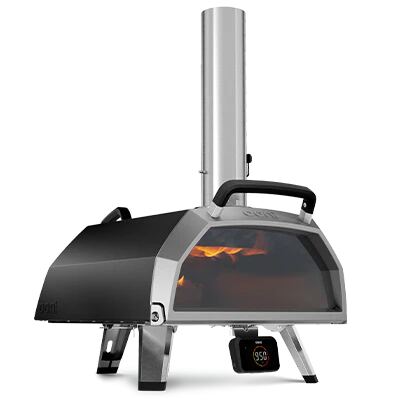
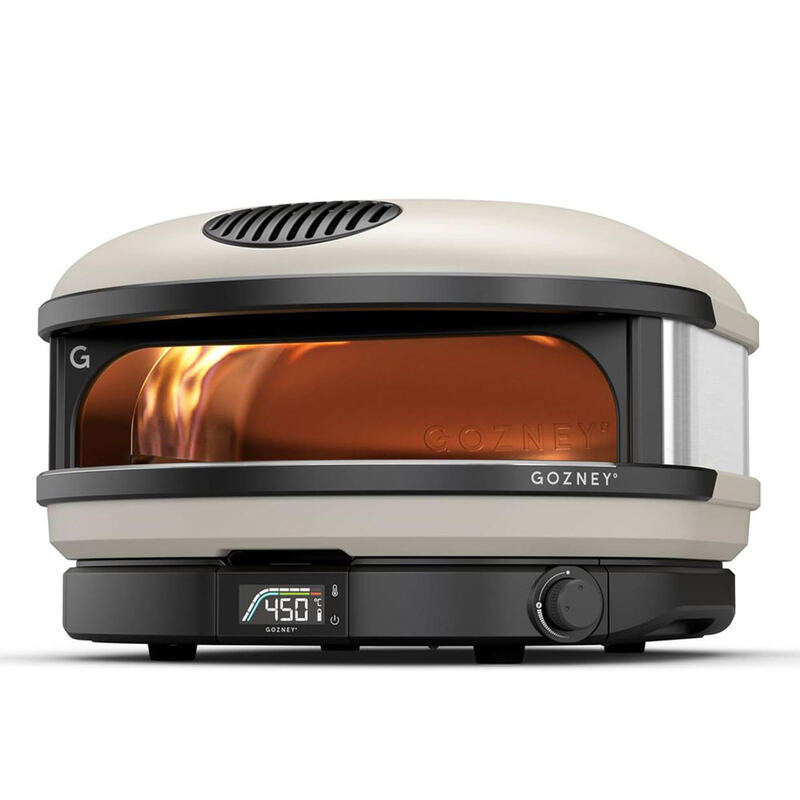
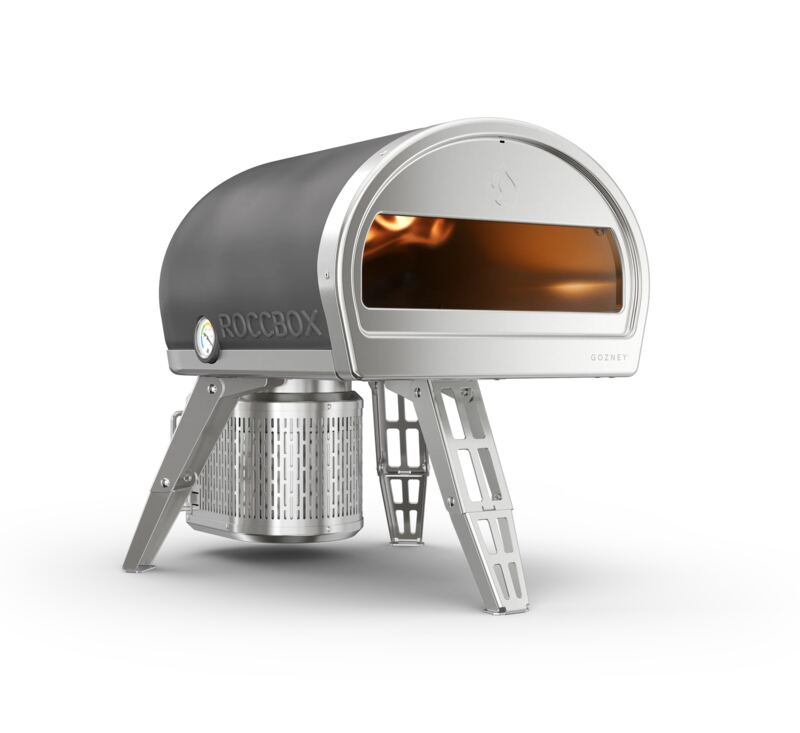
With its massive 18.5-inch cooking area and 33,000 BTU dual burners, the Ooni Koda 2 Pro offers significantly more capacity than the compact Gozney Tread or Roccbox. However, its intense heat requires more careful management than the evenly distributed lateral burners of the Gozney Arc XL, and it lacks the multi-fuel flexibility of the Ooni Karu 2 Pro.
Rating sources
“Our favorite gas-powered pizza oven is the Ooni Koda 2 Pro. It's ridiculously powerful and has a wide opening for easily adding, turning, and removing pies.”
Our 5.0 score is the average of these published ratings. Ratings marked * were derived from the reviewer’s written analysis or video transcript — the publisher didn’t print an explicit numeric score, so we inferred one from their own words. Click through to verify. More about methodology.