The Nuwave PIC Gold is one of the cheapest ways into precise portable induction cooking: a 1500W element with 52 temperature steps from 100°F to 575°F and three selectable wattage levels, all in a roughly 5-pound, sub-14-inch footprint. For the money it heats fast, runs comparatively quiet, and brings real safety features like auto pan-detection. Reviews agree on the trade-offs too: a relatively small 8-inch coil that hot-spots under bigger pans, occasionally wobbly heat-hold, and a ferrous-cookware-only limitation. It suits budget-minded and space-constrained buyers more than anyone chasing professional-grade evenness, where pricier 1800W models like Nuwave's own Pro Chef pull ahead. Treat it as a capable value pick within the compact-induction category rather than a top performer.
Full review
A 1500-Watt Burner in an 1800-Watt Category
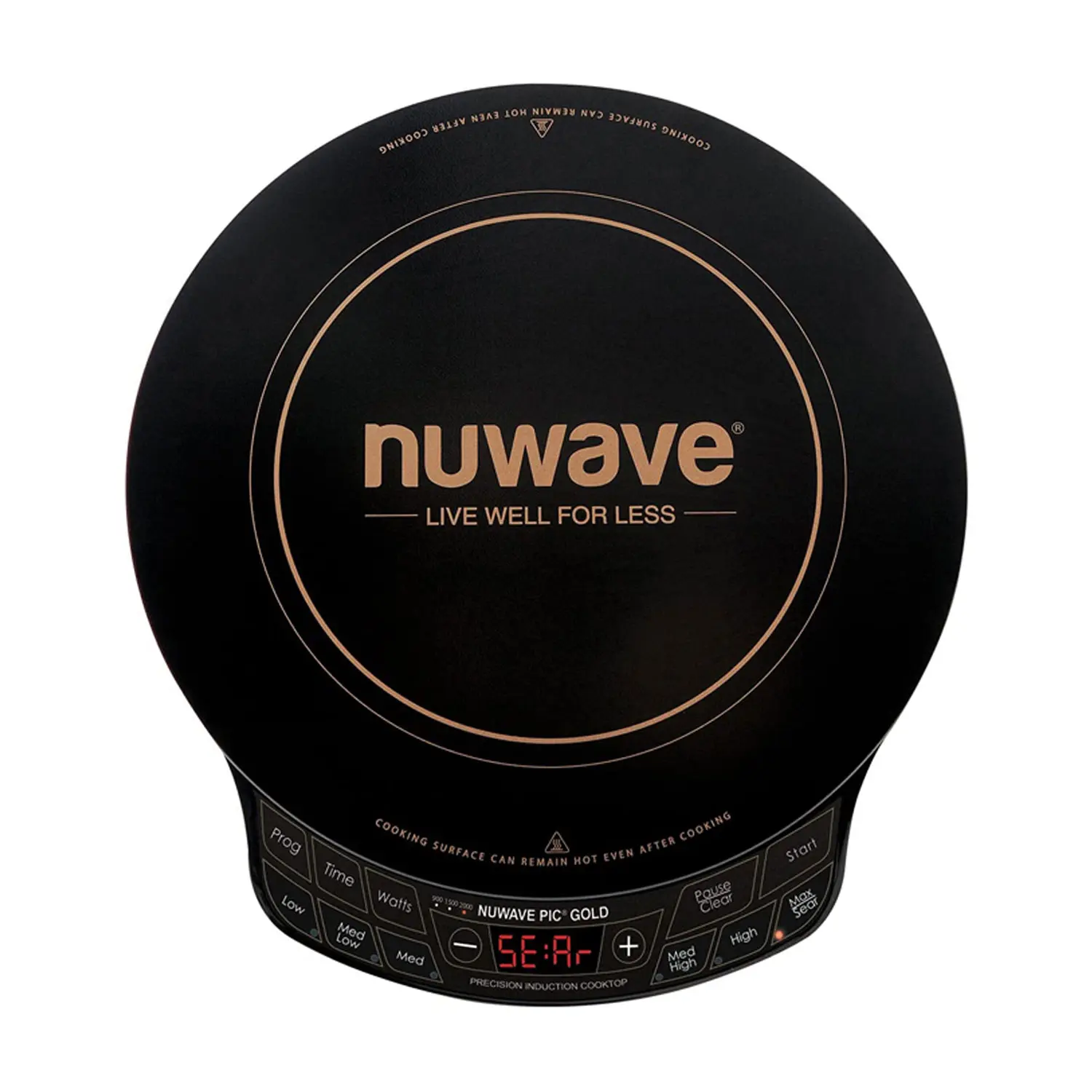
The Nuwave PIC Gold (model 30211, vendor SKU 30211-E) is Nuwave's long-running flagship single-burner portable induction cooktop, and it occupies the budget end of the compact-induction category. Nuwave lists it at $139.99 on nuwavenow.com, though it routinely sells well below $100 through Amazon and Walmart, which is a meaningful part of its appeal. It measures roughly 13.8 by 12.4 by 2.5 inches with a 12-inch ceramic-glass cooking surface, comfortably inside the 24-inch-wide ceiling for this guide and small enough to live in a cabinet between uses.
What separates the PIC Gold from a generic hot plate is genuine induction control. Nuwave advertises 52 temperature settings spanning 100°F to 575°F in 10°F increments, three selectable wattage levels (600W, 900W, and the default 1500W), and six pre-programmed presets. As the comparison site magneticcooky.com summarizes it, the unit "allows you to cook at 52 different temperatures from 100°F to 575°F." For a sub-$100 burner, that is an unusually fine-grained control scheme, even if the real-world heat-hold doesn't always match the on-paper precision.
Heating Performance and Temperature Control
Induction's core advantage is speed and efficiency, and the PIC Gold leans on it: Nuwave claims it transfers roughly 85–90% of its electromagnetic energy directly into the cookware, and inductionselect.com notes induction cooking is "up to 70% more efficient than using gas or traditional electric." In practice, owners report fast boils and responsive changes when you step the wattage down to 600W or 900W for a simmer, which is something single-setting plug-in burners simply can't do.
The temperature precision is the headline feature. inductionselect.com praises it directly: "Temperature control is something that's highly important to any cook, and Nuwave has done a great job. You can choose from 100 – 575 Fahrenheit," and notes you "can pre-program up to 6 different settings." The caveat is that the cooktop targets a setpoint by cycling power rather than holding a perfectly steady output, so at low simmer settings you may see the element pulse on and off rather than maintain a constant gentle heat.
Design, Size, and Portability
At about 5.15 pounds and just two and a half inches tall, the PIC Gold is one of the more travel-friendly precision burners around. The body is black with gold accents, hence the name, and the surface is shatter-proof ceramic glass that wipes clean with a damp cloth. Because heat is generated in the pan and not the glass, spills don't bake on the way they do on a traditional electric coil; magneticcooky.com observes that "spills will not burn and stick to the ceramic glass surface."
The compact footprint is genuinely useful for the people this product targets—dorms, RVs, boats, small apartments, outdoor demos, or as a third burner when a holiday meal overruns the stovetop. It needs only a standard outlet. The flip side of the small body is a single 8-inch heating coil under a 12-inch surface, which has direct consequences for how evenly larger pans cook, covered below.
Safety and Everyday Usability
Safety is one of the PIC Gold's stronger suits and a legitimate reason to prefer induction in a small or shared space. The unit uses auto pan-detection: as magneticcooky.com describes, it will "power off when the pan is removed and not replaced within 10 seconds," and it includes a diagnostic error-message system. Because the glass itself stays comparatively cool, the risk of accidental burns and kitchen fires is lower than with gas or radiant electric.
Day to day, the controls are touch-based with an LED display, and the six presets plus a delay function and a 1-hour resume timer make it reasonably hands-off for staged cooking. inductionselect.com flags one ergonomic quirk for active cooks: if you lift the pan to toss or flip, the auto-shutoff means "you will have to manually switch the heat back on each time," which can interrupt techniques that rely on frequent pan movement.
Cookware Compatibility
This is the single most important thing to understand before buying. Like all induction cooktops, the PIC Gold works only with ferrous (magnetic) cookware. mommacuisine.com states it plainly: the cooktop "functions only with ferrous cookware," and incompatible materials include "glass, ceramic, or ironless metallic pots and pans." If your current pans are aluminum, copper, or glass, they simply will not heat, and you may need to budget for new cookware on top of the burner.
There is also a geometry constraint: induction wants a flat-bottomed pan that roughly matches the coil, so inductionselect.com warns that specialty shapes "won't" work—"if you're currently using square steak pans, you won't be able to use them." A quick test before you buy: if a kitchen magnet sticks firmly to the bottom of a pan, that pan will work on the PIC Gold.
8-inch coil leaves the edges of a 12-inch pan cooler
The most consistent complaint across owner and editorial reviews is heat evenness and stability. The 8-inch coil concentrates heat at the center of the 12-inch surface, so larger pans get a hot center and cooler edges; reviewers describe results like the ends of bacon being undercooked while the middle is done. One long-term owner quoted by mommacuisine.com is blunt: "I have 3 PIC's and not one of them holds a constant heat." If your cooking depends on a wide, perfectly uniform pan temperature, that is a real limitation.
Reliability and support are the other recurring concerns. inductionselect.com notes "a few complaints about Nuwave's customer service (or the lack of it), and mixed reviews on reliability," and some owners report units failing within a year or two. Aggregate retail scores are still high—Walmart shows roughly 4.8 out of 5 across about 686 reviews, with more than 80% at five stars—but the tail of one-star reviews clusters around dead units and inconsistent heat rather than minor gripes. Buyers should weigh the low price against a warranty that is only one year. The fan also produces audible noise under load, though magneticcooky.com still characterizes the unit overall as "quite silent."
Trades peak power for a price near $100
Inside Nuwave's own lineup, the PIC Gold sits below the PIC Pro Chef, an 1800W, NSF-certified, commercial-grade burner with a finer 5°F-increment range and 94 settings that targets heavier or professional use. Reviewers who want maximum power and steadier high-heat performance generally point to the Pro Chef or the PIC Titanium; the Gold's pitch is price and portability, not peak output. For shoppers cross-shopping outside the brand, premium portable units from other makers tend to offer better edge-to-edge evenness and sturdier build, but at a noticeably higher cost.
The honest read is that the PIC Gold competes on value. If the goal is precise, portable induction for occasional or space-limited cooking near the $100 mark, it earns its place in a compact-induction shortlist. If the goal is a daily-driver burner that holds a rock-steady simmer under a large pan, the spec sheet flatters it more than real-world use, and stepping up to a higher-wattage model is the safer choice.
A backup burner for dorms, RVs, and small apartments
The PIC Gold is best for budget-conscious and space-constrained buyers: students in dorms, RV and boat cooks, small-apartment dwellers, and anyone who wants a safe, fast backup burner that disappears into a cupboard. Its strengths—low price, fine temperature steps, light weight, and induction safety—map cleanly onto those needs, and the high volume of positive retail reviews shows it satisfies that audience.
It is a weaker fit for serious home cooks who need uniform high heat across a large pan, who already own non-magnetic cookware they don't want to replace, or who prioritize long-term durability and responsive support. Those buyers should look at Nuwave's 1800W Pro Chef or a higher-end competitor. Bought with realistic expectations—and magnetic pans on hand—the PIC Gold is a sensible value pick rather than a category leader.
The Durability Question Serious Eats Raised
The PIC Gold's previous write-up on this page cited two sites that turned out to be affiliate content rather than testing, and they have been removed. In their place is the one substantive independent assessment available: Serious Eats' Ashlee Redger included it among the 17 portable induction cooktops she tested for a review updated in April 2026, listing it under "The Competition" rather than among her picks. Her note is short and cuts both ways: "The Gold Precision performed well with accurate temperatures and a simple control panel, but it's so lightweight that it feels cheap and makes me question the long-term durability."
That is a genuinely mixed verdict rather than a dismissal, and the first half of it is a real compliment in this category. Redger's central finding across all 17 models was that temperature settings on portable induction burners are frequently misleading, because the sensor reads the pan base rather than the food; a burner she describes as having accurate temperatures is doing better than most of the field. The concern is the build. At around five pounds it is the lightest unit discussed on this page, and light is a virtue right up until it is a proxy for thin materials.
Why the Wattage Gap Matters
Every other cooktop on this page is rated to 1800 watts. The PIC Gold tops out at 1500, with selectable 600W and 900W steps below that. Redger's testing established that even among burners sharing the same 1800-watt ceiling, efficiency varied enough to produce a nine-minute spread on the same gallon-of-water boil — 16 minutes for the Duxtop 9100MC against 25 for the iSiLER. Starting 300 watts lower does not help.
In practice the deficit shows up on volume rather than on technique. Melting butter, holding a sauce, softening onions or cooking for one are all well within 1500 watts, and the 52 temperature steps from 100°F to 575°F give you finer positions on the dial than most rivals offer. Filling a stockpot is where you feel it. Treat the PIC Gold as a precise low-and-medium-heat burner rather than a workhorse and its specification sheet stops looking like a compromise.
The 52 Temperature Settings Are Really About Six
Nuwave's headline specification for the PIC Gold is 52 temperature steps from 100°F to 575°F in 10-degree increments. NYT Wirecutter's Rachel Wharton tested that claim and could not reproduce it. Her finding, from a guide updated in February 2026: "The Nuwave PIC Gold is a larger version of the Nuwave PIC Flex, with slightly more wattage and a larger coil. As with the Flex, I couldn't actually adjust the Gold's temperature in 10-degree increments as promised, and the appliance essentially limited me to just six built-in preset heat levels, which isn't enough for everyday cooking."
That is a serious charge, because the fine increments are the entire reason to choose this burner over a cheaper one. Wharton's own screening standard is a minimum of 15 usable settings, on the grounds that coarse steps make the simmer zone hard to hit; six presets is well below that. Set against Serious Eats' finding that its temperatures were accurate and its panel simple, the reconciliation is that the PIC Gold is precise about the handful of heat levels it actually delivers, and imprecise about how many it claims to have. Buy it as a six-setting burner and it will not disappoint you; buy it for the 52 and it will.
Strengths
- +Inexpensive entry point into induction cooking, with a manufacturer MSRP around $139.99 and frequent street prices below $100, far cheaper than most precision portable burners.
- +Genuinely fine temperature control: 52 temperature settings from 100°F to 575°F in 10°F increments, with six pre-programmed presets for common tasks.
- +Selectable wattage (600W, 900W, or the default 1500W) lets you dial down power for gentle simmering rather than just cycling a single element on and off.
- +Lightweight and compact at roughly 5 lb and about 13.8 x 12.4 x 2.5 inches, so it stows in a cupboard and travels easily for dorms, RVs, or demos.
- +Built-in safety logic: auto pan-detection shuts the unit off if cookware is removed and not replaced within about 10 seconds, and the surface stays comparatively cool since heat is generated in the pan.
Watch-outs
- −Wirecutter could not access the advertised 10-degree temperature increments at all, finding the burner effectively limited to six preset heat levels — "which isn't enough for everyday cooking"
- −Serious Eats found it so lightweight that it "feels cheap" and questioned how long it would last
- −1500W ceiling is 300 watts below every other cooktop on this page
- −Neither Wirecutter nor Serious Eats recommends it — both placed it in their also-ran sections
- −Works only with ferrous (magnetic) cookware; glass, ceramic, aluminium and copper pans will not heat at all
- −The single 8-inch coil concentrates heat at the centre, so larger pans cook unevenly toward the edges
- −Sold out on Nuwave's own store as of 2 August 2026, leaving Amazon as the practical source
How it compares
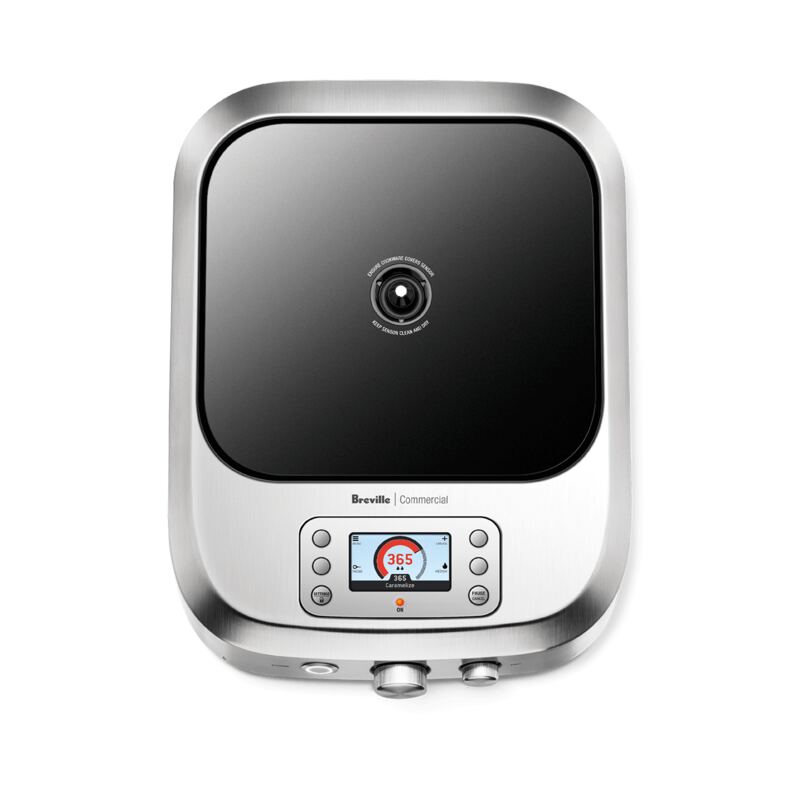
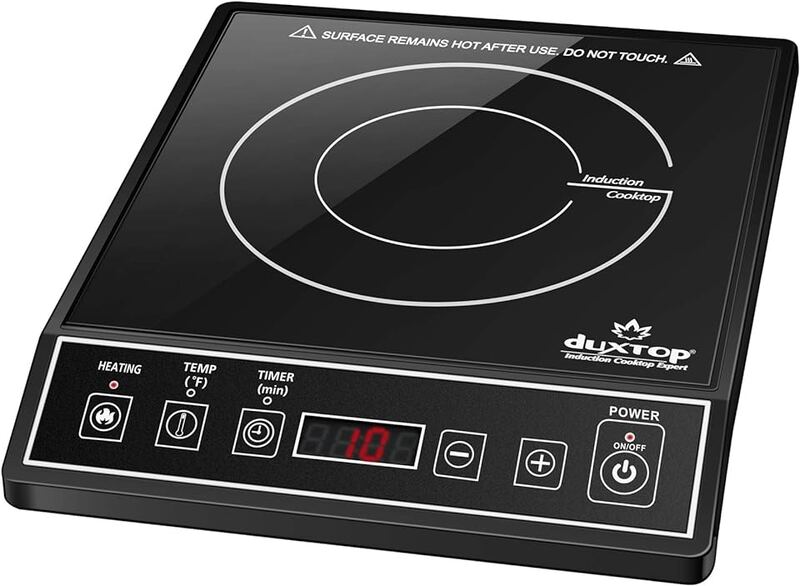
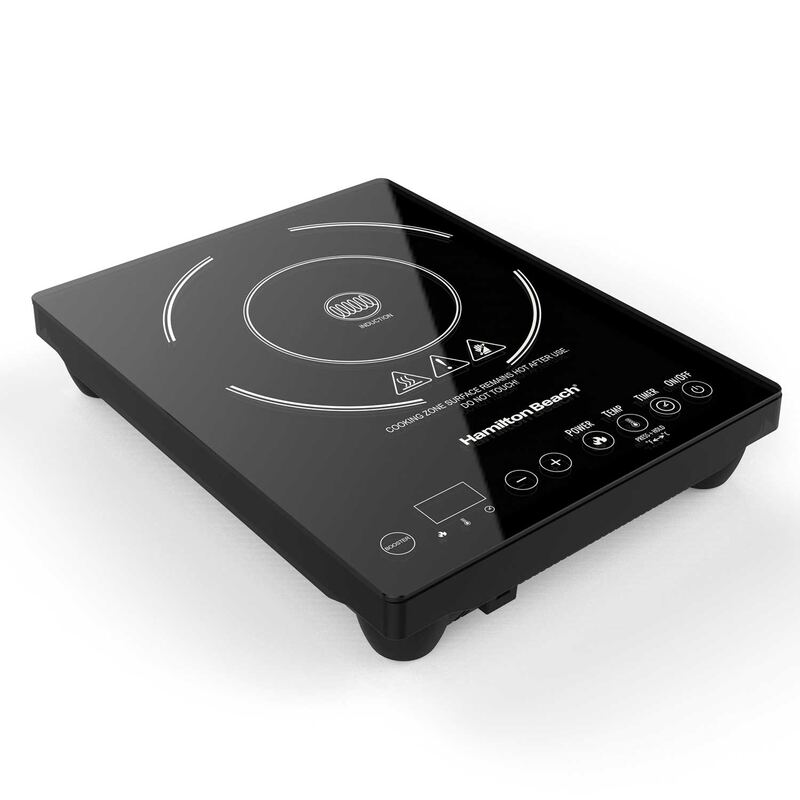
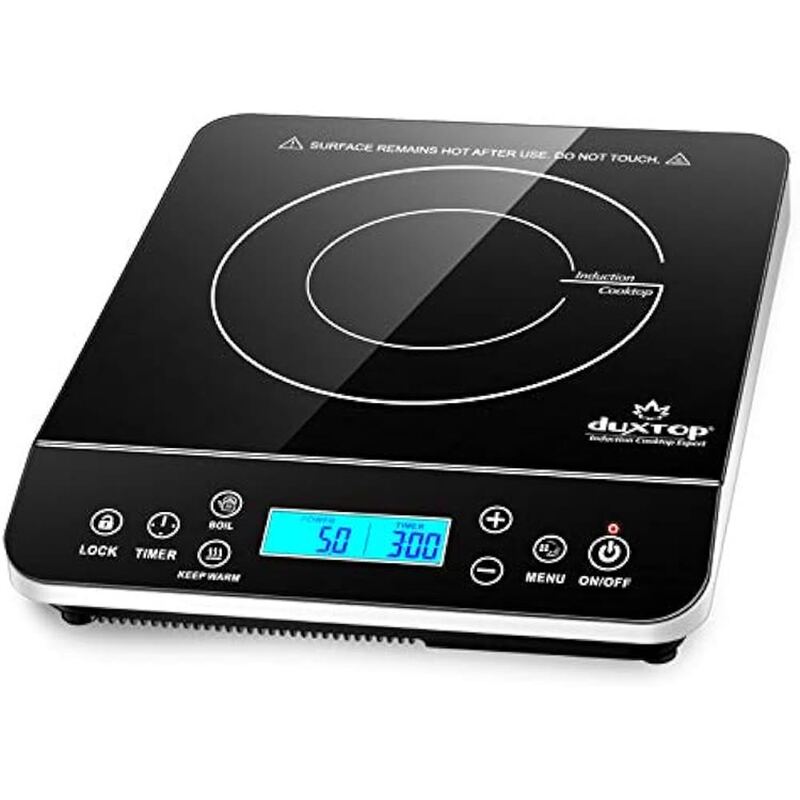
The PIC Gold's control panel is one of the simplest here and Serious Eats found its temperatures accurate, but it is the only cooktop on this page rated below 1800 watts and the only one two separate testers declined to recommend. The Duxtop 9100MC and Hamilton Beach 34104 are sturdier and faster for similar money; the IKEA TILLREDA is simpler still and cheaper; the Duxtop 9600LS offers 20 real settings where this one advertises 52 and delivers about six; and the Breville Control Freak CMC850 Induction Cooktop is in a different class entirely.
Rating sources
“As with the Flex, I couldn't actually adjust the Gold's temperature in 10-degree increments as promised, and the appliance essentially limited me to just six built-in preset heat levels, which isn't enough for everyday cooking.”
“The Gold Precision performed well with accurate temperatures and a simple control panel, but it's so lightweight that it feels cheap and makes me question the long-term durability.”
Our 3.3 score is the average of these published ratings. Ratings marked * were derived from the reviewer’s written analysis or video transcript — the publisher didn’t print an explicit numeric score, so we inferred one from their own words. Click through to verify. More about methodology.