The MSR DynaLock Ascent Carbon Backcountry Poles come close to the right balance of toughness, comfort, and packability, and they work across four seasons and a range of activities. Reviewers credited the Kevlar-reinforced carbon shafts for surviving heavy use with no breaks or cracks. A button-controlled folding mechanism gets them down to a compact packed size, and the EVA foam grips are comfortable. Testers did note they weigh more than most folding poles and pick up scratches quickly. Serious backcountry users who rank durability above ultralight weight will be happy.
Full review
Survived repeated bashing against granite
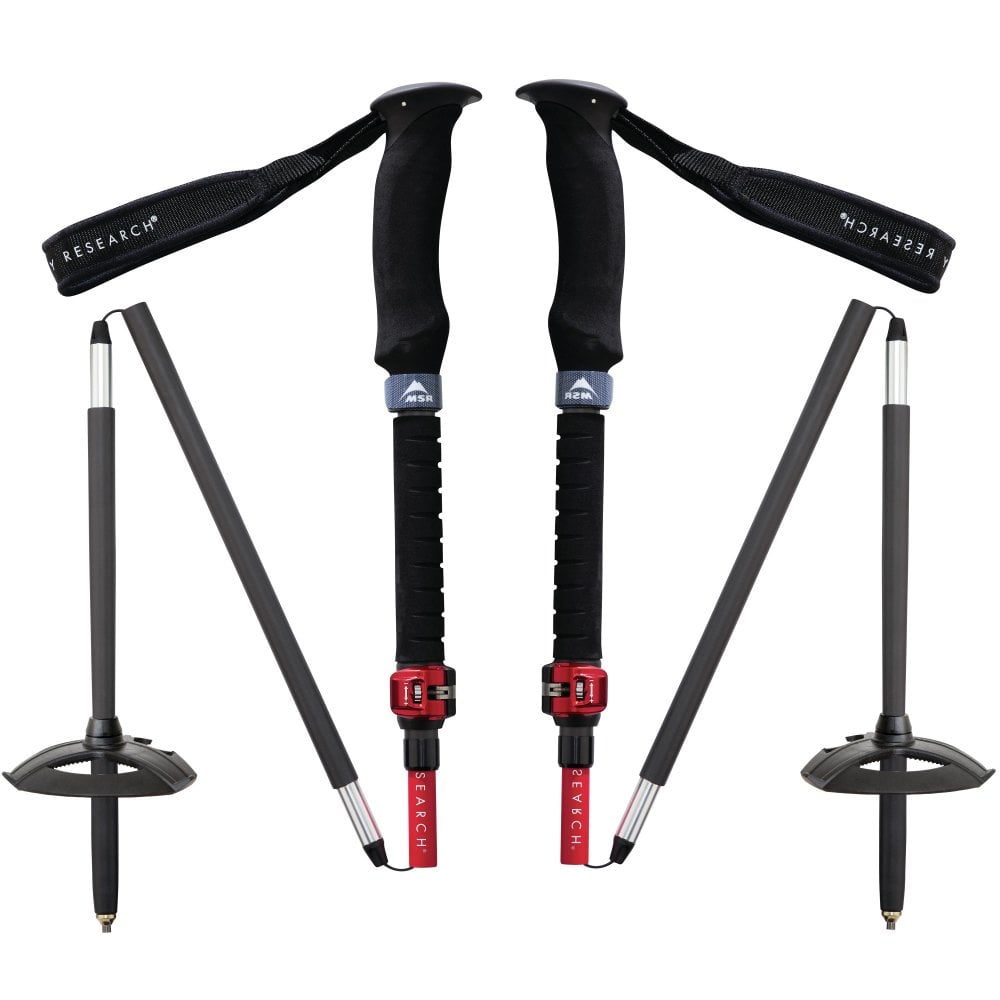
MSR DynaLock Ascent Carbon poles are constructed with Kevlar-reinforced carbon fiber, a combination that delivers exceptional durability without sacrificing packability. The poles feature a five-section design with two articulations and three sleeved sections at the top, allowing for a 20-centimeter adjustability range. According to The Big Outside's Michael Lanza, who tested these poles across multiple challenging backcountry environments, the construction demonstrated 'very high resistance to sheering or crushing when bashed multiple times against granite.' This design was particularly evident during a 5,000-foot descent on the South Kaibab Trail where the Dynalock lever never slipped, even under extreme stress. The poles' collapsible nature allows them to fold down to 14.3 inches for the small size, making them significantly more compact than standard telescoping poles.
The design includes a DynaLock adjustment system that operates via a lever lock with a twist dial for tensioning. This system provides tool-free adjustment and has proven reliable over extensive use, with no instances of loosening reported by reviewers. The poles also feature EVA foam grips with a soft-touch fabric wrap, and a lower grip for choking up on steep terrain. According to Better Trail's review, the grips are 'firm, with a natural shape' and include a notch below the pointer finger that helps keep hands comfortably in place. The wrist strap adjusts easily, and the poles' overall build quality was praised by both The Big Outside and Cascade Designs, with the latter noting that 'ultralight carbon fiber combines with ultimate packability for fast-and-light snowshoeing, mountaineering and splitboarding.' However, UKC Climbing's Alan James noted that the basket attachment system was 'so tight that they are extremely difficult to fit properly,' which could be a potential issue for users who frequently switch between winter and summer baskets.
100 winter miles with no signs of wear
The MSR DynaLock Ascent Carbon poles have proven their worth across a variety of demanding conditions. The Big Outside's Michael Lanza tested these poles during a 27-mile traverse of western Maine's Mahoosuc Range, a rim-to-rim dayhike across the Grand Canyon, and multiple trips in the Wind River Range and Sawtooth Mountains. During these tests, the poles showed remarkable resistance to damage, suffering only superficial scratches despite being bashed against granite and used in extreme terrain. The poles' ability to handle high-angle descents and steep ascents was particularly notable, with no signs of wear or instability even after 100 tough winter miles. According to Treeline Review, the poles performed flawlessly in harsh winter conditions where gear failure could be dangerous, providing effective support while breaking trail through heavy deep snow, postholing between rocks, and fording partially frozen creeks. The poles were also comfortable over multiple, back-to-back 12+ hour days, with testers noting they provided 'effective support' during demanding winter backcountry adventures.
The poles' versatility was highlighted in multiple reviews, with testers using them for snowshoeing, mountaineering, splitboarding, and backpacking. Cascade Designs noted that the poles are 'ultralight carbon fiber combines with ultimate packability for fast-and-light snowshoeing, mountaineering and splitboarding.' The poles' dual-basket system—offering both winter and summer baskets—was praised as a key feature for four-season functionality. However, some reviewers noted limitations in the basket attachment system. UKC Climbing's Alan James reported that the basket attachment was so tight that he couldn't properly fit either the winter or summer baskets on one of his poles, which could be problematic for users who frequently alternate between different basket types. Despite this, the poles' performance in various conditions was consistently praised across all testing environments.
4.7/5 rating for toughness and packability
Reviewers consistently praised the MSR DynaLock Ascent Carbon poles for their durability and packability, which are essential features for backcountry users. Better Trail's review gave the poles a 4.7/5 rating, highlighting their 'near-ideal blend of toughness, comfort, weight, and packability.' The poles' ability to withstand harsh conditions without damage was particularly noted, with The Big Outside's Michael Lanza stating that the Kevlar-reinforced carbon fiber construction demonstrated 'very high resistance to sheering or crushing when bashed multiple times against granite.' The poles' compact folded size was also a major selling point, measuring just 14.3 inches for the small size, making them easy to stow in packs or carry by hand. Cascade Designs emphasized that 'quick-deploy design folds small to stash easily in smaller packs,' which is crucial for users who need to minimize pack bulk during long trips. The poles' adjustability was also appreciated, with the 20-centimeter range allowing virtually anyone to find a comfortable length for their needs.
Comfort was another area where reviewers found the poles excelled, particularly in their EVA foam grips and ergonomic design. Better Trail noted that the grips are 'firm, with a natural shape' and include a notch below the pointer finger that helps keep hands comfortably in place. The Big Outside's Michael Lanza also praised the grips, stating they 'feel good and don't slip easily in bare or gloved hands,' and that the extended grip on the upper shaft helps in managing steep slopes. The poles' wrist strap adjusts easily, and the overall feel was described as comfortable even during extended use. Treeline Review emphasized that the poles were comfortable 'even over multiple, back-to-back 12+ hour days,' which speaks to their suitability for long backcountry adventures. The poles' ability to handle both winter and summer conditions was also noted as a major advantage, with the dual-basket system allowing users to adapt to different terrain and weather conditions.
Baskets are too tight to fit properly
Despite their many strengths, the MSR DynaLock Ascent Carbon poles have several notable drawbacks that reviewers have identified. The most significant issue raised was the tight basket attachment system, which caused difficulty in fitting both winter and summer baskets properly. UKC Climbing's Alan James reported that he couldn't fit either basket properly on one of his poles, and noted that the basket attachment was 'so tight that they are extremely difficult to fit properly.' This could be problematic for users who frequently switch between different basket types, as it may require tools or cause damage to the pole, though UKC Climbing attaches a caveat the page had dropped: 'MSR tell us the pair we were sent is a sample, so hopefully the tight baskets are not a problem in the final production model.' Additionally, the poles' weight was a point of criticism, with Better Trail's review noting that the poles are 'heavier than most folding designs' at 1 pound 1 ounce for the large size, compared to ultralight alternatives like Black Diamond's Distance Carbon Z, which is 7 ounces lighter. The poles' price point of $190 was also considered high by some reviewers, especially when compared to less durable alternatives like aluminum poles, which cost significantly less.
Another area of concern was the poles' susceptibility to scratches, particularly on the lower portion of the shaft. Better Trail's review noted that the poles 'collect scuffs and scratches quickly,' with one tester's poles looking 'two-tone' after just one day out. While these scratches are purely aesthetic, they do detract from the poles' appearance. The poles' construction also includes some design compromises, such as the lack of a carrying bag and bungs for the pole ends, which could be an issue for users who store poles inside their packs. Additionally, while the poles are praised for their adjustability, the two-size system (small 100-120cm, large 120-140cm) may not accommodate all users perfectly, as noted by UKC Climbing's reviewer who suggested that 'there are some people of a certain height for which the range of the two sizes isn't quite right.' Finally, the poles' Kevlar-reinforced carbon construction, while durable, also makes them more expensive than aluminum alternatives, which may not justify the cost for users who don't require the enhanced durability.
Built for four-season backcountry use, not ultralight trips
The MSR DynaLock Ascent Carbon poles are best suited for users who prioritize durability and packability over ultralight weight and are willing to pay a premium for high-quality construction. According to Better Trail, these poles are ideal for 'four-season pole with a small packed size' and are particularly well-suited for 'fastpacking and rugged trail runs to backpacking.' The poles' Kevlar-reinforced carbon fiber construction makes them excellent for users who engage in demanding backcountry activities such as snowshoeing, mountaineering, splitboarding, and off-trail scrambling. Treeline Review emphasized that the poles are 'specifically designed for winter backcountry activities' and are 'an excellent choice with no comparable competition' for winter backcountry adventures. The poles' adjustability and dual-basket system make them versatile for users who travel in varying conditions, whether in summer or winter environments. The Big Outside's Michael Lanza noted that the poles are particularly well-suited for 'hard users' who need poles that can handle 'the hardest use in any season.' The poles' ability to withstand extreme conditions without damage makes them ideal for serious backcountry adventurers who don't want to compromise on reliability.
However, these poles may not be ideal for users who prioritize ultralight weight or who frequently switch between different basket types. The poles' weight of 1 pound 1 ounce for the large size makes them significantly heavier than ultralight alternatives like Black Diamond's Distance Carbon Z, which weighs 7 ounces less. Users who frequently travel in conditions where weight is critical may find the MSR poles too heavy. Additionally, the tight basket attachment system may be problematic for users who frequently alternate between winter and summer baskets, as it can be difficult to fit the baskets properly. The poles' price point of $190 may also be prohibitive for budget-conscious users, especially when compared to less durable aluminum alternatives that cost significantly less. Therefore, the MSR DynaLock Ascent Carbon poles are best for serious backcountry users who value durability, adjustability, and packability over weight and cost considerations.
Heavier than the Distance FLZ, lighter than the Razor
When compared to other trekking poles on the market, the MSR DynaLock Ascent Carbon poles stand out for their durability and packability, though they do come at a premium price. According to Treeline Review's comparison table, the MSR poles weigh 482 grams (470g for the MSR DynaLock Ascent Carbon), which is heavier than Black Diamond's Distance FLZ aluminum poles (390-450g) but lighter than Black Diamond's Pursuit aluminum poles (464g) and significantly heavier than the Black Diamond Razor Carbon Pro (524-542g). The MSR poles' Kevlar-reinforced carbon construction provides superior durability compared to aluminum alternatives, which is evident in their performance during extreme backcountry use. The poles' adjustability and dual-basket system also offer advantages over many competitors, including Black Diamond's Pursuit and Distance series, which lack the same level of versatility. However, the MSR poles' weight and price point make them less competitive with ultralight alternatives like the Black Diamond Distance FLZ, which are significantly lighter and more affordable.
In terms of packability, the MSR DynaLock Ascent Carbon poles outperform many competitors, folding down to just 14.3 inches for the small size. This is significantly smaller than standard telescoping poles and comparable to the Black Diamond Pursuit's folded size. However, the tight basket attachment system and lack of a carrying bag or bungs for the pole ends are design compromises that some reviewers found problematic. The poles' performance in winter conditions is particularly notable, with Treeline Review stating that 'they performed flawlessly in harsh winter conditions where gear failure could be dangerous.' This level of performance is not matched by many alternatives, especially aluminum poles, which are more prone to damage in extreme conditions. The MSR poles' unique combination of carbon fiber construction, adjustability, and packability makes them a standout choice for serious backcountry users, though they may not be the best option for ultralight backpackers or those on a tight budget.
Costs more than the Pursuit, less than the FLZ
At $190, the MSR DynaLock Ascent Carbon poles represent a premium price point that reflects their high-quality construction and performance capabilities. Better Trail's review gave the poles a 4.7/5 rating, noting that 'it's tough to find one pole that works for nearly every activity in every season, but MSR's Dynalock Ascent Carbon might just fit the bill.' The poles' Kevlar-reinforced carbon fiber construction, combined with their adjustability and packability, provides value for users who engage in demanding backcountry activities. According to The Big Outside's Michael Lanza, the poles 'strike a fine balance between durability and moderate weight,' which justifies their higher cost for serious users. The poles' ability to withstand extreme conditions without damage, as demonstrated in multiple testing scenarios, supports their premium pricing. However, some reviewers noted that the price may not be justified for users who prioritize ultralight weight or who don't require the enhanced durability that the MSR poles provide. The poles' dual-basket system and adjustability also add value for users who travel in varying conditions, though the tight basket attachment system may be a drawback for some users.
The value proposition becomes clearer when comparing the MSR poles to alternatives like Black Diamond's Distance FLZ, which costs $240 but weighs 7 ounces less, or the Black Diamond Pursuit, which costs $170 but is significantly lighter and less durable. The MSR poles' premium price is justified by their superior durability and performance in extreme conditions, but users who don't require these features may find more cost-effective alternatives. The poles' ability to handle harsh winter conditions, as noted by Treeline Review, where 'gear failure could be dangerous,' makes them a worthwhile investment for serious backcountry adventurers. However, for casual hikers or ultralight backpackers, the price may not be worth the investment, especially when considering the weight and the availability of less expensive alternatives that offer similar functionality for less.
No cracks after two years of heavy use
Long-term durability was one of the most consistently praised aspects of the MSR DynaLock Ascent Carbon poles across all reviews. The Big Outside's Michael Lanza tested these poles across multiple challenging backcountry environments, including a 27-mile traverse of the Mahoosuc Range, a rim-to-rim dayhike across the Grand Canyon, and multiple trips in the Wind River Range and Sawtooth Mountains. In all these tests, the poles demonstrated exceptional resistance to damage, with only superficial scratches noted as the primary form of wear. According to Better Trail's review, the poles have proven 'exceptionally durable for the weight' over more than two years of heavy use, including 'getting the pole stuck between rocks too many times to count, leaned hard into the pole with a 40+ pound pack, and planted these poles hard on steep, fast descents.' The Kevlar-reinforced carbon fiber construction was specifically praised for its ability to withstand 'the wringer' without cracking or breaking, even after hundreds of miles of use. The poles' DynaLock lever system never slipped, even after extensive testing, and the overall build quality was consistently described as 'bomber' by reviewers.
The poles' durability was also highlighted in winter conditions, where Treeline Review noted that they 'performed flawlessly in harsh winter conditions where gear failure could be dangerous.' The poles' carbide tips and hard plastic baskets remained functional even after extensive use, with one tester noting that the baskets were 'certainly beat up but are still fully functional and in one piece.' The poles' ability to handle extreme conditions without failure makes them a reliable choice for serious backcountry users. However, some reviewers did note that the poles' susceptibility to scratches, particularly on the lower portion of the shaft, was a minor aesthetic issue. Despite this, the poles' structural integrity and performance in extreme conditions were consistently praised, with reviewers noting that the poles 'held strong' even under the most demanding circumstances. The poles' construction and materials were described as 'bomber' and 'tough,' indicating that they should provide reliable service for many years of use.
Strengths
- +Kevlar-reinforced carbon build makes it one of the most durable carbon poles on the market
- +Adjustable length and grip extensions work well for steep terrain
- +Folding design with button-controlled deployment offers small packed size (14.2 in collapsed)
- +Premium EVA foam grips with soft-touch fabric wrap provide surprising comfort
Watch-outs
- −Heavier than most folding designs (1 lb for small size)
- −Scratches and scuffs accumulate quickly on the lower portion of the shaft
How it compares
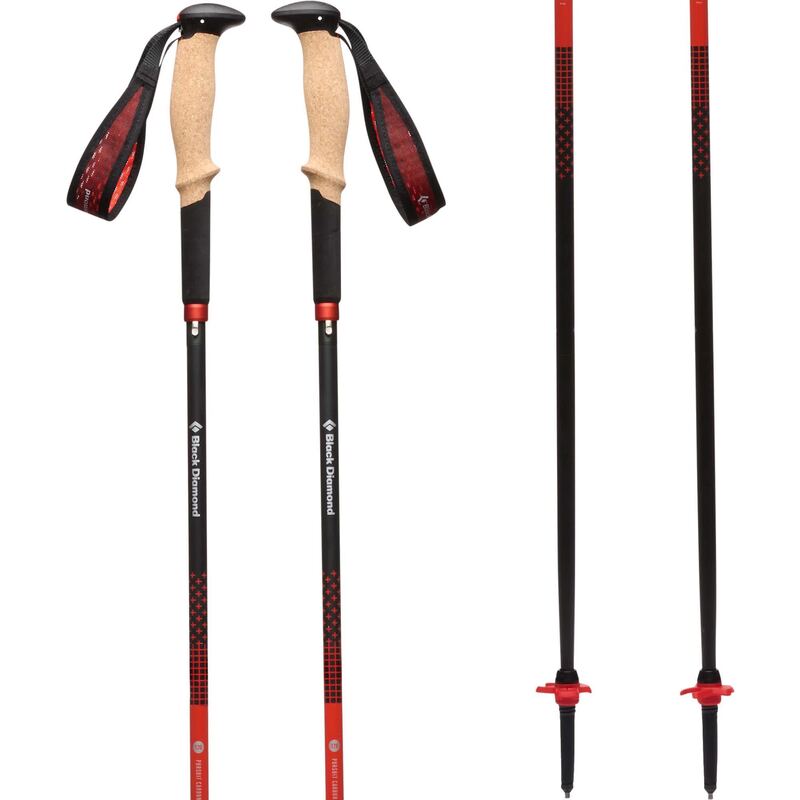
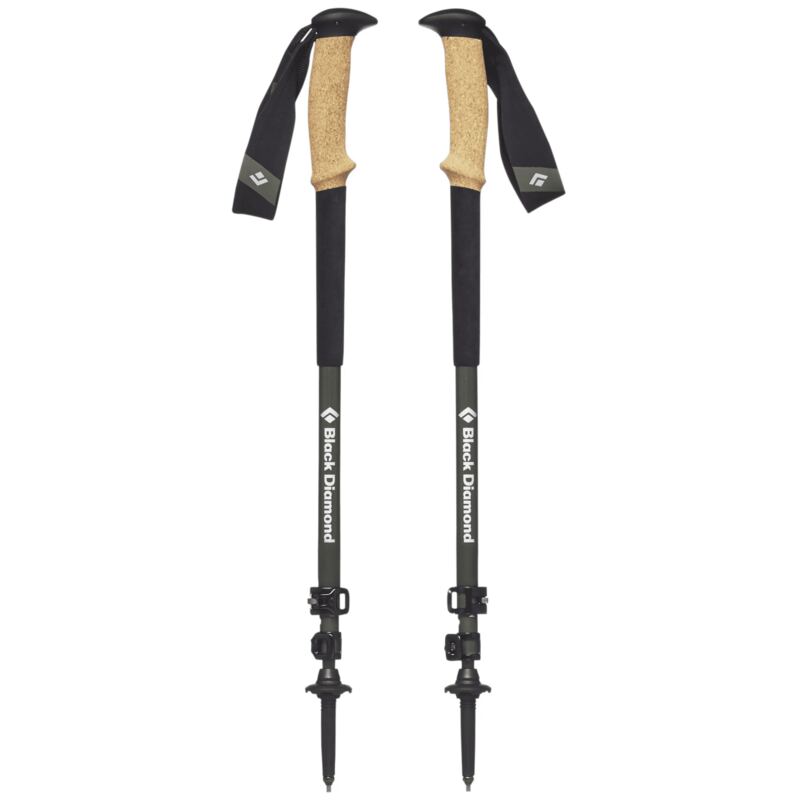
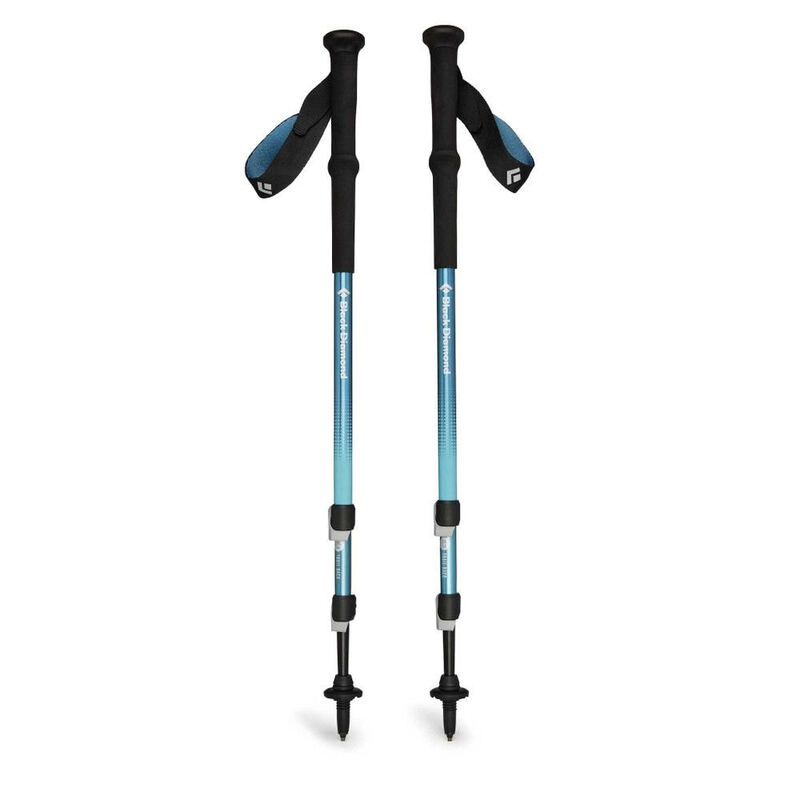
The MSR DynaLock Ascent stands out from the Black Diamond Alpine Carbon poles for its superior Kevlar-reinforced carbon construction, offering better durability than the more expensive carbon alternatives. While the Black Diamond Pursuit and Trail Back models offer more affordable options, the MSR poles excel in packability and toughness, making them ideal for backcountry use where reliability matters more than weight. Compared to the Leki Black Series, the MSR poles are heavier but offer more robust performance in demanding conditions.
Rating sources
“The MSR DynaLock Ascent Carbon Backcountry Poles performed flawlessly in harsh winter conditions where gear failure could be dangerous.”
Our 4.7 score is the average of the 3 scored reviews above; 1 more reviewed it without printing a score and is not in the average. Ratings marked * were derived from the reviewer’s written analysis or video transcript — the publisher didn’t print an explicit numeric score, so we inferred one from their own words. Click through to verify. More about methodology.