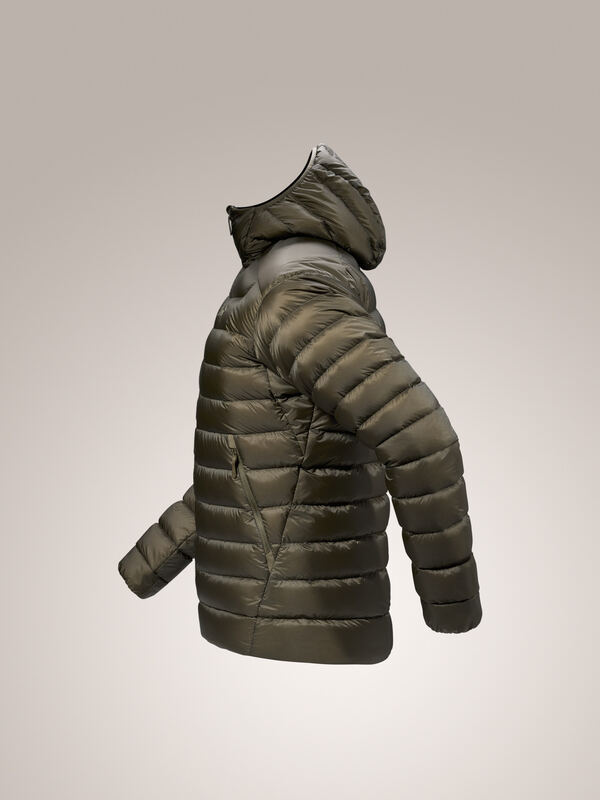
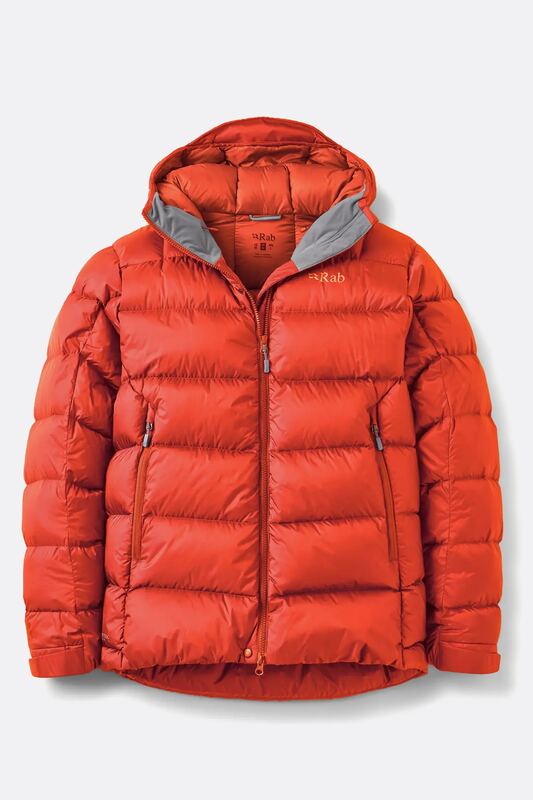
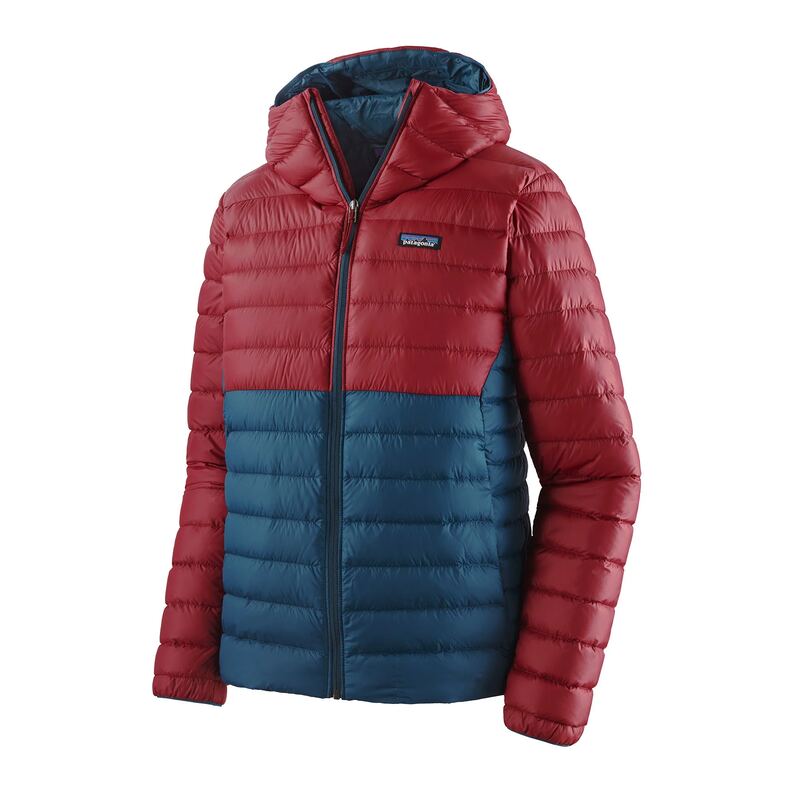
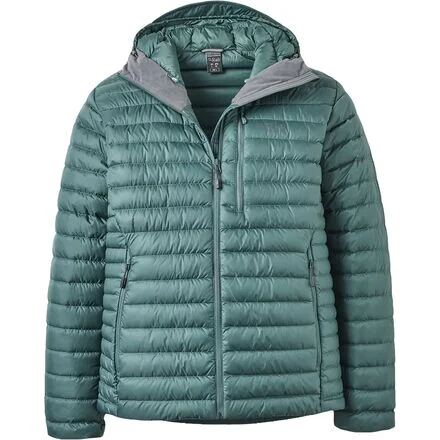
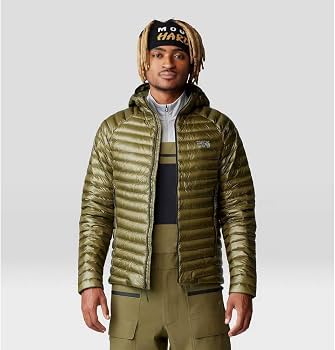
The Mountain Hardwear Ghost Whisperer Hoody delivers an exceptional warmth-to-weight ratio by utilizing premium 800-fill or 1,000-fill down in a remarkably thin shell. Better Trail found the standard model offers unmatched insulation for its price range, while Switchback Travel noted the UL variant packs down to roughly the size of a Nalgene bottle with an internal carabiner clip for easy attachment. However, this minimalist construction leaves a fragile exterior that is prone to damage from sharp contact with rocks or gear. The limited insulation volume makes it insufficient for sustained cold temperatures below the upper 40s, requiring users to bundle up during rest periods. This jacket fits weight-conscious backpackers seeking an emergency layer for shoulder-season trips, but those needing durable protection in abrasive environments should look elsewhere.
Full review
Ultralight weight and packability metrics
The Mountain Hardwear Ghost Whisperer series occupies a unique position in the insulated jacket market because it aggressively prioritizes mass reduction over feature density. Better Trail measured the standard women's small at 7.4 ounces on their home scale, noting that this falls below the manufacturer's listed weight of 8.5 ounces for the men's medium version. Switchback Travel recorded an even lighter figure for the Ghost Whisperer UL variant, clocking a women's medium at just 6.2 ounces. This extreme lightness is achieved through the use of high-loft down and exceptionally thin shell fabrics that strip away every non-essential component from the garment.
The packability of these jackets matches their low weight profiles. The standard Ghost Whisperer compresses into its own hand pocket, which features an internal carabiner clip designed for attaching the bundled jacket to a climbing harness or backpack strap. Switchback Travel noted that while the jacket packs down to roughly the size of a 1-liter Nalgene bottle, it often fits better when left unstuffed and allowed to fill the nooks and crannies of a pack rather than being tightly compressed into its stuff pocket.
This obsession with weight savings dictates every aspect of the build quality and feature set available to the wearer. Backpackers highlighted the jacket's unmatched warmth-to-weight ratio for its price range, calling it an ultralight masterpiece precisely because it delivers legitimate insulation while weighing less than half a pound. However, this extreme compression comes at the cost of durability, as the thin exterior fabrics are highly susceptible to damage from sharp contact with rocks or gear, requiring users to handle the jacket with significant care during technical climbing or scrambling missions.
Down fill power and insulation volume differences
Insulation strategy varies significantly between the standard Ghost Whisperer Hoody and the ultra-lightweight UL variant, fundamentally altering their warmth profiles. Better Trail found that the standard model contains only 2.6 ounces of 800-fill-power down, which they described as considerably less insulated than competitors like the Patagonia Down Sweater Hoody or the Arc'teryx Cerium. Switchback Travel reported that the UL version utilizes a higher quality fill, containing just 1.92 to 2.2 ounces of premium 1,000-fill down depending on the specific update cycle being reviewed. This shift toward fewer but loftier feathers allows the UL model to maintain an impressive warmth-to-weight ratio despite having less total material.
The practical application of this insulation volume becomes clear when comparing temperature tolerances across different jacket models. Better Trail recommended the standard Ghost Whisperer for temperatures in the upper 40s to low 60s Fahrenheit, noting that it serves as a go-to layer for summer mountain evenings and shoulder-season day missions where wind is not extreme. The Big Outside confirmed this utility on April backpacking trips along the Arizona Trail and Grand Canyon Gems Route, finding the UL version sufficient over a t-shirt during calm mornings and evenings with lows in the 40s.
Despite the high quality of the down used, reviewers consistently pointed out that neither model provides enough bulk for sustained cold-weather use or periods of low activity. Better Trail documented a September fastpacking trip in the Glacier Peak Wilderness where the standard Ghost Whisperer failed to provide adequate warmth around camp after sunset, forcing the reviewer to bundle up in their sleeping quilt despite wearing base layers underneath. This limitation highlights that while the jacket excels at trapping heat during active movement or brief stops, it lacks the thermal mass required for extended periods of stillness in genuinely cold conditions.
Thin shell fabric durability and fragility
The exterior fabrics chosen to achieve these ultralight weights introduce significant vulnerability concerns that every owner must manage. Better Trail assigned the jacket a low durability score of 1.5 out of 5, explicitly warning users to be extra careful with the thin shell fabric due to its fragility. The Big Outside described the 5-denier-by-7-denier ripstop nylon used on the UL version as the lightest found in any outdoor garment, advising buyers to strictly avoid contact with sharp points like rock edges or carabiner teeth during technical use.
This fragility extends beyond just the shell material to include the zipper and other hardware components. The Big Outside noted that because all materials, including the front zipper, are extremely light, they are inherently less durable than heavier products designed for rugged conditions. While these components may last for years of normal backpacking use with careful handling, reviewers cautioned against treating the jacket as a primary outer layer in abrasive environments where snagging or tearing is highly probable.
The trade-off between weight and durability is a deliberate design choice rather than a manufacturing flaw. Switchback Travel acknowledged that while the minimalist build lacks the ruggedness of heavier competitors, it accomplishes its main goal of cutting weight with flying colors for shoulder-season companionship. Users who prioritize absolute minimum pack mass over long-term abrasion resistance will find this acceptable, but those requiring a jacket to withstand daily abuse in rocky terrain should look toward models with thicker denier fabrics and reinforced high-wear areas.
Minimalist feature set and adjustability limits
To maintain their ultralight status, both the standard and UL versions strip away many features found on traditional insulated jackets, though CleverHiker notes a drawcord hem and adjustable hood. Better Trail specifically criticized the lack of hood adjustment and chest pockets on the standard model, noting that these omissions are direct results of weight-saving measures rather than oversights. Switchback Travel echoed this sentiment regarding the UL version, pointing out that the absence of a stuff sack in the box was surprising given the jacket's minimalist intentions.
The hood design represents one of the most significant functional compromises for users who require weather protection or helmet compatibility. Chris from a YouTube review demonstrated that the UL hood does fit over standard climbing helmets like the Black Diamond Half Dome, but noted there are absolutely no pull cords in the front or back to tighten the fit around the face.
Pocket configuration is similarly restricted to basic utility rather than comprehensive storage. Both models typically feature two zippered hand pockets, with one pocket on each version doubling as a stuff sack for packing the jacket away. Better Trail noted that while streamlined, these features are functional enough for carrying small essentials like gloves or a hat. The complete absence of internal chest pockets or secure stash areas means users must rely entirely on their backpack or outer layers to carry additional items when wearing the Ghost Whisperer.
Water resistance and moisture management
Down insulation has historically suffered from a catastrophic loss of insulating value when wet, but Mountain Hardwear has implemented specific treatments to mitigate this risk across the Ghost Whisperer line. Backpackers highlighted the use of Q.Shield technology on certain models, which coats the down fibers to help repel water and allow them to dry out much more quickly than untreated fill. This treatment provides peace of mind for backpackers who might encounter damp conditions or accidental spills without immediately compromising their warmth.
The exterior shell fabrics also receive durable water repellent treatments to shed light moisture before it reaches the down. Both reviewers emphasized that wearing these jackets in wet conditions without an outer shell is risky because once the down clumps together from saturation, it loses its ability to trap hot air effectively.
Weather resistance remains a consistent weak point across all iterations of the Ghost Whisperer series. Better Trail awarded the standard model a weather resistance score of only 1.5 out of 5, reinforcing that these jackets are designed for dry cold rather than wet environments. Users operating in damp mountain climates or expecting precipitation should treat the Ghost Whisperer strictly as an insulating mid-layer to be worn underneath a waterproof hardshell, rather than relying on its DWR coating and treated down to keep them dry during active rain events.
Fit profiles across standard and UL variants
The fit of the Ghost Whisperer series is generally described as trim and athletic, designed to layer efficiently under hardshells or over base layers without adding bulk. This tailored cut ensures that the jacket does not flap excessively in the wind during active pursuits like trail running or climbing.
Sizing availability covers a broad range of body types, with options typically spanning from extra-small to double-extra-large across men's and women's versions. Treeline Review noted that while the size range is not exhaustive for every possible body shape, it adequately covers ninety percent of potential buyers. The jacket tends to run slightly small in the shoulders according to some users, but generally leaves enough room underneath for a fleece or multiple base layers depending on the specific model and intended layering strategy.
Cuff design also contributes to the overall fit and thermal efficiency of the garment. The Big Outside highlighted a similar feature on the UL version, where the first baffle at both elasticized sleeve cuffs is filled with synthetic insulation specifically designed to prevent the cuffs from wetting out if brushed against damp surfaces, adding a small but practical durability boost in high-friction areas.
Strengths
- +Exceptionally lightweight design weighing as little as 6.2 ounces, making it ideal for weight-conscious missions.
- +High warmth-to-weight ratio utilizing premium 800-fill or 1,000-fill down insulation.
- +Packs down into its own hand pocket with an internal carabiner clip for easy attachment to gear.
- +Thin 7D-10D ripstop nylon shell fabric provides a low-profile look and excellent compressibility.
Watch-outs
- −Thin exterior fabric is fragile and prone to damage from sharp contact with rocks or gear.
- −Limited insulation volume makes it insufficient for sustained cold temperatures below the upper 40s.
How it compares
The Mountain Hardwear Ghost Whisperer Hoody is exceptionally lightweight at as little as 6.2 ounces, making it significantly lighter than the Arc'teryx Cerium (11.9 oz) and Outdoor Research Helium Down Hoodie (15.4 oz).
Rating sources
Counts as 4.42/5 in our score — this publisher's 36 scores on the site average 4.38, so its scores are adjusted down to compare fairly with other publishers.
Counts as 3.96/5 in our score — this publisher's 149 scores on the site average 3.69, so its scores are adjusted up to compare fairly with other publishers.
Counts as 4.70/5 in our score — this publisher's 3 scores on the site average 4.43, so its scores are adjusted down to compare fairly with other publishers.
Counts as 4.69/5 in our score — this publisher's 1 scores on the site average 4.80, so its scores are adjusted down to compare fairly with other publishers.
Counts as 4.40/5 in our score — this publisher's 60 scores on the site average 4.49, so its scores are adjusted down to compare fairly with other publishers.
Our 4.4 score is the average of the 5 scored reviews above, each adjusted for how strictly its publisher scores; 4 more reviewed it without printing a score and are not in the average. More about methodology.