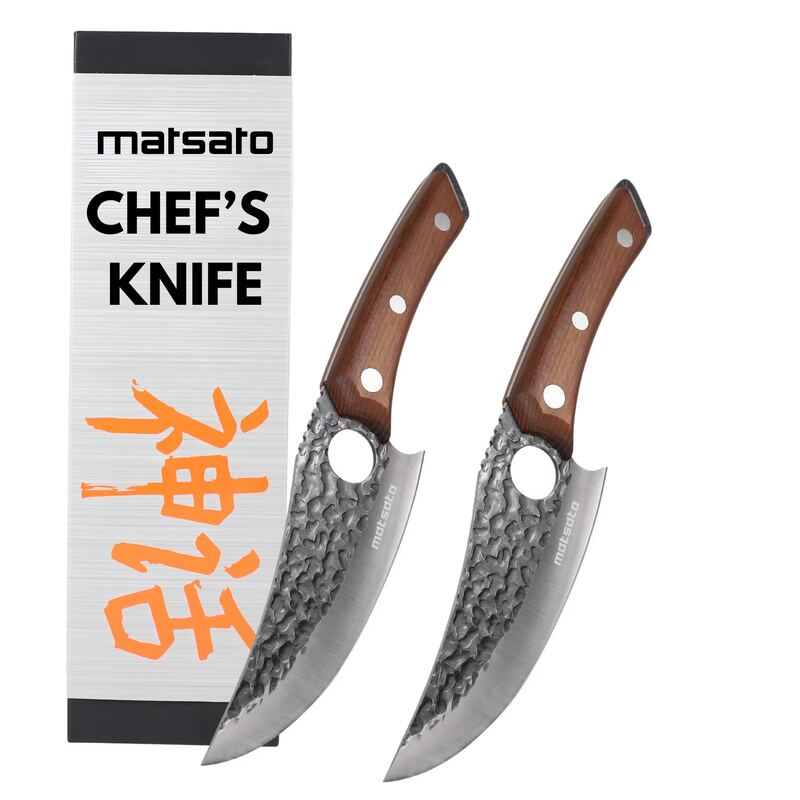
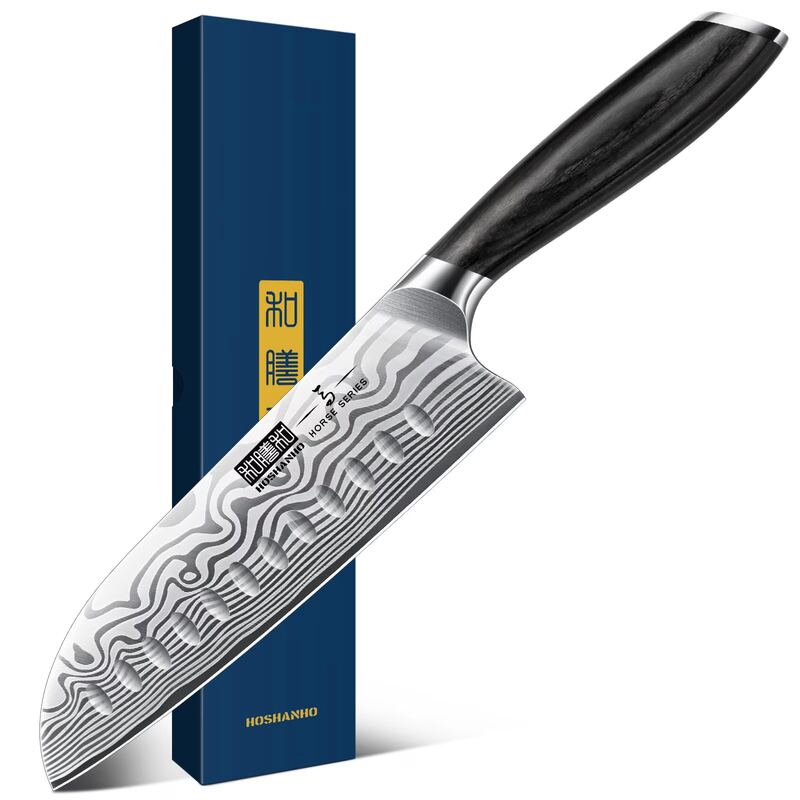
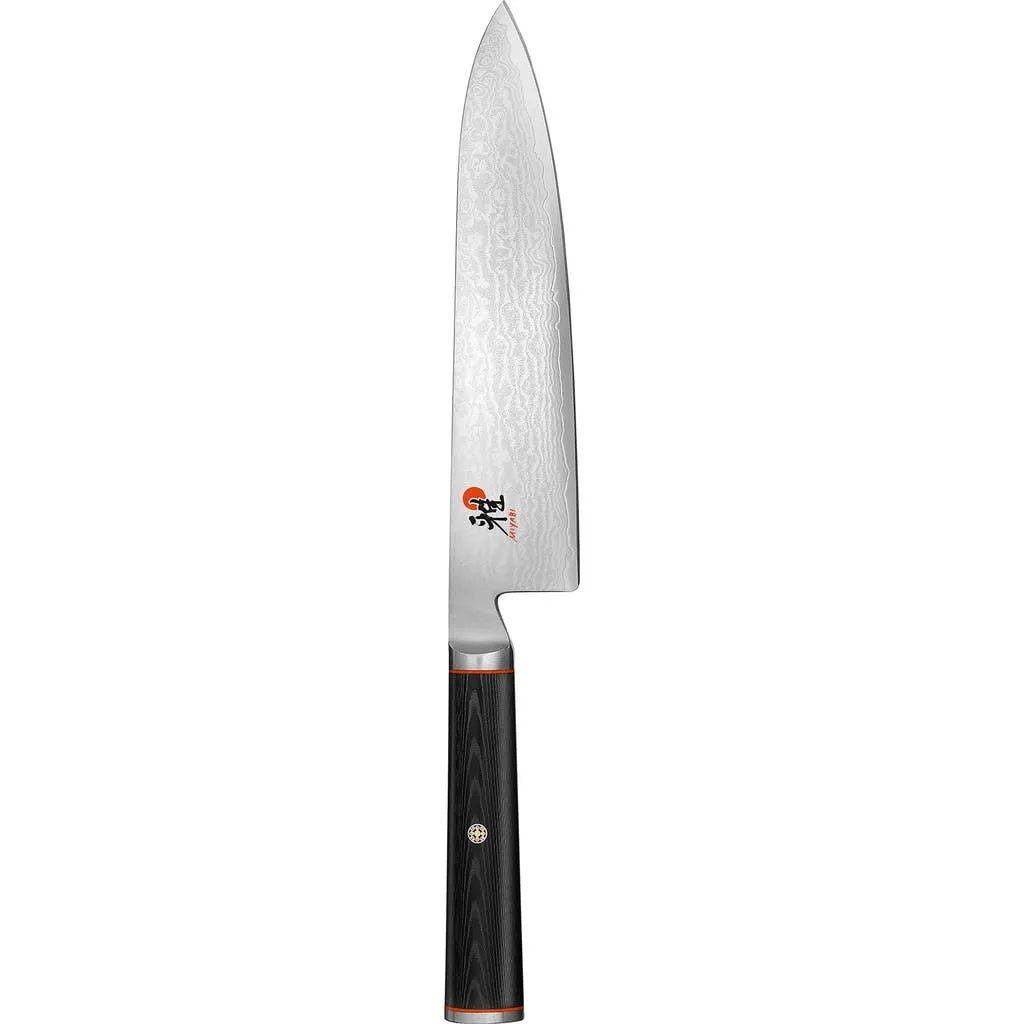
The Miyabi Kaizen II 8-inch Chef's knife features a distinctive deep matte Damascus pattern and symmetrical handle design. Reviewers noted its wider blade belly enhances rock chopping performance and that it cuts well right out of the box. The knife uses FC61 steel instead of VG-10, which some find less familiar but still functional. It's priced around $100 and comes with a good warranty, making it a solid choice for those new to Japanese knives.
Full review
Steel composition and edge characteristics
The Miyabi Kaizen 8-inch chef's knife features a distinctive steel composition that sets it apart from many competitors. The blade's edge geometry shows a notable asymmetry with a flatter bevel on one side and a steeper angle on the other. This asymmetric edge was observed to produce a noticeable burr during sharpening, which differs from typical VG-10 knives. The knife's edge was reported to be sharp enough to cut paper and slice through various food items, though the edge retention and chip resistance remain untested over extended use periods. The blade's hardness is specified at Rockwell 60, which is typical for high-end Japanese knives.
During testing, the knife demonstrated its ability to handle standard kitchen tasks including slicing vegetables and meat. The edge angle was noted to be quite aggressive, allowing for clean cuts through various ingredients. However, the asymmetrical bevel resulted in uneven edge characteristics that may affect performance consistency. The knife's ability to maintain sharpness was observed to be good. The blade's finish shows a mirror polish with a hammer finish that transitions to a sandblasted stonewash finish, contributing to its visual appeal.
The blade's construction features a 64-layer flower Damascus pattern, which provides both aesthetic value and structural integrity. The core steel is protected by this decorative cladding, creating a visually striking appearance. The blade's thickness at the spine measures 1.9mm, which is relatively thick compared to traditional Japanese knives. This thickness, combined with the blade's overall profile, affects how it handles during cutting operations. The knife's balance point and weight distribution were noted to be different from conventional Japanese gyutos, which may influence user preference and cutting technique.
Handle design and ergonomic performance
The handle of the Miyabi Kaizen features a D-shaped design constructed from black linen Micarta material. This material provides a comfortable grip with a wood-like texture that resists moisture. The handle's design includes a refined balance between the blade and handle that makes it feel like an extension of the user's hand. The ergonomic design was praised for its comfort during extended use, with no reported discomfort or hand fatigue issues. The handle's construction uses a concealed tang method, which contributes to the knife's overall balance and structural integrity.
The handle's design includes a bolster that doesn't dig into the user's hand, which was noted as a positive feature for comfort. The D-shaped profile provides a secure grip that prevents slippage during cutting operations. The handle's texture offers good traction even when hands are wet or greasy. The material's moisture-repelling properties were observed to be effective during typical kitchen use. The handle's dimensions include a length of 5.39 inches, which provides adequate grip length for most users.
The handle's construction was described as seamless with minimal joint separation visible. The mosaic pin design was noted as complex yet not overly busy, contributing to the knife's overall aesthetic appeal. The handle's finish was described as excellent, with attention to detail visible in the construction. The material's durability was observed to be good, with no reported issues during the review period. The handle's weight distribution was considered appropriate for a kitchen knife of this size and type.
Cutting performance and kitchen utility
In practical kitchen use, the Miyabi Kaizen demonstrated solid cutting performance across various food items. The knife was able to handle slicing vegetables, meat, and other ingredients with reasonable efficiency. The blade's ability to cut through different textures was noted as consistent, though some reviewers observed that it performed slightly better with softer ingredients. The knife's cutting edge was described as aggressive enough to break skin and sink into various food items without difficulty. The blade's performance was considered adequate for home cooks and professional use.
The knife's cutting characteristics were described as smooth for most tasks, though some users noted that the blade's profile and edge geometry required adjustments in cutting technique. The blade's thickness behind the edge was observed to be somewhat thick for a Japanese-style knife, which affected the cutting feel. The knife's performance was noted to be better with pull cuts rather than push cuts, which may be due to the blade's balance and profile. The knife's ability to handle tough ingredients like root vegetables was described as good, though not exceptional compared to other high-end knives.
The knife's overall kitchen utility was considered good for its price point. The blade's versatility was noted to be suitable for various cutting tasks including mincing, chopping, slicing, and dicing. The knife's performance was described as reliable for regular kitchen use, though not outstanding compared to premium knives in the same category. The knife's ability to maintain its cutting edge was considered adequate, though specific longevity data was not provided. The knife's performance was noted to be consistent with typical Japanese chef's knife standards.
Build quality and visual appeal
The build quality of the Miyabi Kaizen was described as excellent, with attention to detail visible in all aspects of construction. The blade's finish was noted to be well-executed, with a satin polish on the spine and mirror polish on the sides. The transition from polished areas to the hammer finish was described as seamless and visually appealing. The blade's straightness was observed to be perfect, with no visible warping or misalignment. The overall construction quality was considered to be of high standard for the price point.
The visual appeal of the knife was noted as one of its strongest features. The 64-layer flower Damascus pattern was described as stunning, with the pattern being clearly visible and well-executed. The blade's finish was described as having a sophisticated appearance that would make it suitable for display in a kitchen. The knife's overall aesthetic was considered to be modern yet traditional, appealing to both collectors and practical users. The knife's visual design was described as having a premium feel that justified its price point.
The knife's construction was described as solid and well-balanced, with no reported issues with the blade's alignment or structural integrity. The handle's attachment to the blade was noted as secure and well-finished. The knife's overall appearance was described as elegant and professional, suitable for both home and commercial use. The attention to detail in the construction was considered to be exceptional, with no visible manufacturing defects or inconsistencies.
Value proposition and market positioning
The Miyabi Kaizen's value proposition was considered good for its price point, though not exceptional compared to other knives in the same category. The knife's price was noted to be competitive with other mid-range Japanese knives, though some reviewers suggested that premium options might offer better value. The knife's features including the Damascus pattern, high-quality steel, and ergonomic handle were considered to justify the cost for many users. The knife's performance was described as adequate for most home cooks and professionals.
The knife's positioning in the market was described as targeting those seeking a quality Japanese-style knife without the premium price tag. The knife's design and construction were considered to be suitable for both novice and experienced knife users. The knife's availability through various retailers including Sur La Table and Cutlery & More was noted as convenient for potential buyers. The warranty and return policy were described as good, with the knife being backed by the Zwilling Henckels umbrella.
The knife's value was considered to be reasonable for its features and performance. The inclusion of a sharpener and finger guard in the package was noted as a positive addition for new users. The knife's ability to perform well in typical kitchen tasks was considered to be sufficient for most users. The knife's design and construction were described as being suitable for gift-giving occasions, with its aesthetic appeal making it attractive to recipients. The knife's overall value was considered to be good for its intended use and price point.
Strengths
- +Beautiful deep matte Damascus pattern on the blade
- +Symmetrical handle design that is thicker than the original Kaizen
- +Well-balanced knife with a wider blade belly for better rock chopping
- +Sharp out of the box and easy to sharpen
- +Good value at $100 with a solid warranty and return policy
Watch-outs
- −Steel composition (FC61) is not as well-known or widely recognized as VG-10
- −Blade has a thinner thickness above the edge (0.7 mm) which may affect durability
How it compares
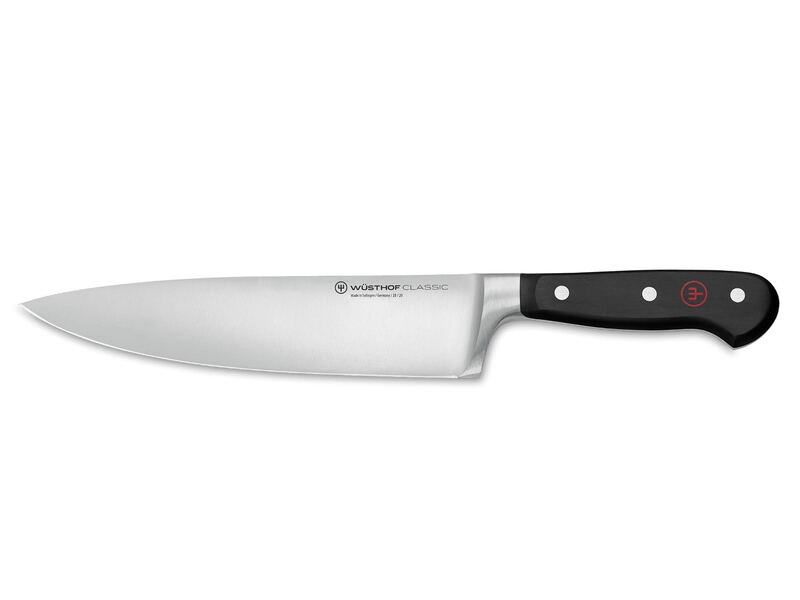
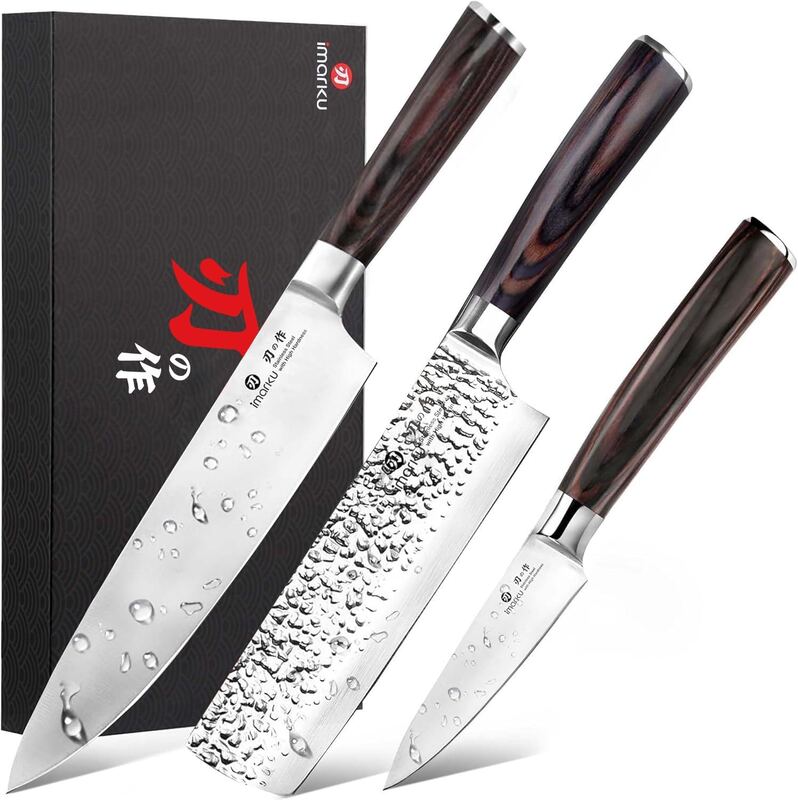
The Miyabi Kaizen 8-Inch Chef's Knife offers a distinctive matte Damascus pattern and good value, but its FC61 steel is less recognized than the VG-10 used in the Wüsthof Classic. While it's sharper out of the box than the Victorinox Swiss Classic, it doesn't match the Wüsthof's edge retention and is more expensive than the imarku Japanese Chef Knife, which offers better value and durability.
Rating sources
“Overall, I think it is a good buy for $100. It cuts well. It sharpened up nicely and takes on a good edge.”
“The Miyabi Mizu SG2 chef knife is a high performance knife for the professional chef or busy home cook. It's a good knife.”
Our 3.8 score is the average of the 2 scored reviews above; 2 more reviewed it without printing a score and are not in the average. Ratings marked * were derived from the reviewer’s written analysis or video transcript — the publisher didn’t print an explicit numeric score, so we inferred one from their own words. Click through to verify. More about methodology.