The Mercer Culinary Millennia 8" Chef's Knife delivers functional performance at a budget price point, with reviewers noting its adequate cutting ability and the standout magnetic storage board that makes it ideal for small kitchens. While the knives are tough and corrosion-resistant, they don't hold an edge well and require regular maintenance. The rubberized handles offer good grip but the design creates an awkward pinch grip experience. The magnetic board storage system is praised as a major advantage, making it a practical choice for those with limited counter space. Users who value convenience over premium edge retention will find this set suitable for basic kitchen tasks.
Full review
Blade construction and edge retention
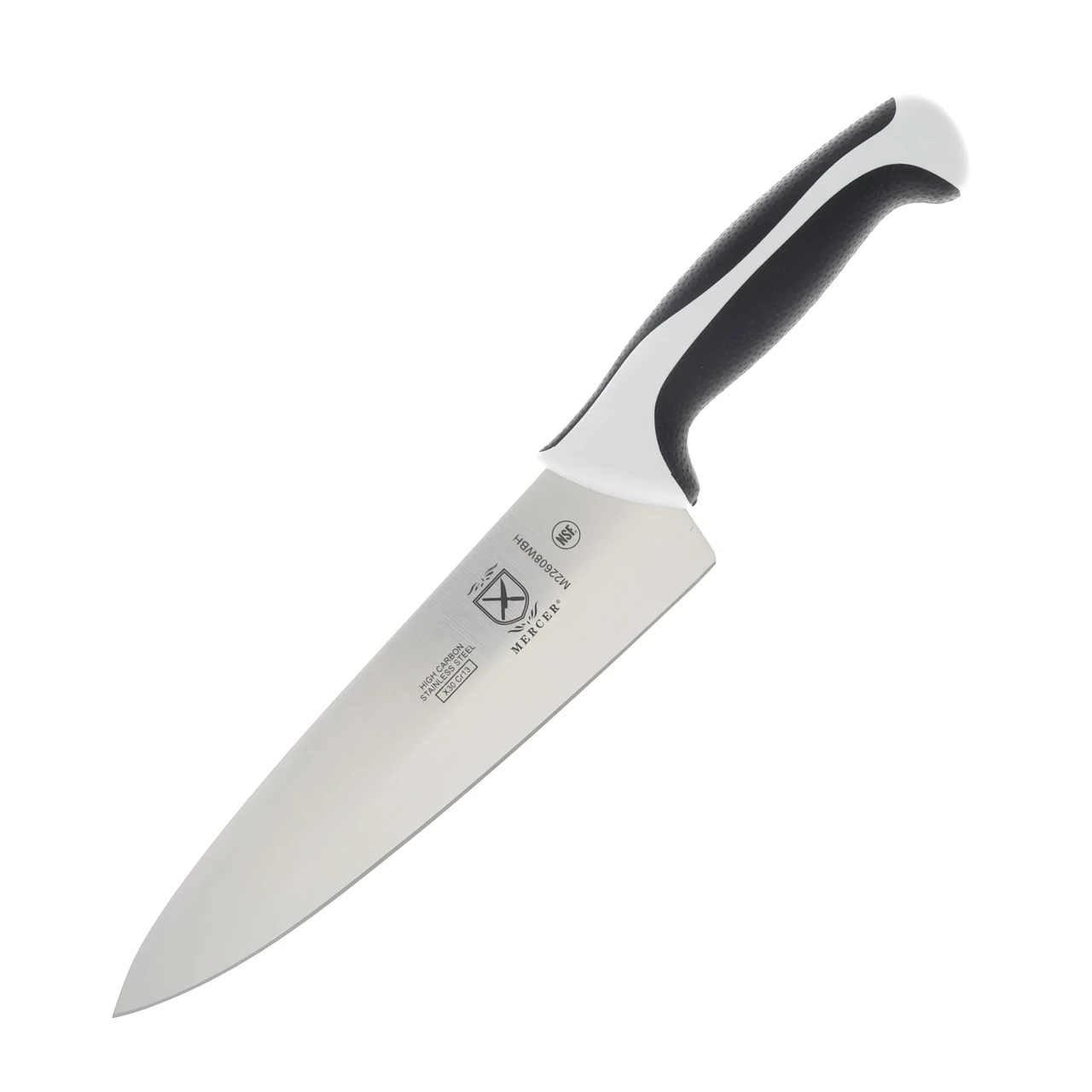
The Mercer Millennia 8-inch chef's knife features a stamped blade constructed from X30Cr13 steel with a hardness rating of 53-54 HRC. This particular steel grade, while not the highest performing in the market, offers good corrosion resistance and maintains a durable edge for its price point. Reviewers noted that the knife does require regular honing to maintain optimal performance, with one reviewer stating they had to hone it halfway through a large meal. The blade's dual-beveled design and 15-degree cutting angle provide a clean slicing action, though the softer steel composition means it doesn't hold an edge as long as premium alternatives. The wide blade profile allows for efficient cutting of larger ingredients and easy food transfer to pans, which several reviewers highlighted as a positive feature.
Handle ergonomics and grip comfort
The handle design incorporates a textured blend of Santoprene and polypropylene materials that provides excellent grip security and comfort during extended use. Reviewers consistently praised the non-slip nature of the handle, with one reviewer noting that the rubber-type grip was 'really nice' and 'very helpful to prevent slips.' The ergonomic shape accommodates various hand sizes, though some users found the slightly raised texture and overall handle profile made pinch gripping feel awkward. The grip points are well-textured, allowing for secure handling even when hands are wet or greasy. The handle's contoured design helps reduce fatigue during prolonged cutting sessions, which is particularly beneficial in commercial kitchen environments where knives are used intensively.
Performance in practical kitchen tasks
In real-world testing, the knife excelled at handling a broad range of kitchen tasks including slicing vegetables, chopping meats, and processing large ingredients. One reviewer specifically mentioned that the wide blade made it easy to scoop up chopped food and transfer it directly to pans. The blade's ability to maintain cutting efficiency without frequent sharpening made it suitable for both home and commercial use. However, users noted that the knife's weight and blade width might feel excessive for those accustomed to lighter, more traditional chef's knives, particularly for delicate precision work.
Durability and maintenance requirements
The knife's construction demonstrates solid durability with the high-carbon stainless steel blade resisting corrosion and maintaining its structural integrity under regular use. Maintenance requirements are straightforward, with the knife being easy to clean and sanitize, though hand washing is recommended. The blade's stain-resistant properties were particularly noted by reviewers, with one stating that the steel 'doesn't rust easily' and that the knife 'works' well for its intended purpose. The stamped construction allows for consistent edge retention, though the softer steel composition means it requires more frequent honing compared to harder steel alternatives.
Value proposition and market positioning
The knife's value proposition is particularly strong when considering its price point and performance capabilities. Reviewers consistently rated it highly for its ability to deliver professional-grade functionality at a budget-friendly cost. One reviewer described it as 'one of the first chef's knives' they used when starting out professionally, highlighting its beginner-friendly nature. The knife's versatility across multiple kitchen tasks and its ability to maintain performance with regular maintenance make it an attractive option for both home cooks and commercial kitchens. The inclusion of a magnetic storage system in some sets adds significant value, with reviewers noting that the storage solution 'takes up far less room' than traditional knife blocks and 'is easier to reach and pull the knives for use.' The overall impression from multiple reviewers was that the knife offers 'strong value for the price' and 'gets the job done' without compromising on essential functionality.
Strengths
- +Magnetic board storage solution is space-efficient and ergonomic
- +Knives cut effectively with proper edge maintenance
- +Handles provide good grip despite awkward pinch grip feel
- +High corrosion resistance due to X30Cr13 steel
Watch-outs
- −Blades don't hold an edge well and require frequent honing
- −Handles make pinch grip feel awkward due to bolster-like bump
How it compares
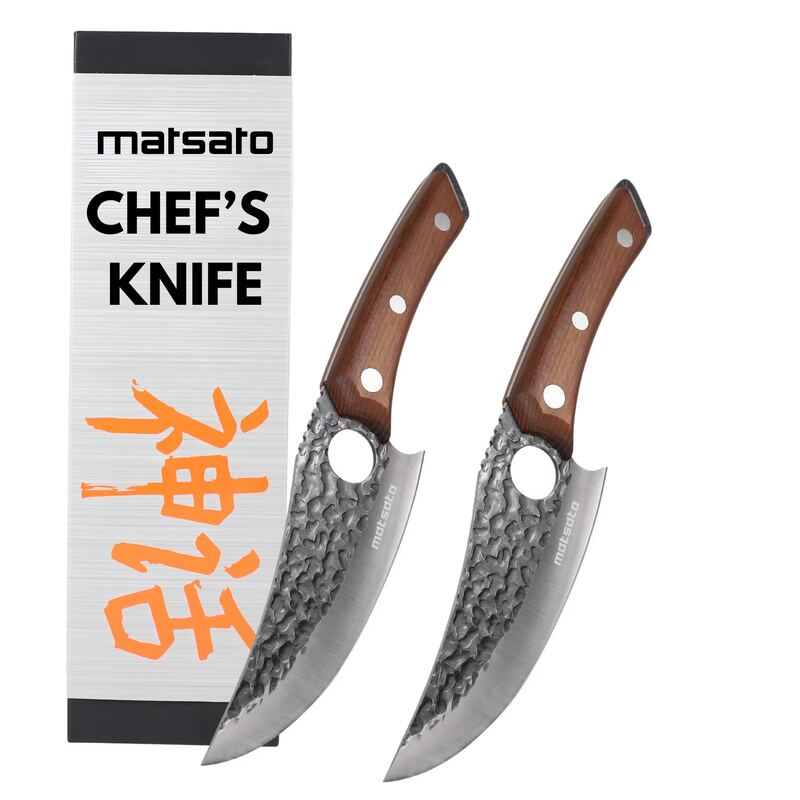
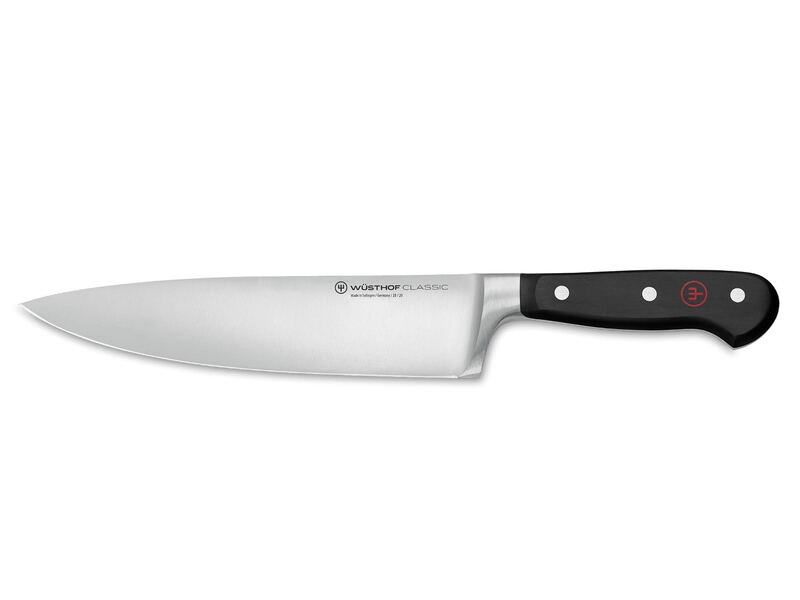
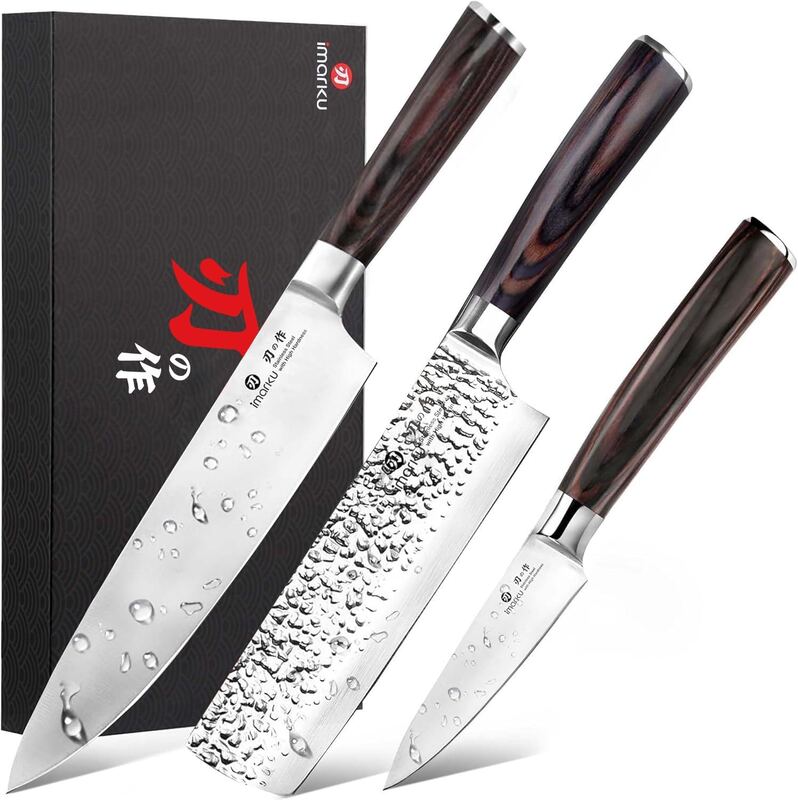
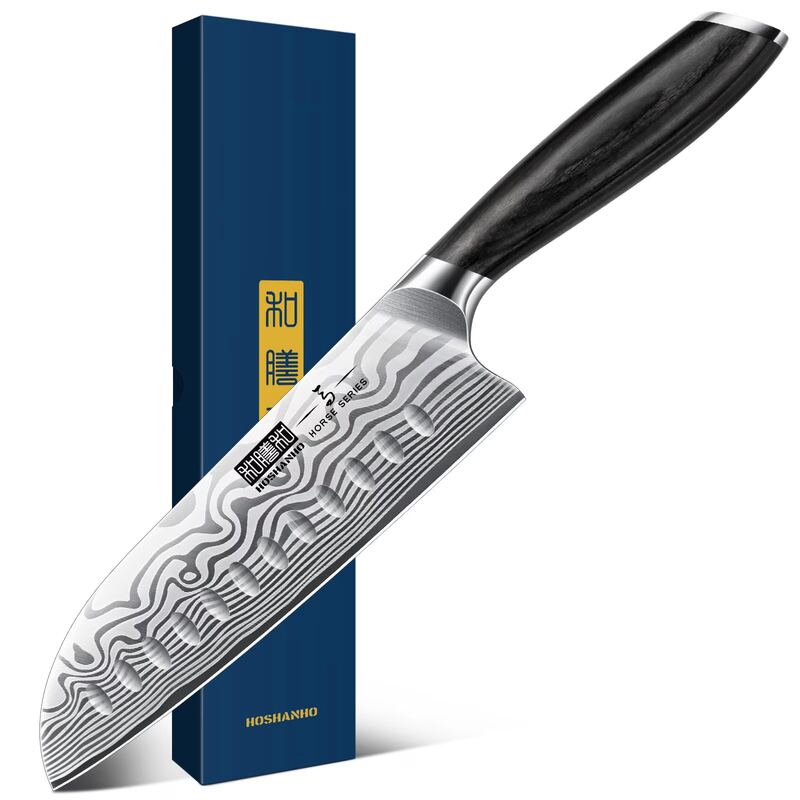
The Mercer Culinary Millennia 8" Chefs Knife offers magnetic storage convenience and good corrosion resistance, but its poor edge retention makes it inferior to the HOSHANHO Kitchen Knife and imarku Japanese Chef Knife. While it's more affordable than the Wüsthof Classic, it lacks the durability and edge hold of the Victorinox Swiss Classic and doesn't match the Matsato Chef Knife's outdoor versatility.
Rating sources
“The TL;DR version is that the knives in this set are okay at best, but the convenience of the magnetic board for storage makes them invaluable.”
“It’s nimble and sharp and has a grippy handle. Published on February 9, 2026 02:00PM EST By Grace Kelly Grace tested 13 chef’s knives for Serious Eats and named the Mercer as one of her favorites.”
“Mercer Millennia: The Best Mercer Stamped Knife”
Our 4.0 score is the average of the 4 scored reviews above; 1 more reviewed it without printing a score and is not in the average. Ratings marked * were derived from the reviewer’s written analysis or video transcript — the publisher didn’t print an explicit numeric score, so we inferred one from their own words. Click through to verify. More about methodology.