Epicurious found that the cordless design eliminates safety hazards and offers flexible movement in cramped kitchens, while Homes & Gardens noted the device is among the largest tested. The unit includes versatile attachments like a whisk and chopper, along with a removable pan guard to protect non-stick cookware from blade damage. However, spare batteries are expensive, adding significant cost if the included unit degrades or gets lost. This product fits users who prioritize power and versatility in a stationary kitchen setting but may be too bulky for those seeking compact portability.
Full review
Cordless freedom in cramped kitchens
Epicurious found that removing the cord fundamentally changes how a cook interacts with their kitchen workspace. The reviewer noted they had previously accepted doing all mixing on the left side of the sink or processing food only next to the stove because of outlet placement. Freed from being tethered, the appliance allows users to pace while chopping onions and move freely around the counter without worrying about unplugging the device mid-task. This flexibility is particularly valuable for those with limited kitchen space who previously found it frustrating to maneuver a corded tool near burners or check recipes on a tablet placed nearby.
The elimination of the cord also addresses safety concerns that come with traditional immersion blenders. The reviewer highlighted how dangerous and irritating it was to have cords draped over hot burners while trying to blend a sauce. By removing this hazard, the KitchenAid Go allows for safer operation in busy cooking environments where pots are moved frequently. This freedom transforms the appliance from a stationary tool into an active partner that goes wherever the ingredient preparation happens.
Variable speed control and safety mechanisms
The device features a trigger mechanism combined with a rear safety switch, requiring simultaneous pressure to activate the motor. This dual-action design prevents accidental activation when the user is positioning the blender in a pot or jar. While KitchenAid markets the tool as having variable speed settings, real-world usage reveals that finding the precise line of variable control can be difficult. The average kitchen reviewer noted that the trigger feels more like an on/off switch rather than offering smooth, incremental speed adjustments, making it challenging to maintain a consistent low-speed blend for delicate tasks.
Despite the binary feel of the trigger, the blender effectively handles high-power tasks such as pureeing soups and breaking down hard ingredients. The variable speed capability allows users to start at a lower setting to prevent splashing before ramping up power to liquify thicker mixtures. This mechanism ensures that while the control might not be infinitely adjustable, it provides enough range to handle everything from smooth hummus to chunky salsa without requiring multiple different tools.
Pan guard protects non-stick cookware
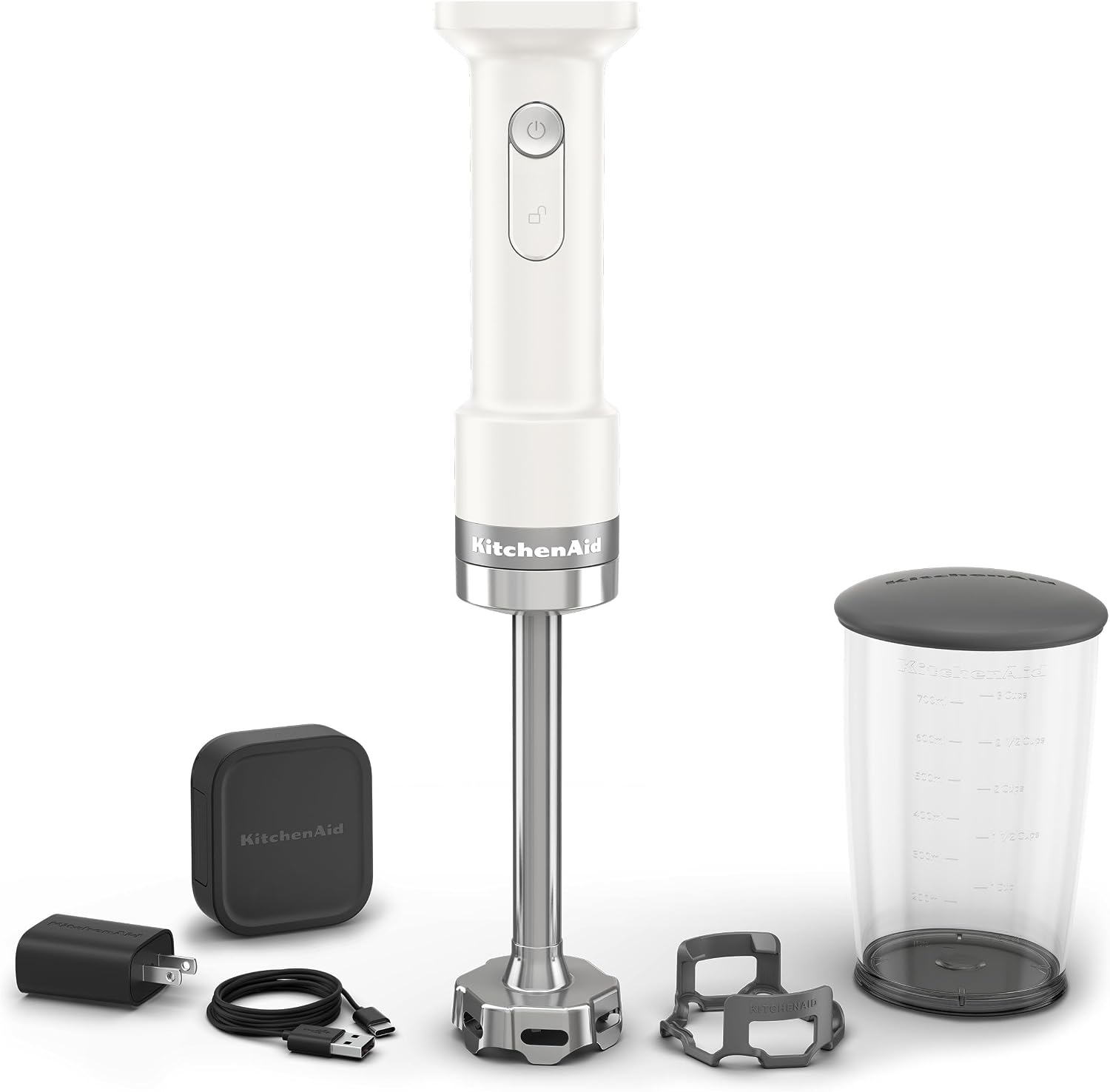
A standout feature of the immersion blending arm is the removable plastic-coated pan guard. This component surrounds the four-point stainless steel blades to prevent direct contact between the metal and the interior walls of pots or pans. The average kitchen reviewer demonstrated this by pureeing a can of diced tomatoes directly in a pot, noting that the guard protects delicate Teflon surfaces from getting scratched or damaged by the spinning blades. This is a significant advantage over older models or competitors that lack such protection.
The pan guard also serves as a safety buffer when blending hot liquids like butternut squash bisque or potato soup. It helps keep the user's hand and wrist away from the sharp blades while maintaining control over the immersion depth. The ability to remove this guard allows for easier cleaning of the blade assembly, ensuring that no food particles get trapped between the guard and the motor housing. This thoughtful design detail addresses a common pain point for home cooks who frequently use non-stick cookware.
Versatile attachments expand functionality
The KitchenAid Go system includes multiple attachments that transform the base unit into a multi-functional kitchen tool. The whisk attachment allows for whipping heavy cream and making chocolate milkshakes, while the chopper attachment can pulverize almonds into fine pieces or process proteins for homemade sausage filling. Epicurious found the cordless chopper particularly helpful for tasks like chopping onions without the physical effort and aftermath of manual chopping.
The blending jar attachment provides a dedicated vessel for smoothies and protein shakes, eliminating the need to blend directly in serving glasses or messy pots. This setup is ideal for gym-goers who want to prepare big portions on the go. The ability to switch between attachments means users can whip cream, puree soup, chop vegetables, and mix drinks with a single base unit, reducing clutter and saving counter space compared to owning separate appliances.
Battery compatibility across the range
One of the most significant advantages of the KitchenAid Go ecosystem is the shared battery technology. The rechargeable lithium-ion battery used in this blender is compatible with other tools in the Go Cordless line, such as hand mixers and choppers. This means users only need to invest in one or two batteries regardless of how many appliances they own from the range. Homes & Gardens noted that buying a model with a battery included is more expensive upfront but eliminates the need for extra investment later if you already own another Go device.
The battery indicator light provides visual feedback on charge levels, changing colors as power runs low. While KitchenAid claims up to 60 minutes of runtime, real-world usage varies based on the task. The average kitchen reviewer mentioned charging every two to three weeks for light use like mixing coffees, but noted that heavy tasks like pureeing soups might drain it faster. This shared battery system ensures that users are never left without a power source as long as they have at least one charged unit in their collection.
Cleaning convenience and maintenance
The blending arm detaches easily from the main body for safe cleaning, preventing water from entering the battery compartment. Most parts are dishwasher safe, including the whisk, chopper bowl, and blending jar, though the chopper attachment itself contains gears that should not be submerged in water. The average kitchen reviewer demonstrated a quick cleaning trick by rinsing the whisk under running water in a sink, showing how easily food particles can be removed from intricate pieces.
The removable pan guard adds another layer of convenience for maintenance, allowing users to clean around the blades without risking injury. This design ensures that no part of the appliance becomes a breeding ground for bacteria or old food residue. The ability to disassemble and dishwasher-clean most components makes post-meal cleanup quick and hassle-free, encouraging more frequent use for everyday tasks like making soups and dips.
Size trade-offs for portable blenders
While the KitchenAid Go offers powerful performance, its size is a notable consideration. Homes & Gardens found it to be one of the biggest cordless personal blenders tested, feeling more like a normal blender than a compact travel tool. This larger footprint makes it ideal for kitchen use where space allows, but it may be too bulky for users seeking something that fits easily into a handbag or small gym bag.
The size also impacts storage options. While the cordless design eliminates the need to hang cords around outlets, the bulk of the unit and its multiple attachments require significant drawer or counter space. Users with very small kitchens might find it challenging to store all components neatly without cluttering their workspace. This trade-off between power and portability means the appliance is best suited for stationary kitchen use rather than frequent travel.
Spare battery costs impact long-term value
A significant drawback highlighted by reviewers is the high cost of spare batteries. Homes & Gardens explicitly listed expensive spare batteries as a reason to avoid, noting that if the included unit degrades or gets lost, replacing it adds substantial ongoing costs. This financial consideration is particularly relevant for users who plan to expand their KitchenAid Go collection, as they will need multiple batteries to keep all devices running simultaneously.
While the shared battery system offers convenience initially, the price of individual replacement units can quickly add up. Users should factor in the cost of at least one spare battery when evaluating the total investment. This expense might deter budget-conscious shoppers who prefer cheaper alternatives with lower replacement costs, even if those options lack the power and versatility of the KitchenAid Go.
Strengths
- +Cordless design eliminates cord tangles and allows flexible movement around cramped kitchens or near burners.
- +Battery is compatible with the entire KitchenAid Go Cordless range, allowing users to share one battery across multiple tools.
- +Includes versatile attachments such as a whisk for whipped cream, an immersion blending arm for soups, and a chopper attachment.
- +Blending arm features a removable pan guard to protect non-stick cookware surfaces from blade damage.
Watch-outs
- −Spare batteries are expensive, adding significant cost if the included unit degrades or gets lost.
- −The device is larger than most portable blenders and may be too big for some users.
How it compares
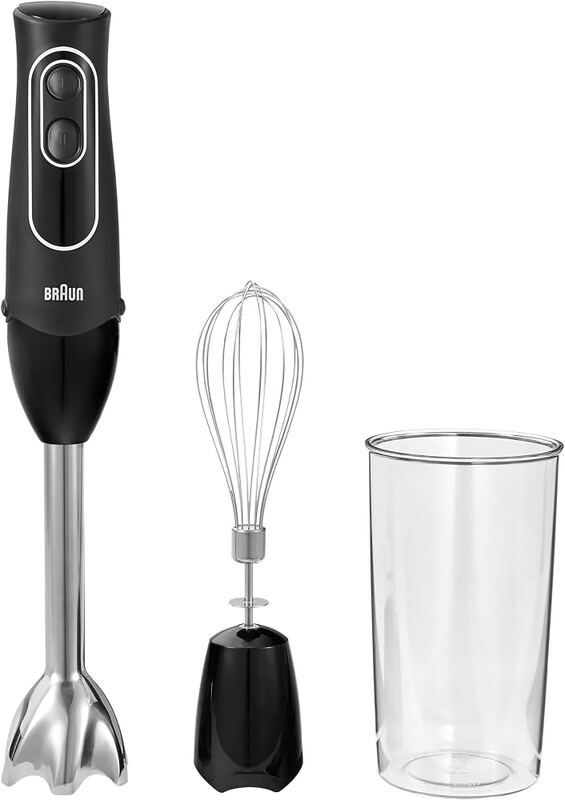
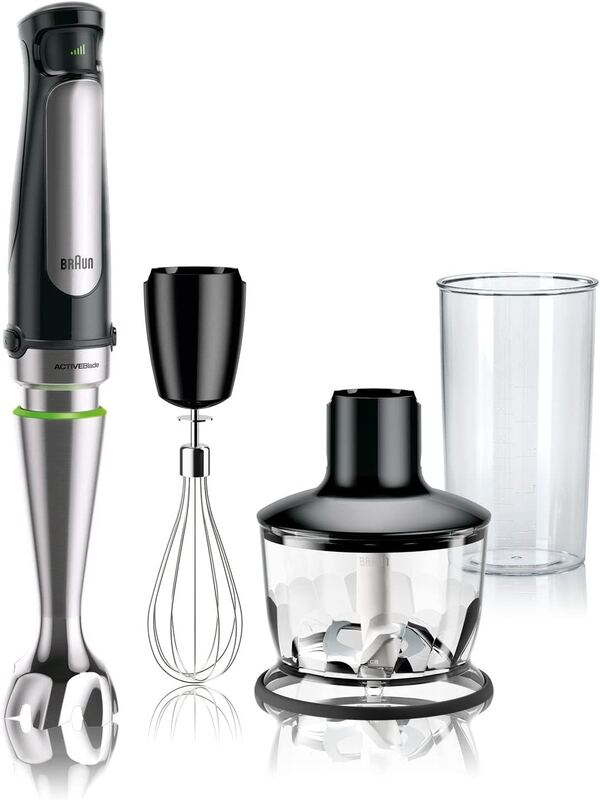
Unlike the corded Braun MultiQuick 5 or All-Clad Immersion Blender, this unit offers cordless flexibility to eliminate tangles in cramped kitchens.
Rating sources
“If you're fed-up of personal blenders that make small glasses of smoothie, you'll love the KitchenAid. It's big, powerful, and completely cordless without being too bulky or heavy.”
“And now that I’ve been spoiled, there’s no going back.”
Our 4.5 score is the average of these published ratings. Ratings marked * were derived from the reviewer’s written analysis or video transcript — the publisher didn’t print an explicit numeric score, so we inferred one from their own words. Click through to verify. More about methodology.