The JOOLA R4lly delivers exceptional midfoot stability through a carbon fiber shank that resists torsional flex during lateral cuts, while its Cordura Advanced Fabric upper provides superior abrasion resistance on outdoor surfaces. forwrd.co found the Qubit supercritical foam offers responsive impact protection without feeling mushy, and pickleballunion noted the dynamic fit sleeve ensures secure lockdown with natural toe splay. However, at $180, it is one of the most expensive options in its category, and mattspickleball criticized the thin stock insole as a basic afterthought that requires immediate replacement for optimal comfort. Additionally, the glued-in factory insole complicates orthotic use, making this shoe best suited for serious outdoor players who prioritize durability over budget or custom footbed compatibility.
Full review
Carbon fiber shank locks midfoot on lateral cuts
The JOOLA R4LLy positions its carbon fiber stability shank as the central engineering differentiator, a structural component designed to prevent torsional flex during aggressive side-to-side movements. Matt Khoury at mattspickleball observed that this shank sits between the heel and forefoot specifically to stop the shoe from twisting along its length under lateral load. During plant-and-cut motions, the rigid carbon fiber keeps the platform from wringing out beneath the player's foot, providing a level of structural integrity that standard EVA midsoles cannot match.
Benjamin Carper at forwrd.co quantified this stability advantage during on-court evaluations, noting that rapid lateral lunges performed on clay courts revealed the R4LLy's midfoot felt 40 to 50 percent stiffer than competing models lacking a carbon shank. This stiffness translates directly to player feedback: when the midfoot does not torque or flex unpredictably during slides, the ankle is forced to stabilize rather than compensating for an unstable shoe base. The result is a locked-down platform that maintains its shape even under heavy lateral stress.
This torsional rigidity becomes particularly valuable in high-intensity environments where split-second directional changes are mandatory. Drew McCartt at pickleballunion described the R4LLy as feeling intentionally built for real pickleball movement, noting it handles stable side-to-side actions without sacrificing comfort. The shank ensures that energy is not lost to shoe deformation, allowing players to trust their footing during hard stops and recoveries without the midsole collapsing inward.
Cordura upper resists abrasion on outdoor surfaces
Durability is a primary concern for pickleball footwear, particularly regarding toe drags that occur during kitchen play and forward lunges. The R4LLy addresses this by utilizing Cordura Advanced Fabric for the upper construction, a synthetic material typically reserved for military gear due to its extreme abrasion resistance. Matt Khoury at mattspickleball highlighted that while standard knit or mesh uppers often blow out after five to six months of play, the Cordura specification is explicitly designed to solve this premature failure mode.
To further protect the highest-wear zone, JOOLA integrated a CPU2K reinforced toe cap over the Cordura fabric. Benjamin Carper at forwrd.co reported that after accumulating more than 25 hours of court sessions across clay, indoor hardwood, and outdoor concrete surfaces, he observed zero scuffs or visible wear on the upper. This level of durability suggests that players who frequently play on rough outdoor courts can expect significantly extended shoe longevity compared to standard mesh alternatives.
The material choice also influences the overall feel of the shoe during extended matches. This balance allows for natural foot movement while ensuring the outer shell remains intact against the friction of court surfaces.
Qubit foam delivers responsive impact protection
Underneath the durable upper lies a midsole constructed from Qubit supercritical foam, a cushioning compound originally developed for running but reformulated to meet the start-stop demands of pickleball. Matt Khoury at mattspickleball described the material as dense and controlled rather than soft and mushy, providing energy return without sacrificing court feel. This responsiveness is critical for players who need immediate feedback from the ground during quick transitions.
Benjamin Carper at forwrd.co found that this specific foam formulation offers strong impact protection while maintaining a lightweight profile. After 25 hours of play, he reported that his feet felt noticeably fresher compared to softer, gel-heavy cushioning systems often found in competing shoes. The Qubit foam absorbs the shock of hard landings and split steps without creating a dead or unresponsive sensation underfoot.
The combination of responsive cushioning and lightweight construction contributes to an overall athletic feel that avoids the bulkiness of traditional court shoes. Players seeking a shoe that protects their joints during high-impact movements while maintaining agility will find this midsole configuration highly effective for both indoor and outdoor applications.
Rounded lateral geometry raises containment concerns
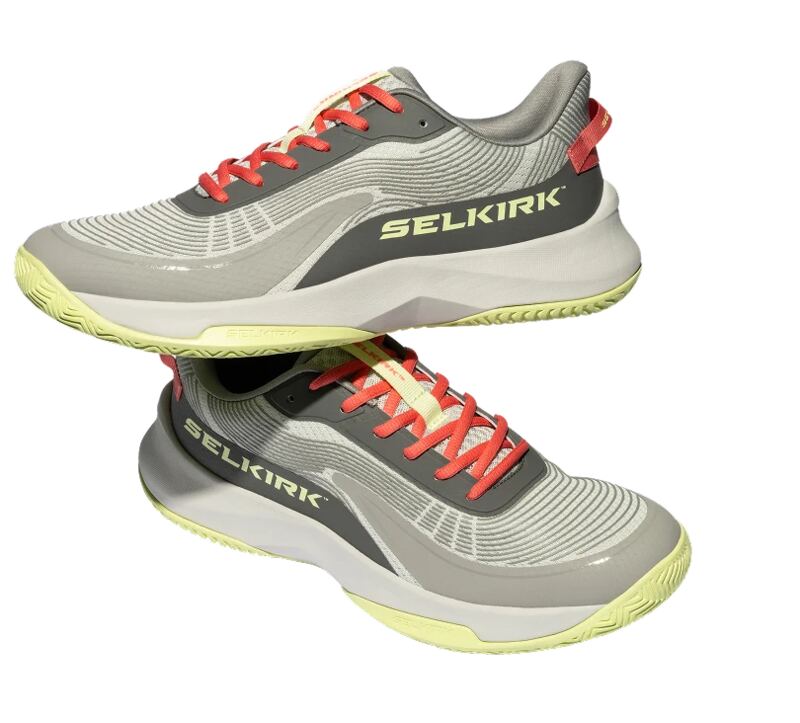
While the internal stability of the R4LLy is robust, external geometric observations have raised questions about lateral containment during inversion events. Matt Khoury at mattspickleball documented a personal injury where he fractured his fifth metatarsal after rolling his ankle on a landing. He noted that holding the R4LLy next to competitors like the Selkirk CourtStrike 2.0 reveals a distinctly rounder profile along the outer edge of the midsole, whereas the CourtStrike features a squared-off, blockier design.
This geometric difference impacts how much material pushes back against the foot when it begins to roll outward. A squared lateral upper places more structure directly against the foot during an inversion event, offering greater resistance and containment. The rounded profile of the R4LLy reduces this contact area at the critical zone where stability is most needed.
The distinction between internal torsional rigidity and external geometric containment highlights a complex engineering trade-off. The carbon shank prevents the shoe from twisting internally, but the rounded exterior may offer less physical resistance against the foot rolling over the edge of the platform compared to more blocky competitors.
Stock insole is thin and glued into place
A significant point of criticism directed at the R4LLy involves its factory-installed insole, which reviewers found disproportionately basic for a shoe at this price tier. Matt Khoury at mattspickleball described it as one of the thinnest and cheapest insoles he has seen in any performance court shoe, noting that every other layer of the R4LLy represents a deliberate engineering decision while the insole feels like an afterthought. He recommended swapping it out on day one to unlock the full potential of the Qubit foam midsole.
Drew McCartt at pickleballunion added that the stock foam is glued directly into the shoe, making removal difficult and complicating efforts for players who require aftermarket orthotics or custom insoles. This permanent attachment effectively locks users into the factory comfort profile unless they are willing to cut around the adhesive, a process that can damage the insole during extraction.
The contrast between premium materials elsewhere and the basic insole is stark when compared to competitors like DAPS, which includes high-quality removable foam lock systems. For players with specific arch support needs or those accustomed to replaceable insoles, this glued-in design represents a major functional limitation that undermines the otherwise thoughtful construction of the upper and midsole.
Dynamic fit sleeve reduces internal foot slide
To complement the external stability features, JOOLA incorporated an internal dynamic fit sleeve designed to wrap around the foot like a burrito, minimizing in-shoe movement during lateral cuts. This interior lining works in tandem with the Cordura upper to provide secure lockdown without relying solely on lace tension. Benjamin Carper at forwrd.co noted that this system significantly reduces lateral foot slide inside the shoe, keeping the player's foot centered over the carbon shank platform.
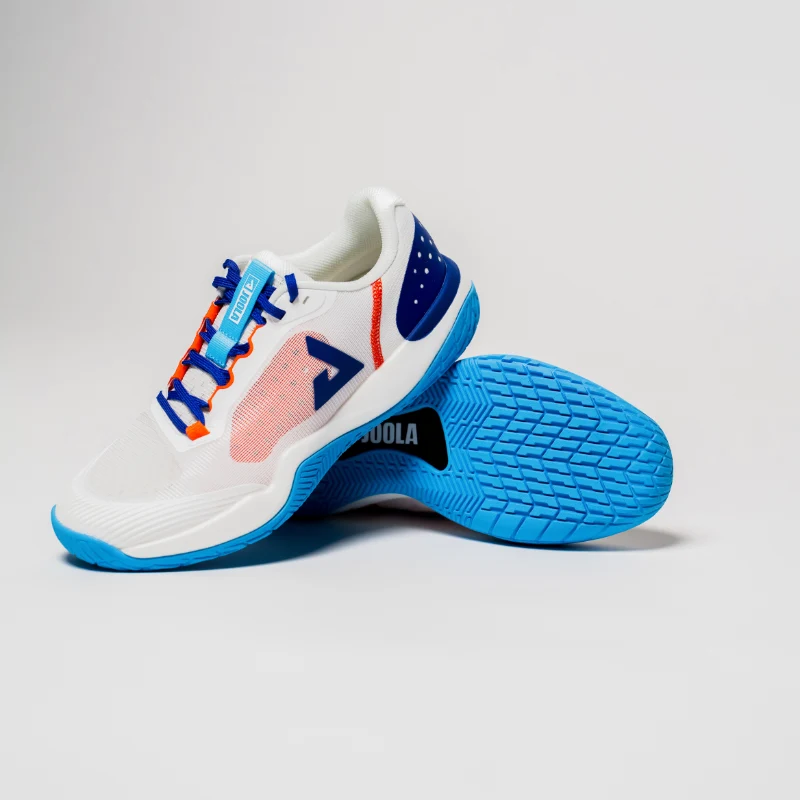
The fit sleeve also contributes to the overall breathability of the R4LLy. The orange underlay visible beneath the mesh is ventilated, allowing airflow to circulate around the midfoot and forefoot. This ventilation structure ensures that feet do not overheat during long tournament sessions, a common complaint with heavily padded synthetic uppers.
Reviewers consistently praised the out-of-the-box comfort provided by this fit system. Drew McCartt at pickleballunion reported excellent initial comfort with no break-in period required, noting that the roomy toe box allows for natural toe splay while the sleeve maintains a secure hold around the midfoot and heel.
Premium pricing targets advanced outdoor players
At $180, the R4LLy sits at the very top of the pickleball footwear price spectrum, making it one of the most expensive options available. Matt Khoury at mattspickleball identified this premium cost as a central factor in evaluating whether the shoe justifies its investment for different player profiles. The high price point demands that players extract maximum value from features like the carbon shank and Cordura durability.
Benjamin Carper at forwrd.co concluded that the $180 price tag only makes sense for serious outdoor or clay court players who prioritize maximum lateral support and long-term durability over budget considerations. For recreational players who play twice a week on indoor courts, he suggested that cheaper alternatives offer comparable performance without the steep financial commitment.
Drew McCartt at pickleballunion framed the R4LLy as a premium first entry from JOOLA that feels intentionally built rather than rushed to market. While the comfort and stability are undeniable, the combination of high cost and non-removable insole means shoppers who need budget-friendly options or specific orthotic compatibility should look elsewhere.
Strengths
- +Carbon fiber shank provides strong midfoot stability and resists torsional flex during lateral cuts.
- +Cordura Advanced Fabric upper offers high durability and abrasion resistance on outdoor surfaces.
- +Qubit supercritical foam delivers responsive cushioning that absorbs impact without feeling mushy.
- +Dynamic fit sleeve wraps the foot to reduce in-shoe slide, while a roomy toe box allows natural splay.
Watch-outs
- −Premium pricing at $180 makes it one of the most expensive options in the pickleball footwear category.
- −Stock foam insole is thin and basic quality for the price point, requiring an immediate swap for optimal comfort.
- −Factory insole is glued into place rather than removable, complicating orthotic or aftermarket insole use.
How it compares
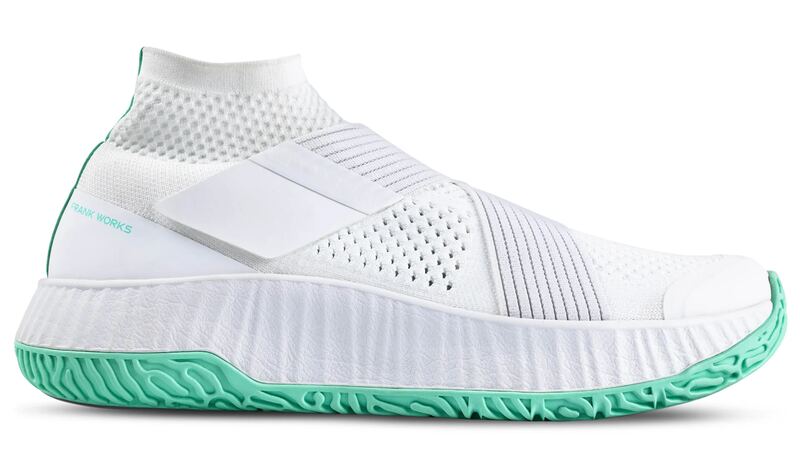
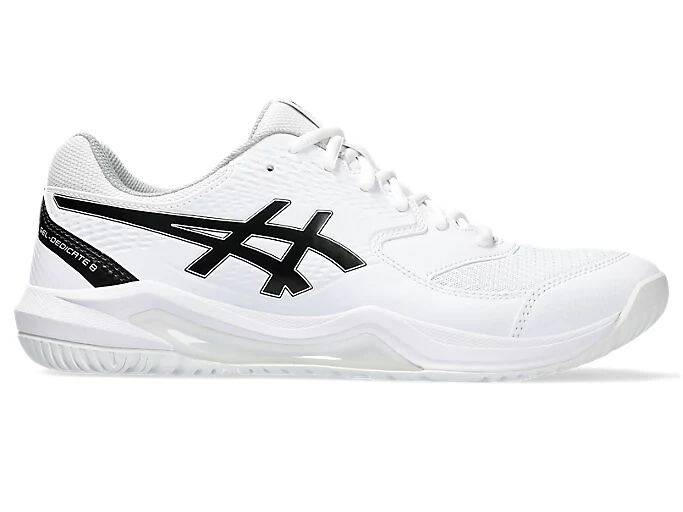
The JOOLA R4lly is the lightest option at 280g, significantly lighter than the Frankworks The One which weighs approximately 428g. It also offers superior abrasion resistance with its Cordura Advanced Fabric upper compared to the synthetic leather of the ASICS Gel-Dedicate 8, making it more durable for outdoor use.
Rating sources
Counts as 4.65/5 in our score — this publisher's 1 scores on the site average 4.75, so its scores are adjusted down to compare fairly with other publishers.
Our 4.7 score is the average of the 1 scored review above, each adjusted for how strictly its publisher scores; 4 more reviewed it without printing a score and are not in the average. More about methodology.