outdoorgearlab found that the Jackery SolarSaga 200 generates 171 watts per hour in side-by-side testing, achieving an impressive 86% efficiency rating. The panel weighs only 14.2 pounds, making it the lightest folding 200-watt option available, and features a bifacial design with 26.7% IBC cell efficiency for better low-light performance per outdoortechlab. However, its proprietary DC8020 connector requires specific adapters to connect with non-Jackery portable power stations, creating a significant barrier for users outside the brand ecosystem. This product fits Jackery owners seeking high-output portability, while those using other brands or prioritizing cost efficiency should look elsewhere.
Full review
Efficiency and output in side-by-side testing
outdoorgearlab measured the Jackery SolarSaga 200 generating exactly 171 watts per hour during controlled, side-by-side solar panel testing at a California location. This performance resulted in an efficiency rating of 86% relative to its claimed wattage, placing it among the top performers for folding panels in that category. The outlet noted that this output was higher than average when compared directly against other 200-watt models available on the market at the time.
The SolarSaga utilizes bifacial monocrystalline silicon cells to achieve these figures. outdoortechlab highlighted the specific cell technology as a key differentiator, noting that the panel employs 26.7% IBC (Interdigitated Back Contact) efficiency. This advanced architecture allows the panel to capture reflected light from both sides and perform significantly better in low-light conditions compared to standard PERC panels found on many competitors.
Real-world field tests corroborate these laboratory-style findings. A YouTube reviewer running a power rating test recorded an input of 160 to 162 watts at 10:30 AM, which the reviewer described as close to acceptable for that time of day without full solar elevation. When deploying two panels simultaneously into a Jackery Explorer 1000, the setup delivered approximately 315 watts of combined input, allowing the unit to charge from forty percent capacity in roughly two and a half hours.
Portability metrics for basecamp deployments
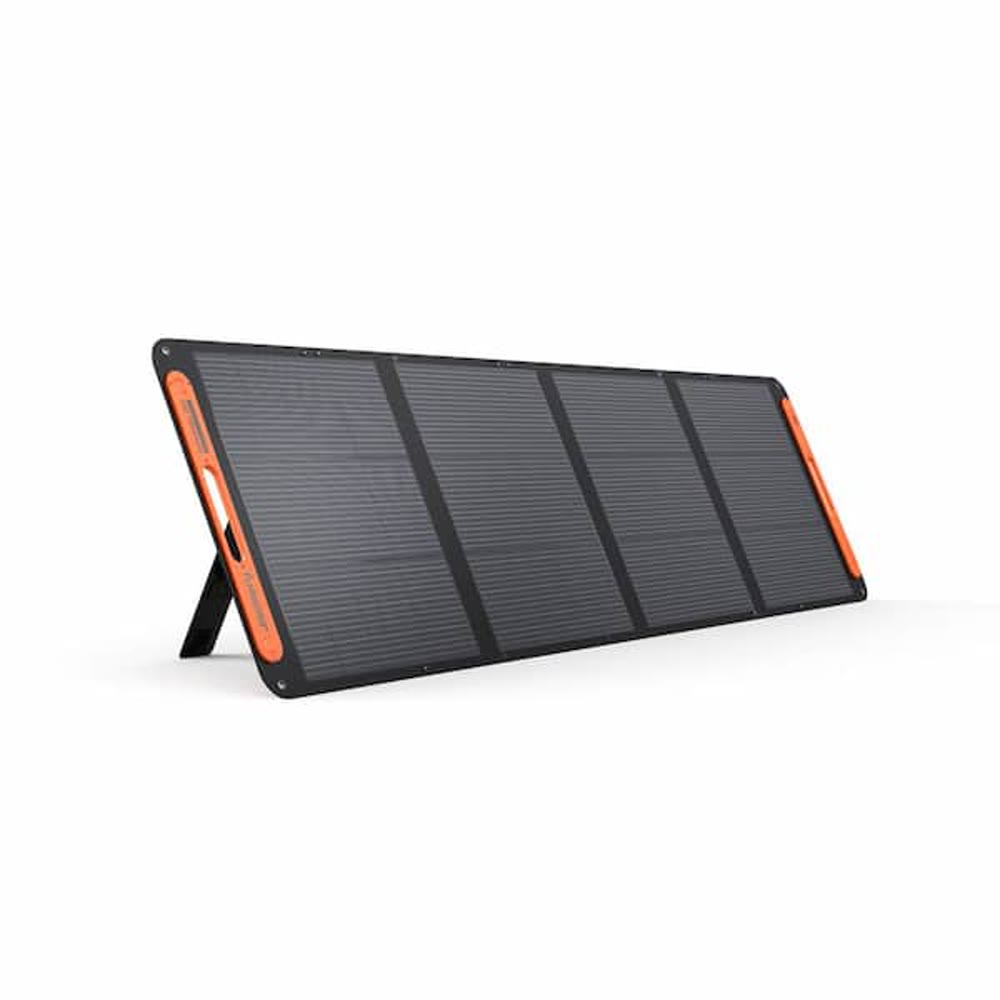
outdoorgearlab clocked the weight of the SolarSaga 200 at precisely 14.2 pounds, identifying it as the lightest folding 200-watt panel available on the market. This low mass makes loading the unit into a vehicle trunk alongside camping gear significantly easier than hauling heavier alternatives. The design incorporates a built-in carry handle with magnetic closures that secure the folded panels tightly during transport.
outdoortechlab contrasted this directly with the smaller SolarSaga 100W Air model, which weighs only seven pounds and folds down to the size of an A2 sheet of paper. The 200W panel is explicitly designed as high-output infrastructure for stationary setups rather than ultralight backpacking.
Setup mechanics involve unfolding the panels and deploying integrated kickstand legs. outdoorgearlab noted that while the setup process is generally quick, the included kickstand legs can be somewhat wobbly on uneven ground. Users must rely on tie-down holes located along the edges to secure the panel against wind when it is not anchored by a heavy power station or additional gear.
Proprietary connectors and ecosystem lock-in
The SolarSaga 200 relies on a proprietary DC8020 connector to interface with portable power stations. outdoorgearlab explicitly identified this as the panel's biggest downside for users who do not own Jackery equipment, stating that non-Jackery power station owners will likely need to purchase separate adapters to use this specific solar panel. This requirement creates a financial and logistical barrier outside of the brand ecosystem.
BackupPowerHub tested third-party connections using various adapters and found that connecting the SolarSaga 200 to high-power stations from other brands frequently failed, regardless of whether an AC outlet or car charger adapter was utilized. The proprietary nature of the plug means the panel is functionally locked into Jackery's hardware unless users invest in compatible conversion cables.
Despite this restriction, the panel includes built-in USB-A and USB-C ports on its junction box. This allows direct charging of small electronics like smartphones or cameras without routing power through an intermediate battery pack. However, for any meaningful energy generation to recharge a large power station, the DC8020 connection remains mandatory.
Bifacial performance on varied surfaces
The bifacial design of the SolarSaga 200 is engineered to capture ambient light reflecting off the ground, theoretically increasing total energy harvest. BackupPowerHub conducted real-world testing across various ground surfaces to measure these bifacial gains alongside standard direct sunlight performance. The panel features an IP68 waterproof rating, which exceeds the industry-standard IP67 found on many competitors.
outdoortechlab emphasized that the 26.7% IBC efficiency specifically targets low-light environments, such as overcast days or shaded areas under tree canopies. In Northern Michigan field testing, this capability allowed the panel to meaningfully recharge larger stations like the Explorer 1000 v2 and 2000 Plus within a single day of sun, even when weather conditions were not perfectly clear.
The physical construction includes textured panels that are simple to clean and easily remove debris. The case utilizes strong magnets and snaps to keep the panels folded during transport. While the IP68 rating suggests robust water resistance, some users note that keeping the USB ports dry is critical for long-term reliability, as exposed moisture can degrade efficiency if not managed properly.
Price premium versus third-party alternatives
The Jackery SolarSaga 200 carries a retail price. outdoorgearlab rated this as expensive compared to the broader market, noting that it is not the most affordable option for consumers seeking raw wattage per dollar. The outlet calculated a cost-per-watt figure of $2.21 based on its measured output, which sits significantly higher than competitors like the Renogy 200W or JJN Bifacial panels.
hagensieker, reviewing the smaller SolarSaga 100 model, described the pricing as expensive and noted that third-party solar panels offer comparable wattage for a fraction of the cost. This sentiment extends to the 200W tier, where users must decide if the premium is justified by the build quality, brand reliability, and ecosystem integration rather than raw electrical output.
The high price point positions the SolarSaga 200 as a premium option for serious solar users who prioritize maximum power from a single foldable unit. However, shoppers looking strictly at cost efficiency will find that cheaper monocrystalline panels deliver similar peak wattage numbers, albeit with heavier weights and lower conversion efficiencies.
Warranty terms and physical durability
Jackery provides a three-year warranty on the SolarSaga 200, which can be extended by an additional two years if purchased directly from their website. This five-year coverage period is notably longer than the standard two-year warranties offered by many competing folding solar panels in the same weight class.
The physical build quality is frequently praised for its premium materials and robust construction. The integrated handle with magnetic closure inspires confidence during transport, preventing accidental unfolding. The silicone output cables are removable, high-quality, and feature attached hook-and-loop straps for organized storage, a detail that reviewers found superior to permanently wired competitors.
While the panel itself is durable, hagensieker pointed out that the lightweight nature of the unit makes it susceptible to theft if left unattended at a campsite. The fabric covering can also become dirty or stained if placed directly on wet ground, requiring users to be mindful of placement despite the high IP68 water resistance rating.
Strengths
- +Outdoorgearlab measured an efficiency of 86%, generating 171 watts per hour in side-by-side testing.
- +Weighs only 14.2 pounds, making it the lightest folding 200-watt panel available according to outdoorgearlab.
- +Features a bifacial design with 26.7% IBC cell efficiency for better performance in low-light conditions per outdoortechlab.
- +Includes built-in USB-A and USB-C ports for direct device charging without needing an intermediate power station.
Watch-outs
- −Requires specific adapters to connect with non-Jackery portable power stations due to its proprietary DC8020 connector.
- −High price point
How it compares
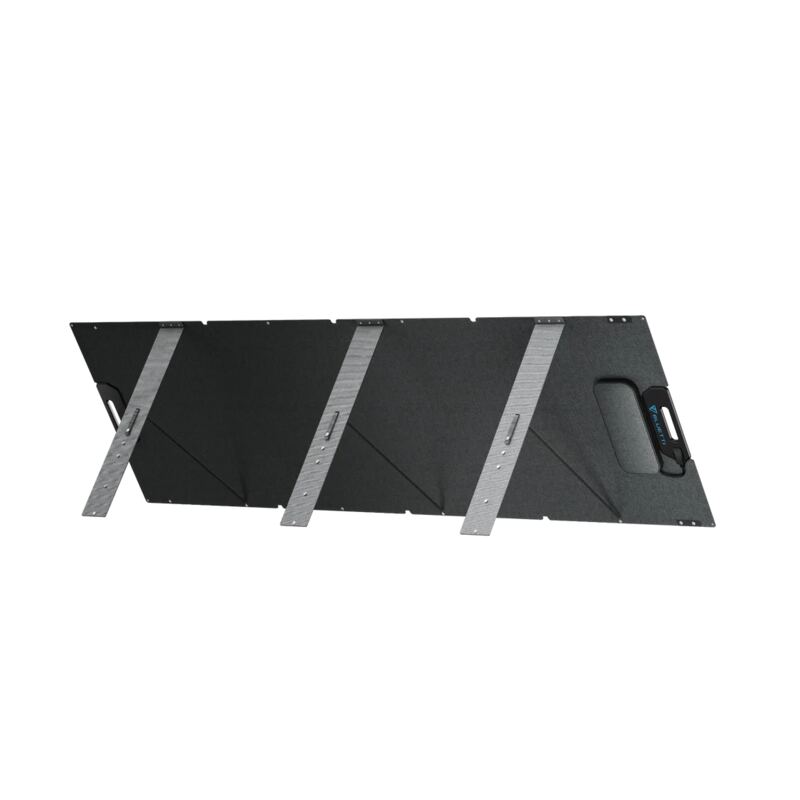
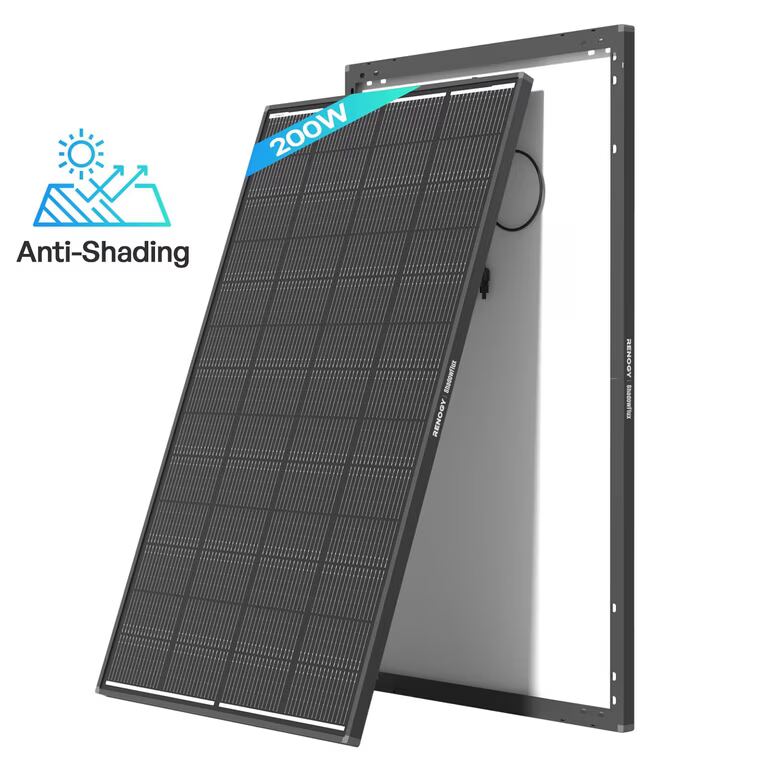
The Jackery SolarSaga 200 features an IP68 waterproof rating, offering better weather resistance than the IP65-rated Renogy 200W and Bluetti PV350. However, its proprietary DC8020 connector makes it less versatile for non-Jackery users compared to the MC4 connectors found on the Renogy 200W and Bluetti PV350.
Rating sources
Our 4.4 score is the average of the 3 scored reviews above; 3 more reviewed it without printing a score and are not in the average. More about methodology.