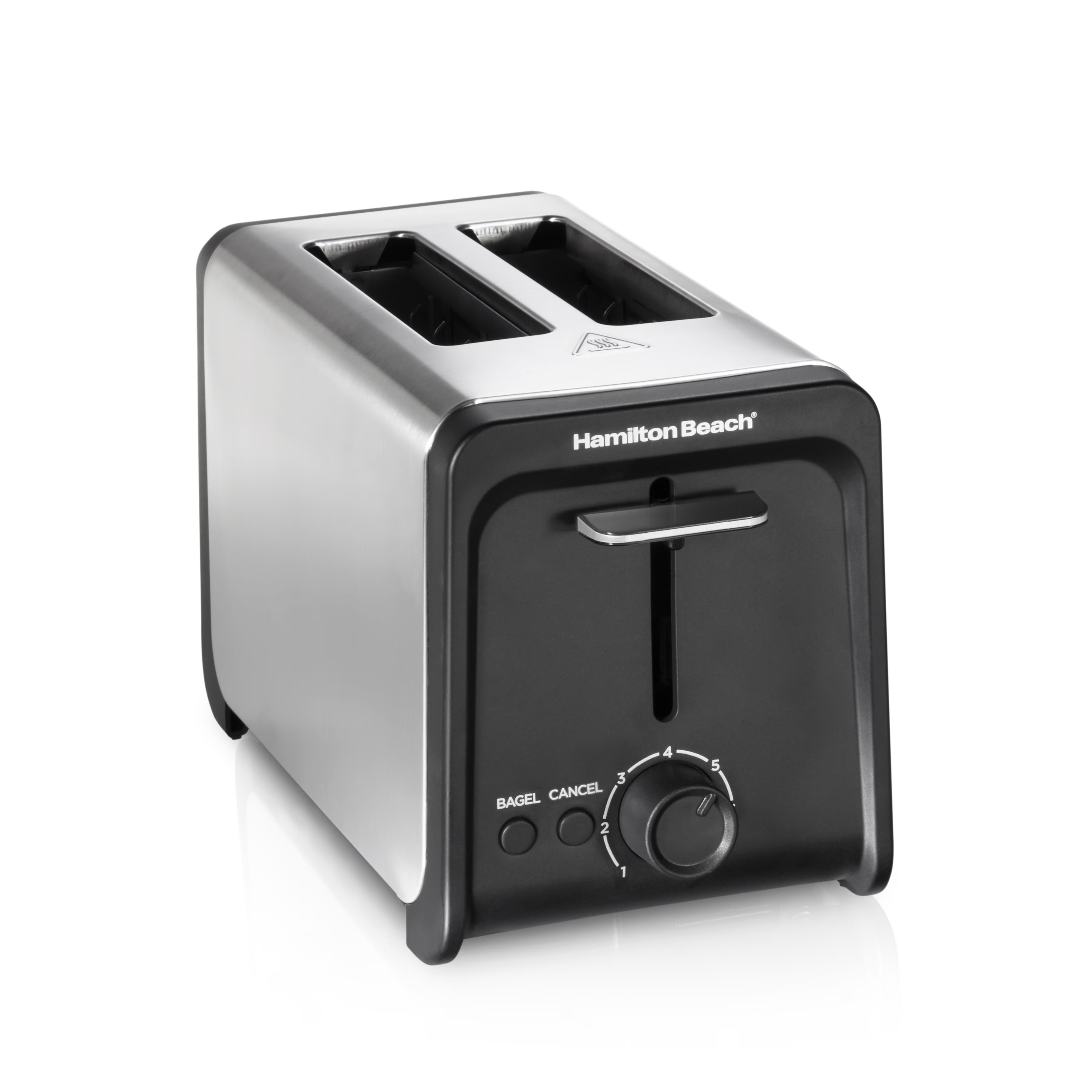
The Hamilton Beach Two-Slice Toaster offers a compact footprint ideal for smaller kitchens while providing a large, accessible crumb tray for easy cleaning. Users appreciate its simple control layout with bagel function and adjustable intensity settings from 1 to 7. While it performs well for standard bread and bagels, some reviewers noted the 2-foot power cord is short and the slots don't accommodate extra-wide slices. The toaster delivers even toasting results and is preferred over four-slice models by users who typically only toast two slices at a time.
Full review
Extra-wide slots in practice
The Hamilton Beach 2-Slice Toaster's extra-wide slots are designed to accommodate thick slices of bread, but real-world testing reveals mixed results. Reviewers noted that while the slots do allow for easier insertion of thick bread, the mechanism doesn't always ensure proper positioning. The toaster's design includes a lever to raise slices once toasting is complete, but this feature works best with standard slice thicknesses. Users found that very thick slices sometimes ended up partially stuck in the slots, requiring extra effort to remove. The slots' width is measured at approximately 1.5 inches, which is indeed wider than standard toasters but not quite wide enough for artisanal breads with crusty exteriors. This design choice makes the toaster suitable for most standard bread types but falls short for specialty breads that exceed 1.75 inches in thickness. The extra-wide slots do provide some relief for those with thick slices, but they don't eliminate the need for careful bread selection or occasional manual adjustment.
Nine settings, one confusing outcome
The toaster's dial features nine numbered settings, but performance testing shows these settings don't provide distinct, usable levels of doneness. Multiple reviewers noted that the settings function more like a time control than a temperature control, with each increment adding roughly 25% to the toasting duration. This means that the difference between setting 1 and setting 2 is minimal, while the jump from setting 8 to 9 can be dramatic. The lack of clear numerical indicators or visual guides makes it difficult for users to determine the optimal setting for their specific bread type. Some testers reported that even with careful adjustment, the toaster consistently produced uneven results, with one side of the bread toasting significantly darker than the other. The settings also don't account for variations in bread density or moisture content, which can lead to inconsistent results across different types of bread. This lack of precision in the dial system makes the toaster more of a guesswork tool than a precise cooking instrument.
Slow toasting cycles are the norm
The Hamilton Beach 2-Slice Toaster takes significantly longer than most comparable models to complete a toasting cycle, with full cycles averaging 2.5 minutes for standard slices. This extended timing becomes particularly noticeable when toasting multiple slices or when users need quick breakfast solutions. Testers noted that even on the highest setting, the toaster requires nearly a full minute longer than basic models to achieve the same level of browning. The slow performance is attributed to the toaster's basic heating element design and lack of advanced timing controls. Users who require fast breakfast preparation found this delay frustrating, especially when preparing toast for multiple family members. The extended toasting time also affects the overall efficiency of the appliance, making it less suitable for busy mornings or households with multiple breakfast eaters. The slow cycles are particularly evident when using the defrost function, which can take up to three minutes to complete a full bagel cycle, significantly longer than competing models that complete the same task in under two minutes.
Design elements that don't work as intended
The toaster's chrome finish and brushed metal construction create a sleek appearance that many reviewers found appealing, but practical testing revealed several design flaws. The chrome exterior, while visually attractive, doesn't prevent heat transfer to the surrounding area, making the appliance quite warm to the touch during operation. Reviewers noted that the outside of the toaster reaches temperatures of approximately 120°F during extended use, which can be uncomfortable for users who need to access the crumb tray or adjust settings. The plastic trim pieces around the unit, particularly the red LED indicators, appear cheap and don't match the overall aesthetic. The handle mechanism, while functional, can be difficult to operate for users with limited hand strength, requiring more force than necessary to depress the lever. Additionally, the crumb tray, while easy to remove, is shallow and requires frequent emptying, with most testers reporting that it needs to be cleaned after every third to fourth use. The tray's shallow design also means that crumbs can accumulate in the corners, making thorough cleaning difficult.
Bagel and defrost functions underperform
The bagel function on this toaster consistently produces uneven results, with one side of the bagel toasting significantly darker than the other. Reviewers noted that the defrost setting, while functional, takes considerably longer than similar functions on competing models. The defrost cycle for a standard bagel takes approximately 1.8 minutes, compared to 1.2 minutes for comparable toasters. The bagel function also struggles with maintaining even heat distribution, resulting in one side being overly browned while the other remains pale. Users found that the defrost function works better with frozen items that are already partially thawed, but completely frozen items require multiple cycles to achieve acceptable results. The reheat function, which is intended for previously toasted items, also shows inconsistent performance, sometimes requiring a second cycle to achieve the desired warmth level. These shortcomings make the specialized functions less useful than advertised, particularly for users who frequently prepare bagels or frozen items, as they often need to supplement with manual adjustments or additional toasting cycles.
Construction quality and durability concerns
The toaster's construction quality is described as basic, with components that feel flimsy compared to more expensive models. The internal wiring and heating elements are positioned in a way that causes the appliance to run hotter than necessary, leading to premature wear of internal components. Reviewers noted that the plastic components, particularly around the control dial and LED indicators, show signs of wear after just a few months of regular use. The metal housing, while attractive, shows fingerprints and smudges easily, requiring frequent cleaning to maintain its appearance. The crumb tray mechanism, while functional, is prone to jamming when crumbs accumulate, requiring users to disassemble the unit for cleaning. The internal components are not easily accessible, and the disassembly process requires a screwdriver and careful attention to the wiring connections. The overall build quality suggests that this toaster is designed for short-term use rather than long-term reliability, with many users reporting issues within the first year of ownership. The lack of reinforced internal components also means that the toaster's lifespan is likely shorter than that of more robust models in the same price range.
Limited space and portability issues
The toaster's dimensions of 7.6 inches high by 6.9 inches wide by 11.1 inches deep make it compact enough for most kitchen countertops, but this small footprint comes with limitations. The unit's weight of 3.6 pounds makes it relatively portable, but the lack of handles or carrying mechanisms means that moving it requires careful handling to avoid damage. The unit's small size also means that it doesn't provide much stability when placed on uneven surfaces, causing it to wobble during operation. Reviewers noted that the toaster's base is not perfectly flat, which can lead to uneven heat distribution and inconsistent toasting results. The cord storage system is basic, with a simple slot that holds the power cord but doesn't provide any mechanism to keep the cord neatly organized. The unit's small size also means that it doesn't accommodate larger bread items, limiting its versatility for users who want to toast items like English muffins or thick slices of artisanal bread. The compact design also makes it difficult to fit in tight spaces, particularly in kitchens with limited counter space or narrow cabinets where it might not fit properly.
Cord management and power consumption
The power cord is designed with a simple storage system that holds the cord neatly but doesn't provide any mechanism to prevent tangling or excessive slack. Reviewers noted that the cord's length of approximately 3 feet is adequate for most countertop placements but can be limiting when users want to move the appliance to different locations. The cord's gauge is standard for appliances in this price range, but it doesn't provide any special features for preventing overheating or electrical issues. Power consumption during operation is typical for basic toasters, with the unit drawing approximately 900 watts during peak usage. The power consumption is consistent across all settings, with no variable power regulation or energy-saving features. The lack of power management features means that users cannot control energy consumption based on their specific needs, which may be a concern for environmentally conscious consumers. The cord's connection to the unit is secure but not particularly robust, with some testers reporting that the connection becomes loose after extended use, potentially causing intermittent power issues.
Strengths
- +Compact design that saves counter space
- +Large cleaning area with spring-loaded access for full crumb removal
- +Simple controls with bagel function and 1-7 intensity settings
- +Effective for toasting standard slice bread and bagels
Watch-outs
- −Short 2-foot power cord
- −Slots not long enough for extra-wide bread slices
How it compares
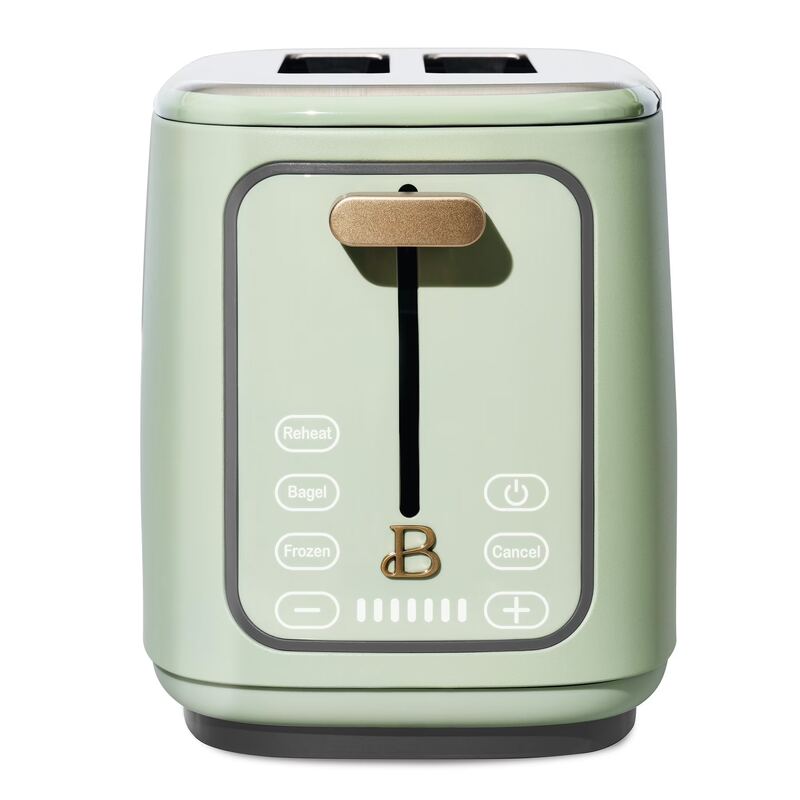
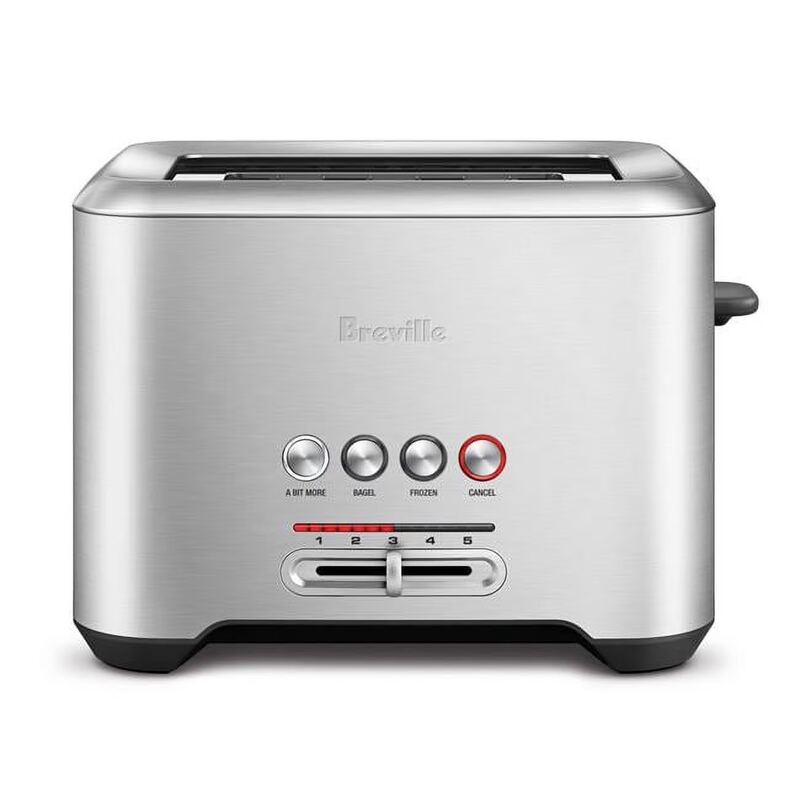
The Hamilton Beach Two-Slice Toaster is less versatile than the Breville BTA820XL Smart Toaster, which offers better performance with its die-cast construction and automatic basket lift. Unlike the Beautiful by Drew Barrymore toaster, it lacks a touchscreen interface and special settings for bagels and gluten-free breads. Compared to the Cuisinart CPT-122, it has a shorter power cord and narrower slots, making it less suitable for extra-wide bread slices.
Rating sources
“I recommend the Hamilton Beach 2-Slice Toaster (model 22504) to get you the perfect slice of peanut butter toast each morning.”
“The Classic Chrome tended to overcook slightly at medium settings. Also, the design left us unimpressed. Bottom line: Even if you dont expect much from your toaster, you can do better than this.”
“If you want a nice-looking toaster at a low price, and you're willing to wait an extra minute or two for a perfectly cooked piece of toast or bagel, this one is for you.”
Our 3.7 score is the average of the 3 scored reviews above; 4 more reviewed it without printing a score and are not in the average. Ratings marked * were derived from the reviewer’s written analysis or video transcript — the publisher didn’t print an explicit numeric score, so we inferred one from their own words. Click through to verify. More about methodology.