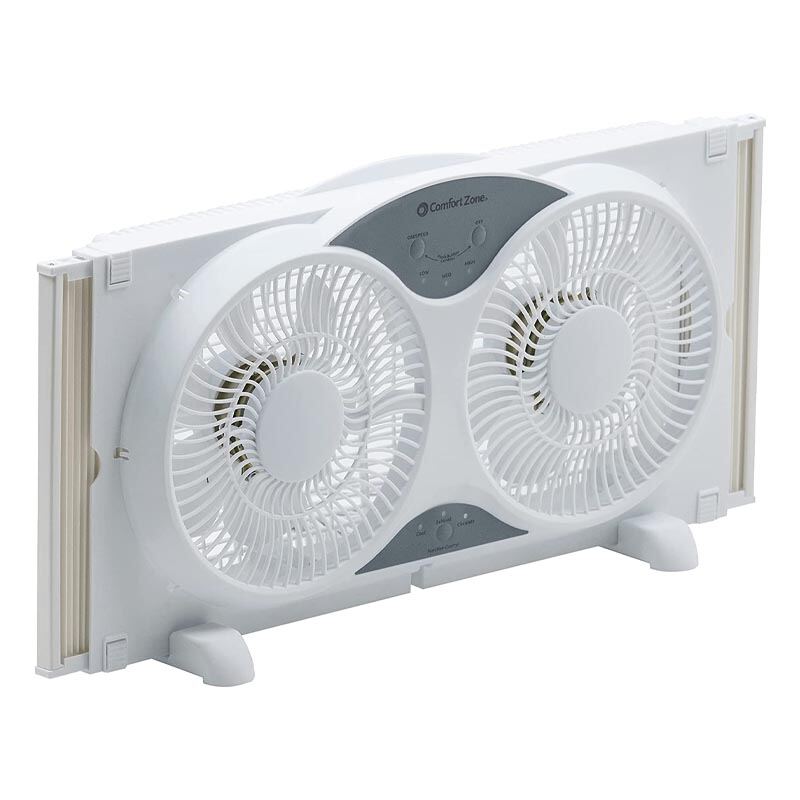
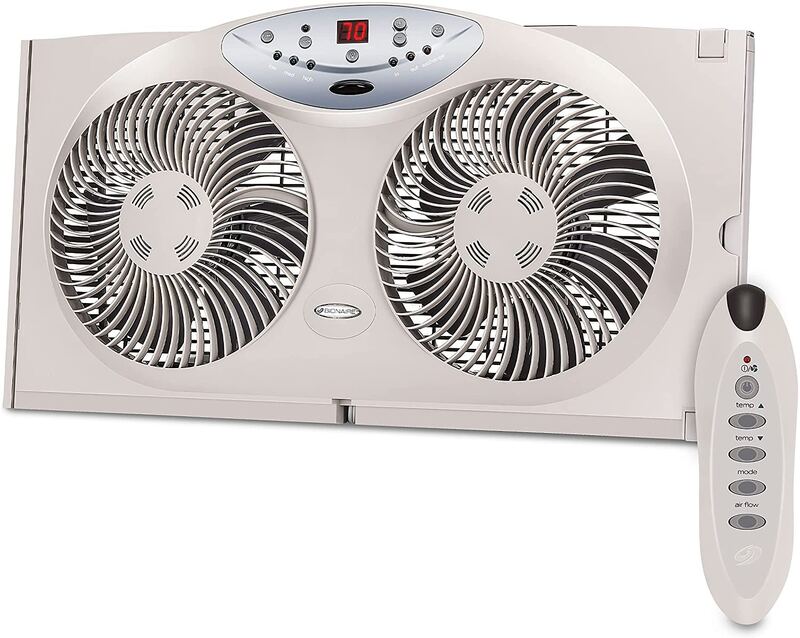
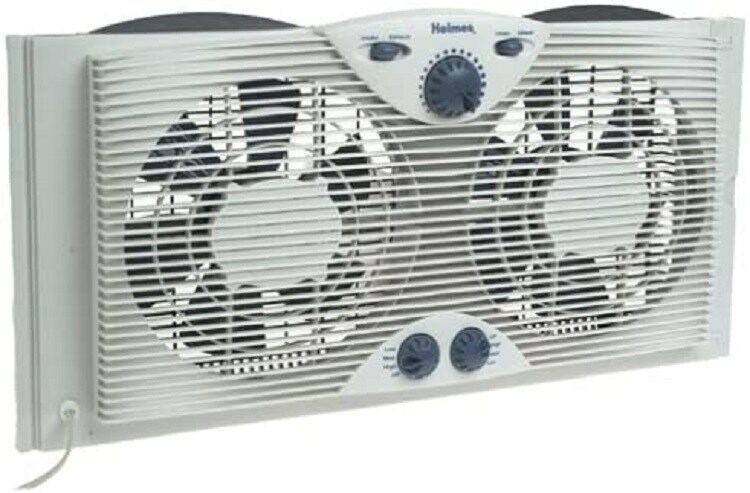
With the largest blades of any twin in this round-up, the Genesis A1WINDOWFAN is the best value for buyers who care about raw airflow over creature comforts. Copper motors and a real thermostat lift it above bargain-bin twins. The plastic chassis and the noise on high are what keep it from beating the Bionaire premium pick.
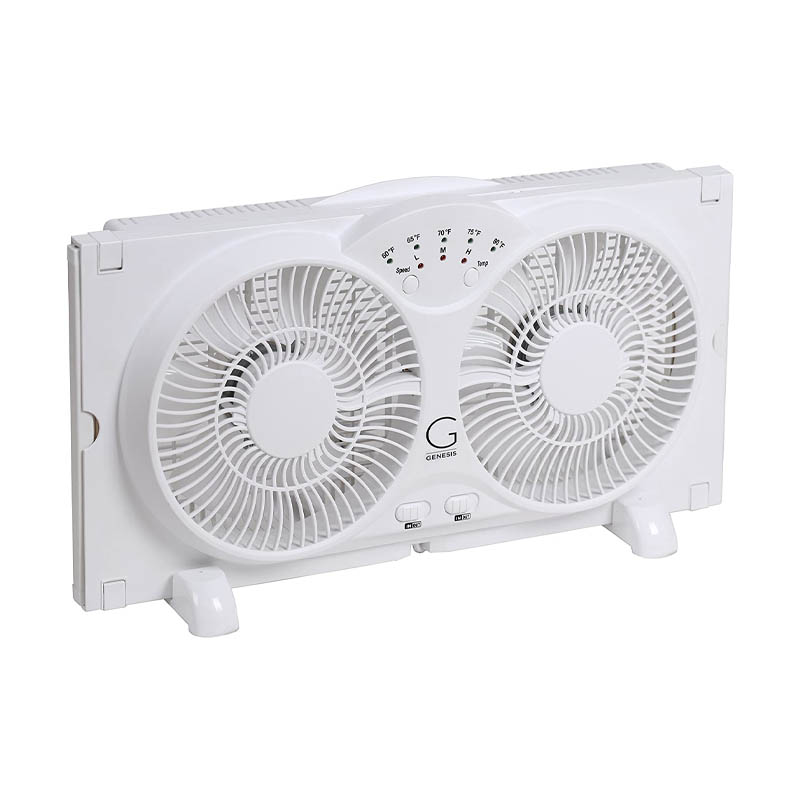
Full review
Doubles as a floor fan in the off-season
The Genesis A1WINDOWFAN posts the largest twin-blade footprint in this category at 9 inches per blade, and TechGearLab's lab testing clocked it at 668.5 CFM - meaningfully more airflow than the Holmes HAWF2043's 592 CFM but trailing the Bionaire's 754. The dual copper motors and Max Cool branding aren't just marketing; reviewers on Home Depot and Amazon consistently note the fan can move enough air to drop a small bedroom's temperature noticeably within minutes of installation, particularly when you run one blade as exhaust and the other as intake to create a true cross-draft.
Bob Vila ranked the Genesis their Best Overall pick (4.3/5 weighted), citing accordion panels and the ability to run the unit freestanding on its included feet. That dual-mode use case is genuinely useful: when shoulder seasons end and you don't need a window fan, the same unit becomes a floor fan in a hallway or garage. The 2,500 CFM manufacturer rating is the marketing-spec number; treat the 668 CFM lab figure as the real-world comparison point.
Copper motors, but a chassis that cracks in shipping
Genesis builds the A1WINDOWFAN around two independent copper motors - a step up from the cheaper aluminum-wound motors common in sub-$30 window fans, and a meaningful reliability factor in coastal humidity. ETL certification is on the spec sheet, as are LED indicator lights for thermostat status visible from across a dark room. The expandable side panels add 6.5 inches on each side, giving the unit roughly 23.5 to 36 inches of window-width flexibility.
The downside is the chassis. Multiple Bob Vila testers, Amazon reviewers and Home Depot owners describe the plastic frame and blade housing as feeling thin and fragile, with reports of blades breaking in shipping and side panels developing locking issues. BestViewsReviews logged 97% positive sentiment in aggregate but acknowledged the noise-decibel transparency gap - Genesis doesn't publish a manufacturer dB rating, and the 55.1 dBA TechGearLab measured is louder than every other twin in this round-up.
Grilles snap off in seconds for cleaning
The independent blade control is the most-praised feature - Genesis lets you set each fan to a different speed and direction, so you can configure intake-only on one side and exhaust-only on the other without buying a second unit. This is unique among sub-$50 twin window fans; the Comfort Zone CZ319WT requires you to flip the entire unit, and most cheaper twins only let both blades spin in the same direction. The adjustable thermostat with LED indicators is also a step up from no thermostat at this price tier.
Long-term reviewers on Home Depot mention using the fan over multiple summers without motor failure, attributing it to the copper-motor construction. Bob Vila's testers gave the Genesis 5/5 for cleanability, noting the front grilles snap off easily for blade cleaning - critical for a fan that's drawing outdoor air laden with pollen and dust through its blades all summer.
Loudest twin fan TechGearLab tested at 55 dBA
TechGearLab gave the Genesis a 52/100 overall - one of the lower scores in their pool - largely because the 55.1 dBA peak noise was tied for the loudest in their test, and the manual reversibility means you physically pull the fan out of the window and flip it around to switch between intake and exhaust. For an overnight ventilation use case where you want intake at dusk and exhaust at dawn, that's a real friction point compared to the Bionaire BWF0910AR's electric reverse button.
The plastic chassis is the second consistent complaint. Reviewers report cracked side panels, broken blade tips in shipping, and side-panel locks that engage when you don't want them to. The fan does not include a remote control, despite some retailer listings implying one - Bionaire is the only sub-$100 twin in this category that ships with a real remote. Genesis also publishes no decibel rating on its spec sheet, which is a transparency miss for buyers shopping by noise.
Largest airflow of any twin fan under 50 dollars
Buy the Genesis A1WINDOWFAN if your primary criterion is the largest possible twin-blade airflow under $50, and you don't need a remote control or scheduling. It's a great pick for a sleeping porch, a garage workshop window, a basement room, or any space where you want serious cross-ventilation but the fan will spend most of its life in one position - so the manual reversibility doesn't matter day-to-day.
Skip the Genesis if you sleep light and need the quietest possible peak operation - the Bionaire BWF0910AR and Comfort Zone CZ319WT are both quieter at full speed. Skip it too if you'll be installing in a coastal location where the plastic chassis won't hold up against salt humidity over multiple seasons, or where you need an electrically reversible thermostat-driven setup for unattended overnight use.
More air than the Comfort Zone, less hush than the Bionaire
The Genesis sits between the Bionaire BWF0910AR and the Comfort Zone CZ319WT in capability and price. It moves more raw air than the Comfort Zone (668 CFM vs Comfort Zone's lighter performance) and adds a real thermostat the Comfort Zone lacks, but it gives up the Bionaire's electric reverse, remote, and quieter peak noise. The Holmes HAWF2043 has a similar thermostat and the same one-touch design but moves less air (592 CFM) at a higher price.
Against the Lasko 2155A, the Genesis is a fundamentally different product - twin reversible blades vs a single 16-inch whole-house style blade. The Lasko is louder, more powerful, has Storm Guard and a true 3-speed dial, but only blows one direction at a time. The Genesis is the better pick for room-level cross-ventilation; the Lasko is the better pick for moving the largest possible CFM through a single window opening.
Delivers 70-dollar features for under 50
At a list price under $50, the Genesis A1WINDOWFAN is the best value twin window fan with a real thermostat in this round-up. The copper-motor construction, independent blade control and ETL certification are normally features you'd pay $70+ for - the trade-off is the plastic chassis fragility and the lack of a remote. Bob Vila scored value 4.3/5; TechGearLab valued it at $50 list in their March 2025 update.
If you can find the Bionaire BWF0910AR on a Costco or Amazon deal around the same price point, take the Bionaire - it's quieter, has a remote and ships with the digital thermostat. But at full price the Bionaire is $20-50 more, and that gap is exactly the calculus that lands the Genesis its 'best value' status: similar size, lower noise tolerance, no remote, but enough thermostat and motor quality to outlast the truly cheap twins.
Copper windings outlast the fragile plastic shell
Durability stories for the Genesis A1WINDOWFAN cluster around the copper motors. Owners who report multi-year service consistently cite the motors as the reason - copper windings handle humidity and heat better than the cheap aluminum windings in sub-$25 window fans, and Genesis builds two of them into every unit. Home Depot reviewers writing after 3-5 years of summer-only use report the motors still running quietly, with most failures showing up at the side-panel locks or blade tips rather than the motor assembly.
The chassis is the area to be careful with. Several reviewers on Amazon describe blade tips that broke in shipping (Genesis ships in a single thin box without inner foam), and a few reports of cracked side panels after the first installation cycle. Don't force the side-panel locks; if they bind, work them free with the panel removed from the window rather than torquing them in place. The ETL certification covers electrical safety, but it doesn't certify the plastic chassis against impact - treat the fan gently in transit and you'll get the multi-year service the copper motors are designed for.
Strengths
- +Two 9-inch blades powered by independent copper motors, larger than every other twin in this round-up
- +Adjustable thermostat with LED indicator lights lets you set a target temperature without a separate display
- +Each blade can run as intake, exhaust, or be set to different speeds for directional cross-ventilation
- +Expandable side panels add up to 6.5 inches on each side, fitting most standard double-hung windows
- +Recorded a strong 668.5 CFM in TechGearLab lab testing while listing well under $50 at most retailers
Watch-outs
- −TechGearLab measured peak noise at 55.1 dBA, noticeably louder than the Bionaire's 50.1 dBA
- −Several reviewers report the blades and plastic frame feel fragile and have broken in shipping
- −Direction switching is manual on the back panel - not as convenient as the Bionaire's electric reverse
How it compares
Larger 9" blades than the Bionaire BWF0910AR (8.5") but louder and without a remote; identical 9" blades to the Comfort Zone CZ319WT but with a real thermostat and copper motors; lacks the electric reversibility of the Bionaire BWF0910AR and the storm guard of the Lasko 2155A.
Rating sources
Our 3.5 score is the average of these published ratings. Ratings marked * were derived from the reviewer’s written analysis or video transcript — the publisher didn’t print an explicit numeric score, so we inferred one from their own words. Click through to verify. More about methodology.