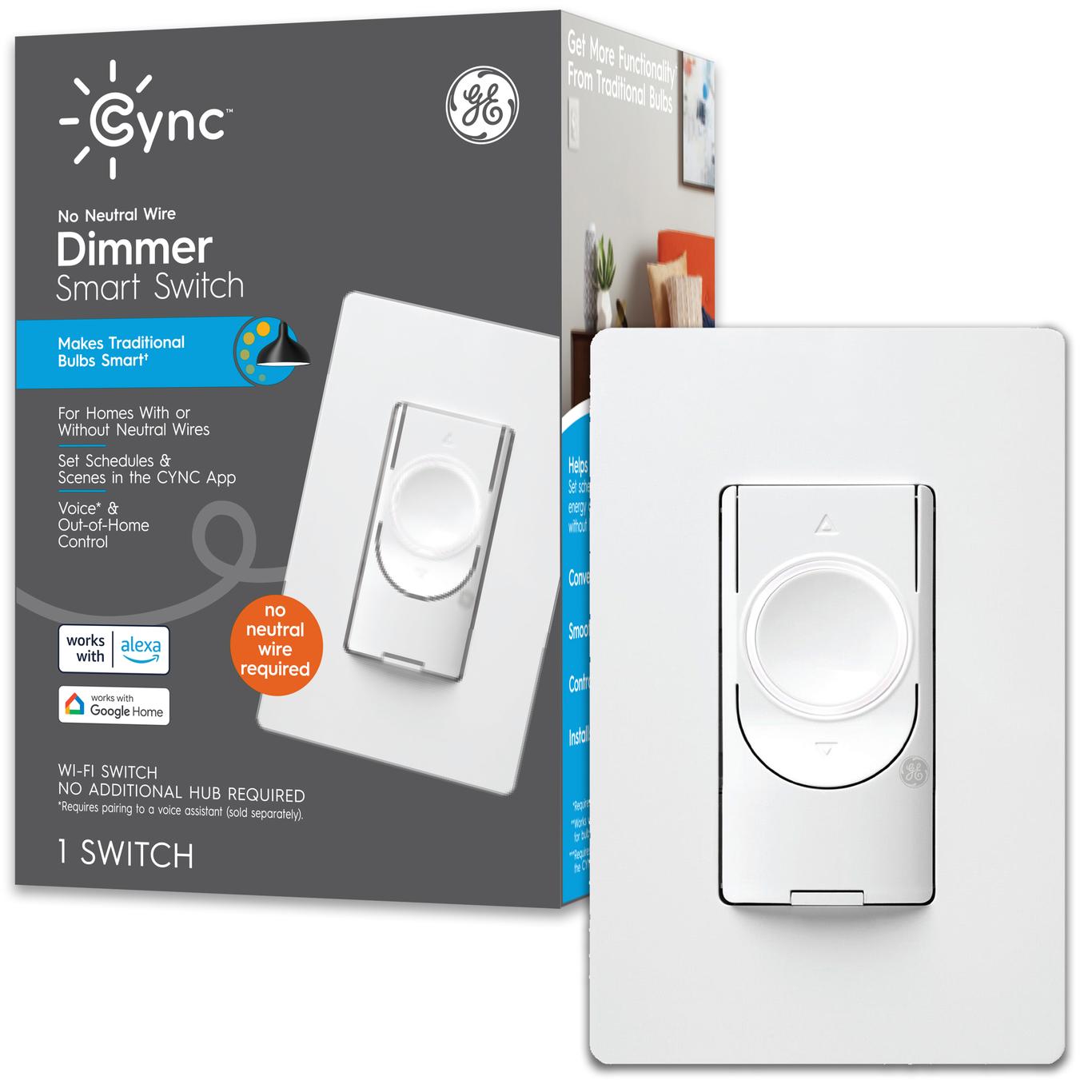
The GE CYNC Smart Dimmer is the budget no-neutral pick, bringing dimming to older homes without a neutral wire at a fraction of the Lutron Caséta's cost, over Bluetooth and Wi-Fi with no hub. Reviewers and PCWorld point to it as a budget-friendly no-neutral alternative. The trade-offs are real: inconsistent reliability, no HomeKit or Matter, and a minimum load that can exclude very low-wattage LEDs.
Full review
Dims without a neutral wire at half Lutron's cost
The GE CYNC Smart Dimmer exists to solve one specific problem cheaply: dimming in an older home that lacks a neutral wire.
When it works, owners are happy: reviewers report switches that 'installed and were working in 10 minutes each' with good integration into the Cync app and Google Home. The honest caveat is consistency. Reliability is the GE's weak spot, with scattered reports of units arriving defective and intermittent communication issues — 'half of the time Alexa is unable to communicate with it,' as one reviewer put it. It's serviceable, but it doesn't approach the Lutron's flawless dependability.
Installation and No-Neutral Operation
The CYNC's headline feature is no-neutral operation. It's a 3-wire dimmer designed for homes built before modern wiring conventions, provided there's a ground wire — GE specifically targets 'homes built prior to the 1980s.' That makes it one of the few affordable smart dimmers that can go where most Wi-Fi switches can't. It supports single-pole installs and 3-way control when wirelessly paired with companion CYNC switches, even across different circuits.
Setup uses Bluetooth for initial pairing and 2.4GHz Wi-Fi for ongoing control, with no hub required. One practical limitation to plan for: the dimmer needs a minimum load of around 15W, so very low-wattage LED fixtures may not dim properly or may flicker — worth checking your bulbs' wattage before buying.
Controls paired bulbs even when switch power is cut
Installation through the Cync (formerly C by GE) app is generally quick, and pairing to Alexa and Google Home is straightforward. The app handles scheduling, scenes, and dimming control, and the switch works with both Amazon Alexa and Google Assistant for voice control. A nice ecosystem feature: when paired with Cync smart bulbs, the dimmer can control them via app or voice even when power is cut at the switch.
The software is the area where the budget pricing shows. The Cync app and ecosystem are less polished than Lutron's or TP-Link's, and there's no Apple HomeKit or Matter support, so the switch is locked to the Alexa/Google world. For a buyer who just needs basic no-neutral dimming on those platforms, it's adequate; for anything more ambitious it's limiting.
Weakest reliability of any switch in this roundup
Reliability is the clearest weakness — more so than any other switch in this roundup. The intermittent connectivity and the scattered reports of defective units mean it requires more patience than the alternatives. The lack of HomeKit and Matter limits its ecosystem reach and future-proofing, and the ~15W minimum load can be a real problem with modern low-wattage LEDs.
These are meaningful trade-offs, and they're why the GE CYNC ranks last here. But they have to be weighed against its one decisive advantage: it brings affordable dimming to no-neutral homes where most of the competition simply won't install. For that specific scenario on a budget, the compromises can be worth accepting.
Cheaper no-neutral option than the Lutron, but flakier
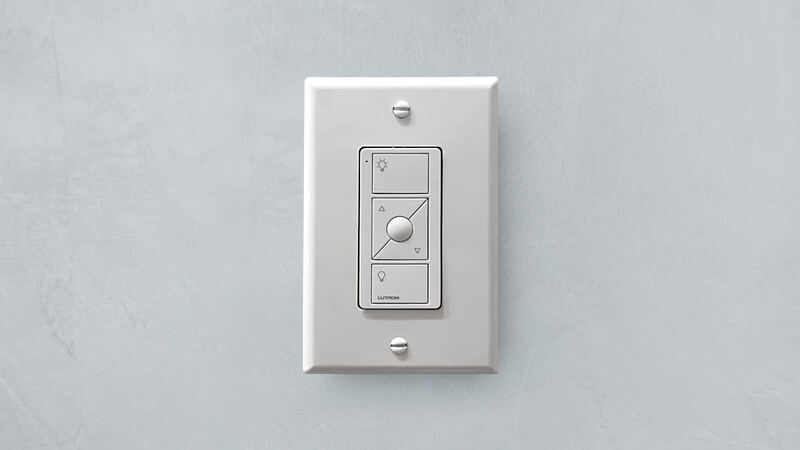
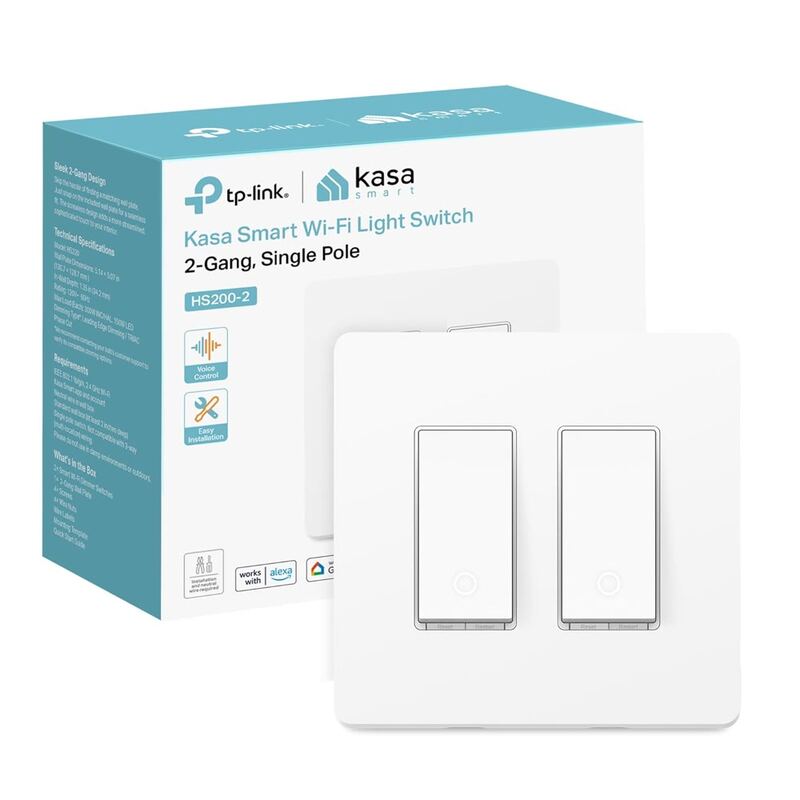
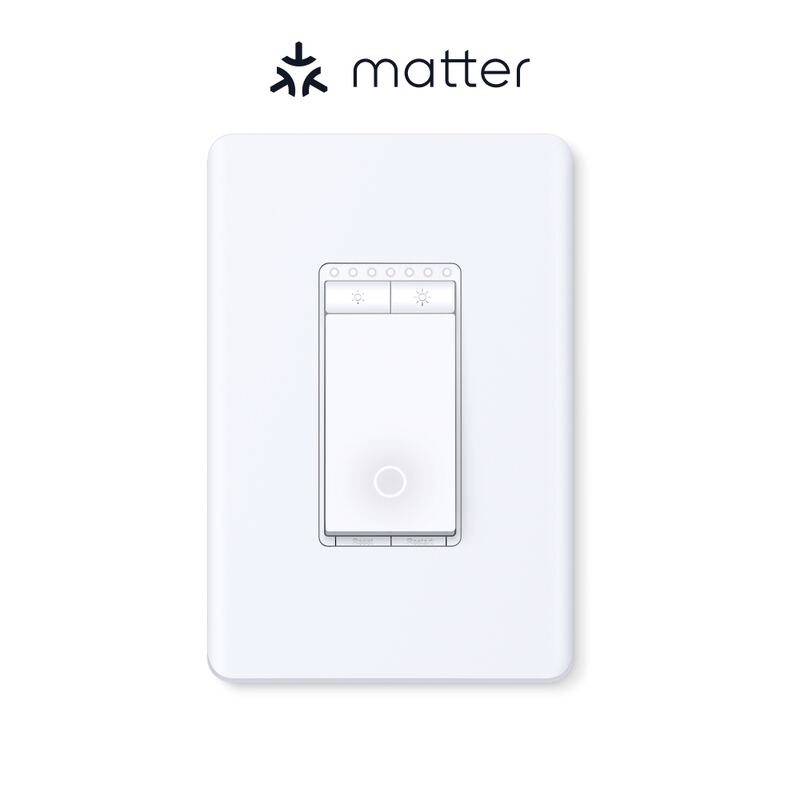
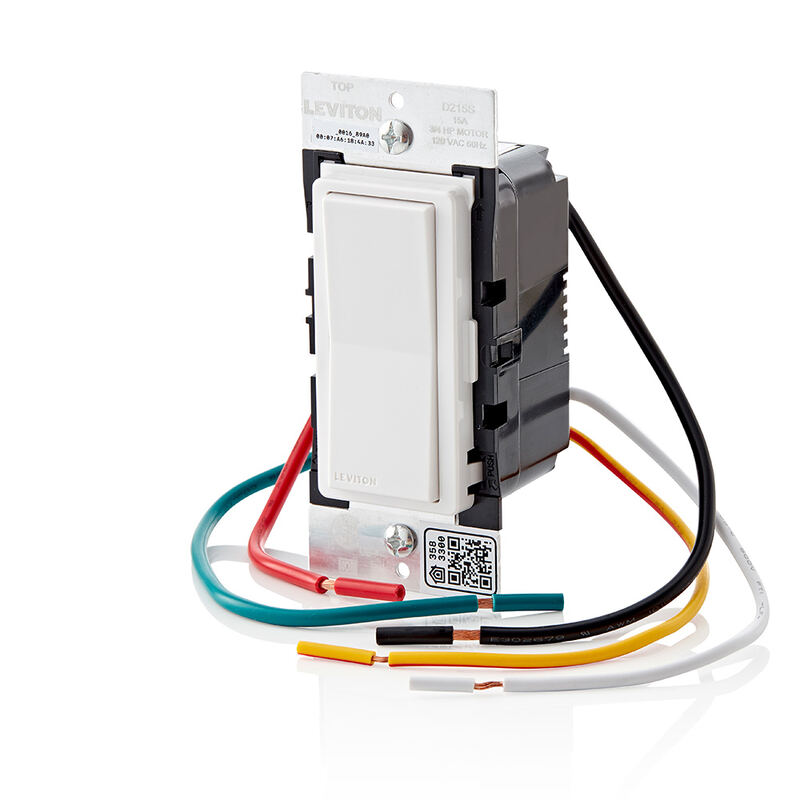
The GE CYNC's natural comparison is the Lutron Caséta Smart Dimmer PD-6WCL: both work without a neutral wire, but the Lutron is far more reliable and requires a hub, while the GE is cheaper, hub-free, and flakier. Against the neutral-required switches — the Kasa HS200, Leviton Decora Smart D215S, and TP-Link Tapo S505D — the GE's advantage is that it works in homes those can't, while its disadvantage is weaker reliability and no Matter (which the Leviton and Tapo both offer).
Its lane is narrow but real: the budget dimmer for no-neutral older homes. If you can stretch to the Lutron, do — it's dramatically more dependable. If you can't, and your home lacks a neutral, the GE CYNC is the affordable fallback.
For budget buyers who can tolerate reliability quirks
The GE CYNC Smart Dimmer is for budget buyers in older homes without neutral wires who want dimming on Alexa or Google and can tolerate some reliability quirks. If a missing neutral has been blocking you from a smart dimmer and the Lutron Caséta is out of budget, the GE is the affordable way in.
Skip it if reliability is paramount (the Lutron Caséta Smart Dimmer PD-6WCL is the no-neutral upgrade), if you have neutral wires and want Matter (the Leviton Decora Smart D215S or TP-Link Tapo S505D), or if you only need basic on/off switching at the lowest price (the Kasa HS200).
Strengths
- +No neutral wire required — works in many older homes
- +Affordable alternative to no-neutral Lutron dimmers
- +Bluetooth and 2.4GHz Wi-Fi, no hub required
- +Single-pole or 3-way support with companion switches
- +Works with Amazon Alexa and Google Assistant
Watch-outs
- −Reliability is inconsistent — some units and connections flaky
- −No Apple HomeKit or Matter support
- −Minimum ~15W load limits use with low-wattage LEDs
- −Cync app and ecosystem less polished than rivals
How it compares
The budget no-neutral pick. It shares the no-neutral-wire advantage of the premium Lutron Caséta Smart Dimmer PD-6WCL at a much lower price, but it can't match the Lutron's reliability. Unlike the neutral-required Kasa HS200, Leviton Decora Smart D215S, and TP-Link Tapo S505D, it works without a neutral, but it lacks the Matter support the Leviton and Tapo offer.
Rating sources
Our 4.0 score is the average of these published ratings. Ratings marked * were derived from the reviewer’s written analysis or video transcript — the publisher didn’t print an explicit numeric score, so we inferred one from their own words. Click through to verify. More about methodology.