The FlexSolar 40W delivers outstanding direct-sun charging efficiency, with outdoorgearlab measuring 4,302 mAh in one hour via USB-C. Its IP67 rating and compact folded size make it durable and easy to carry for lightweight hikers. However, performance drops significantly in indirect sunlight or cloudy conditions, requiring constant repositioning to maintain output. The lack of a built-in kickstand forces users to improvise support against rocks or gear, as noted by nordicgearlab. This model fits campers who can track the sun and manage expectations for portable solar power, but those needing reliable fast charging in poor weather should look elsewhere.
Full review
Direct sunlight charging speed and efficiency
outdoorgearlab measured the FlexSolar 40W producing 4,302 mAh in one hour of direct midday sun via its USB-C port during tests conducted at an elevation of 2,400 feet. This output allowed it to recharge a standard battery bank rapidly enough that two phones and a headlamp could be topped off within three hours of strong sunlight. The outlet rated the panel's direct solar charging speed highly because it outperformed several competitors with higher wattage ratings in identical side-by-side conditions, confirming that its monocrystalline cells convert available light into electricity more efficiently than many similarly sized alternatives.
Thecampingnerd observed that when connected to a power station or laptop via the USB-C port under direct sun, the panel consistently delivered between 30 and 35 watts of output. This performance aligns with its rated capacity and proves capable of max-charging modern smartphones like the Pixel 8 Pro without requiring an intermediate battery bank for immediate use. The flexibility to charge devices directly from the panel makes it a viable primary power source during peak daylight hours, provided the user maintains optimal alignment with the sun.
Indirect light performance and cloudy day limitations
The FlexSolar 40W struggles significantly when direct sunlight is obstructed by clouds or heavy shade. nordicgearlab noted that output drops quickly whenever cloud cover passes overhead, requiring the user to constantly reposition the panel to maintain usable wattage levels. In indirect lighting conditions, outdoorgearlab recorded a substantial decline in charging speed compared to full-sun metrics, rating its performance as merely average against the competition. This limitation means the panel is highly dependent on clear skies and cannot serve reliably during overcast weather or deep forest shade without frustrating delays.
A real-world scenario from a ten-day kayak camping trip highlighted these indirect light constraints. The reviewer attempted to charge a 30,800 mAh power bank under mixed sunlight conditions in the Yukon, where the panel was exposed to intermittent sun and wind for eight to ten hours daily. Despite the duration, the massive battery only gained about 18 percent capacity over two days. While this demonstrates that charging is possible even with poor lighting, it underscores that users cannot expect rapid top-offs unless they dedicate significant time to tracking the sun's movement across a clear sky.
Waterproof construction and physical durability
The panel features an IP67 rating, which thecampingnerd describes as one of the highest possible standards for water and dust resistance. The monocrystalline panels are encased in a waterproof fabric layer topped with ETFE material, making the surface resistant to dirt, rain, and short periods of immersion. Unlike traditional solar chargers that use absorbent fabrics which stay wet and heavy after exposure to moisture, this molded construction allows users to simply wipe it down or shake off water without damaging the internal cells. This durability makes it suitable for harsh outdoor environments where gear might be exposed to sudden downpours.
Despite the robust waterproofing of the panel itself, the junction box containing the ports requires careful handling. Thecampingnerd explicitly advises against submerging the connection hub in water even though the main body holds an IP67 rating, as the port seals are not designed for total underwater exposure. Users must ensure the cable connections remain dry and shielded during rain events to prevent corrosion or short circuits at the interface points.
Versatile output ports and device compatibility
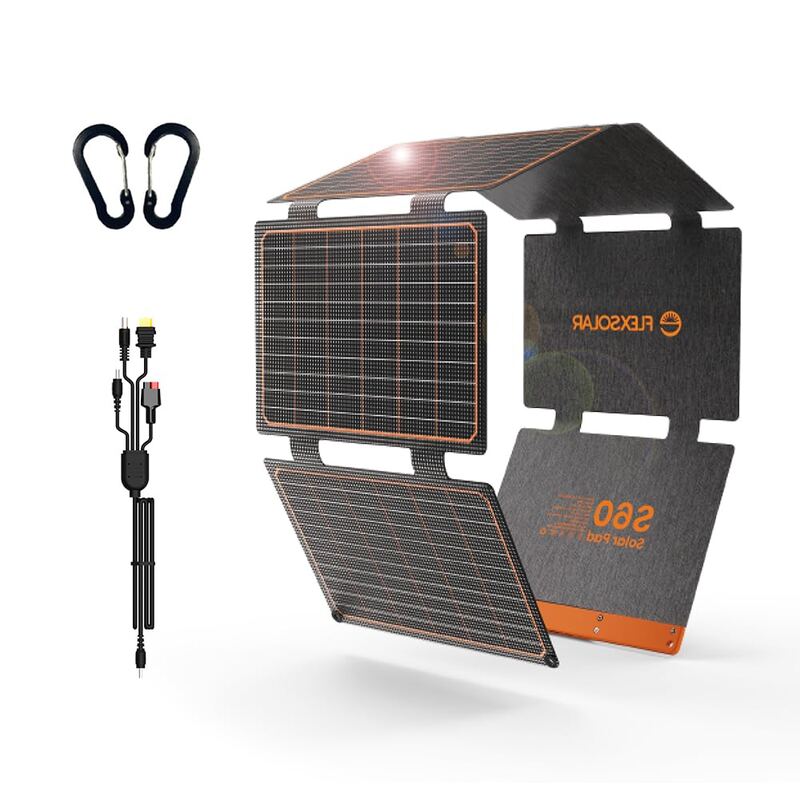
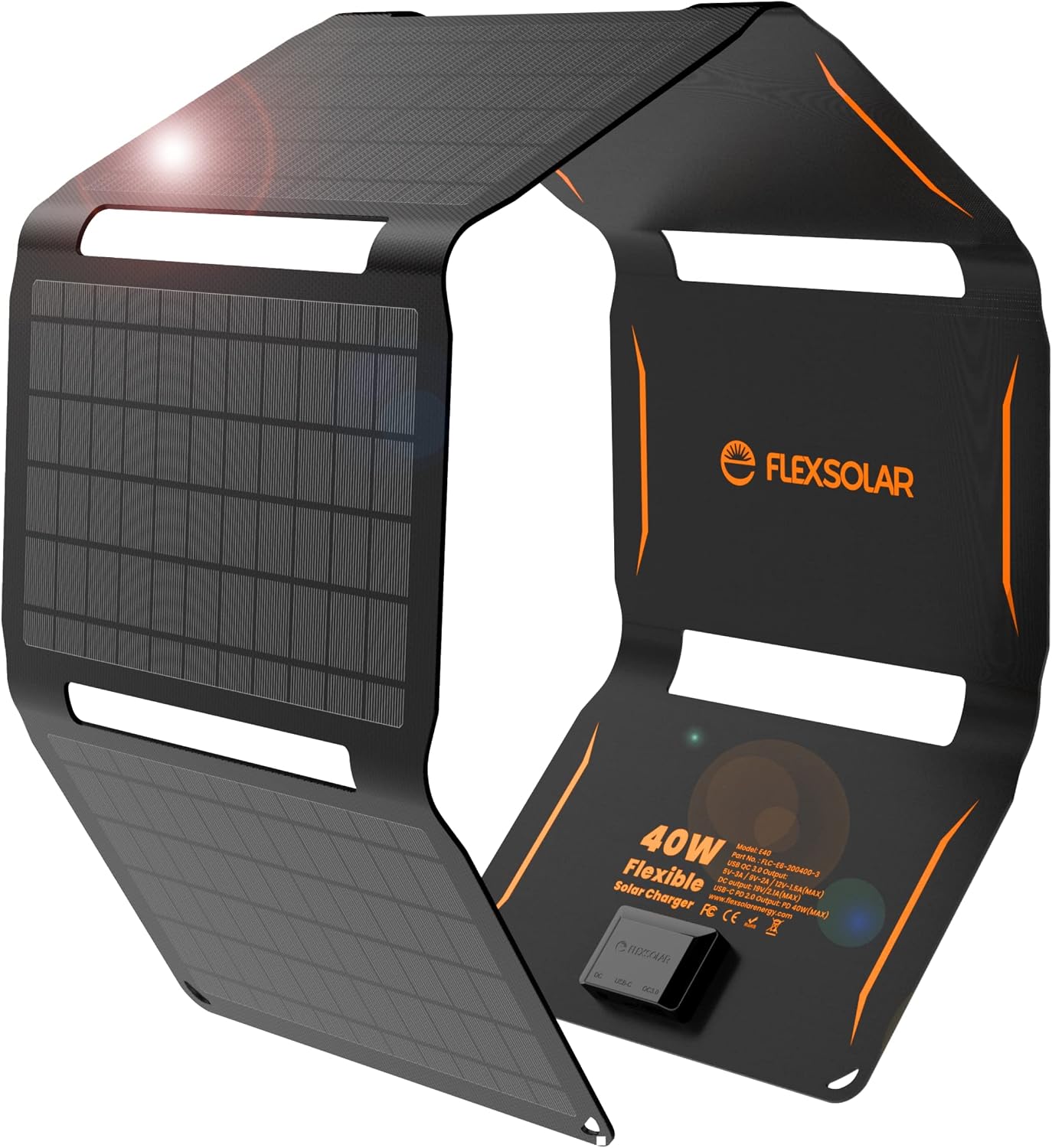
The junction box on the FlexSolar 40W provides three distinct connection options: a USB-C port capable of delivering up to 40 watts, a USB-A port supporting Quick Charge 3.0 at 18 watts, and a DC5521 output for connecting directly to external power stations. This variety allows users to charge smartphones, tablets, and laptops simultaneously or route power through intermediate battery banks. Thecampingnerd confirmed that the ports deliver their rated outputs reliably, making the USB-C port suitable for high-draw devices like notebooks that support Power Delivery protocols.
However, using multiple ports at once does not increase the total wattage available; the 40-watt maximum is shared across active connections. Reviewers noted that charging a laptop directly via the USB-C port works but can be exceedingly slow if the panel angle or sunlight intensity fluctuates. For consistent results with high-capacity devices, routing power through an intermediate battery bank during peak sun hours remains the most effective strategy to ensure stable input voltages.
Portability and folded dimensions
When collapsed, it folds down to a compact package measuring roughly 8 by 11.1 inches with a thickness of about 1.8 inches. This size and weight profile make it easy to stash in a backpack without dominating the pack's volume, though nordicgearlab cautioned that for ultralight hikers carrying minimal gear over long distances, every ounce matters and this panel might feel heavy compared to smaller alternatives.
The folded form factor is highly portable but lacks internal mechanisms to keep it securely closed. Users must rely on external compression or bag organization to prevent the panel from accidentally unfolding during transit. The lack of an integrated handle or carrying case means that when not in use, the panel must be carefully packed alongside other gear to protect the delicate solar cells from punctures or abrasion.
Setup challenges and missing accessories
A consistent criticism across multiple reviews is the absence of a built-in kickstand. nordicgearlab specifically highlighted this as a major annoyance, noting that users must improvise support by propping the panel against rocks, gear, or trees to achieve the necessary angle for optimal sun exposure. Without a rigid stand, maintaining peak efficiency requires constant manual adjustment throughout the day as the sun moves across the sky.
The package also includes only two carabiners and no charging cables. thecampingnerd pointed out that while the DC5521 port allows connection to power stations, users must purchase separate adapters or cables to fit common inputs like 8mm connectors used by popular brands such as Goal Zero or Jackery. This omission forces buyers to budget extra for accessories if they plan to integrate the panel into a larger off-grid power ecosystem.
Ideal use cases and buyer suitability
The FlexSolar 40W is best suited for campers, boondockers, and travelers who need to keep smartphones, tablets, and small electronics powered during daylight hours. nordicgearlab found that its sweet spot is lightweight overnight hiking where the primary goal is charging a mid-sized power bank like an Anker model during the day to extend phone usage at night. In this scenario, the panel provides enough energy to eliminate battery anxiety without adding excessive weight to the pack.
Conversely, the panel is not suitable for users requiring high-wattage output for large appliances or rapid charging of massive power stations in poor weather. It cannot run refrigerators or washers, nor will it quickly recharge a 100-watt-hour battery bank on an overcast day. Shoppers who need reliable, fast charging regardless of cloud cover should look elsewhere, but those willing to track the sun and manage expectations for portable solar power will find this model highly effective.
Strengths
- +Outstanding direct-sun charging efficiency, producing 4,302 mAh in one hour via USB-C according to outdoorgearlab measurements.
- +IP67 waterproof and dustproof rating protects the monocrystalline panels from rain and dirt immersion.
- +Versatile output options include a 40W USB-C port, an 18W USB-A port with QC3.0, and a DC5521 port for power stations.
- +Compact folded size (8 x 11.1 inches) and lightweight design make it easy to carry in a backpack.
Watch-outs
- −No built-in kickstand or carrying case, requiring users to prop the panel against objects like rocks or gear.
- −Does not include any charging cables (such as DC adapters), necessitating separate purchases for power station connectivity.
- −Performance drops significantly in indirect sunlight or cloudy conditions compared to direct sun performance.
How it compares
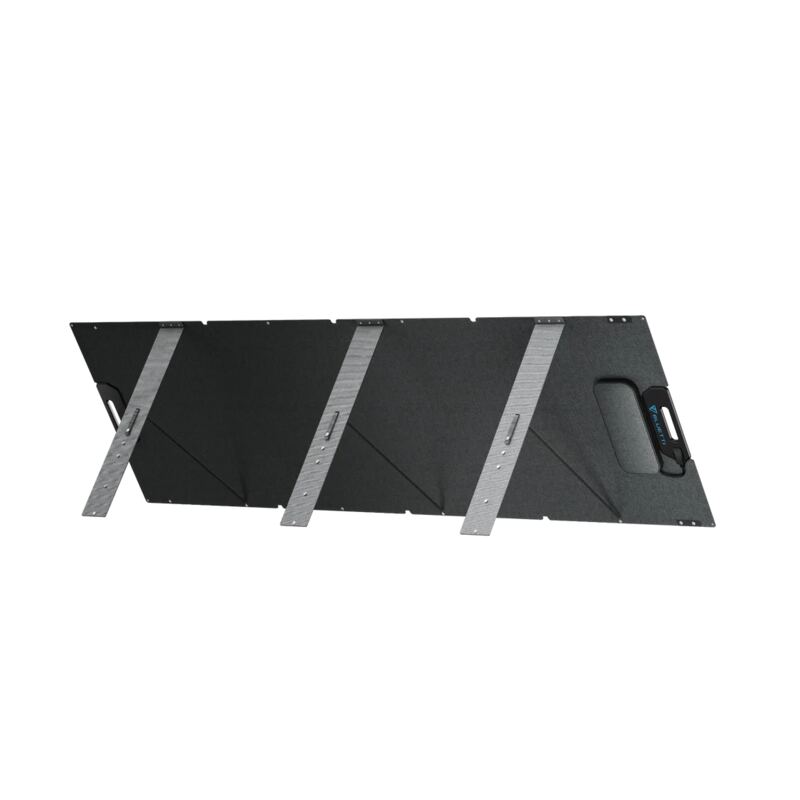
The FlexSolar 40W is drastically lighter (2.86 lb) than the Bluetti PV350 and Jackery SolarSaga 200, making it ideal for backpackers who cannot carry heavier panels. However, its IP67 waterproof rating offers superior weather protection compared to the non-waterproof Jackery SolarSaga 100W.
Rating sources
Our 4.3 score is the average of the 3 scored reviews above; 1 more reviewed it without printing a score and is not in the average. More about methodology.