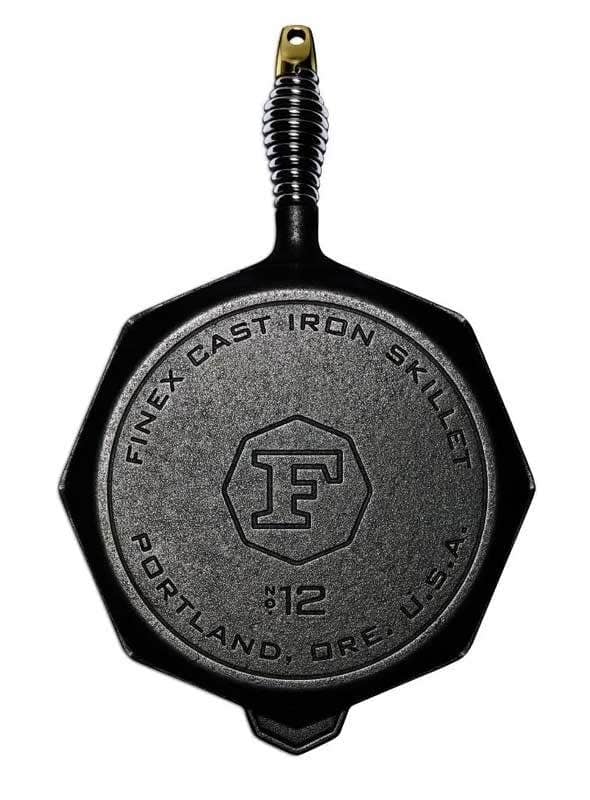
The FINEX Cast Iron Skillet offers a distinctive hexagonal design with multiple pouring spouts and a spring-covered handle that stays cooler than typical cast iron. The Spruce Eats reviewer found it attractive and functional, noting its computer-aided smooth cooking surface and pre-seasoning with flaxseed oil. However, the skillet's high price point and the heat retention of the brass end cap were drawbacks. It's best suited for those seeking a premium, aesthetically pleasing cast iron skillet that performs well for small servings and baking, though budget-conscious cooks may want to consider alternatives.
Full review
Design and Aesthetic Appeal
The FINEX Cast Iron Skillet stands out visually with its distinctive octagonal shape, a design choice that goes beyond mere aesthetics. The Spruce Eats reviewer noted that while most cast iron skillets look similar, the FINEX is distinctly recognizable, evoking a rustic yet modern feel that recalls pioneer-era cookware. The company's website emphasizes that the hexagonal form isn't just for looks, as it provides multiple pouring spouts and makes it easier to portion food into neat wedges. The skillet's 8-inch version, which was tested, measures just over 6 inches across the cooking surface, making it suitable for single servings or small portions. However, this size limitation means larger cuts of meat like ribeye steaks won't fit, restricting its versatility for certain cooking tasks. The skillet features a spring-loaded handle inspired by antique wood stoves, designed to stay cooler during use, though some users reported the end cap getting hot during extended cooking sessions.
Material and Seasoning Performance
FINEX skillets are pre-seasoned with flaxseed oil, a detail that sets them apart from many traditional cast iron options. The Spruce Eats reviewer noted that while the exterior and sides remain rough like typical cast iron, the cooking surface is completely smooth thanks to computer-aided manufacturing. This smoothness allows for easier food release and cleaning compared to standard cast iron. However, the seasoning process revealed inconsistencies during testing. The reviewer observed that the cooking surface seasoned unevenly, with the rest of the pan darkening more consistently while the cooking surface returned to a silvery color after cooking fish and cleaning. Despite this, eggs cooked in the pan released evenly, suggesting that some seasoning remained intact. The company's website claims that hand seasoning each piece is a tedious but worthwhile step, resulting in foods sliding easily and sauces not sticking. The skillet's cooking surface is described as being made of cast iron with organic flaxseed oil, offering natural near-nonstick performance.
Heating and Cooking Performance
Cast iron's characteristic heating and cooling properties were evident in the FINEX skillet's performance. The Spruce Eats reviewer confirmed that cast iron heats slowly but retains heat well and cools down slowly, which is expected behavior. The 8-inch skillet, being smaller, heated faster than larger versions, but still demonstrated good heat retention. The Tiny House Blog's reviewer noted that the skillet's weight—13.5 pounds for the 12-inch model—was initially off-putting but became an advantage as it held heat exceptionally well. The reviewer successfully made frittatas, tofu dishes, and cornbread, all of which benefited from the skillet's heat retention. The 10-inch grill pan reviewed by The Kitchn showed similar performance, with the coil handle staying cool even during extended cooking sessions. The skillet's ability to maintain consistent heat makes it ideal for tasks like searing, baking, and slow-cooking, though its size limits its utility for larger meals.
Cleaning and Maintenance
The cleaning process for FINEX skillets aligns with traditional cast iron care, though the company provides a specific care kit that includes a wooden scraper, chain scrubber, and flaxseed oil. The Spruce Eats reviewer noted that while the skillet is pre-seasoned, it still requires regular seasoning for optimal performance. The company's website recommends seasoning with flaxseed oil, but some reviewers have used Crisco or other oils. The Tiny House Blog's reviewer emphasized that the skillet doesn't require a dishwasher and that hot water is usually sufficient for cleaning. The reviewer also mentioned seasoning the skillet after each use with olive oil, which helps maintain the non-stick surface. The company's website suggests that the skillet is equally at home on the stove, in the oven, on the grill, or over a bed of coals, and can be used with or without a lid for steaming, braising, or simmering. The design includes multiple spouts for easy pouring of sauces and liquids, and the lid helps seal in flavors for better cooking results.
User Experience and Practicality
User experiences with FINEX skillets vary significantly. The Tiny House Blog's reviewer, who had no prior cast iron experience, found the skillet to be a game-changer after just a few weeks of use. The reviewer noted that while the skillet is heavy, it becomes easier to handle with use and is versatile enough for everything from scrambled eggs to cornbread. The reviewer also mentioned that the skillet's design allows for better control when flipping foods, with the eight sides providing multiple opportunities to get a spatula in the pan. However, The Kitchn's reviewer initially hesitated to use the skillet due to its beauty, treating it more as a decorative piece than a functional tool. The company's website emphasizes that the skillet is designed for life and can be passed down as a family heirloom, with a guarantee of 'Good Forever.' The handle design, inspired by antique wood stoves, is meant to stay cooler and feel great in the hand, though some users have reported issues with the end cap getting hot during extended use.
Where It Falls Short
Despite its many strengths, the FINEX skillet has notable drawbacks that potential buyers should consider. The Spruce Eats reviewer criticized the skillet's price point, noting that while it looks attractive and performs well, it's expensive compared to other cast iron options. The company's website lists the 8-inch skillet at $150, while the 12-inch version is priced at $230, making it a significant investment. The Tiny House Blog's reviewer noted that the skillet's weight—13.5 pounds for the 12-inch model—can be a challenge for some users, especially those with limited strength or mobility. Additionally, the company's customer service has been criticized by one reviewer who reported that after their pan warped, they were ignored when trying to get a replacement internationally. The reviewer noted that while the company initially agreed to send a replacement, they never followed through, leaving the customer disappointed. The skillet's design, while innovative, also presents cleaning challenges, particularly with the end cap of the handle getting hot during extended use. Some users have noted that the skillet's cooking surface seasons unevenly, which can affect performance over time.
Who It's Best For
The FINEX Cast Iron Skillet is best suited for serious home cooks who value both performance and aesthetics. The Tiny House Blog's reviewer, a vegetarian, found the skillet versatile enough to handle everything from frittatas to tofu dishes, and noted that its heat retention made it ideal for cooking delicate foods. The skillet's design makes it particularly appealing to those who appreciate heirloom-quality cookware that can be passed down through generations. The company's website emphasizes that the skillet is designed for life and can be used on any heat source, including induction, making it suitable for modern kitchens. However, the skillet's weight and price point make it less ideal for casual cooks or those on a tight budget. The skillet is also not recommended for users who are uncomfortable with the traditional maintenance requirements of cast iron cookware, as it requires regular seasoning and careful cleaning. The 8-inch skillet is ideal for single servings, while the larger sizes are better suited for families or those who cook for multiple people.
Value and Market Positioning
The FINEX Cast Iron Skillet is positioned as a premium product, with prices ranging from $150 for the 8-inch skillet to $230 for the 12-inch version. The company's website emphasizes that the skillet is crafted in the USA and designed to last a lifetime, with a guarantee of 'Good Forever.' The Spruce Eats reviewer found the skillet's performance and design worth the investment, though they noted the price point as a potential barrier. The Tiny House Blog's reviewer, who had no prior experience with cast iron, was impressed by the skillet's performance and versatility, suggesting that it's a worthwhile investment for serious cooks. The company's website also offers a care kit for $60, which includes tools for maintaining the skillet. The Kitchn's reviewer, who was initially hesitant to use the skillet due to its beauty, eventually became a fan after using it for several months. The reviewer noted that the skillet's performance justified its price, especially considering its durability and the quality of its construction. However, the company's customer service has been criticized by some users, which may impact the overall value proposition for some buyers.
Strengths
- +Unique hexagonal design with multiple pouring spouts for versatility
- +Spring-covered handle stays cooler during cooking
- +Preseasoned with flaxseed oil for immediate use
- +Computer-aided manufacturing creates a smooth cooking surface
Watch-outs
- −Expensive compared to standard cast iron skillets
- −End cap on handle gets hot during cooking
How it compares
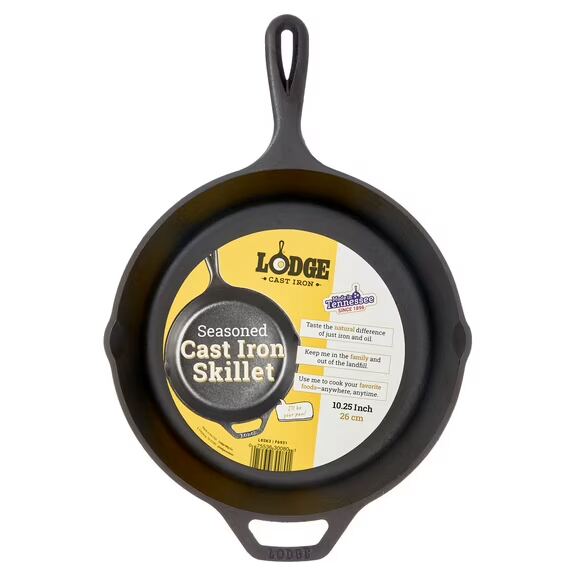
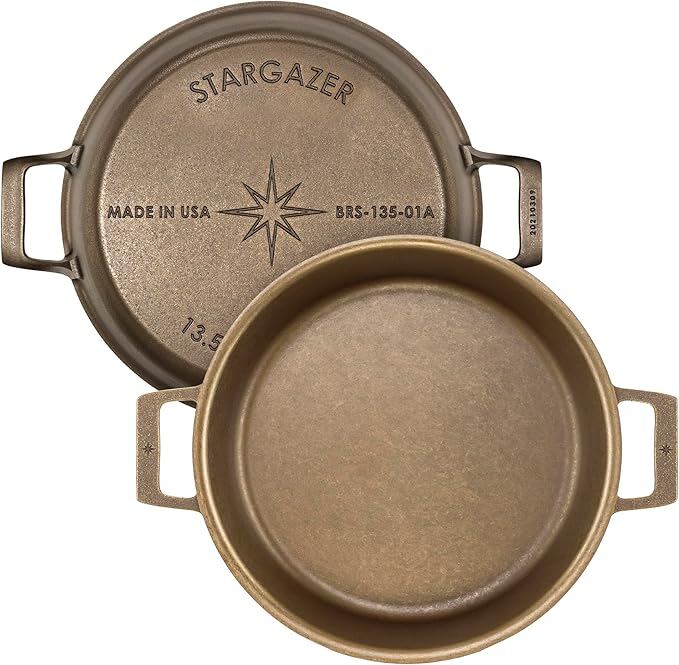
The FINEX skillet's hexagonal design and multiple pouring spouts set it apart from the standard Lodge or Utopia Kitchen options, but it's more expensive and has a hot end cap. Compared to the Stargazer skillet, it offers a unique aesthetic but lacks the smooth, machined surface and durable build of the Stargazer.
Who this is for
At a glance: Aesthetic-conscious buyers seeking premium features.
Why you’d buy the FINEX Cast Iron Skillets
- Unique hexagonal design with multiple pouring spouts for versatility.
- Spring-covered handle stays cooler during cooking.
- Preseasoned with flaxseed oil for immediate use.
Why you’d skip it
- Expensive compared to standard cast iron skillets.
- End cap on handle gets hot during cooking.
Rating sources
“The Finex Cast Iron Skillet looks attractive, artisan-made, and a bit rustic, but looks aren't everything. We used it, seasoned it, cleaned it, and cooked with it again, for searing, baking, and gentle cooking, too.”
“Results: fantastic! The cast iron really holds the heat and makes the eggs come out fluffy and perfectly done.”
Our 4.3 score is the average of these published ratings. Ratings marked * were derived from the reviewer’s written analysis or video transcript — the publisher didn’t print an explicit numeric score, so we inferred one from their own words. Click through to verify. More about methodology.