Woodworkers and remediation pros buy the Festool CT 26 EI HEPA when filtration accuracy and tool integration outrank tank capacity. Explore and Renovate clocked 99.96% real-world capture and 70 dB(A) operating noise, and ToolGuyd's long-term reviewer calls it 'one of my most-used power tools.' It's pricey at $899 bare, and the 6.9-gallon drum is small for demo work. For sander, router and track-saw work, it's the benchmark.

Full review
Consistent suction and high dust capture efficiency
Festool publishes 138 CFM and 96 inches of static water lift, which lands the CT 26 EI HEPA in the middle of the airflow pack but among the leaders for sealed-suction lift. The 5-stage variable-suction dial is the more important number day-to-day: drop it to position 1 and you can sand 1/4-inch ply without the workpiece grabbing the platen, then crank it up for track-saw or router collection. Explore and Renovate measured 92% dust capture on a circular saw under shop conditions, which is closer to the integrated track-saw collection figure than to the open-port shop-vac result reviewers usually publish.
On longer runs, suction stays steady because the SELFCLEAN fleece bag collapses inward as it fills rather than packing against the filter media. Explore and Renovate logged only a 15% suction drop during full-bag demolition cleanup — a number that's meaningful when you compare it to standard cartridge vacs, where suction can fall by half before you notice the bag is full and stop to swap it.
High-tier filtration meets real-world OSHA standards
This is the line on Festool's spec sheet that justifies the price. The HEPA main filter is rated to capture 99.99% of particles down to 0.3 microns, and Explore and Renovate's third-party air sampling came back at 99.96% real-world — close enough to spec that they reported keeping respirable dust below 0.1 mg/m3 during a maple-floor refinishing job. For lead-paint or silica-exposure work, that is the filtration tier OSHA Table 1 calls for.
The two-stage architecture matters here. The fleece bag is the primary collection medium and catches the bulk of debris; the HEPA element behind it is the polishing filter that catches the fines. Because the bag does the work of trapping coarse material, the HEPA filter stays clean longer, and clean filters maintain airflow. ToolGuyd's reviewer notes the CT 26 paired with a sander 'works every bit as well' after years of use because the system was designed around sustained filtration rather than peak suction.
Build Quality and Tool Integration
The German manufacturing comes through in the small details: tight panel gaps, a brake on the front caster so the unit doesn't roll when you tug the hose, T-LOC mounts on top for stacking Systainers, and an integrated cord and hose garage. ToolGuyd called out the new hose's outer sleeving as 'fantastic' for the way it slides over edges and surfaces without snagging — a small thing until you spend a day vacuuming with a hose that catches every door threshold.
Bluetooth is the integration that changes how the tool gets used. Pair a Festool battery sander or a CT-compatible corded saw and the extractor spins up the moment the tool starts and stays running for a few seconds after to clear the hose. Explore and Renovate confirmed the radio works reliably within about 25 feet but struggles through multiple walls — so it's a job-site convenience, not a whole-house solution.
Wet pickup requires extra steps and has limited capacity
The CT 26 is rated for wet pickup and Festool integrates a level-shutoff sensor that cuts the motor before the canister overfills. You do need to swap to a wet-rated filter or remove the bag entirely for water, which adds a step compared to pure shop vacs that handle wet and dry without intervention. The hose and seals are anti-static and rated for moisture, but the 6.9-gallon canister means roughly five gallons of usable wet capacity before you need to empty.
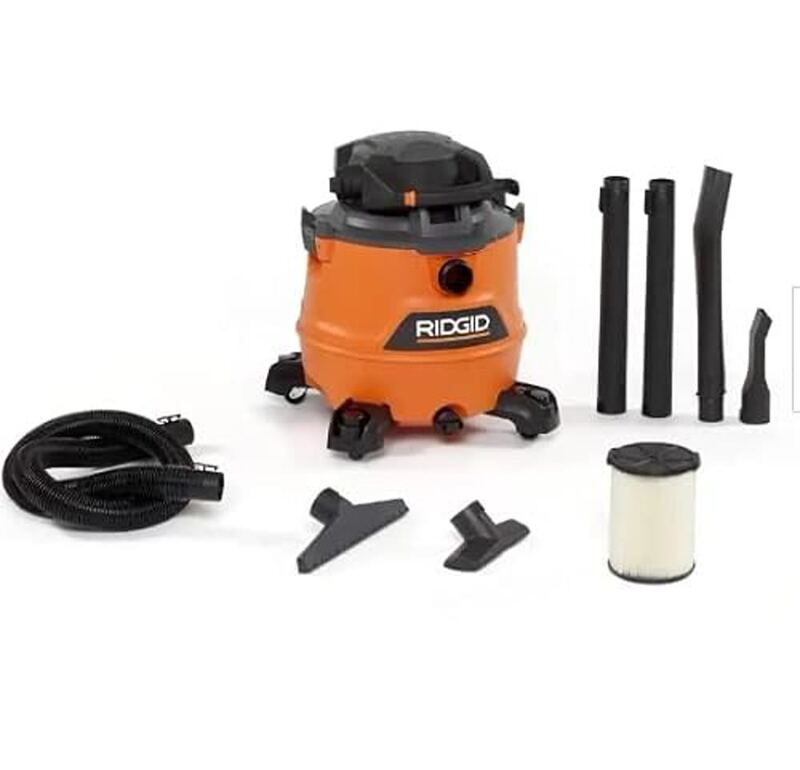
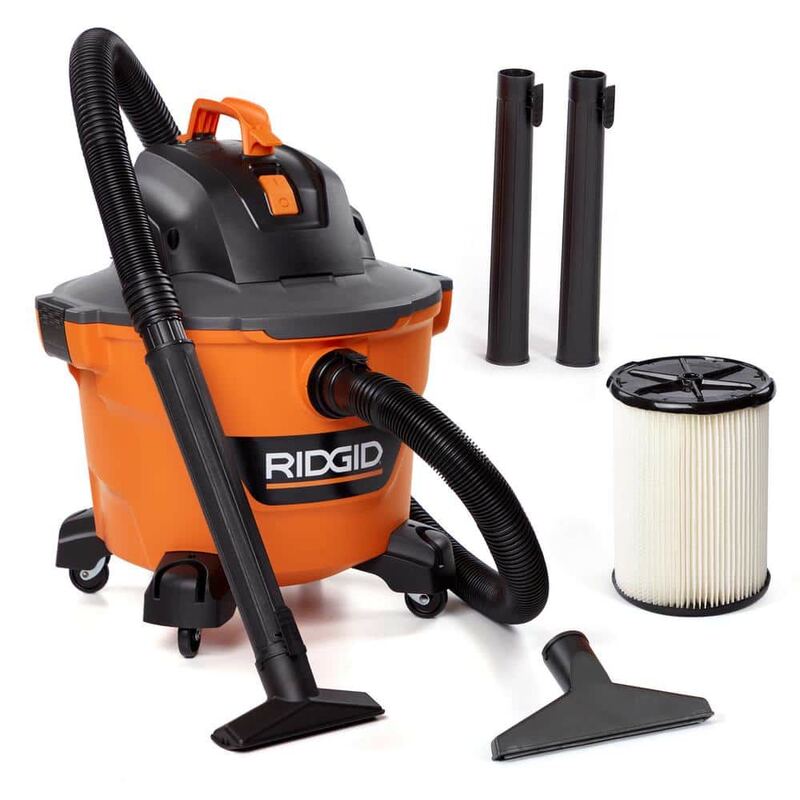
Most owners run the CT 26 dry most of the time. If wet pickup is a regular workflow — auto detailing, plumbing leak cleanup, basement floods — the Ridgid HD1600 or HD09001 are better-suited tools at a fraction of the price.
Noise Level
Explore and Renovate measured 70 dB(A) at ear height during normal operation, which is the lowest figure in any of the reviews surveyed for this guide. For reference, the Milwaukee M18 FUEL 9-Gallon dust extractor measures around 90 dB, and big workshop vacs like the Ridgid HD1600 push past 95 dB. The difference is enough that the CT 26 can run continuously in an occupied finish-carpentry job without hearing protection or complaints from clients in the next room.
The five-stage suction dial helps here too: at the lower settings the motor pitch drops noticeably, and for sanding tasks you genuinely don't need the top setting. ToolGuyd commenters consistently raise the noise level as a quality-of-life win, especially for cabinetmakers who spend full days within arm's reach of the extractor.
There's also a structural reason the unit is quieter: Festool insulates the motor housing more aggressively than budget shop vacs, and the suction-management firmware ramps the motor speed up and down rather than running at peak the entire time. The result on a quiet shop floor is that you can have a conversation over the running vacuum without raising your voice — something you cannot do with any other vacuum in this guide.
Used units resell for 70 to 80 percent of retail
Across ToolGuyd, Explore and Renovate, the Festool Owners Group, and ThisIsCarpentry, the consistent themes are filtration accuracy, tool-triggered convenience, and ergonomics. ToolGuyd's reviewer summarized it bluntly: 'I have never regretted purchasing my CT 26.' Owners cite the brake, the cord garage, the suction dial, and the Systainer mounts as the kind of small-but-relentless usability touches that justify the premium over a comparable Bosch or Makita extractor.
The Festool Owners Group thread describes the suction at full setting as 'nothing short of incredible' for through-tool collection — meaning when you pair it with a sander or track saw and the dust never reaches the open air. That's the use case Festool optimized for, and it shows.
Long-term resale value is the other consistent owner-review theme: used CT 26 EI units routinely sell on Festool Owners Group's classified forum for 70-80% of new retail, even years out. That holds-its-value profile is unique in the shop-vac category, where most consumer-grade units have effectively zero used-market demand.
6.9-gallon canister fills fast during demolition
The price is the obvious objection. At $899 bare and another $200+ for the accessories most owners eventually want (boom arm, extension hoses, anti-static hose upgrades), this is a $1,000-plus purchase. ToolGuyd's reviewer is candid: 'Buying my CT 26 stung my wallet considerably, and it would sting again if I had to replace it out of pocket.' For a hobbyist who runs a sander a few times a month, the math doesn't pencil out.
The other practical limit is the 6.9-gallon canister. Demolition work — drywall removal, concrete grinding, plaster — fills the bag in under an hour, and bag changes mean Festool-branded consumables at $3–4 each. The auto-sensing tool socket also caps at 2,400 watts of pass-through, so it won't reliably trigger from a larger corded table saw. Festool sells a remote-trigger accessory to work around that.
Overkill for general garage cleanup duty
The CT 26 is the right tool for pro woodworkers, finish carpenters, cabinet shops, and remediation contractors who run tool-attached collection for hours at a time and need filtration that holds up to occupational exposure standards. If you own a Festool track saw, sander, or domino, the Bluetooth integration alone changes how you work.
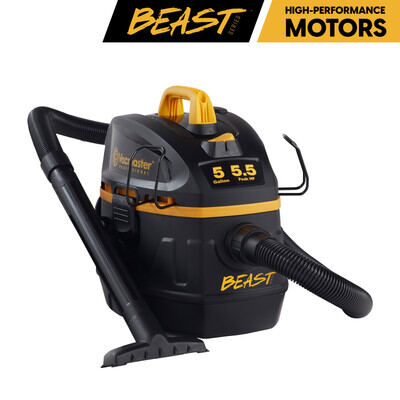
It is the wrong tool for general garage cleanup, leaf-blowing duty, or anyone who needs to suck up gallons of water on the regular. For those jobs the Ridgid HD1600 NXT moves more air per dollar, the HD09001 is half the price, and the Vacmaster Beast 5-Gallon costs $110 and includes a blower port. Buy the CT 26 because of how it handles fine dust at the tool, not because of what it does as a generalist shop vac.
Strengths
- +HEPA filtration measured at 99.96% real-world capture by Explore and Renovate, with cabinet shop air-quality logs matching lab specs during maple flooring refinishing
- +Bluetooth tool-triggered start eliminates trips to the switch when paired with Festool track saws, sanders, or routers
- +Quietest extractor in the field at 70 dB(A) ear-level (Explore and Renovate), low enough to run all day without hearing protection
- +Self-cleaning fleece bag plus HEPA main filter sustained 95 inches of water lift across a 20-minute continuous concrete-grind session
- +Five variable suction levels let you dial down on sanders so workpieces don't suction-lock to the platen
Watch-outs
- −$899 list price (plus essential accessories pushing the kit closer to $1,100) prices most DIYers out
- −6.9-gallon canister fills fast on demo work, requiring frequent bag swaps
- −Auto-sensing tool socket capped at 2,400 watts of pass-through, so it won't reliably trigger from a corded table saw
How it compares
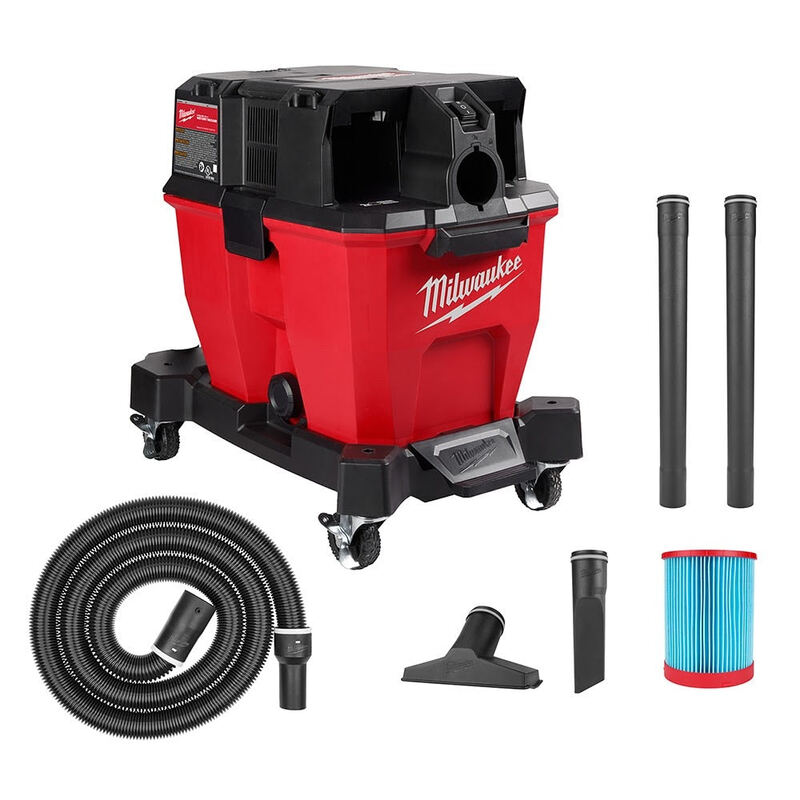
More refined than the Ridgid HD1600 NXT for fine-dust work — the HD1600 moves more raw air at 161 CFM but lets visible drywall haze out the filter exhaust on demo. Vs the Milwaukee M18 FUEL 9-Gallon (0920-20), the CT 26 stays corded but trades cordless freedom for HEPA-certified filtration and Bluetooth tool integration. The Vacmaster Beast and Ridgid HD09001 are workshop-cleanup vacs by comparison; this is a dust-management system.
Rating sources
“Best-in-Class Filtration: Actual jobsite air quality measurements matched laboratory results”
“I have never regretted purchasing my CT 26”
Our 4.8 score is the average of these published ratings. Ratings marked * were derived from the reviewer’s written analysis or video transcript — the publisher didn’t print an explicit numeric score, so we inferred one from their own words. Click through to verify. More about methodology.