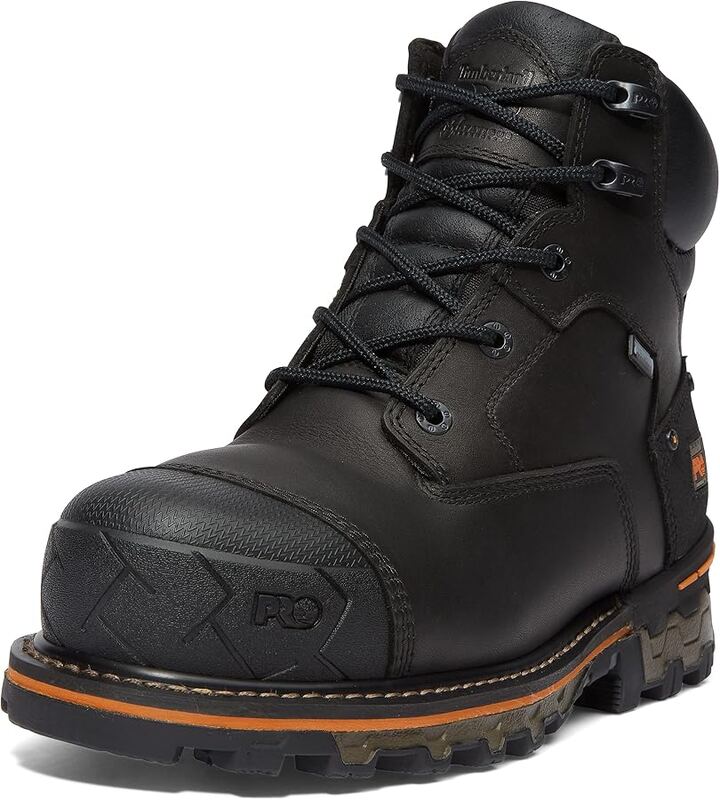
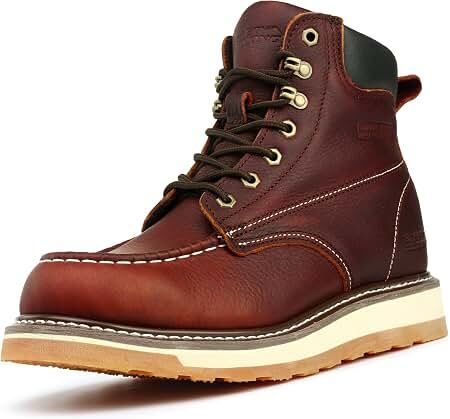
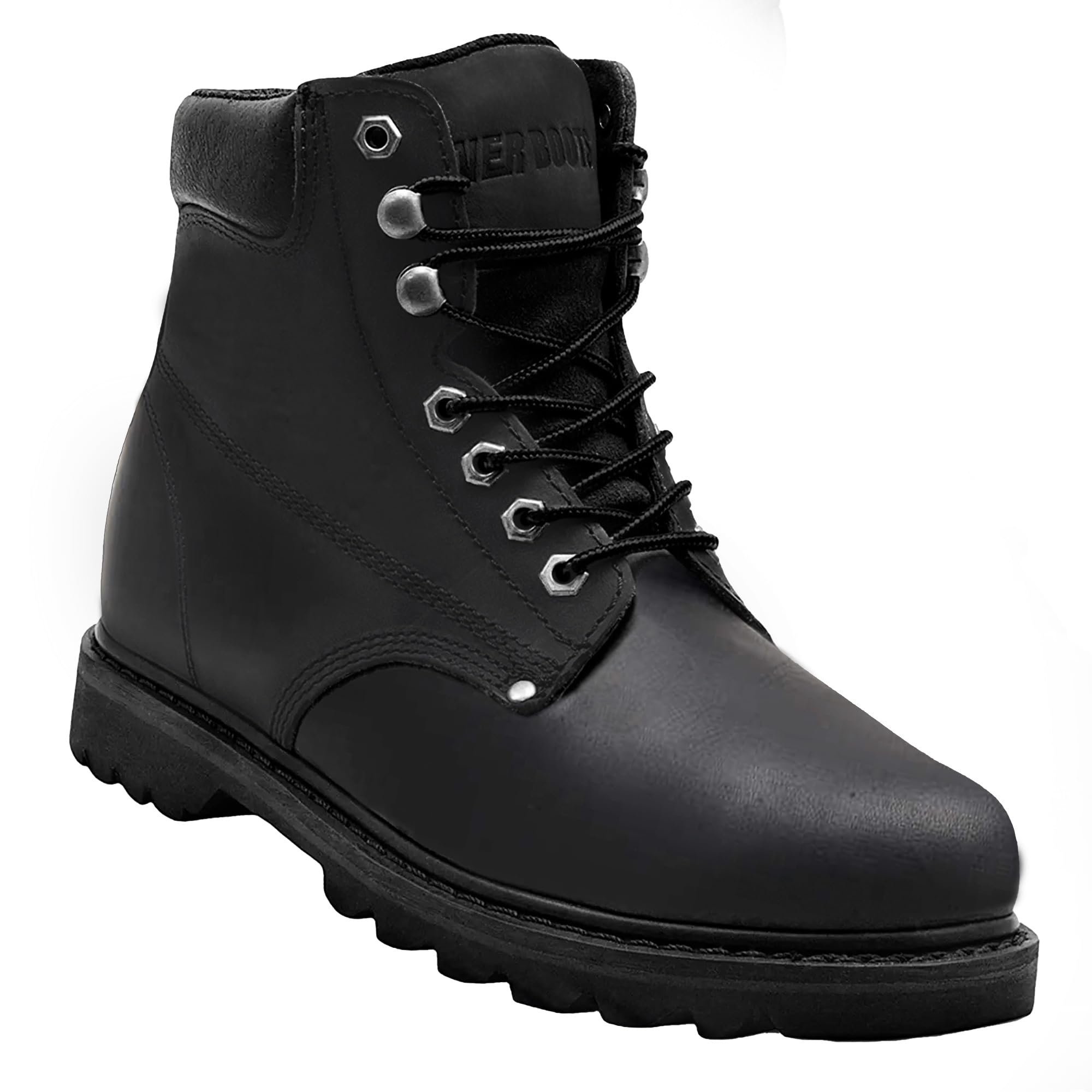
The Ever Boots Tank distinguishes itself in the budget category through Goodyear welt construction and soft nubuck leather that requires no break-in period, offering comfort out of the box. workwear.org noted the removable insoles feel like aftermarket memory foam for all-day wear. However, the fabric mesh lining wears through quickly under heavy daily use, and the soft toe version lacks ASTM safety protection required by many employers. The stock insole also features a strange heel bump that some users find annoying during long shifts. These boots fit light-to-moderate laborers seeking value and immediate comfort, but those needing industrial-grade durability or mandatory safety toes should look elsewhere.
Full review
Goodyear welt construction at a budget price point
The Ever Boots Tank distinguishes itself from the vast majority of footwear in its price bracket by utilizing Goodyear welt construction, a method where the upper is stitched to a leather strip that anchors the sole. This stitching provides a structural advantage over simple glue bonds, offering a durability baseline that mimics more expensive heritage brands like Thorogood or Red Wing.
The presence of this construction method allows for potential resoling down the line, though workwear.org noted that the overall material quality suggests the boot is better suited for moderate use rather than extreme industrial abuse. The stitching extends to the toe area with extra reinforcement, a detail highlighted by YouTube reviewers who observed the physical build before putting the boots through rigorous wear tests. This structural integrity stands in contrast to the internal lining, which presents a different durability story entirely.
Nubuck leather thickness and fabric lining degradation
This specific thickness provides a level of resilience that can withstand contact with sharp sheet metal or rough terrain without tearing immediately. The leather has been chrome tanned and treated with oils and waxes, giving it a matte finish that hides scuffs effectively during daily labor on construction sites or farms. workwearspy noted that this material quality is surprisingly good for the extreme low-cost category, making the boots appear significantly more expensive than their actual market price.
Despite the robust exterior, the interior lining presents a critical weak point. YouTube reviewers conducting scratch tests found that the mesh fabric lining inside the boot breaks down rapidly under friction from daily wear. When subjected to repeated scraping against an ankle or heel area, the lining gave way in less than a minute during controlled testing, whereas unlined leather interiors showed only minor fiber displacement. workwearspy explicitly warned that this internal fabric will not last long if worn for five days a week over several months, suggesting that heavy-duty users might experience interior failure before the sole separates.
Memory foam-like insoles and heel bump complaints
Comfort out of the box is a primary selling point for this model, largely driven by its cushioning system. workwear.org described the removable insole as feeling like aftermarket memory foam, providing thick padding that absorbs shock during long shifts on hard surfaces like concrete or asphalt. This plush feel eliminates the traditional break-in period associated with stiff leather boots, allowing workers to wear them immediately without blister formation around the padded collar. The ability to remove these insoles also accommodates users who prefer flatter support or need to insert custom orthotics for specific arch requirements.
However, this comfort profile is not universally praised due to a specific design flaw in the stock insole geometry. workwearspy reported that the heel area of the insole features a strange bump that many users find annoying and disruptive during movement. While the cushioning itself is adequate for part-time wear or light-to-moderate daily tasks, workers on ten-hour shifts often swap this out entirely to avoid pressure points.
Soft toe limitations versus steel-toe variant availability
The standard Ever Boots Tank model comes exclusively with a soft toe design, meaning it lacks any ASTM F2413 safety protection against impact or compression. This makes the boot unsuitable for job sites where employers mandate specific safety toes due to hazards like falling objects or heavy equipment. Shoppers requiring this protection must seek out Ever Boots' separate steel-toe listings rather than assuming the standard model meets industrial codes.
For those who do require safety features, workwear.org reviewed a dedicated steel-toe version of the Tank that includes a protective cap and a steel shank for underfoot rigidity. This variant maintains the same classic silhouette and cushioned comfort but adds necessary structural support for hazardous environments. The steel toe model also featured a high-grip outsole that performed well on slippery surfaces, though workwear.org noted it is not waterproof, limiting its effectiveness in wet conditions to dry work settings only.
Sizing inconsistencies and width recommendations
Fit consistency varies significantly across the user base, with sizing being one of the most discussed topics on Amazon. workwear.org tested a size 10 steel-toe version and found it true to size but noted the toe box is on the snug side.
For users with wider feet, the recommendation is not to size up in regular width but rather to order the Wide (E) option if available in their specific size range. workwear.org suggested going half a size up only for those who want more space in the heel area or have particularly wide toes that feel cramped in the standard box. The boot also features five eyelets and two metal speed hooks at the top, which facilitate quick on-and-off adjustments, though some users find lacing through the top eyelets creates a hassle when removing the boots after long shifts.
Durability expectations for light versus heavy labor
The consensus among reviewers is that the Ever Boots Tank excels in scenarios involving light-to-moderate daily work, such as landscaping, warehouse duties, carpentry, or farm chores. The thinner leather and softer rubber outsole are designed for comfort and value rather than the extreme abuse that would quickly destroy more expensive workwear.
For professionals working in harsh environments where boots need to last five years or more, reviewers consistently advised investing in higher-priced alternatives like White's Packers or Thorogood. The value proposition holds strong only when the user's expectations align with the boot's intended light-duty role.
Strengths
- +Goodyear welt construction provides better durability than cemented soles found in many budget boots
- +Soft leather requires no break-in period and feels comfortable out of the box
- +Thick, cushioned removable insoles offer memory foam-like comfort for all-day wear
- +Classic 6-inch nubuck leather design looks more expensive than its low price point
Watch-outs
- −Fabric mesh lining wears through quickly under heavy daily use
- −Soft toe version lacks ASTM safety protection required by many employers
- −Stock insole has a strange heel bump that some users find annoying
How it compares
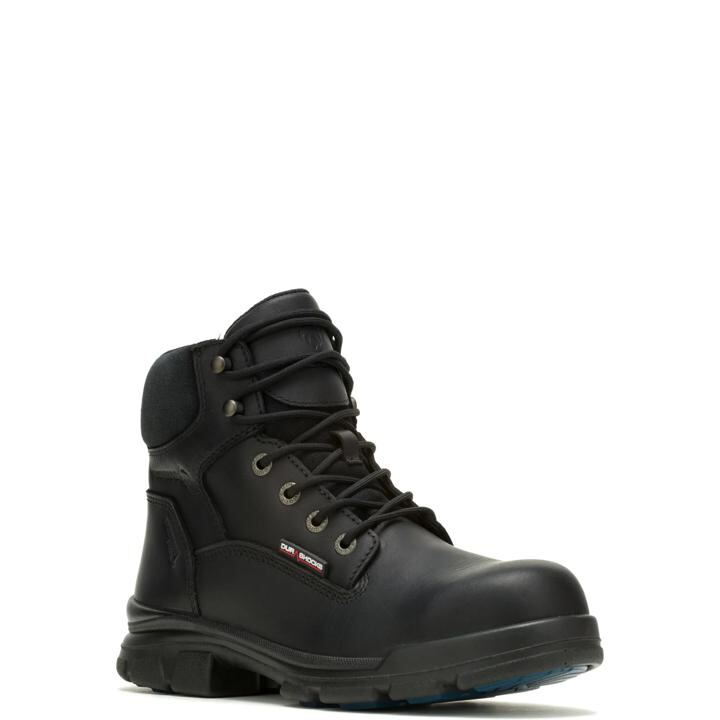
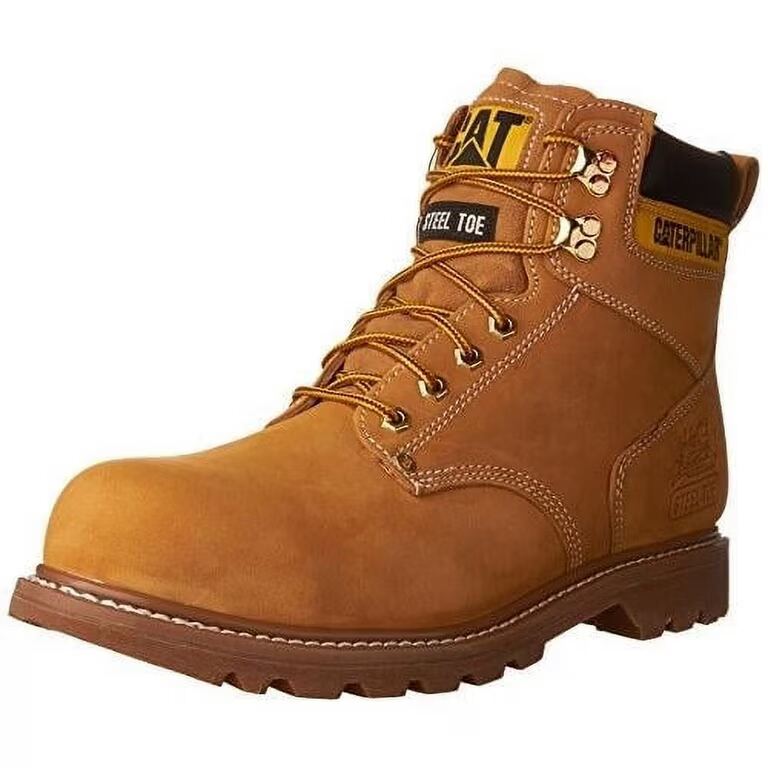
Weighing only ~2 lb 4 oz, the Ever Boots Tank is much lighter than the Caterpillar Second Shift (4.6 lb) and Timberland PRO Boondock (2 lbs 6 oz), offering immediate comfort without a break-in period unlike the SUREWAY heavy-duty boots which require significant stiffening time. However, its fabric mesh lining wears through faster than the full grain leather uppers found on the Caterpillar Second Shift and SUREWAY boots.
Rating sources
“Buy it if you need a soft toe leather work boot for landscaping, carpentry, warehouse work, DIY or farm chores, and you want the most boot for under $75.”
“The Ever Boots Tank Steel Toe Boot didn’t disappoint, not only because it was affordable, but also because of its overall set of features.”
Our 4.0 score is the average of the 2 scored reviews above; 2 more reviewed it without printing a score and are not in the average. Ratings marked * were derived from the reviewer’s written analysis or video transcript — the publisher didn’t print an explicit numeric score, so we inferred one from their own words. Click through to verify. More about methodology.