WIRED found that the Eargo 8 offers a virtually invisible completely-in-canal design and robust 16-hour battery life, supported by Smart Sound Adjust which automatically manages noise in loud environments. However, the device suffers from high price point issues that reviewers found difficult to justify compared to competitors, alongside handling challenges for users with dexterity or vision impairments due to its extremely small size. The self-fitting process relies on ultrasonic signals rather than Bluetooth and lacks granular controls for voice amplification, which can sound over-amplified without mitigation options. This product fits those prioritizing discretion and automated features above all else, but should be avoided by individuals seeking affordable pricing or easier physical manipulation.
Full review
Smart Sound Adjust and Device Scan features
The Eargo 8 introduces two primary software-driven innovations designed to automate the hearing aid experience: Smart Sound Adjust and a patented Device Scan. WIRED found that Smart Sound Adjust analyzes environmental noise levels and automatically tweaks cancellation settings when the user enters loud spaces like crowded restaurants, removing the need for manual adjustments via the app or ear gestures.
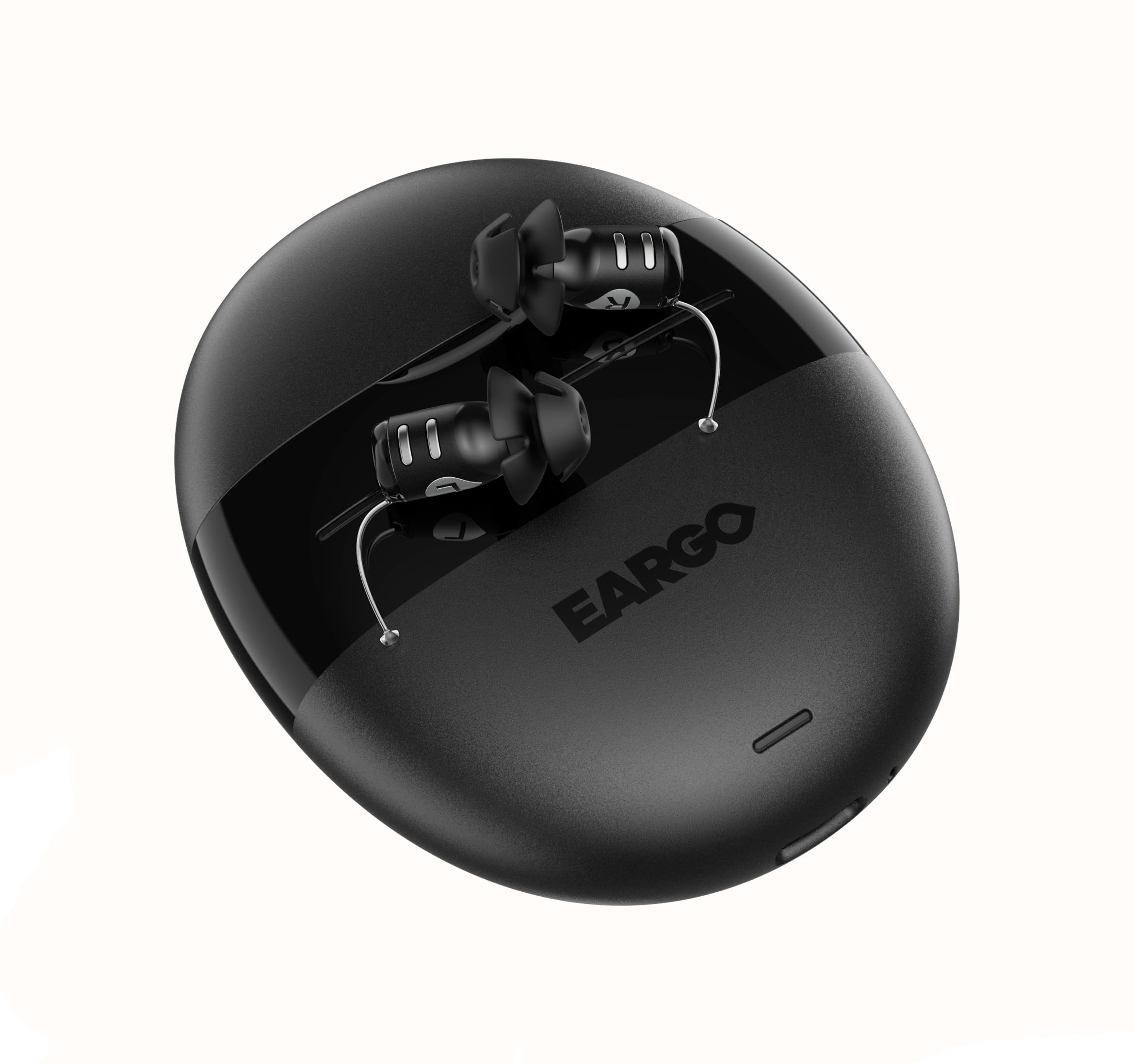
Complementing this is the on-demand Device Scan, which performs a wellness check by requiring the hearing aids to be placed in their charging case. WIRED reported that after a few minutes of scanning, the system reports results from speaker and microphone tests, though the reviewer noted they had only seen "Passed" results during initial use.
Battery life claims versus app visibility
Eargo 8 claims an impressive 16 hours of running time on a single charge, with the accompanying charging case providing up to two weeks of additional power. WIRED noted that they could only drain the battery fully by leaving the aids out of the case overnight, confirming the endurance is robust enough for daily use without mid-day recharging.
One-way communication limits app feedback
Communication between the Eargo 8 hearing aids and the companion mobile application remains a one-way street. WIRED found that while users can change volume or environmental programs through the phone, the aids do not report their status back to the device. All changes are confirmed only by beeps in the ear, with voice responses reserved strictly for hitting minimum or maximum volume levels.
Audiogram training relies on ultrasonic signals
The self-fitting audiogram training system continues to use ultrasonic signals from the user's phone rather than wireless Bluetooth technology. WIRED criticized this implementation as "iffy," noting that a single training session took nearly half an hour because the hearing aids missed a large portion of the test tones, requiring repeated attempts.
Sound quality and voice amplification issues
In daily use, WIRED found the Eargo 8 to deliver top-notch sound quality with no discernible difference from its predecessor. The units provided a moderate boost where needed most without introducing audio hiss or significant feedback, limiting acoustic interference mostly to minor instances when removing or inserting the aids.
Over-amplified voice and lack of control
A common complaint with hearing aids surfaced during use: WIRED found their own voice was slightly over-amplified. Because the Eargo 8 lacks granular user controls to adjust this specific frequency response, there is no good way for the wearer to mitigate the effect of their own voice sounding louder than natural.
Completely-in-canal design and physical size
The Eargo 8 maintains a virtually invisible completely-in-canal (CIC) design, sitting deep inside the ear canal.
High price point versus market competition
WIRED rated the Eargo 8 at 6 out of 10, heavily penalizing its expense. The publication found that the high price is nearly impossible to justify compared to competitors in a tightly competitive market, especially as the hearing aid industry consolidates and other brands offer similar features for less.
Dexterity challenges from tiny form factor
The extremely small size of the Eargo 8 presents significant handling difficulties. The compact completely-in-canal design makes insertion, removal, and routine cleaning challenging for users with vision impairments or limited dexterity, a trade-off inherent to achieving such a discreet physical profile.
Strengths
- +Virtually invisible completely-in-canal design that sits deep inside the ear canal
- +16-hour battery life with a charging case providing up to two weeks of additional power
- +Smart Sound Adjust feature automatically analyzes and reduces noise in loud environments like restaurants
- +Patented Device Scan performs on-demand wellness checks for speaker and microphone health
Watch-outs
- −High price point that reviewers found difficult to justify compared to competitors
- −Extremely small size makes handling, insertion, and cleaning challenging for users with dexterity or vision issues
Rating sources
Counts as 3.34/5 in our score — this publisher's 31 scores on the site average 3.77, so its scores are adjusted up to compare fairly with other publishers.
Our 3.3 score is the average of the 1 scored review above, each adjusted for how strictly its publisher scores; 4 more reviewed it without printing a score and are not in the average. More about methodology.