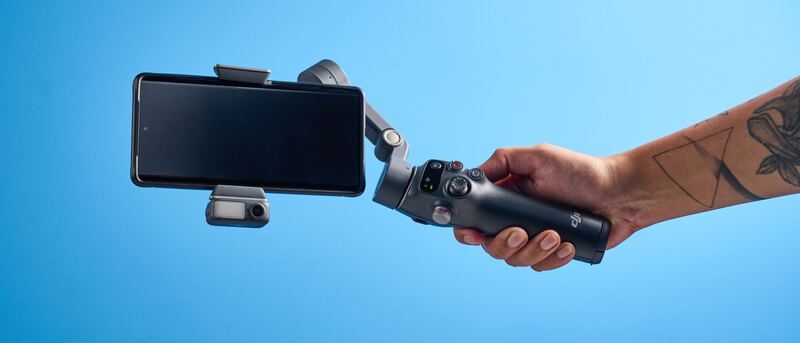
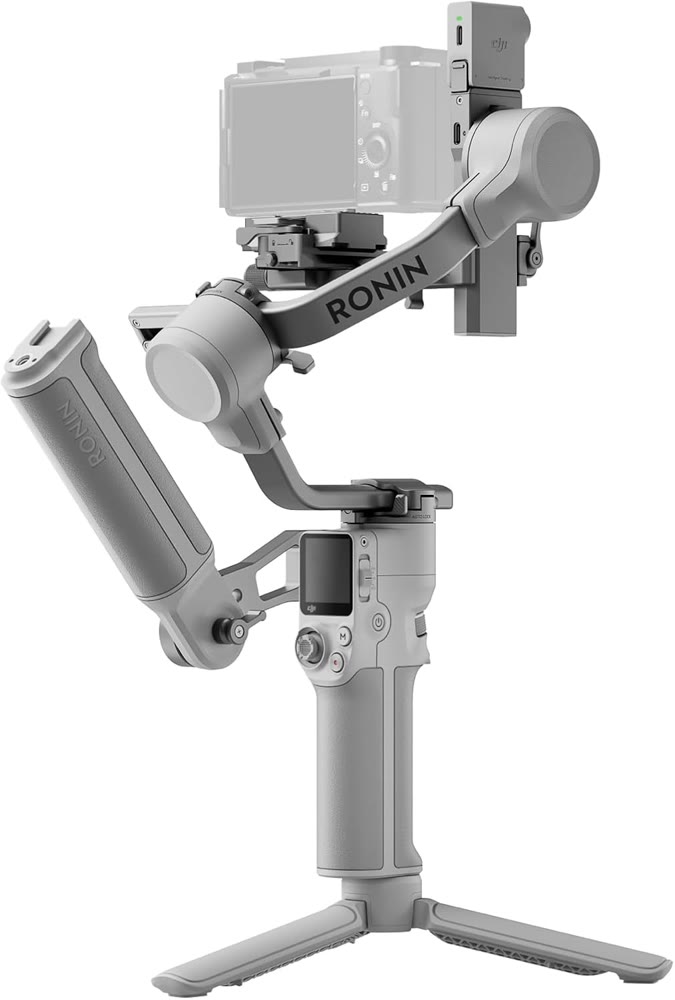
The DJI RS 4 Mini is an 890 g camera gimbal with a 2 kg maximum payload. TechRadar calls it the best portable camera gimbal you can buy, and Tom's Guide praises its automatic axis locks and fast switch to vertical shooting. The optional Intelligent Tracking Module adds subject tracking, though Tom's Guide notes it cannot track non-human subjects. DJI claims 13 hours of battery life; TechRadar averaged around half of that in testing. PCMag lists the smartphone activation required before first use as a con, Digital Camera World objects that it insists on a smartphone sign-up, and TechRadar found the arms stiff when balancing.
Full review
890 g body with a 2 kg payload
Tom's Guide lists the RS 4 Mini at 890 g with a 2 kg maximum payload, Teflon aluminum alloy arms and a 1.4-inch full-color LCD. TechRadar lists it at 236 × 64 × 316mm folded and says the 2 kg limit is enough for a full-frame mirrorless body with a relatively weighty lens, though the shorter handle gives less ergonomic support when fully loaded.
Tom's Guide lists limited headroom for larger full-frame rigs among its dislikes. PCMag describes the stabilization as effective for 4.4-pound camera kits and notes there is not much clearance for the camera's LCD in vertical mode.
Automatic axis locks and balancing
TechRadar reports that the axis locks unlock when the gimbal powers on and that DJI added physical switches for gimbal and joystick modes plus a fine-tuning knob for the mounting plate. It still found the arms stiff when balancing and notes the camera has to be rebalanced for vertical shooting, a point Digital Camera World also lists.
Trusted Reviews found first-time set-up unintuitive even after reviewing two earlier RS gimbals. Photography Life points to measurement ticks on each axis that let a balanced position be noted and repeated for a given camera and lens.
Optional Intelligent Tracking Module
The tracking module attaches magnetically to the top of the mounting arm, according to Tom's Guide. PCMag found that once the module locked on, the gimbal panned and tilted to follow the reviewer's movements.
Photography Life notes that on smaller cameras the module blocks the strap eyelet, and that the camera may need rebalancing once the module is attached.
Battery life and smartphone activation
DJI's 13-hour claim is based on a stationary gimbal; TechRadar averaged around half of that in testing, which it says is still better than the RS 3 Mini, and notes recharging now takes 1.5 hours. Photography Life saw the battery fall to 55% after four hours of constant use. PCMag reports that a 30-minute charge delivers five hours of use.
The battery cannot be removed, which Tom's Guide and Photography Life both count against it. PCMag and Photography Life each object that the gimbal has to be activated through a smartphone app before it can be used, and Digital Camera World lists its insistence on a smartphone sign-up as a reason to avoid it.
Strengths
- +Weighs 890 g and carries up to 2 kg, enough for a full-frame mirrorless body with a relatively weighty lens (TechRadar)
- +Axis locks release automatically when the gimbal powers on (TechRadar)
- +Switches from widescreen to vertical without tools (PCMag)
- +Optional Intelligent Tracking Module follows a subject for hands-free solo shooting (Tom's Guide, PCMag)
- +Recharge time cut to 1.5 hours (TechRadar)
Watch-outs
- −Smartphone activation required before first use (PCMag, Photography Life); Digital Camera World lists 'Insists on smartphone sign-up'
- −Arms can be stiff when balancing, and the camera needs rebalancing for vertical (TechRadar)
- −Battery is not removable (Tom's Guide, Photography Life)
- −Quick release plate is no longer Arca-Swiss standard size, per Tom's Guide
- −Trusted Reviews found first-time set-up tricky and battery life limited next to other RS 4 gimbals
How it compares
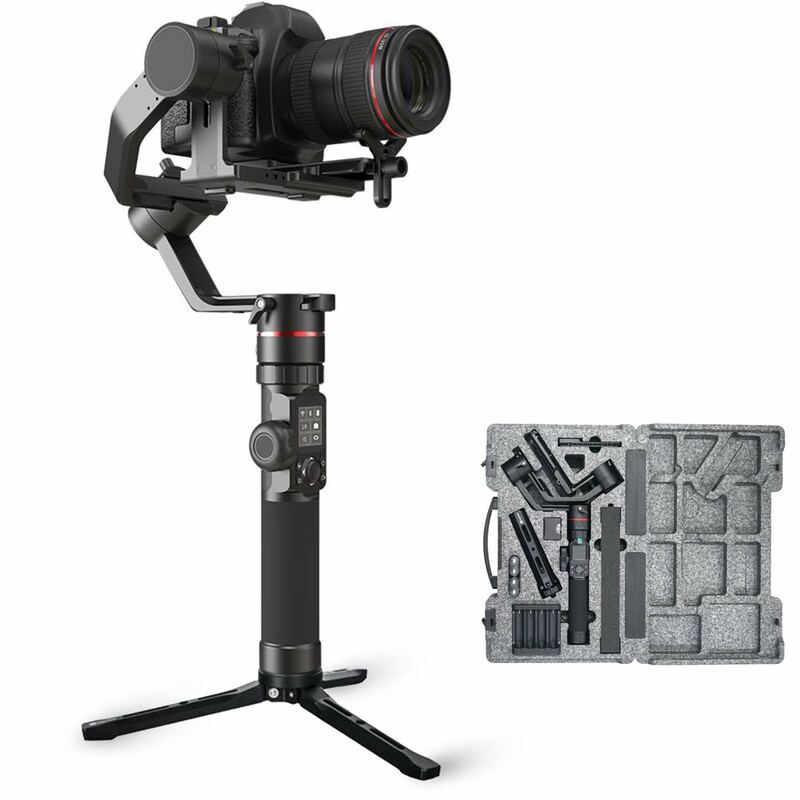
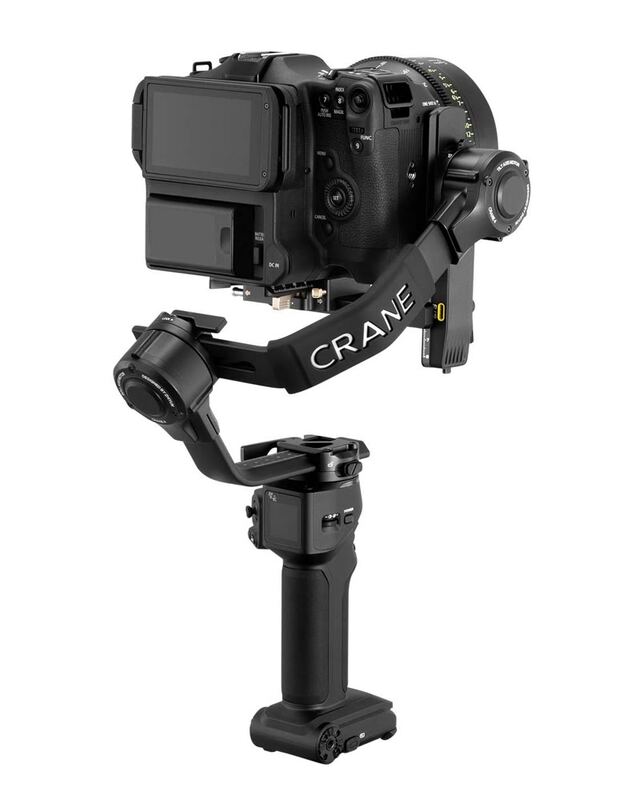
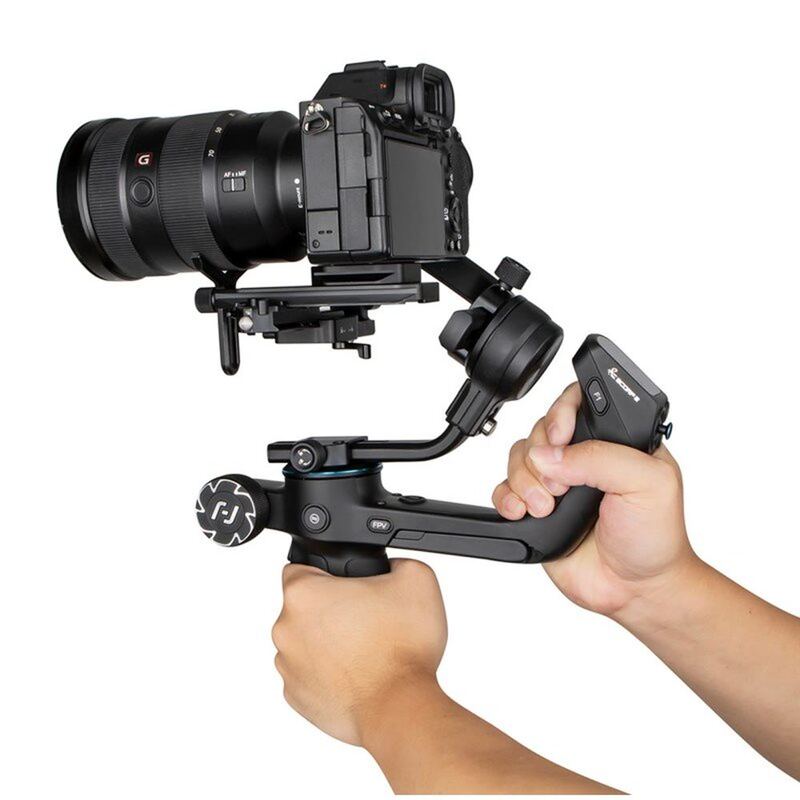
At 890 g the DJI RS 4 Mini weighs less than the Zhiyun Weebill 3E (2.18 lb) and FeiyuTech SCORP 2 (2.36 lb), but its 2 kg payload is below the Weebill 3E's 3 kg, the SCORP 2's 2.5 kg and the Zhiyun Crane 4's 4 kg. Its claimed 13 hours matches the SCORP 2 and trails the Weebill 3E's 16. Subject tracking needs the optional Intelligent Tracking Module, whereas the SCORP 2 has a built-in AI tracking camera.
Rating sources
Counts as 4.52/5 in our score — this publisher's 156 scores on the site average 4.15, so its scores are adjusted up to compare fairly with other publishers.
Counts as 4.42/5 in our score — this publisher's 195 scores on the site average 4.25, so its scores are adjusted down to compare fairly with other publishers.
Counts as 4.16/5 in our score — this publisher's 181 scores on the site average 4.00, so its scores are adjusted up to compare fairly with other publishers.
Counts as 4.45/5 in our score — this publisher's 43 scores on the site average 4.22, so its scores are adjusted down to compare fairly with other publishers.
Counts as 4.27/5 in our score — this publisher's 55 scores on the site average 4.42, so its scores are adjusted down to compare fairly with other publishers.
Counts as 4.56/5 in our score — this publisher's 3 scores on the site average 4.00, so its scores are adjusted up to compare fairly with other publishers.
Our 4.4 score is the average of the 6 scored reviews above, each adjusted for how strictly its publisher scores; 2 more reviewed it without printing a score and are not in the average. More about methodology.