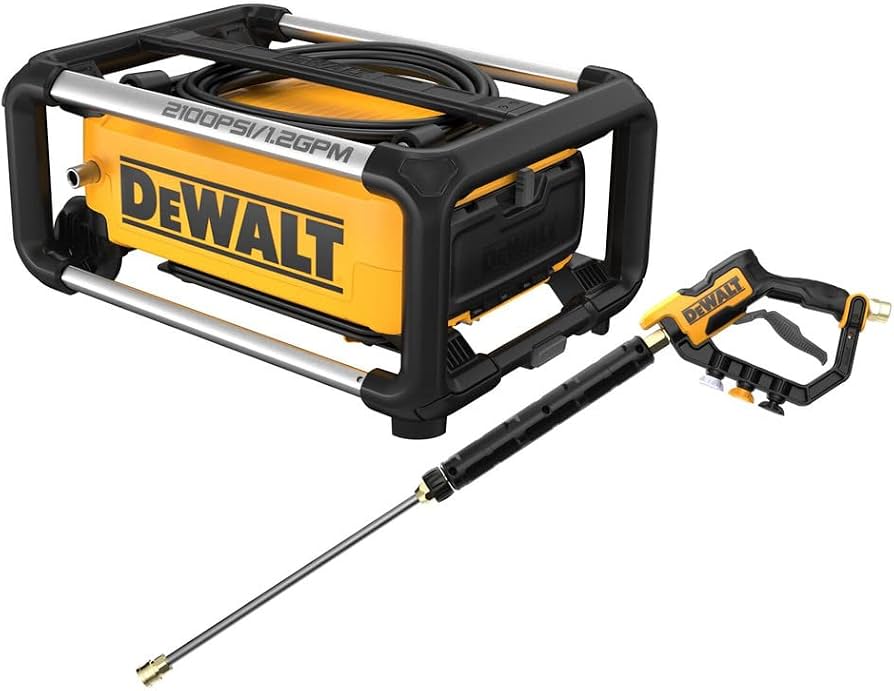
The DeWalt DWPW2100 features a compact suitcase-style design with integrated wheels and an internal storage compartment that keeps accessories organized, though Reviews Made Simple noted its removable detergent tank is easier to empty than fixed reservoirs. The 13-amp motor delivers 2,100 PSI at 1.2 GPM for effective residential cleaning, but the axial cam pump is less durable than commercial triplex alternatives and lacks adjustable pressure settings on the unit itself. Devin Owen found that while the turbo nozzle handles heavy grime, users must carefully select nozzles to avoid damaging softer surfaces like wood or vinyl. This model fits occasional home use where mobility matters, but professionals requiring high durability or those frustrated by the contradiction between upright storage and flat operational orientation should look elsewhere.
Full review
Compact suitcase design and mobility
The DeWalt DWPW2100 abandons the traditional bulky frame of most pressure washers in favor of a rectangular, mid-sized carry-on luggage footprint. This lightweight construction makes it significantly easier to load into the bed of a truck or the back of a van compared to heavier gas-powered alternatives, addressing one of the primary pain points for jobsite cleanup.
Mobility is handled by two integrated four-inch wheels and a telescoping handle that extends to 39 inches. However, Devin Owen pointed out that while carrying it is feasible due to its low weight, the retractable handle provides a comfortable height for rolling. It is important to note that these tires are not designed for all-terrain use and perform best on hard surfaces such as concrete driveways or paved jobsites.
The suitcase design also dictates how the machine must be stored when not in active use. The power cord wraps neatly around two large plastic cleats located in a recessed area on the underside of the unit, while the 25-foot pressure hose coils securely under the top handle bar using a Velcro strap. This dedicated storage keeps the equipment tangle-free and protected from damage during transport, ensuring that all components remain organized inside the vehicle.
Internal accessory organization system
One of the most distinctive features of this pressure washer is its extensive internal storage compartment. Reviews Made Simple highlighted that the wand breaks down into three pieces that stow away inside an internal compartment on the end of the machine, a design choice that eliminates external dangling parts. The nozzles are attached directly to the handle via a locking switch mechanism, and there is a designated space for the turbo nozzle as well as the two sections of the wand.
Devin Owen described this organization system as exceptionally neat, noting that everything has a specific home within the unit's footprint. A permanent nozzle reference guide is printed inside the storage compartment to help users identify which tip corresponds to which spray angle and pressure level. This internalization means the user must fully break down the wand assembly when storing the machine, but it results in a clean profile that fits easily into tight garage spaces or toolboxes.
The onboard detergent tank adds another layer of convenience within this compact design. Unlike many competitors where the reservoir is fixed to the body, the DWPW2100 features a removable bottle. Reviews Made Simple found that this allows users to pour leftover soap back into the original container easily after finishing a job. The pump mechanism is designed to feed detergent whether the unit is standing upright or lying flat on its side.
2100 PSI performance and axial cam limitations
The machine utilizes a 13-amp universal motor paired with an axial cam pump to deliver 2,100 pounds per square inch of pressure at a flow rate of 1.2 gallons per minute. It also effectively blasts grills clean and removes stubborn dirt and algae from PVC privacy fencing and vinyl siding without requiring additional chemicals.
However, the axial cam pump represents a durability trade-off compared to commercial-grade equipment. Reviews Made Simple explained that while axial pumps are simpler in construction, triplex pumps tend to be more efficient and last longer. Users who plan to operate this machine frequently or for extended periods should take note of this distinction, as the axial design is better suited for occasional residential use rather than heavy daily professional abuse.
The unit does not feature adjustable pressure settings on the body itself; instead, users must rely on switching nozzles to control the spray intensity. The turbo nozzle, which rotates aggressively, can make the 2,100 PSI unit perform similarly to machines with significantly higher static pressure ratings.
Orientation conflicts and storage contradictions
A significant operational quirk involves how the machine must be positioned during use versus how it is designed for storage. The manual clearly states the pressure washer should be lying down while in operation, yet the wheels and handle are oriented such that the unit naturally stands upright.
This creates a confusing scenario where the onboard accessory storage is designed for the machine to sit upright, but running it in that position can cause mechanical failures. The Drive advised that users must read the instructions carefully to avoid self-inflicted damage by storing the wand and nozzles inside while attempting to operate the unit vertically. This contradiction between the physical design of the handle/wheels and the operational requirements of the pump is a major point of frustration for new owners.
The soap reservoir adds another layer of complexity to this orientation issue. While the removable tank can feed detergent in either position, running soap through the pressure hose and gun while the unit is lying down may lead to build-up or contamination issues if not flushed properly. Users who prefer to use a separate foam cannon rather than the onboard dispenser avoid some of these internal plumbing concerns.
Noise levels and motor operation
Compared to traditional gas-powered pressure washers, this electric model operates at a significantly lower decibel level. This reduced sound profile is a direct benefit of using an electric motor rather than an internal combustion engine.
He noted that users might initially think they need to let pressure build up, as the sound changes noticeably. However, he clarified that this noise increase indicates the pump is running dry or under strain; holding off for a few seconds allows the pressure to reset before resuming spraying.
The motor only runs when the trigger on the gun is pulled, which contributes to both its quietness and energy efficiency. This zero-pressure standby mode means the unit does not waste electricity or wear down components while waiting between sprays.
Concrete cleaning and nozzle effectiveness
When tackling heavy-duty surfaces like concrete driveways, the choice of nozzle becomes critical. The turbo nozzle is necessary in these scenarios to achieve the aggressive scrubbing action required to remove set-in dirt and oil spots.
Devin Owen tested the various spray angles and found that the 40-degree white nozzle is gentle enough for washing cars without damaging paint, while the 15-degree yellow nozzle provides a more abrasive stream suitable for removing heavy grime from decks or siding. He warned that the narrower angles require careful handling to avoid etching softer materials like wood or vinyl.
For final rinsing after applying soap, some users prefer using a standard garden hose with a shower nozzle attachment rather than relying on the pressure washer's low-pressure setting. The Drive mentioned that while the onboard detergent tank is convenient for light cleaning jobs, it does not dispense enough volume to replace dedicated foam cannons for deep car washes, leading many enthusiasts to bypass the internal reservoir entirely.
Strengths
- +Compact suitcase-style design with integrated wheels and telescoping handle for easy mobility.
- +Extensive internal storage compartment keeps the wand, nozzles, and hose organized and protected.
- +Quiet operation compared to gas-powered pressure washers.
Watch-outs
- −Requires specific storage orientation (lying flat) which conflicts with upright accessory storage design.
How it compares
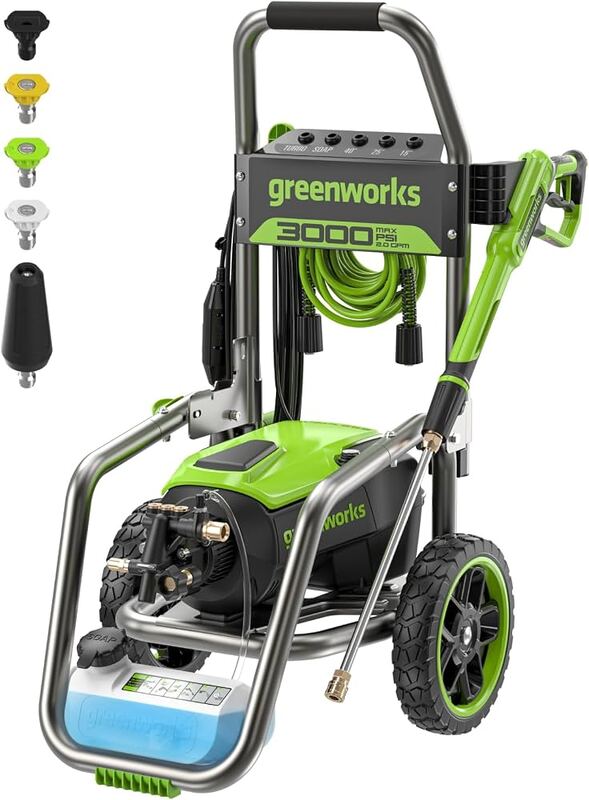
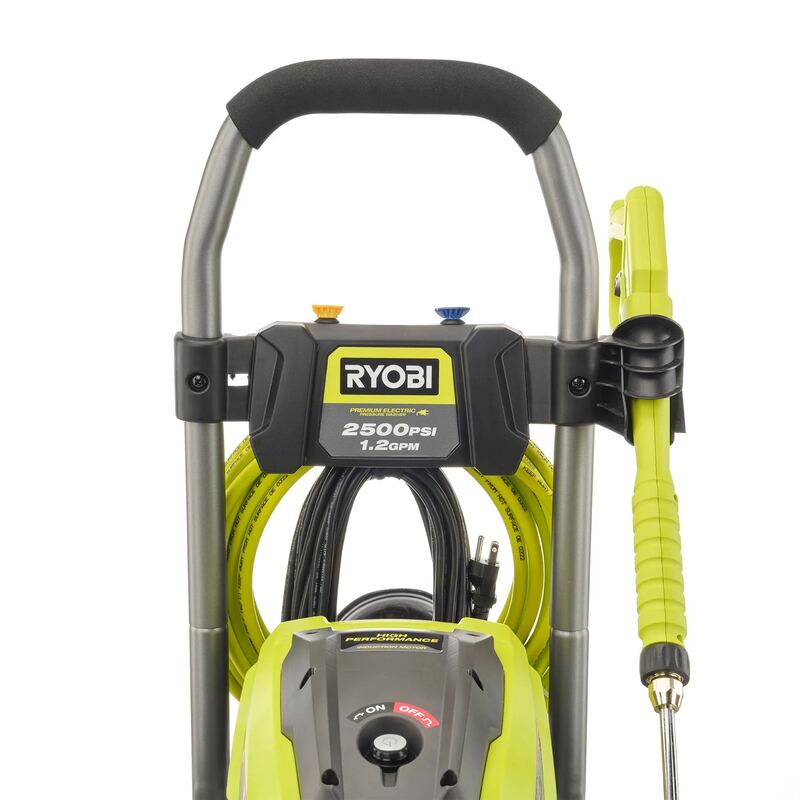
The DeWalt DWPW2100 is significantly lighter at under 28 lbs compared to the Greenworks' 53 pounds and Ryobi RY142500's 43.36 lbs, making it the most portable option for users who need to lift or carry the unit frequently. However, its axial cam pump lacks the durability of the brushless motors found in the Greenworks and both Ryobi models, and it offers lower pressure (2100 PSI) than the 2500 PSI output of the RY142500.
Rating sources
“Aside from that minor issue, I really don't have any complaints about this tool. It has plenty of power. It's nicely designed and it's super convenient.”
“so overall if you're looking for an electric pressure washer that you can rely on and that's powerful enough to do everything you need around the house around your job site I would highly recommend this one by D Walt”
Our 4.5 score is the average of the 2 scored reviews above; 2 more reviewed it without printing a score and are not in the average. Ratings marked * were derived from the reviewer’s written analysis or video transcript — the publisher didn’t print an explicit numeric score, so we inferred one from their own words. Click through to verify. More about methodology.