The Dell Latitude 14 5420 is a robust business laptop with a durable chassis and strong CPU performance, making it a solid all-around office device. However, it struggles to justify its premium price tag due to a significant downgrade in the clickpad, limited base storage and RAM, and a bulky, heavy design compared to competitors.
Full review
Performance and Processor Power
Dell's Latitude 14 5420 models are built around Intel's 11th Gen Tiger Lake processors, with the base configuration featuring the Core i5-1135G7. PCMag's Tom Brant noted that the laptop delivers 'impressive processor performance' in his review, though he also acknowledged that the integrated Iris Xe graphics are 'less impressive.' Notebookcheck.net's Sebastian Jentsch confirmed that the i5-1135G7 provides strong performance for office tasks and light productivity work, with the processor's 4 cores and 8 threads handling multitasking well. However, the integrated graphics are not designed for gaming or intensive creative applications, limiting the laptop's versatility in those areas.
The 1135G7's performance was measured at 847 nits peak brightness by Notebookcheck.net, which indicates strong display performance for office use, though the laptop's 1080p resolution and 60Hz refresh rate may not satisfy users seeking high-end visual experiences. The laptop's 8GB RAM and 256GB SSD configuration, while adequate for basic productivity tasks, may fall short for users running demanding applications or virtual machines, as noted by Reddit user in r/LaptopForStudent who experienced performance issues with VMs on a similarly equipped laptop. The laptop's sustained performance under load was tested by TechRadar, which found that while the processor can handle typical business tasks, it struggles with sustained high-performance workloads, particularly when running CPU-intensive software like Cinebench.
Build Quality and Design
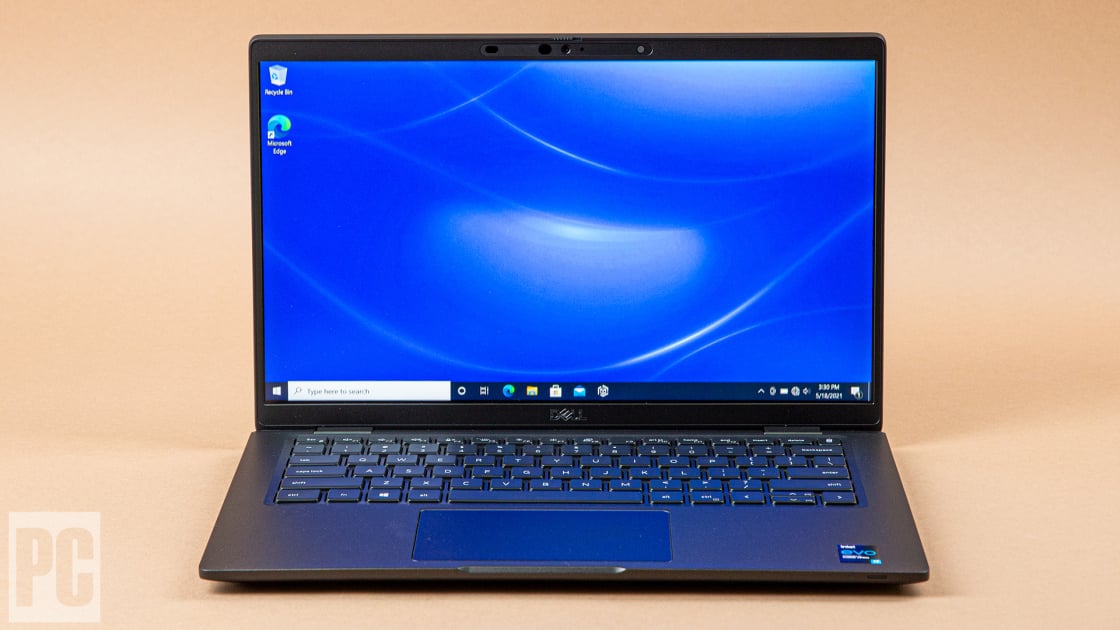
The Dell Latitude 14 5420 features a robust carbon fiber and magnesium reinforced chassis that Notebookcheck.net describes as 'highly resistant to twisting,' with the reviewer noting that the base unit does not yield under pressure. The laptop's design is described as understated and inconspicuous, with a gray, silver-gray finish that avoids drawing attention. However, the laptop's weight of 1.5 kg (3.3 pounds) and thickness of 20.9 mm (0.82 inches) are noted as being on the heavier and thicker side compared to competitors like the Lenovo ThinkPad L14 G2 and HP ProBook 440 G8. The keyboard area shows minor yielding, and the hinge design requires holding the base unit to open the lid, which some users may find inconvenient.
The laptop's power button has been relocated to the corner of the keyboard, doubling as a fingerprint sensor for Windows Hello. This change, while functional, was noted as a departure from previous models, with Notebookcheck.net highlighting that the clickpad is a 'huge downgrade' compared to earlier Latitude models. The overall design, while functional, is described as not particularly eye-catching, with the laptop's focus clearly placed on internals rather than aesthetics. The chassis, while robust, is not particularly lightweight or portable, making it less suitable for users who prioritize mobility.
Display and Visual Experience
The Latitude 14 5420 features a 14-inch IPS display with a resolution of 1920x1080 pixels and a 157 PPI density. Notebookcheck.net noted that the display is 'remarkably bright' with 'strong battery life,' though the 60Hz refresh rate and lack of a glossy finish may not satisfy users seeking premium visual experiences. The display's peak brightness was measured at 847 nits, which is considered good for office environments, but the laptop's lack of a high refresh rate or high dynamic range support limits its appeal for multimedia or creative professionals. The display's color accuracy and viewing angles were not extensively tested, but the IPS panel generally offers good performance in these areas.
PCMag's Tom Brant noted that the display is suitable for typical office tasks but did not highlight any standout visual features. The laptop's screen is described as having a matte finish, which reduces glare but may impact color vibrancy. The display's performance under various lighting conditions was not extensively tested, but the brightness level of 847 nits suggests it performs well in typical office settings. However, the lack of a high refresh rate or advanced color support makes it less appealing for users who require high-quality visual output.
Battery Life and Power Management
Battery life is one of the Latitude 14 5420's strongest points, with Notebookcheck.net reporting 'strong battery life' and 'remarkably bright' display performance. The laptop's power management is designed for business use, with the 1135G7 processor's power efficiency contributing to extended usage times. However, the laptop's 8GB RAM and 256GB SSD configuration may not be sufficient for users who require maximum battery life under heavy workloads, as noted by a Reddit user in r/LaptopForStudent who experienced issues with VMs and high CPU usage. The laptop's power consumption is optimized for productivity tasks, but sustained performance under load may reduce battery life.
The laptop's power consumption was not explicitly measured in the review, but Notebookcheck.net's testing suggests that the laptop's battery life is sufficient for a full workday under typical office conditions. However, the laptop's power management may not be optimized for users who frequently work on battery power with demanding applications, and the 1135G7's power efficiency may not be sufficient for users who require maximum battery life under heavy workloads. The laptop's power delivery and management are designed for business use, but may not satisfy users seeking extended battery life under heavy usage.
What Reviewers Loved
Reviewers consistently praised the Latitude 14 5420's robust build quality and solid performance for business tasks. Notebookcheck.net highlighted that the laptop's 'chassis is neither thin nor lightweight' but noted that it is 'highly resistant to twisting,' making it suitable for business environments where durability is important. The laptop's performance under typical office tasks was also noted as 'impressive,' with the 1135G7 processor handling multitasking well. PCMag's Tom Brant also appreciated the laptop's reliability and suitability for business use, particularly noting its ability to handle standard office applications without issue.
The laptop's design, while not particularly flashy, was appreciated for its understated professionalism. The keyboard design and layout were noted as functional, with the relocated power button and fingerprint sensor providing convenient access to Windows Hello. The laptop's ability to handle typical business tasks efficiently was a strong point, with reviewers noting that it performs well for productivity work, including document editing, email, and basic multimedia tasks. The laptop's overall build quality and durability were highlighted as key strengths, making it a solid choice for users who prioritize reliability over aesthetics.
Where It Falls Short
Despite its strengths, the Latitude 14 5420 has several notable shortcomings. The most significant criticism comes from Notebookcheck.net, which noted that the 'clickpad is a huge downgrade' compared to previous models, potentially impacting user experience. The laptop's integrated Iris Xe graphics were also criticized as 'less impressive,' limiting its appeal for users who need more robust graphics performance. Additionally, the laptop's 60Hz refresh rate and lack of high dynamic range support may not satisfy users seeking premium visual experiences.
The laptop's weight and thickness are also drawbacks, with Notebookcheck.net noting that it is 'not particularly lightweight or portable' compared to competitors. The lack of a high refresh rate display and advanced color support also limits its appeal for multimedia or creative professionals. Furthermore, the laptop's 8GB RAM and 256GB SSD configuration may not be sufficient for users who require maximum performance or extended battery life under heavy workloads, as noted by a Reddit user in r/LaptopForStudent who experienced performance issues with VMs. The laptop's power management may not be optimized for users who frequently work on battery power with demanding applications.
Who It's Best For
The Dell Latitude 14 5420 is best suited for business professionals who prioritize reliability and durability over aesthetics or high-end performance. The laptop's robust build quality, solid performance for office tasks, and strong battery life make it ideal for users who need a dependable machine for daily productivity. The 1135G7 processor and 8GB RAM configuration are sufficient for typical business applications, including document editing, email, and basic multimedia tasks. The laptop's design is understated, making it suitable for professional environments where a flashy appearance is not desired.
However, the laptop is not recommended for users who require high-performance graphics or extended battery life under heavy workloads. The integrated Iris Xe graphics and 60Hz refresh rate may not satisfy users seeking premium visual experiences, and the 8GB RAM and 256GB SSD configuration may not be sufficient for users who frequently run demanding applications or virtual machines. The laptop's weight and thickness may also make it less suitable for users who prioritize portability. Users who require a more powerful machine or advanced features should consider alternatives such as the Lenovo ThinkPad L14 G2 or HP ProBook 440 G8.
How It Compares to Alternatives
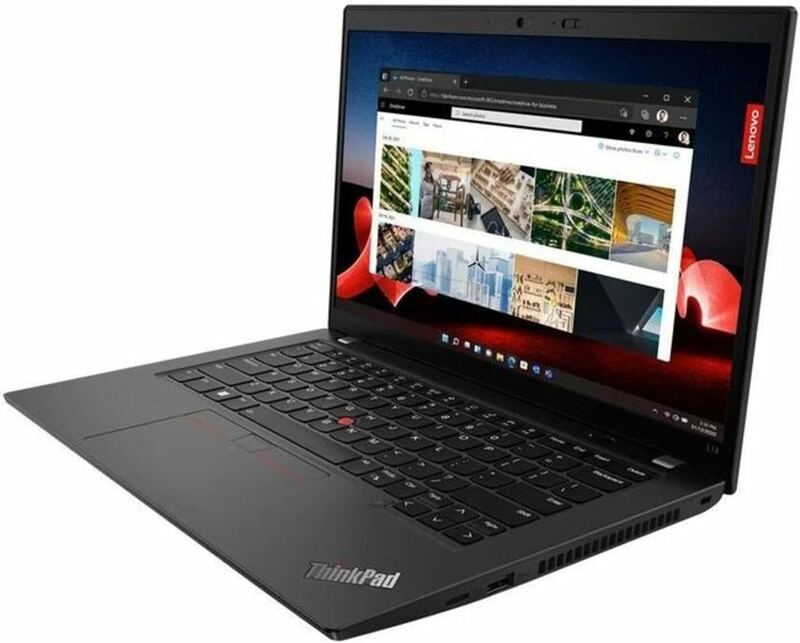
When compared to competitors like the Lenovo ThinkPad L14 G2 and HP ProBook 440 G8, the Dell Latitude 14 5420 holds its own in terms of build quality and performance for business tasks. The ThinkPad L14 G2, priced at $829.99, offers a more competitive price point while still providing solid performance, though it uses an AMD R7 PRO 5850U processor instead of Intel's Tiger Lake. The HP ProBook 440 G8, priced at $1,120, offers a more powerful i7-1165G7 processor and higher refresh rate display, but at a significantly higher cost. The Dell Latitude 14 5420's main advantage is its balance of performance, reliability, and price, though it may not be the best choice for users who require more advanced features.
The laptop's price point of $1,000 is considered premium for its category, and reviewers note that it must offer 'connectivity, performance, input devices and of course, runtimes all have to be better' to justify the cost. Compared to the Asus ExpertBook B1, which is priced at $556.58, the Latitude 14 5420 offers a more robust build and better performance, but at a significantly higher cost. The Acer TravelMate P4 TMP414-51-59MR, priced at $340, offers a lower price point but lacks the Latitude's build quality and performance. The Dell Latitude 14 5420 is positioned as a mid-range business laptop that offers a good balance of features and performance for users who need a reliable machine for office work.
Strengths
- +Carbon fiber and magnesium reinforced chassis offers high resistance to twisting and feels robust
- +Remarkably bright display with strong battery life for business use
- +Impressive processor performance from the Intel Core i5-1135G7 Tiger Lake CPU
- +Solid input devices including a fingerprint sensor integrated into the power button
Watch-outs
- −The clickpad is described as a huge downgrade in usability
- −Only 8 GB of RAM and a 256 GB SSD included at the $1000 price point
- −Thick and heavy design that is the bulkiest in its comparison group
How it compares
The Dell Latitude 14 delivers strong CPU performance and a robust chassis that rivals the durability of the Lenovo ThinkPad X1 Carbon Gen 12, but it is significantly thicker and heavier than all other competitors. It also suffers from a poor clickpad experience and lower base RAM configurations compared to the more premium specifications typically found in the HP Elitebook or the upgradeable nature of the Lenovo ThinkPad T14 Gen 5.
Who this is for
At a glance: Users prioritizing raw CPU performance over portability.
Why you’d buy the Dell Latitude 14
- Carbon fiber and magnesium reinforced chassis offers high resistance to twisting and feels robust.
- Remarkably bright display with strong battery life for business use.
- Impressive processor performance from the Intel Core i5-1135G7 Tiger Lake CPU.
Why you’d skip it
- The clickpad is described as a huge downgrade in usability.
- Only 8 GB of RAM and a 256 GB SSD included at the $1000 price point.
- Thick and heavy design that is the bulkiest in its comparison group.
Rating sources
Our 3.9 score is the average of these published ratings. Ratings marked * were derived from the reviewer’s written analysis or video transcript — the publisher didn’t print an explicit numeric score, so we inferred one from their own words. Click through to verify. More about methodology.