DeepCool LT720 V2 delivers strong cooling performance with its 360mm AIO design featuring a 4th generation pump and skived copper cold plate. KitGuru rated it 9.0, praising its thermal efficiency and value. The cooler includes FK120 fluid dynamic bearing fans that run quietly at 32.9dBA and offer high static pressure. TechPowerUp noted its anti-leak technology and easy installation process. However, reviewers criticized the lack of a standalone RGB hub and the fixed positioning of the infinity mirror top cover. This cooler is ideal for high-end desktop platforms including AMD Threadripper and Intel LGA1700, but those seeking maximum RGB customization may want to consider alternatives.
Full review
Design and Build Quality
The DeepCool LT720 features a distinctive infinity mirror design on its CPU block that sets it apart from typical AIO coolers. The water block is constructed from copper with micro-skived fins, a design choice that improves heat transfer efficiency. According to KitGuru's review, the LT720's cold plate is compatible with all current desktop platforms including AMD Threadripper and Intel LGA1700. The radiator measures 402×120×27mm and uses a 360mm, 3 x 120mm fan configuration. The cooler includes DeepCool's Anti-Leak Technology, which employs an elastic pressure-relief bag inside the radiator to prevent leakage. The tubing is 410mm long with permanently crimped braided sleeves and articulating 90-degree fittings for easier installation. The top cover is removable and features multiple infinity mirrors partially covering three faces, with RGB lighting effects displayed on each. However, unlike other AIOs, the top cover can only be positioned in one orientation, limiting flexibility.
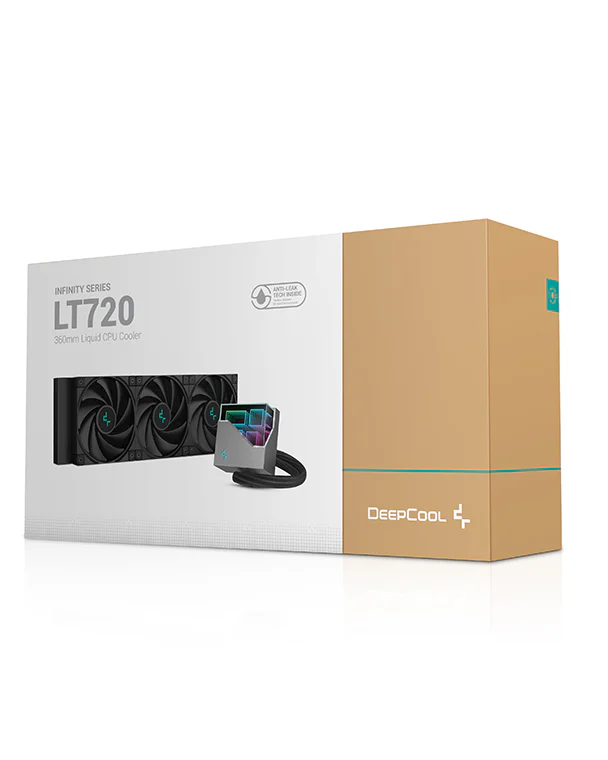
APH Networks reviewer noted that the LT720 is solidly built with a clean matte black radiator and smooth water block contact base surface. The ARGB LED lighting on the water block looks great, and the infinity mirror is described as a cool visual touch. The cooler's build quality reflects DeepCool's evolution from a budget manufacturer to a more premium brand. The pump head measures 94mm (L) x 80mm (W) x 68mm (H) and connects to the aluminum radiator via 410mm braided tubing. The FK120 fans are 25mm thick, spin between 500 and 2,250rpm, and generate up to 86CFM airflow at maximum speed. The fans use standard 4-pin PWM headers, which is a welcome change from unique headers used in previous models like the LS720. The cooler's packaging is described as clean and well-designed, featuring a simple natural brown color scheme with minimal text and a white sleeve displaying the product image.
Installation and Setup
Installation of the DeepCool LT720 is straightforward according to multiple reviewers, with clear step-by-step instructions provided in the included manual. Club386's review notes that installation is simple enough for even novice users, with the process involving removing stock upper plastic cooler mounts but leaving the stock AMD backplate in place. For AMD platforms, users need to fasten AM4/5 brackets to the base of the CPU block and screw the stand-offs to the stock AMD backplate. The CPU block comes with pre-applied thermal paste, and installation is completed using four thumbscrews. The cooler includes two plastic tubing clips that slide up and down the tubes to help keep the tubing in line. The installation manual includes clear illustrations, making the process accessible to most users. However, one notable caveat mentioned by Club386 is that the magnetic pump cover only attaches in one orientation, which affects cable routing. Additionally, the radiator has a refill hole on one side and a company logo on the other, with the reviewer preferring the logo to be visible and the refill hole hidden.
Tom's Hardware's testing revealed that setup for the LT720 is relatively quick and simple, requiring only basic tools and following the provided manual. The cooler includes mounting brackets for the latest Intel and AMD sockets, along with a 3-way PWM splitter cable for daisy-chaining fans. The pump header uses a 3-pin voltage connector rather than a 4-pin PWM header, which some reviewers noted as a limitation. The reviewers also pointed out that while the pre-applied thermal interface material is helpful, there's no spare paste included for remounting or new builds. The cooler's cable management is clean, with only 3-pin power and ARGB connectors for the pump, eliminating the need for software or USB cables. The absence of a standalone RGB controller hub is noted as a cost-saving measure by DeepCool, though this may disappoint users seeking more advanced lighting control options.
Performance Metrics
Tom's Hardware conducted extensive testing with the DeepCool LT720 paired with Intel's i9-13900K processor, measuring cooling performance under various loads. The cooler demonstrated exceptional performance, handling loads up to approximately 315W, which is considered the strongest cooling capacity they've tested. The 4th generation in-house pump design reportedly gives the LT720 an edge over other coolers, with a 3,100rpm motor and improved microchannel layout for optimal coolant flow. The pump's noise level was measured at 19 dB(A), which is relatively quiet for a high-performance cooler. The FK120 fans generate up to 85.85 CFM airflow at maximum speed with a maximum air pressure of 3.27 mmAq. The fans operate between 500-2250 RPM and produce a maximum noise output of 32.9 dB(A) at full speed. KitGuru's testing showed that the LT720 delivers solid thermal performance during both idle and load conditions, with the radiator's 360mm size providing ample surface area for heat dissipation.
APH Networks reviewer noted that the LT720 performed solidly during testing, both during idle and under load conditions. The cooler's performance is particularly impressive given its competitive pricing, which is around $140 at launch. The 360mm radiator with three 120mm fans provides substantial cooling capacity, while the 402mm tubing length allows for flexible installation options. The pump's 3,100rpm motor and upgraded microchannel layout contribute to its superior performance compared to previous generations. The cooler's thermal performance is consistent across different CPU platforms, with compatibility extending to Intel sockets LGA2066/2011-v3/2011/1700/1200/1151/1150/1155 and AMD sockets sTRX4/sTR4/AM5/AM4. The reviewers also observed that the cooler's performance is particularly strong when compared to similar products in the market, such as the ARCTIC Liquid Freezer II 280 A-RGB, which is noted for better noise output but similar performance.
Noise and Power Consumption
Noise performance of the DeepCool LT720 is generally considered reasonable for a high-performance cooler. The FK120 fans produce a maximum noise output of 32.9 dB(A) at full speed, which is within acceptable limits for most users. Tom's Hardware measured the pump's noise at 19 dB(A), which is relatively quiet for a high-performance unit. The fans operate at 500-2250 RPM with a maximum airflow rate of 85.85 CFM. The cooler's noise level is particularly notable when compared to similar 360mm AIO coolers, with reviewers noting that while the extra 120mm fan does add to the overall noise compared to 240mm models, it remains quite reasonable in day-to-day usage. The reviewers noted that users know what they are getting themselves into when purchasing a 360mm unit, and the noise output is predictable and manageable.
Power consumption data shows the pump consumes 4.56W at rated voltage (12V DC) and 0.38A current, while the fans consume 2.64W at 12V DC and 0.22A current. The total power consumption for the cooler is relatively modest, especially considering its high-performance capabilities. The pump's 3-pin voltage connector instead of a 4-pin PWM header is noted as a limitation, as it prevents users from having better control over pump speed. However, the pump noise remains reasonable at any speed, according to APH Networks reviewer. The fans' fluid dynamic bearing design contributes to their quiet operation, and the PWM control allows for dynamic adjustment of fan speeds based on system temperature.
Where It Falls Short
Despite its strong performance, the DeepCool LT720 has several notable drawbacks that reviewers have identified. One major limitation is the lack of a standalone RGB controller hub, which DeepCool omits to keep costs down. This absence may disappoint users who want more advanced lighting control options. Additionally, the pump header uses a 3-pin voltage connector rather than a 4-pin PWM header, limiting users' ability to control pump speed precisely. APH Networks reviewer specifically mentioned this as a point of improvement, noting that users would prefer a 4-pin PWM header for better pump speed control. The magnetic pump cover's fixed orientation is another limitation, as it affects cable routing and requires users to plan their installation accordingly.
The cooler's design also presents some challenges. The top cover can only be positioned in one orientation, which limits flexibility in installation and aesthetic preferences. Club386's review noted that while the Infinity Mirror design is visually appealing, the inability to rotate the pump cover means that cables will need to emanate from the bottom of the assembly. Furthermore, the cooler lacks spare thermal paste, which can be problematic for users who need to remount or build new systems. The absence of a 280mm option is also mentioned as a missed opportunity, as some users prefer the 140mm radiator size for better case compatibility. Additionally, while the cooler's performance is strong, some reviewers noted that it's not quite as quiet as some competing models, particularly when running at full speed.
Value and Market Positioning
The DeepCool LT720 is positioned as a premium 360mm AIO cooler with competitive pricing, retailing for approximately £120 ($140) at launch. This pricing puts it in direct competition with other high-end AIO coolers such as the ARCTIC Liquid Freezer II 280 A-RGB, which costs about $120 less. KitGuru's review highlights that the LT720's pricing is very competitive, especially considering its performance and features. The cooler comes with a 5-year warranty, which is a significant advantage over many competitors. The LT720's performance is particularly strong when compared to the LS720, which is its technical twin, with both models offering similar performance but with the LT720 having a slightly more premium design. The cooler's value proposition is further enhanced by its compatibility with all major CPU platforms, including AMD Threadripper and Intel LGA1700.
APH Networks reviewer gave the LT720 a rating of 7.4/10, indicating a very good product with minor drawbacks that are unlikely to matter to end users. The reviewer noted that while the LT720 is slightly more expensive than the ARCTIC Liquid Freezer II 280 A-RGB, it offers similar performance with better noise output and ARGB LED fans. However, the LT720's lack of RGB LED lighting on the radiator fans is mentioned as a minor drawback. The cooler's value is further supported by its solid build quality, excellent performance, and competitive pricing. The inclusion of a 5-year warranty also adds significant value, as it provides peace of mind for users who want a long-term cooling solution. The LT720's positioning as a high-performance cooler with a premium design makes it attractive to enthusiasts who want both performance and aesthetics.
Who It's Best For
The DeepCool LT720 is ideal for enthusiasts and high-performance PC builders who need strong cooling for demanding CPUs such as Intel's Core i9-13900K or AMD's Threadripper processors. Users who want a 360mm AIO cooler with excellent thermal performance and a visually appealing design will find the LT720 particularly appealing. The cooler's compatibility with all current desktop platforms, including both AMD and Intel sockets, makes it a versatile choice for various system configurations. The Infinity Mirror design and RGB lighting capabilities make it attractive to users who value aesthetics alongside performance. The cooler is particularly suitable for users who are comfortable with standard installation procedures and don't require advanced RGB control features. The 5-year warranty provides added confidence for users who want a long-term cooling solution.
However, the LT720 may not be ideal for budget-conscious users who prioritize cost over features, or for those who specifically need a 280mm radiator size for case compatibility. Users who require a standalone RGB controller hub or more precise pump speed control may find the cooler's limitations frustrating. The fixed orientation of the pump cover and lack of spare thermal paste are also considerations for users who prefer maximum flexibility in installation. Additionally, users who are sensitive to noise levels may find the cooler's performance at full speed to be slightly louder than some competing models, though it remains within acceptable limits for most users.
Comparison to Alternatives
When compared to the ARCTIC Liquid Freezer II 280 A-RGB, the DeepCool LT720 offers similar performance but with better noise output and ARGB LED fans. The ARCTIC cooler is noted for its quieter operation, while the LT720 provides comparable thermal performance at a slightly higher price point. APH Networks reviewer noted that the LT720 and LS720 had very similar performance and built in almost the exact same way, with the LT720 having a slight edge due to its better RGB lighting and more premium design. However, the LS720's thinner radiator makes it easier to fit inside some cases, which may be a consideration for users with tight case constraints. The LT720's 360mm radiator provides more cooling surface area, which is beneficial for high-performance CPUs.
Compared to the LS720, the LT720 offers similar performance but with a more premium design and better RGB lighting. The main difference is that the LT720 lacks RGB LED lighting on the radiator fans, which is not necessarily a negative but a design choice. The LT720's 360mm radiator provides more cooling capacity than the LS720's 240mm radiator, making it better suited for high-end CPUs. The LT720's 4th generation pump design and improved microchannel layout give it an edge over previous models. Tom's Hardware's testing showed that the LT720 provides the strongest cooling performance they've tested, handling loads up to about 315W when paired with Intel's i9-13900K. This performance advantage is significant for users who want maximum cooling capability.
Strengths
- +360mm AIO with 4th generation pump design and three-phase motor for strong performance
- +Skived copper cold plate with redesigned channels for efficient heat transfer
- +FK120 fluid dynamic bearing fans with high static pressure and low noise output (32.9dBA at full load)
- +Removable top cover with infinity mirror design for modern aesthetics and easy maintenance
Watch-outs
- −No standalone RGB controller hub included, only 3-pin ARGB connector
- −Top cover can only be positioned in one orientation, limiting customization options
How it compares
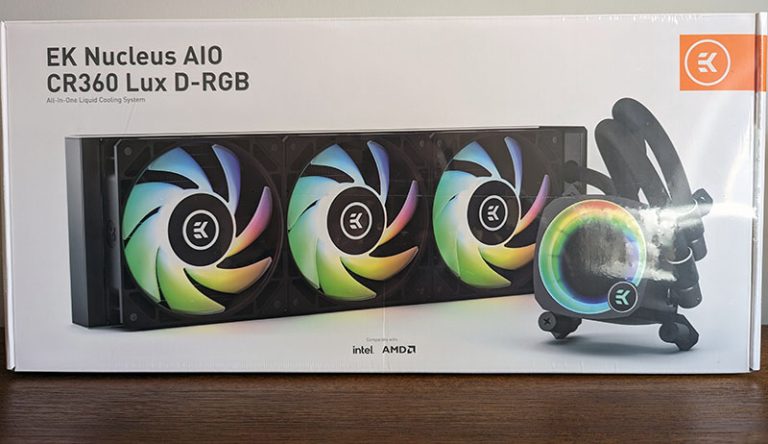
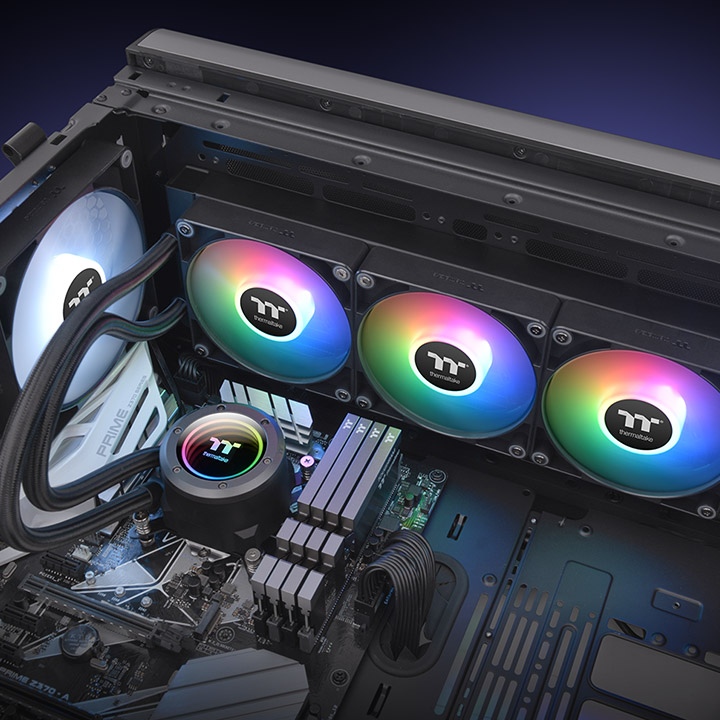
It's also more affordable than the EK-Nucleus AIO CR360 Lux D-RGB and provides better noise control than the Cooler Master MasterLiquid PL360 Flux. However, it lacks the visual customization features of the Thermaltake TH360 V2 ARGB and the modular maintenance of the Arctic Liquid Freezer III 360.
Who this is for
At a glance: value-conscious performance seekers.
Why you’d buy the DeepCool LT720 V2
- 360mm AIO with 4th generation pump design and three-phase motor for strong performance.
- Skived copper cold plate with redesigned channels for efficient heat transfer.
- FK120 fluid dynamic bearing fans with high static pressure and low noise output (32.9dBA at full load).
Why you’d skip it
- No standalone RGB controller hub included, only 3-pin ARGB connector.
- Top cover can only be positioned in one orientation, limiting customization options.
Rating sources
Our 4.0 score is the average of these published ratings. More about methodology.