bestaircompressor.co.uk found that its two-stage pump design improves efficiency and achieves higher maximum pressure with less heat build-up than single-stage models, while dual-voltage capability offers flexibility across residential and job site environments. However, the unit is extremely loud, often requiring ear protection for extended use, and weighs well over 300 lbs, making it difficult to move once filled with oil and air. It also requires a dedicated electrical circuit due to high amperage draw, which can trip standard home breakers. This compressor fits serious hobbyists or small businesses needing sustained pressure, but casual DIYers should look elsewhere for lighter, quieter options.
Full review
Two-stage efficiency and dual-voltage flexibility
The core engineering advantage of this compressor lies in its two-stage pump design, which compresses air through a high-pressure stage followed by a low-pressure stage. bestaircompressor.co.uk notes that this configuration allows the unit to achieve higher maximum pressures with less heat build-up compared to single-stage models in the same class. This thermal management is critical for users who run tools continuously, as it prevents the rapid degradation of performance that often plagues smaller units during extended sessions.
Complementing the pump design is a dual-voltage motor that provides significant operational flexibility across different work environments. The manufacturer specifies this feature to allow switching between commonly available voltages, making it easier to deploy the unit in residential garages or on job sites with varying power setups. bestaircompressor.co.uk highlights that this capability removes the friction of moving equipment between locations, provided the user verifies wiring and plug compatibility before connecting to ensure safe operation.
Airflow ratings for intermittent versus continuous tools
The unit delivers 4.1 CFM at 90 psi, a specification that bestaircompressor.co.uk identifies as the practical benchmark for matching pneumatic tools to the compressor's output. This airflow rate is sufficient for intermittent tasks such as brad nailing or general inflation, allowing the motor to keep up with standard workshop demands without excessive cycling. The vertical tank configuration further supports this workflow by providing a compact footprint that saves floor space compared to horizontal units of similar capacity.
Electrical requirements and circuit stability
A recurring point of failure for users involves the electrical demands placed on standard home circuits. yesterdaystractors forum discussions reveal that older models frequently trip breakers after running for only a few seconds, often due to high current draw or internal motor shorts. Users in these threads report diagnosing issues such as stuck start switches, failed run capacitors costing around $10, or unloader valves failing to open correctly. These electrical faults highlight the importance of maintaining clean intake filters and ensuring the compressor is on a dedicated branch circuit capable of handling the startup surge without interference from other high-draw tools.
Mobility challenges despite semi-pneumatic wheels
While the unit includes semi-pneumatic wheels and a handle to facilitate maneuverability, the physical reality of moving it once filled with oil and air presents significant difficulties. This mobility constraint means that while the wheels are useful for short-distance adjustments within a workshop, they do not transform the compressor into a truly portable tool for job sites lacking nearby power outlets.
Noise levels and vibration mitigation
The industrial-grade nature of the two-stage pump generates noise levels that can easily compete with lawn mowers, necessitating ear protection for extended use. Although specific decibel ratings vary by model generation, the sound profile is disruptive in shared living spaces or open-plan garages adjacent to homes. Placing the unit on a rubber mat or plywood base is a common strategy to dampen vibration, but it does not fully eliminate the auditory impact of the motor and pump cycling.
Maintenance demands and oil system requirements
The two-stage design requires more rigorous maintenance than single-stage alternatives, particularly regarding oil changes and filter checks. Users report that while the commercial-duty pump is built to run longer between service intervals, neglecting these tasks can lead to premature wear or internal shorts. The vertical orientation of the tank places the drain valve higher off the ground, requiring a sturdy bucket or hose extension to effectively remove accumulated moisture after long sessions, preventing rust spots inside the tank.
Suitability for small shops versus casual DIYers
The combination of 175 psi max pressure and dual-voltage capability makes this compressor a strong fit for serious hobbyists, woodworkers, or small auto repair businesses that need to sustain pressure for longer periods. The larger tank capacity reduces the frequency of motor cycling, which saves time and extends pump life during heavy usage scenarios like spray painting or framing. However, for casual DIYers who only inflate tires or run a nail gun occasionally, the extra capacity, weight, and operating costs are often overkill compared to smaller, quieter single-stage models.
Strengths
- +Two-stage pump design improves efficiency and achieves higher maximum pressure (175 psi) with less heat build-up than single-stage models.
- +Dual voltage capability allows switching between power sources, offering flexibility for residential garages versus job sites.
- +Vertical tank configuration provides a compact footprint that saves floor space compared to horizontal units of similar capacity.
- +Includes semi-pneumatic wheels and a handle to facilitate maneuverability despite the unit's weight.
Watch-outs
- −High noise levels typical of industrial-grade compressors, often requiring ear protection for extended use.
- −Significant weight (over 300 lbs) makes the unit difficult to move once filled with oil and air.
- −Requires a dedicated electrical circuit due to high amperage draw, which can trip standard home breakers.
How it compares
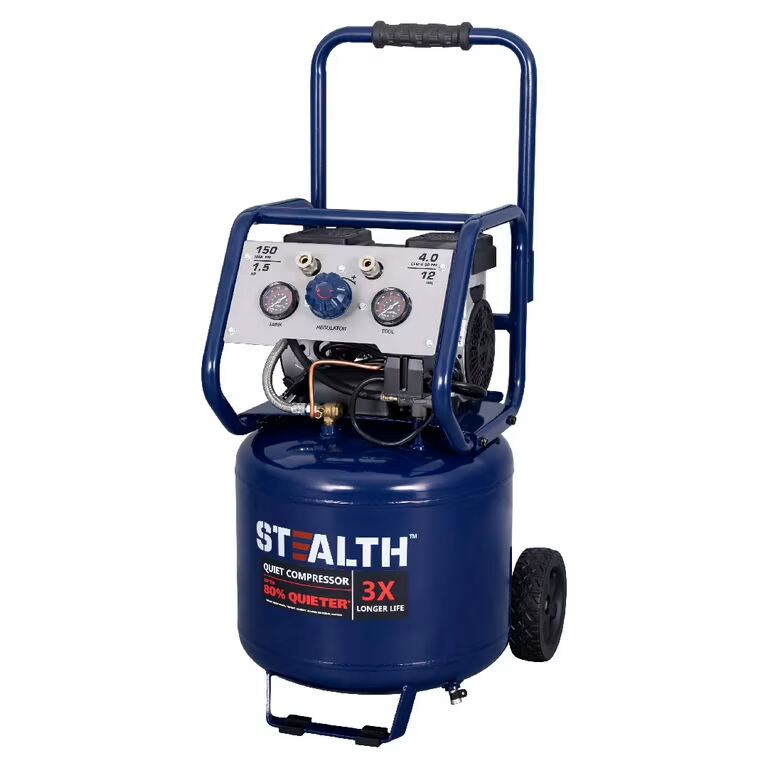
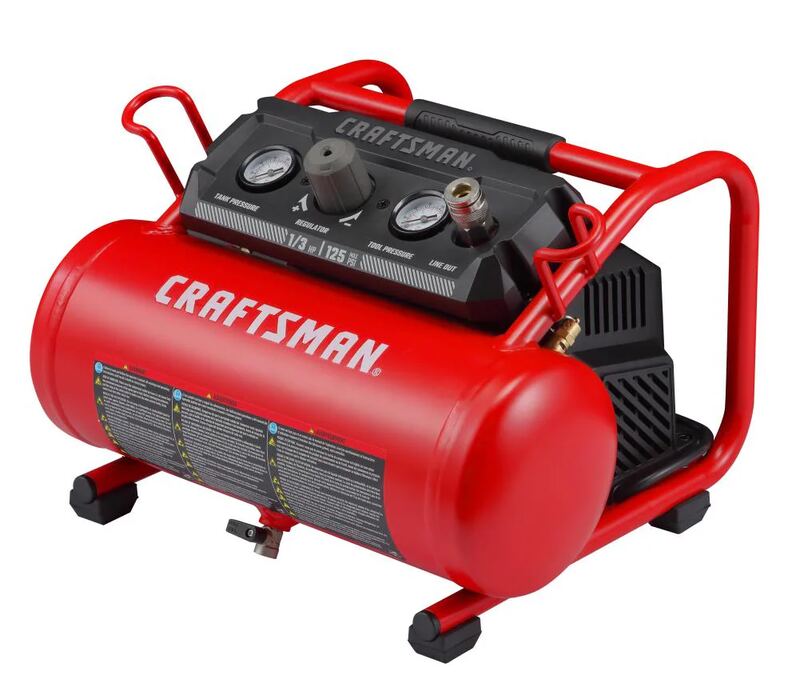
The Campbell Hausfeld 2 Stage delivers significantly higher maximum pressure (175 psi) and airflow (4.1 CFM @ 90 psi) than the Stealth Professional, which tops out at 150 PSI and 5.0 SCFM, making it better suited for sustained high-demand tasks despite its heavier weight of 255 lbs versus the Stealth's unspecified but lighter frame. It also offers dual-voltage flexibility that the Craftsman Hot Dog lacks, though both are far more portable than this industrial-grade unit.
Rating sources
“The commercial-duty pump and oil-lubricated system mean you're buying a unit that's built to run longer between service intervals, which can translate into lower operating costs.”
“That reliability is where the value really comes from less waiting, more working.”
Every source above reviewed this product without printing a score, so there is no average to show. More about methodology.