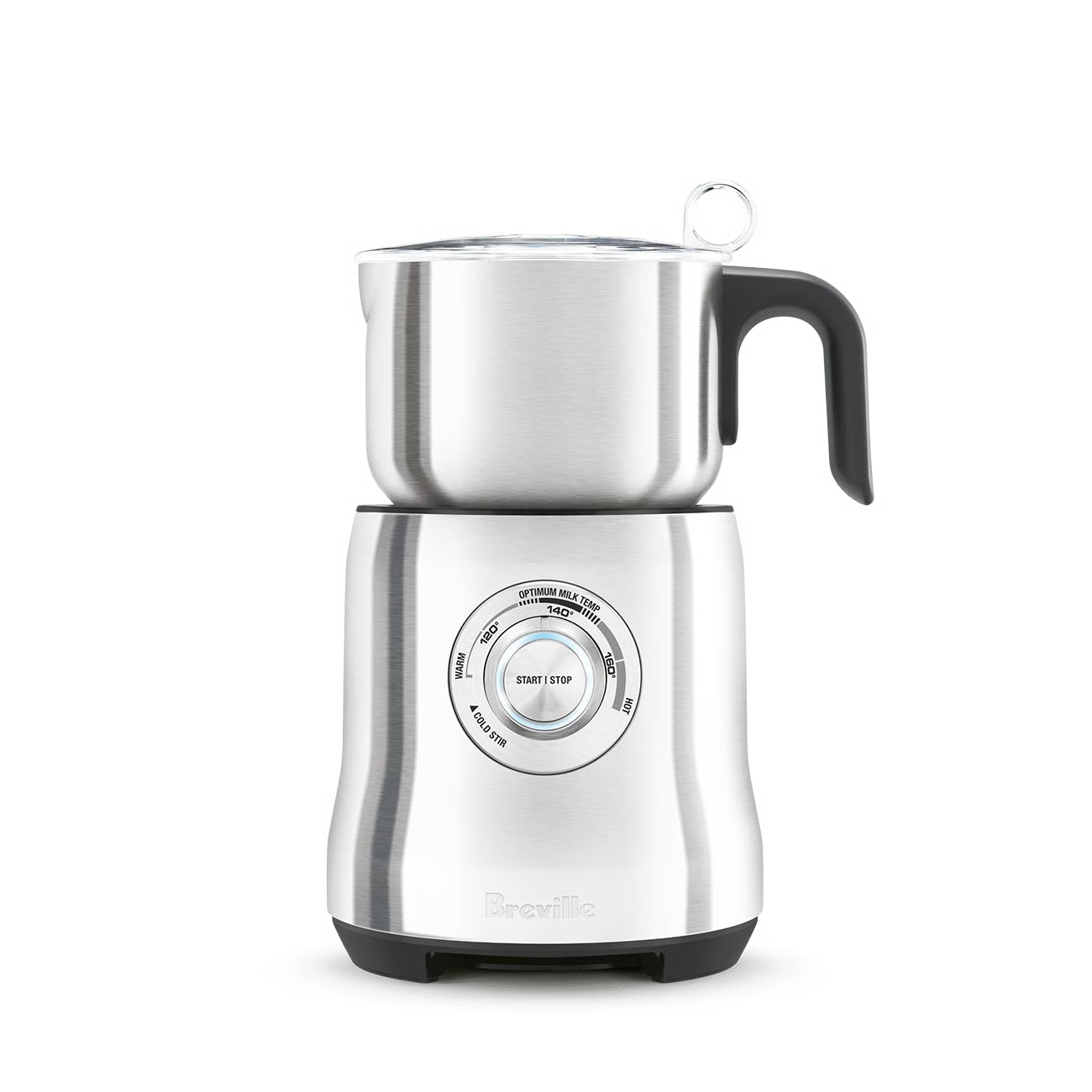
The Breville Milk Cafe uses induction heating to keep its stainless steel jug cool while delivering precise temperature control via a continuous dial that ranges from cold stir to approximately 180°F. Homegrounds.co found this thermal management prevents scalding and enables the creation of velvety microfoam, while Coffee Detective noted the safety benefit of handling the pitcher immediately after use. The unit includes two magnetic frothing discs for distinct latte or cappuccino textures, though its large footprint requires significant counter space and its $199 price point limits appeal for budget-conscious buyers. This appliance suits dedicated home baristas who prioritize consistency and capacity, but casual users with limited kitchen storage should look elsewhere.
Full review
Induction heating keeps jug exterior cool
The Breville Milk Cafe relies on induction technology to heat the milk, a design choice that fundamentally changes how the appliance interacts with its user during operation. Because the energy is transferred directly to the liquid inside the stainless steel vessel rather than through direct contact heating elements touching the jug walls, the exterior of the container remains remarkably cool to the touch even while the contents are reaching near-boiling temperatures. This safety feature eliminates the risk of accidental burns when handling the pitcher immediately after a cycle finishes, allowing users to pour or clean the unit without waiting for it to cool down. The coffee detective noted this specific benefit during their demonstration, highlighting that while the milk gets hot, the jug itself does not, which serves as a practical advantage in busy morning routines where speed and safety are priorities.
This even heat distribution also contributes significantly to the quality of the final product by preventing localized hot spots that can scald dairy or plant-based alternatives. Scalded milk loses its natural sweetness and develops a cooked flavor profile that detracts from delicate espresso drinks, but the induction method maintains a gentle, uniform temperature throughout the frothing process. Homegrounds.co emphasized that this precise thermal control allows for the formation of tiny bubbles as the milk is aerated, which is essential for creating the velvety microfoam texture associated with high-quality lattes. The ability to maintain consistent heat without burning the liquid ensures that every batch comes out with a balanced sweetness and creamy mouthfeel, regardless of whether whole dairy or oat milk is being used.
Temperature dial spans cold stir to 160 degrees
Unlike many standalone frothers that offer only fixed settings for hot or cold foam, the Milk Cafe features a continuous rotary dial that provides granular control over the final temperature of the beverage. This flexibility accommodates a wide variety of preferences and drink types, from lukewarm milk suitable for children or sensitive palates to very hot foam for those who prefer their cappuccinos scalding. Homegrounds.co breaks down these zones into distinct categories: a cold stir setting that agitates the milk without applying any heat, a warm range below 130°F, an optimal zone between 130°F and 150°F where dairy milk tastes sweetest, and a hot range above 150°F for intense warmth or hot chocolate preparation.
The precision of this dial is particularly valuable when working with alternative milks, which often have different thermal tolerance levels than traditional cow's milk. Soy, almond, and oat milks can separate or become grainy if heated too aggressively, so the ability to stop the heating process at a specific lower temperature preserves their texture and flavor. Coffee Detective pointed out that this level of control solves a common frustration for home baristas who use manual steam wands on espresso machines; without automation, it is easy to underheat the milk while chasing the right foam volume, resulting in lukewarm lattes. The Milk Cafe removes this variable by locking in the exact temperature desired before the frothing cycle even begins, ensuring that every cup meets the user's specific thermal preference.
Latte and cappuccino discs create distinct textures
The appliance comes equipped with two interchangeable stainless steel frothing discs that attach to the bottom of the jug via a magnetic connection, allowing users to switch between foam profiles depending on their drink choice. The latte disc is designed to incorporate less air into the milk, producing a dense, silky microfoam that integrates seamlessly with espresso shots and is ideal for pouring latte art. In contrast, the cappuccino disc features ridges that draw in significantly more oxygen during rotation, creating a thicker, fluffier foam with larger bubbles that sits atop the drink rather than mixing into it. This distinction mirrors the difference between professional coffee shop preparations, giving home users the ability to replicate specific textures without needing advanced manual steaming skills.
Proper installation of these discs is critical for the machine to function correctly, as noted by reviewers who demonstrated the setup process. The disc must be pressed down firmly until it clicks into place; if it is merely resting on the magnetic base without being seated fully, the whisk will spin but fail to aerate the milk effectively. This mechanical detail requires a moment of attention during initial use, though once engaged, the discs stay securely in position throughout the frothing cycle. The latte disc typically yields more liquid volume with less foam expansion, making it suitable for larger servings like lattes or macchiatos, while the cappuccino disc maximizes foam density for smaller, airier drinks.
Large capacity handles up to 25 ounces of milk
The stainless steel jug on the Breville Milk Cafe is notably spacious compared to standard countertop frothers, featuring clearly marked fill lines that guide users to the maximum volume for different beverage types. For cappuccinos and lattes, the maximum capacity is 16 fluid ounces, which is sufficient to produce three to four servings in a single batch. This large volume makes the appliance particularly well-suited for households with multiple coffee drinkers or for entertaining guests, as it eliminates the need to froth milk in separate batches throughout the morning.
Despite this generous capacity, the machine does have a minimum fill requirement that users must respect to ensure proper operation. The lowest marked line indicates six ounces of milk; filling below this threshold can result in messy overflow or ineffective frothing because the whisk needs sufficient liquid volume to create the necessary vortex and air incorporation. Reviewers observed that while the jug is large, it performs best when filled between the minimum and maximum lines for the specific disc being used. The inclusion of a small measuring cup inside the lid also assists users in accurately portioning ingredients like cocoa powder or syrups before starting the cycle, adding to its utility as a multi-purpose drink station.
$199 price point limits budget appeal
At a retail price of approximately $199, the Breville Milk Cafe sits at the premium end of the milk frother market, significantly exceeding the cost of basic handheld whisks and many entry-level electric models. Serious Eats categorized it as their top splurge pick among twenty-seven tested units, acknowledging that its advanced features justify the higher cost for dedicated enthusiasts but recognizing that it is a substantial investment for casual users. This price tag places it in competition with other high-end appliances rather than budget alternatives, meaning shoppers must weigh the benefits of precise temperature control and induction heating against the availability of cheaper options that may lack these refinements.
The value proposition becomes clearer when considering the durability and build quality associated with the Breville brand. Coffeeness.de highlighted the sleek, modern aesthetics and abundant use of stainless steel in its construction, noting that the machine feels solid and durable rather than flimsy or disposable. For users who make milk-based drinks daily, the consistency and reliability provided by the automated system can save time and reduce waste from failed attempts at manual frothing. However, for those who only occasionally enjoy a latte or prefer black coffee, the high initial cost may not be warranted when simpler tools can achieve adequate results for occasional use.
Bulky footprint requires dedicated counter space
The large capacity jug and robust base unit give the Milk Cafe a substantial physical presence that demands significant real estate on any kitchen countertop. Homegrounds.co explicitly listed its large footprint as a drawback, noting that it is one of the most space-consuming appliances in its category. Users with limited counter space may find that this appliance dominates their kitchen layout, requiring a permanent home rather than being stored out of sight when not in use.
The cord length of forty-two inches provides some flexibility in placement, allowing the unit to be positioned further from outlets if necessary, but it does not mitigate the issue of its overall size. While the base includes convenient features like cord storage and dedicated slots for stowing the unused frothing disc on the back, these design elements add to the width and depth of the footprint. For apartment dwellers or those with minimalist kitchen designs, the sheer volume of the Milk Cafe may be a dealbreaker despite its performance capabilities, as it cannot be easily hidden away during the day.
Dishwasher safe jug simplifies cleanup routine
Cleaning the Breville Milk Cafe is straightforward due to the removable and dishwasher-safe components. The stainless steel jug, the lid with its integrated measuring cup, and both frothing discs can be placed directly into a dishwasher for easy sanitization after use. This feature saves considerable time compared to models that require hand-washing of delicate internal heating elements or complex disassembly. Coffee Detective praised this aspect of the design, noting that it removes one of the biggest friction points associated with daily coffee preparation routines.
The base unit itself requires only a simple wipe-down with a damp cloth to remove any splashes or milk residue, as it contains no electrical connections in the bottom and should never be submerged in water. Reviewers emphasized the importance of keeping the control panel area dry to prevent damage to the internal electronics. The lack of an internal heating element within the jug also means there are fewer crevices where milk can burn onto surfaces during operation, further reducing the effort required for maintenance. This ease of cleaning encourages consistent use without the dread of post-drug scrubbing that often accompanies other kitchen appliances.
Strengths
- +Induction heating provides even heat distribution to prevent scalding and allows the stainless steel jug exterior to remain cool enough to handle safely.
- +Continuous temperature dial offers precise control from cold stir (for iced drinks) up to approximately 160°F, accommodating various milk types and preferences.
- +Includes two interchangeable frothing discs: a latte disc for silky microfoam and a cappuccino disc that draws in more air for thick, fluffy foam.
Watch-outs
- −Premium price point around $199 makes it significantly more expensive than standard handheld frothers and many basic electric models.
- −Large footprint requires substantial counter space, which can be a drawback for users with limited kitchen storage or small setups.
Rating sources
“The Breville Milk Cafe is large and expensive, but it’s also one of the best frothers on the market.”
Our 4.8 score is the average of the 2 scored reviews above; 3 more reviewed it without printing a score and are not in the average. Ratings marked * were derived from the reviewer’s written analysis or video transcript — the publisher didn’t print an explicit numeric score, so we inferred one from their own words. Click through to verify. More about methodology.