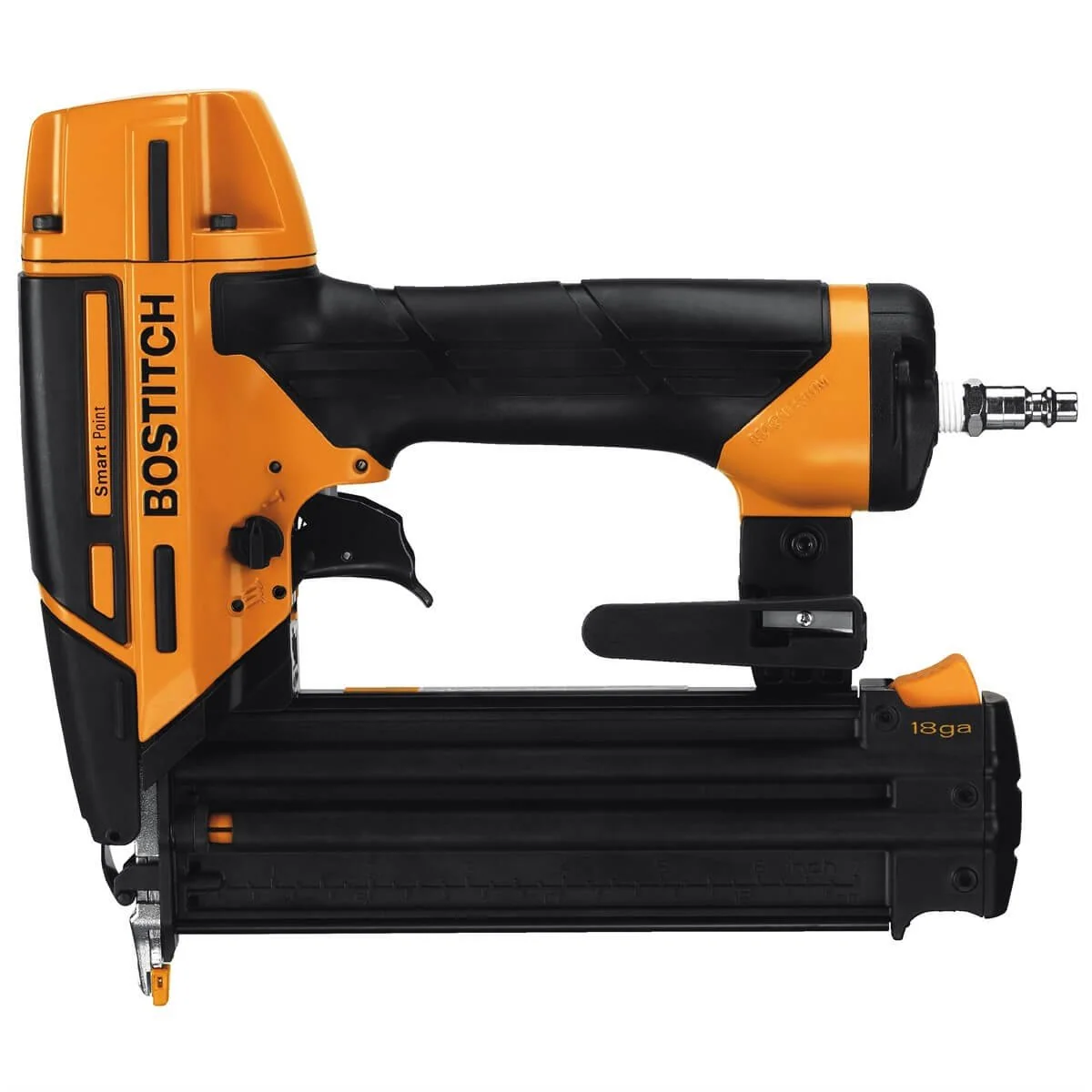
The Bostitch BTFP12233 features a micro-nose design that is 60% smaller than standard models for precise placement in tight spaces. Pro Tool Reviews highlights this innovation alongside the tool-free jam release mechanism at the nose, which allows for quick clearing without tools. The oil-free operation prevents staining on trim and work surfaces, while Bob Vila found that bump-fire mode fires brads cleanly and rapidly without jamming. However, the exhaust port is fixed in position, directing air toward the user or blowing dust around the workspace. Depth-of-drive adjustment dial is small and difficult to see and reach during use, and the air-hose connector nipple does not swivel, making the hose unwieldy at times. This nailer fits finish carpenters who prioritize precision and maneuverability in confined areas but may frustrate users sensitive to airflow direction or hose flexibility.
Full review
Micro-nose design enables precise placement in tight spaces
The Bostitch Smart Point brad nailer distinguishes itself through a significantly reduced nose footprint that measures 60% smaller than standard models. Pro Tool Reviews highlights this micro-nose design as the primary innovation, noting that it allows for quick and accurate fastener placement without requiring the user to push the tool against the work surface to actuate it. This probing tip makes it easier to see exactly where the nail will penetrate, a feature that eliminates the common frustration of misaligned shots that ruin trim returns or shift delicate molding.
The physical reduction in size translates directly into maneuverability for finish carpenters working in confined areas. The tool can fit into narrow spaces that block larger brad nailers, which is particularly useful when clamps are lined up around a workpiece. For professionals building components in a shop before onsite assembly, this extra room to position the nose provides a tangible advantage over bulkier pneumatic tools.
The smaller profile also serves a functional purpose beyond just visibility; it removes the need for contact trip pressure that often moves fragile materials during firing. By allowing the user to align the tip precisely and fire immediately, the design promotes cleaner work with less touch-up required after installation. This precision makes the BTFP12233 particularly well-suited for intricate trim work where standard nailers might struggle to reach or maintain stability.
Oil-free operation prevents staining on finished surfaces
The pneumatic mechanism of the Bostitch Smart Point is engineered to operate without oil, a feature that directly addresses a common problem in finish carpentry. Oil mist from standard nailers can spray onto trim and work surfaces, leaving unsightly stains that require extensive cleaning or masking before painting. The oil-free design ensures that the air exhaust remains clean, protecting delicate wood finishes and reducing the prep time required for high-end cabinetry projects.
This internal cleanliness is maintained by an internal filter that keeps exterior contaminants from damaging the tool's mechanism while simultaneously ensuring no lubricant contaminates the workspace. For carpenters who frequently work with light-colored woods or pre-finished trim, this feature eliminates a significant variable in achieving a professional-looking result without post-installation cleanup.
While this directional flow helps keep dust and debris off the immediate nailing area, the fixed nature of the port means users must be mindful of their stance to avoid blowing loose sawdust back onto freshly nailed surfaces.
Tool-free jam release mechanism at the nose
Clearing a nail jam is an inevitable part of using any pneumatic fastener, but the Bostitch Smart Point simplifies this process with a dedicated tool-free release located directly on the front of the nose. Pro Tool Reviews identifies this as a critical feature for maintaining workflow efficiency, noting that it allows for rapid clearing without the need to hunt for or use an Allen wrench. This placement is logical and accessible, enabling users to resolve jams quickly even when working in awkward positions.
The mechanism is designed to handle the 18-gauge brads commonly used in finish work, which are thin enough that they can easily bend inside the magazine if a jam occurs. By providing immediate access to the jam release at the point of failure, the tool minimizes downtime and reduces the frustration associated with stuck fasteners. This design choice reflects an understanding of real-world shop conditions where quick problem resolution is essential for productivity.
The ease of clearing jams contributes to the overall reliability of the tool during extended use. Users can maintain their focus on the project rather than fumbling with small tools, making the BTFP12233 a practical choice for both professional contractors and serious DIYers who value efficiency in their workflow.
Dial-A-Depth adjustment controls fastener penetration
The depth-of-drive mechanism, branded as Dial-A-Depth by Bostitch, is located conveniently under the trigger to allow users to control how far the brad penetrates into the work material. This feature eliminates the need to constantly readjust compressor output settings when switching between different wood hardnesses or thicknesses. By fine-tuning the drive depth directly on the tool, carpenters can ensure consistent countersinking across various projects.
Despite its functional importance, the physical design of the adjustment dial presents a usability challenge. Bob Vila notes that the dial is small and difficult to see and reach during active use. This size constraint makes precise adjustments cumbersome, particularly when wearing gloves or working in low-light conditions where visibility is already compromised. Users must pause their work to locate and turn the dial carefully, which interrupts the flow of nailing.
The trade-off between having an integrated depth control and maintaining a compact tool body is evident here. While the feature itself saves time by removing compressor adjustments, the execution requires users to develop muscle memory for locating the small knob. For those who frequently switch materials, this dial provides necessary flexibility, but its physical form factor remains a point of friction in daily operation.
Firing modes balance precision and speed
The Bostitch Smart Point offers two distinct firing modes to accommodate different project requirements. Single-fire mode, also known as sequential actuation, requires the user to press the safety tip against the wood before pulling the trigger. This method is essential for precise placement, allowing carpenters to align the narrow tip accurately and fire a single brad exactly where needed without risk of accidental discharge.
Bump-fire mode enables rapid nailing by holding the trigger down and bumping the tool against the workpiece with each shot. Bob Vila found that this mode fires brads cleanly and rapidly without jamming, making it ideal for attaching plywood to wood boxing or other applications where precision is less critical than speed. The selector knob near the trigger allows users to switch between these modes quickly depending on the task at hand.
While bump-fire offers efficiency for bulk fastening tasks, single-fire remains the dominant mode for finish carpentry due to its control. The tool's ability to handle both methods makes it versatile across a range of applications, from delicate trim installation to more robust framing-like tasks within cabinetry construction.
Magnum housing reduces weight without sacrificing durability
The body of the Bostitch Smart Point is constructed from magnesium, a material that provides durability comparable to aluminum while significantly reducing overall weight. This lightweight construction makes the tool easier to handle during extended use, reducing user fatigue when installing crown molding or working overhead. The combination of light weight and sturdy build ensures that the nailer can withstand the rigors of daily shop use.
The ergonomic design extends to an over-molded handle and bumper molding that improve grip and comfort. These features help stabilize the tool during firing, which is crucial for maintaining accuracy with the micro-nose tip. The balanced weight distribution allows users to maneuver the nailer into tight spaces without struggling against a heavy frame.
The compact stature of the BTFP12233 means that size does not compromise power or reliability. Despite its smaller footprint, the tool maintains the structural integrity needed for professional finish work, making it a practical choice for carpenters who prioritize maneuverability and ease of handling.
Fixed exhaust port directs air toward operator
A significant drawback of the Bostitch Smart Point is its non-adjustable exhaust port, which can direct air puffing directly into the user's face or blow dust around the workspace. Bob Vila specifically notes this limitation as a con, highlighting that the fixed position offers no way to redirect the airflow away from sensitive areas. This can be particularly problematic when working with fine sawdust that needs to be kept off freshly finished surfaces.
The lack of adjustability means users must constantly monitor their positioning relative to the exhaust stream to avoid blowing debris onto their work or into their eyes. While the internal filter keeps oil out, it does not mitigate the force of the compressed air exiting the handle end. This design choice limits the tool's adaptability in tight or dusty environments where airflow control is essential.
For professionals who frequently work in confined spaces or with delicate materials, this fixed exhaust can be a persistent annoyance. It requires users to develop habits around their stance and angle of approach to minimize the impact of the air blast, adding an extra layer of consideration to what should otherwise be a straightforward nailing process.
Non-swiveling hose connector creates unwieldy handling
The air-hose connector nipple on the Bostitch Smart Point does not swivel, which can make the tool feel unwieldy during use. Bob Vila identifies this as a consistent issue, noting that the rigid connection restricts movement and can cause the hose to kink or drag awkwardly when maneuvering the nailer into tight spaces. This lack of flexibility is particularly noticeable when working on complex trim installations that require frequent repositioning.
The non-swiveling design forces users to manage the air hose more carefully to avoid tangles or tension pulling against the tool. In contrast, swivel connectors allow for smoother movement and reduce strain on both the operator and the equipment. For tasks requiring extended periods of nailing in various orientations, this limitation can contribute to fatigue and reduced efficiency.
Despite this mechanical shortcoming, the overall performance of the nailer remains strong due to its precision and reliability. However, the unwieldy hose connection is a tangible inconvenience that users must adapt to, often by adjusting their workflow or investing in high-quality swivel fittings if available.
Broad brad length compatibility supports versatile applications
The Bostitch Smart Point accepts a wide range of 18-gauge brads, from lengths as short as 5/8 inch to as long as 2-1/8 inches. This versatility allows users to tackle diverse projects without switching tools, from securing delicate molding with shorter nails to attaching heavier trim components with longer fasteners. Bob Vila notes that this broad compatibility was a key factor in the tool's top performance ranking among tested brad nailers.
The ability to use such varied lengths makes the BTFP12233 suitable for both fine furniture construction and general finish carpentry. Shorter nails are ideal for holding pieces together while glue dries, while longer brads provide the necessary hold for baseboards or crown molding. This range eliminates the need to purchase multiple specialized tools for different tasks.
The pneumatic power source ensures that even the longest brads can be driven cleanly into hardwoods like oak and ash, as well as softer materials like pine. This consistent performance across material types reinforces the tool's reputation as a reliable choice for professional finishers who require precision and holding power in equal measure.
Strengths
- +Features a micro-nose design that is 60% smaller than standard brad nailers for precise placement in tight spaces.
- +Includes tool-free jam release mechanism located at the nose for quick clearing without tools.
- +Oil-free operation prevents staining on trim and work surfaces.
Watch-outs
- −Exhaust port is fixed in position, directing air toward the user or blowing dust around the workspace.
- −Depth-of-drive adjustment dial is small and difficult to see and reach during use.
- −Air-hose connector nipple does not swivel, making the hose unwieldy at times.
How it compares
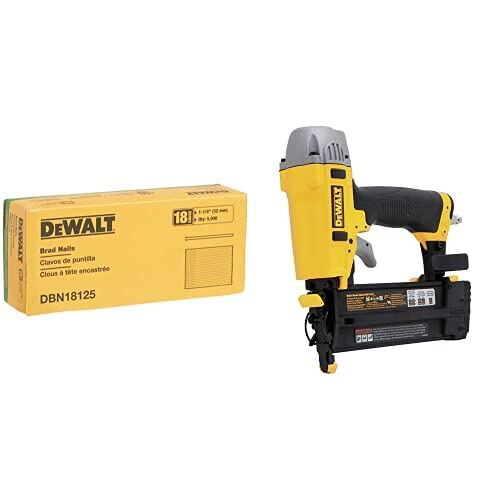
The BOSTITCH BTFP12233 offers a micro-nose design that is 60% smaller than standard models, providing superior maneuverability in tight spaces compared to the bulkier DEWALT DWFP12231 pneumatic model. However, unlike the DEWALT DWFP12231 which features a rear exhaust to keep dust off workpieces, the BOSTITCH has a fixed exhaust port that directs air toward the user.
Rating sources
“The most exciting and certainly unique aspect of this nailer is the smaller nose design... on a recent project I had so many clamps lined up, I have to admit, the extra maneuverability was nice.”
Our 4.0 score is the average of the 1 scored review above; 3 more reviewed it without printing a score and are not in the average. Ratings marked * were derived from the reviewer’s written analysis or video transcript — the publisher didn’t print an explicit numeric score, so we inferred one from their own words. Click through to verify. More about methodology.