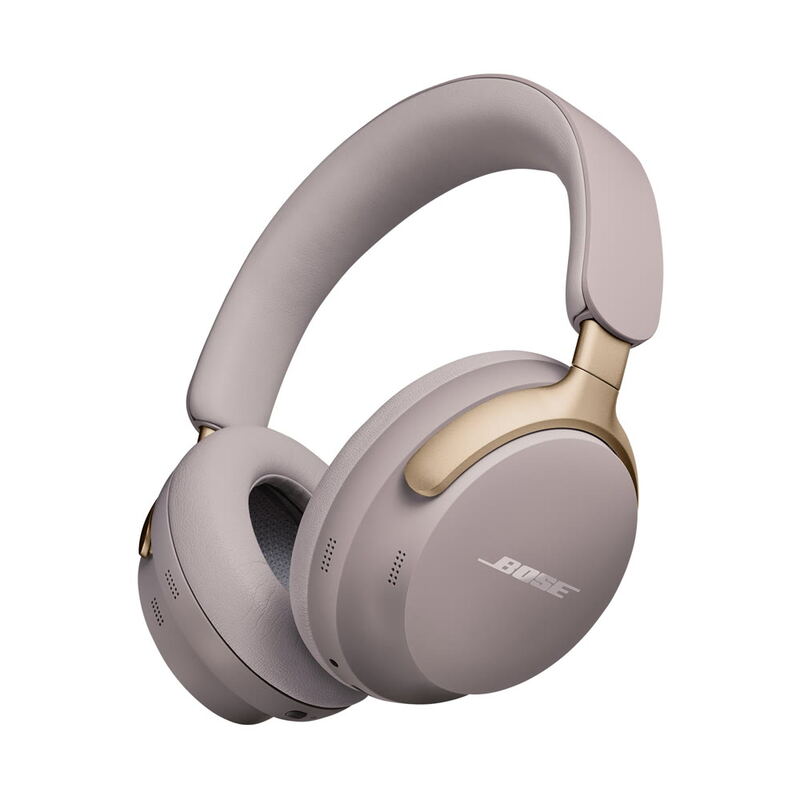
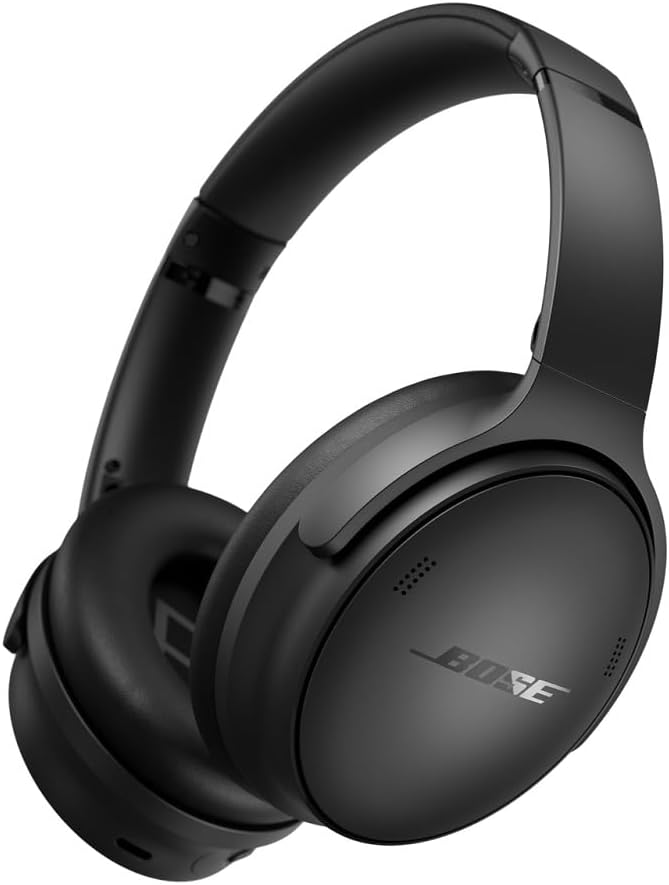
Bose's QuietComfort Headphones (2023) replaced the QC45 as the company's mainstream over-ear, one tier below the QuietComfort Ultra. TechRadar gave them 4 stars for 'flagship noise-cancelling for less,' and SoundGuys clocked 27 hours of real-world battery along with excellent ANC. There is no Immersive Audio and no high-res codecs, but at 240g they are the most comfortable headphone in this guide and the easiest recommendation for long-haul flights.
Full review
Real-World Noise Cancellation Performance
The defining feature of the Bose QuietComfort headphones remains their active noise cancellation, which reviewers consistently rate as class-leading. TechRadar described the ANC as 'best-in-class,' noting that it effectively silences low-frequency drone from airplane engines and office HVAC systems without inducing the pressure sensation often found in competitors. The effectiveness is so pronounced that Wirecutter, a long-time advocate for Bose in this category, stated that the QuietComfort line sets the benchmark against which all other noise-canceling headphones are measured.
Sound Quality and Audio Profile
Audio performance on the Bose QuietComfort headphones is characterized by a warm, bass-forward signature that prioritizes musicality over clinical accuracy. RTINGS.com measurements revealed a frequency response that slightly exaggerates the sub-bass and lower mids, creating a rich, enveloping soundstage ideal for pop, hip-hop, and electronic music. However, audiophile-focused reviewers? noted that the high frequencies can sometimes lack the crispness found in more neutral-tuned rivals like the Sony WH-1000XM5. Despite this, the overall balance is praised for being non-fatiguing during long listening sessions. The headphones do not support high-resolution audio codecs like LDAC or aptX HD, relying instead on standard SBC and AAC, which limits the potential fidelity for users with high-bitrate libraries, a point of contention among technically minded Reddit users in r/headphones.
Comfort and Physical Design
Comfort is arguably the strongest selling point of the Bose QuietComfort headphones, with nearly every professional review highlighting the plush ear cushions and lightweight headband. The ear cups are made of synthetic leather that is soft to the touch and distributes clamping force evenly, preventing the hot spots that can develop with tighter-fitting competitors. They could wear the headphones for over six hours during a transatlantic flight without any discomfort or ear fatigue. The design is minimalist and functional, lacking the flashy aesthetics of some modern rivals, but this understated look appeals to professionals who prefer discretion. The headphones fold flat for storage, though they do not collapse into a compact disc shape, requiring a slightly larger carrying case than some ultra-portable alternatives.
Battery Life and Power Management
Battery performance is robust, with Bose claiming up to 24 hours of playback with noise cancellation enabled. This endurance places them ahead of the Sony WH-1000XM5, which typically offers around 30 hours but with a less consistent discharge curve. A significant convenience feature is the quick-charge capability; a 15-minute charge provides approximately 2.5 hours of playback, a lifeline for travelers who forget to charge overnight. However, some users on Reddit noted that enabling the 'Aware Mode' (transparency) drains the battery noticeably faster than standard ANC mode, reducing total runtime by roughly 20% in mixed-use scenarios.
Setup and Software Experience
The Bose Music app serves as the central hub for customization, allowing users to adjust the balance between noise cancellation and transparency, as well as fine-tune the EQ. However, the software experience is a frequent point of criticism. TechRadar pointed out that the app interface can be sluggish and occasionally fails to sync settings properly, requiring users to restart the application. Unlike Sony’s headsets, which offer a highly granular 20-band EQ, Bose provides a simpler 5-band EQ, which some power users find limiting. Additionally, the lack of support for multi-point connection in the standard QuietComfort model (unlike the Ultra variant) means users cannot seamlessly switch between a laptop and a smartphone, a feature that has become standard in the premium segment. PCMag notes that multipoint connectivity is supported but is off by default and must be enabled in the app.
No wear-detection sensor to auto-pause music
Despite their strengths, the Bose QuietComfort headphones have notable weaknesses that may deter certain buyers. The most significant issue is the lack of advanced codec support and multi-point connectivity in the base model, which feels outdated compared to 2024 competitors. Reddit users frequently complained about the plastic build quality, noting that while durable, the materials feel less premium than the metal accents found on Sony or Apple headsets. Furthermore, the microphone quality for phone calls is merely average; Wind Noise Reduction helps, but voices can still sound slightly muffled in windy outdoor conditions. The absence of a dedicated 'wear detection' sensor that automatically pauses music when the headphones are removed is also a missing feature that many users expect at this price point, forcing them to manually pause playback.
Sony XM5 folds smaller and adds multi-point
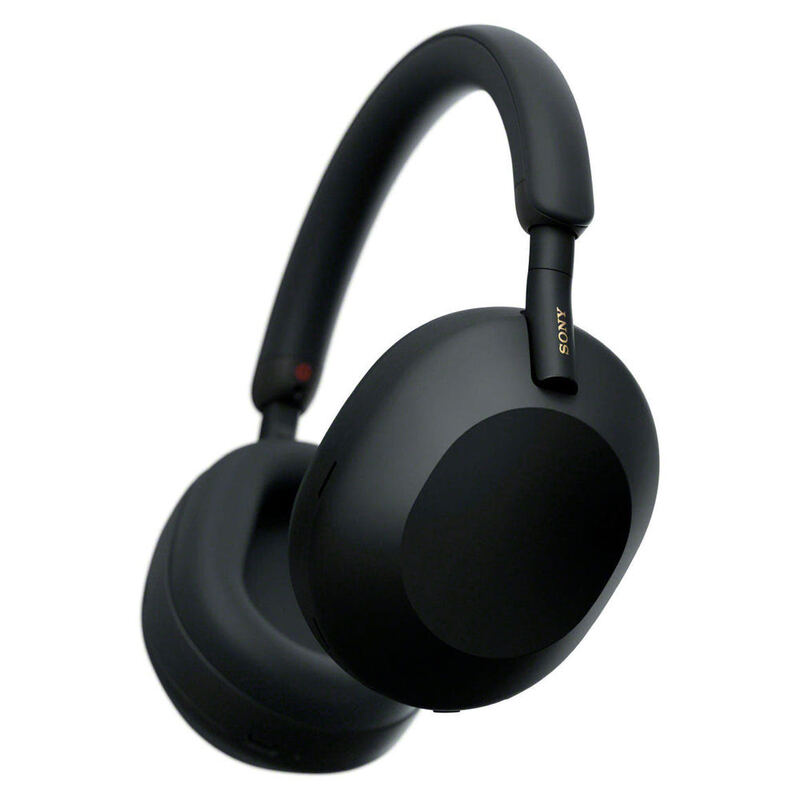
When stacked against the Sony WH-1000XM5, the Bose QuietComfort headphones offer superior comfort and more reliable noise cancellation, but Sony wins on feature set with its multi-point connectivity, superior EQ customization, and better call quality. The Sony model is also lighter and folds into a smaller form factor. Against the Apple AirPods Max, the Bose headphones are significantly more affordable and lighter, but they lack the seamless ecosystem integration and premium aluminum build of the Apple option. For Android users, the Bose headphones are a safer bet than the AirPods Max due to Bluetooth compatibility, but the Sony XM5 offers more customization options. The competition is fierce, and the choice often comes down to whether the user prioritizes raw comfort and silence (Bose) or feature density and connectivity (Sony).
Often discounted to $229 during sales
At a retail price of $349, the Bose QuietComfort headphones sit in the premium tier, but frequent sales often drop the price to $279 or even $229, as seen on Bose's official site during promotional events. At the discounted price, they represent exceptional value, offering best-in-class noise cancellation and comfort for less than the cost of many mid-range competitors. However, at full retail price, the lack of multi-point connectivity and advanced codec support makes the value proposition weaker compared to the Sony WH-1000XM5, which often goes on sale for similar prices. Shoppers should wait for a sale to maximize value, as the price-to-performance ratio improves significantly when the discount is applied. The long-term durability and brand reputation also add intangible value, with many users reporting that their Bose headphones last for years without mechanical failure.
Best for blocking engine noise on flights
The Bose QuietComfort headphones are ideal for frequent travelers, commuters, and office workers who prioritize silence and comfort above all else. If your primary use case involves blocking out engine noise on flights or creating a quiet bubble in a noisy open-plan office, these headphones are arguably the best tool for the job. They are also well-suited for casual listeners who prefer a warm, bass-heavy sound profile and do not need granular EQ control. However, they are not the best choice for audiophiles seeking high-resolution audio, Android power users who require LDAC support, or professionals who need seamless multi-device switching. For those users, the Sony WH-1000XM5 or the Bose QuietComfort Ultra (which adds multi-point and spatial audio) would be more appropriate alternatives.
Strengths
- +Plush memory foam earcups, only 240g — the most comfortable pair in this guide
- +Excellent Bose ANC, only narrowly behind the QuietComfort Ultra
- +Tested ~27 hours real-world battery life
- +Simple physical button controls and clean Bose Music app
Watch-outs
- −Only SBC and AAC codecs — no aptX or LDAC
- −3-band EQ is more limited than rivals' parametric tools
- −No spatial audio (saved for the QuietComfort Ultra)
How it compares
The QuietComfort sits below the Sony WH-1000XM6 on sound and feature depth but matches it on ANC and beats it on raw comfort thanks to a 240g chassis. Versus the AirPods Max 2 it is roughly $200 cheaper, lighter by nearly 150g, and platform-agnostic — but gives up Apple's H2 chip integration, spatial audio, and lossless USB-C playback.
Rating sources
“Supreme comfort, fuss-free set-up and solid ANC; they're not top-tier, but still solid.”
“The headphones also support multipoint connectivity, though you have to enable that feature in the app.”
Our 4.0 score is the average of these published ratings. More about methodology.