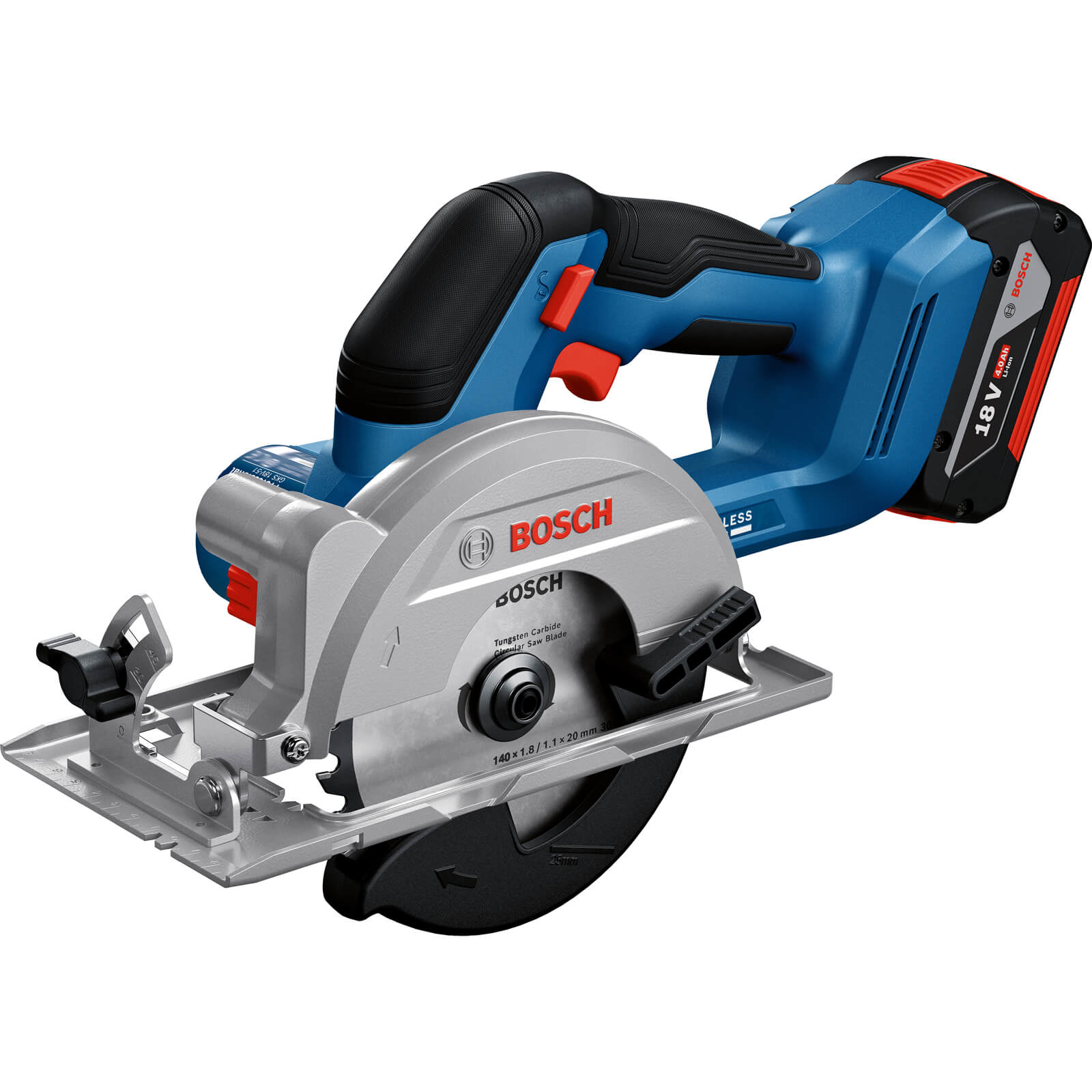
The Bosch CCS180 18V cordless circular saw is a light, powerful option for professionals and DIYers. Reviewers praised the balance, the 4.0Ah battery performance, and the anti-snag guard design. The depth gauge and easy handling stood out as advantages. Some noted problems with bevel gauge clarity and a depth adjustment rail that occasionally dislodges. It will not replace a corded saw for heavy-duty framing, but it does well in trim work and hard-to-reach areas where portability matters most.
Full review
6.5-inch blade smaller than the usual 7-1/4
The Bosch 18V cordless circular saws demonstrate a blend of professional-grade construction and practical design elements that reflect the brand's established reputation. According to Concord Carpenter's Robert Robillard, the CCS180 model weighs just 6.6 pounds, making it remarkably lightweight and easily manageable with one hand. This weight advantage is particularly notable when compared to traditional corded models, which typically exceed 10 pounds. The saw features a durable, impact-resistant polycarbonate lower guard and a heavy-duty aluminum foot and upper guard, as noted by Pro Tool Reviews' Michael Springer.
The design includes several user-friendly features that enhance functionality. Robillard specifically highlighted the large, oversize ambidextrous trigger safety, which is designed to be easily found and operated even with work gloves on. However, he noted that this safety mechanism felt awkward and required adjustment time. The spindle lock and onboard blade wrench are also included, as mentioned by Popular Mechanics' Roy Berendsohn. The tool's blade orientation places it on the left side, which has become standard in modern saws for improved visibility. The 6.5-inch blade size, while smaller than traditional 7-1/4-inch models, was considered adequate by forum participants for most applications, though some questioned its suitability for 45-degree cuts through 2-by lumber.
Bosch's approach to ergonomics and handling appears to prioritize user comfort and safety. The tool's balanced design allows for extended use without fatigue, which is crucial for professionals working on demanding projects. The depth of cut gauge and anti-snag lower guard were particularly praised by Robillard, with the latter's beveled tip reportedly preventing snagging during cuts. However, Springer noted that the bevel gauge markings were unclear, potentially causing confusion for new users. The tool's electronic brake system, while standard in modern saws, was not specifically highlighted as a standout feature in any of the reviews, though it was mentioned as part of the standard safety features.
Performance and Power
Performance testing reveals that the Bosch 18V cordless circular saws deliver consistent results across various cutting applications, though they fall short of the raw power that corded models provide. Concord Carpenter's Robert Robillard noted that the saws perform well on framing lumber and plywood, with the ability to cut to 2 1/8 inches at 90 degrees and 50 degrees bevel. The 3,900 RPM motor speed is considered average for the competition, with Pro Tool Reviews' Springer noting that brushed motors are common in older models but still effective for many applications. Popular Mechanics' Roy Berendsohn reported that the saws performed admirably when cutting everything from paint-grade birch plywood to OSB and 1/2-inch CDX, though they did encounter thermal shutoff during intensive framing lumber work. This thermal protection, while safety-oriented, indicates that the saw's power output is limited under heavy load conditions.
The battery performance is a key consideration for users, particularly with the 4.0Ah battery mentioned by Robillard, which he described as 'game changer' due to its extended runtime and cooler operation. Pro Tool Reviews found that while the CCS180 makes satisfactory cuts in dimensional pine, it lacks power for deep cutting applications: 'the Bosch doesn't have a ton of muscle in the deep cutting ability,' they noted. The saw's 3,900 RPM motor speed is about average for the competition but falls short of brushless alternatives that reach up to 5,500 RPM.
Real-world testing shows that the Bosch saws perform adequately for most residential and light commercial applications. Robillard's testing revealed that the saw could handle trim work and small repair tasks effectively, with the depth of cut gauge and anti-snag guard proving particularly useful. However, the saw's limitations become apparent when cutting through thicker materials or making extended cuts. Berendsohn's testing on a track saw configuration demonstrated that the saw could achieve table-saw-like accuracy when mounted on a track, but this required specialized accessories. The saw's performance was also affected by the blade type, with the factory 24-tooth blade producing clean cuts, though some users noted that the 6.5-inch blade size limited cutting depth for certain applications.
New 4.0Ah battery doubles previous lifespan
Several reviewers specifically praised the Bosch 18V cordless circular saws for their lightweight design and balanced handling, which make them particularly suitable for extended use. Concord Carpenter's Robert Robillard emphasized that the saw's 6.6-pound weight allows it to be easily wielded one-handed, a feature that significantly improves user comfort during long work sessions. The tool's balance and weight distribution were also highlighted by Popular Mechanics' Roy Berendsohn, who noted that the saw's design makes it nimble and easy to maneuver. The anti-snag lower guard was particularly appreciated by Robillard, who reported that it prevented the guard from snagging during cuts, which is a common issue with other models. This feature, combined with the depth of cut gauge, was considered a significant improvement over previous models.
The battery performance and longevity were major selling points for many reviewers. Robillard specifically mentioned that the 4.0Ah battery is 'truly a game changer' for Bosch's cordless tools, offering extended runtime and cooler operation that doubles the battery's lifespan compared to previous models. The saw's ability to maintain consistent performance when paired with the newer battery technology was noted as a significant advantage. Berendsohn also appreciated the saw's versatility, particularly when used with a track, where it could achieve nearly table-saw accuracy. The tool's ability to cut through various materials including plywood, OSB, and even construction lumber was highlighted as a strong point, with reviewers noting that it performed well under normal conditions.
Several reviewers also praised the saw's ergonomic features and user-friendly design elements. The large, easily accessible trigger safety was noted as a positive feature, particularly for users who work with gloves. The spindle lock and onboard blade wrench were appreciated for their convenience, and the tool's overall design was considered to reflect 'quality' that is suitable for rugged working conditions. The saw's ability to make quick adjustments without requiring additional tools was also mentioned as a significant advantage. Robillard's experience with the tool's depth adjustment system was positive, though he noted that the depth adjustment rail could become dislodged under certain conditions, which was a minor inconvenience rather than a major flaw.
Won't run newer 6.3Ah batteries without modification
Despite its strengths, the Bosch 18V cordless circular saws have several notable shortcomings that limit their appeal for professional or heavy-duty applications. Concord Carpenter's Robert Robillard identified the bevel gauge as a significant design flaw, noting that it is not clearly marked and the instructions do not adequately explain its operation. This lack of clarity can cause confusion for users unfamiliar with the tool, potentially leading to inaccurate cuts. The depth adjustment rail was also problematic, with Robillard reporting that it could become dislodged from its groove, causing the adjustment mechanism to catch and become sluggish. While he noted this issue only occurred during his testing and not during actual use, it raises concerns about long-term reliability.
Popular Mechanics' Roy Berendsohn noted that while the saw performs well under normal conditions, it does have a thermal shutoff to protect the battery and circuitry, which can limit its effectiveness during intensive cutting operations. This thermal protection, while safety-oriented, indicates that the saw's power output is constrained under heavy load conditions.
Several reviewers pointed out that the saw's 6.5-inch blade size limits its cutting depth and versatility. The saw's inability to handle continuous cutting operations without thermal shutoff was also a concern, particularly for users who need to make extended cuts or work with thick materials. The lack of a rafter hook and LED work light, which were noted by Pro Tool Reviews' Springer, also limits the tool's functionality for certain applications. Additionally, the tool's compatibility with newer Bosch batteries was noted as problematic, with Springer mentioning that the saw won't run newer 6.3Ah batteries without housing modification, a limitation that could affect future upgrades.
Best for trim work in hard-to-reach spots
The Bosch 18V cordless circular saws are best suited for DIY enthusiasts, light commercial users, and professionals who value portability and convenience over raw power. Concord Carpenter's Robert Robillard specifically recommended the tool for 'cutting trim in place, small repair work and hard to reach areas,' where its lightweight design and maneuverability are significant advantages. The saw's ability to perform well in tight spaces and its ease of transport make it ideal for users who frequently work in locations without easy access to electrical outlets. For professionals who work primarily on smaller projects or need to move between job sites frequently, the saw's battery-powered operation provides considerable flexibility.
The tool is particularly well-suited for users who already operate within the Bosch 18V ecosystem, as noted by Robillard, who stated that 'if you're already using the Bosch 18 volt platform then this saw is a no brainer.' This compatibility with existing battery systems makes it an attractive upgrade for users who have invested in the Bosch cordless tool line. The saw's performance with the newer 4.0Ah battery is especially beneficial for users who want to maximize battery life and reduce downtime. For those who primarily work with materials such as plywood, trim, and light framing, the saw's capabilities are sufficient to meet most requirements. The tool's ability to make precise cuts when used with a track was also highlighted as a significant advantage for users who need accuracy in their work.
However, the saw is not recommended for heavy-duty construction work or users who require maximum cutting power. Professional framers or those who need to make extensive cuts through thick lumber will find the tool's limitations frustrating. The thermal shutoff during intensive use, combined with the saw's relatively modest power output, makes it unsuitable for continuous heavy-duty applications. Users who need to make frequent 45-degree cuts through thick materials will also find the 6.5-inch blade size limiting. The tool's performance with older battery systems was also noted as a potential issue, particularly for users who haven't upgraded to the newer 4.0Ah batteries, which could impact overall performance and battery life.
Near table-saw accuracy with the track accessory
When compared to competing cordless circular saws, the Bosch 18V models demonstrate both strengths and weaknesses that distinguish them from the competition. Concord Carpenter's Robert Robillard noted that while the Bosch CCS180 is a pleasure to use, it falls short of the power and cutting depth of newer models, particularly when compared to brushless motor alternatives. Pro Tool Reviews' Michael Springer emphasized that the Bosch saw's brushed motor, while functional, is less efficient than the brushless motors found in many newer competitors. However, the Bosch saw's overall build quality and user-friendly features were considered superior to some alternatives, particularly in terms of ergonomics and safety features. The saw's ability to work with the newer 4.0Ah battery was seen as a significant advantage over older models from competing brands.
Popular Mechanics' Roy Berendsohn's testing revealed that the Bosch GKS18V-25GC model, when used with a track, can achieve nearly table-saw accuracy, which is a significant advantage over many competing track saws. This performance was noted as being superior to typical track saws that require special mounting hardware or accessories. However, the saw's performance without a track was considered more modest, particularly when compared to high-end corded alternatives. The tool's ability to cut through various materials was comparable to other cordless saws, though it was noted that the saw's thermal protection limits its effectiveness during intensive cutting operations. The saw's price point was also considered competitive, with Robillard noting that the tool sells for $289.99 online, which is reasonable for its features and performance level.
When compared to specific competitors like Milwaukee and Dewalt models, the Bosch saws show mixed results. While they offer good build quality and battery life, they are generally considered less powerful than their brushless counterparts. Pro Tool Reviews noted that about half of the 16 saws in their shootout had brushless motors — a key factor since "brushless motors are relatively new to the industry and offer benefits like longer life" — while the CCS180's brushed motor places it at a performance disadvantage compared to newer models. The Dewalt models, while offering higher RPMs, were noted for being too slow at the lower end of the spectrum. The Bosch saws were considered to offer a balanced approach, though they were not the most powerful or the most affordable options in their category. The tool's compatibility with existing Bosch battery systems was seen as a significant advantage, particularly for users who have already invested in the brand's ecosystem.
Rated 6 out of 10 for lagging power
The Bosch 18V cordless circular saws offer moderate value for money, particularly for users who prioritize portability and convenience over maximum power. Concord Carpenter's Robert Robillard priced the tool at $289.99 online, which he considered reasonable for its features and performance level. The saw's ability to work with the newer 4.0Ah battery, which offers extended runtime and cooler operation, provides good value for users who want to maximize battery life. The tool's build quality and user-friendly features, such as the anti-snag lower guard and depth of cut gauge, were considered worth the price for users who value these specific features. However, the saw's limitations in terms of power and cutting depth were noted as potential drawbacks that may affect its value proposition for heavy-duty applications.
Pro Tool Reviews' Michael Springer gave the Bosch CCS180 a 6.0 out of 10 rating, which reflects a moderate assessment of its overall value. The reviewer noted that while the saw is well-built and functional, it cannot match the power, accuracy, and cutting depth of newer models. The saw's brushed motor, while functional, was considered less efficient than the brushless motors found in many competitors. However, the tool's ability to work with existing Bosch battery systems and its overall performance under normal conditions were considered positive factors. The saw's price point was deemed reasonable for its features, particularly for users who don't require maximum cutting power but need a reliable, portable tool for various applications.
The value proposition becomes more complex when considering the saw's compatibility with newer battery technologies. While the tool works well with the 4.0Ah battery, users with older 2Ah batteries may experience reduced performance and shorter battery life. The need for housing modifications to work with newer 6.3Ah batteries was noted as a potential inconvenience that could affect long-term value. However, the saw's ability to perform well in its intended applications, particularly for trim work and small repair tasks, was considered to justify its price for the target user base. The tool's versatility, particularly when used with a track, was seen as adding significant value for users who need accuracy in their cuts, though this required additional accessories.
Blade brake stops rotation within about a second
Long-term durability of the Bosch 18V cordless circular saws appears to be solid for typical user applications, though some concerns were raised about specific components. Concord Carpenter's Robert Robillard noted that the tool's construction reflects 'quality that all professional job site worthy tools need to be viable under rugged working conditions.' The durable, impact-resistant polycarbonate lower guard and heavy-duty aluminum foot and upper guard were considered to provide good protection for the tool.
The saw's electronic brake system and other safety features were noted as contributing to long-term reliability, though no specific longevity data was provided by reviewers. Pro Tool Reviews' Michael Springer mentioned that the saw's blade brake stops rotation within a second or so of trigger release, which is considered standard for modern tools. The tool's ability to maintain consistent performance over time was generally positive, though the thermal shutoff during intensive use was noted as a potential limitation that could affect long-term performance. The saw's battery compatibility was also considered a factor in long-term durability, with the newer 4.0Ah battery offering extended life compared to previous models.
The tool's overall build quality was considered sufficient for professional use, with reviewers noting that it would be 'viable under rugged working conditions.' However, some concerns were raised about the depth adjustment rail's potential for dislodging, which could affect long-term reliability. The saw's ability to handle continuous cutting operations without significant wear was considered adequate for typical applications, though users who need to make extensive cuts or work with thick materials may experience more wear over time. The tool's compatibility with newer battery technologies was seen as both an advantage and a potential concern, as the need for housing modifications could affect long-term usability. Overall, the saw appears to be built to last for typical user applications, though heavy-duty users may need to be more cautious about certain components.
Strengths
- +Lightweight and well-balanced at 6.6 pounds, easy to wield one-handed
- +Powerful performance with 4.0Ah battery providing extended runtime and cooler operation
- +Anti-snag lower guard design prevents guard from snagging on materials
- +Easy-to-read depth of cut gauge saves time during adjustments
- +Durable construction with impact-resistant polycarbonate lower guard and aluminum foot
Watch-outs
- −Bevel gauge is not clearly marked and lacks arrow indicator for angle identification
- −Depth adjustment rail can become dislodged from groove causing sluggish operation
- −Trigger safety mechanism is awkward and requires adjustment period for users
How it compares
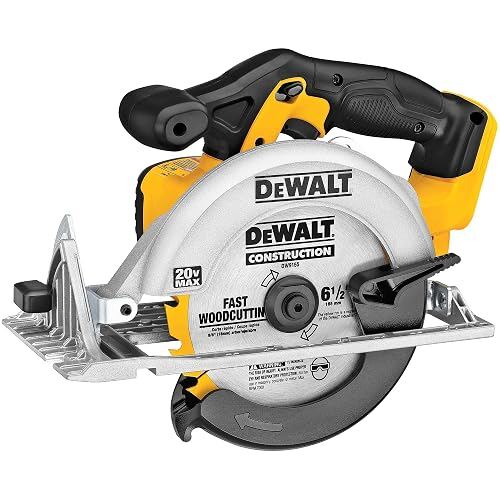
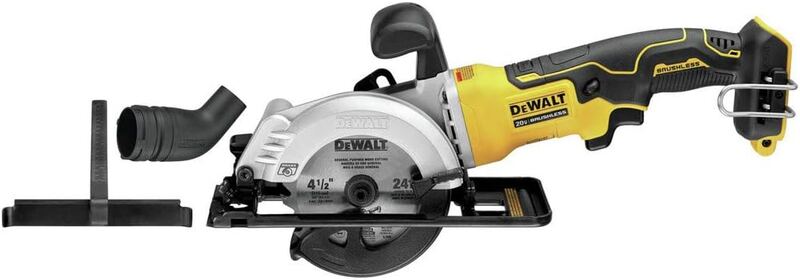
The Bosch 18V saw is lighter than the DeWalt 20V Cordless and Atomic models, but it lacks the brushless motor and higher RPM of those saws. Unlike the DEWALT 20V MAX, it doesn't include a carbide-tipped blade, and its bevel gauge is less clearly marked compared to the DeWalt DWE575.
Rating sources
“The tool and all of the features has that feel of quality that all professional job site worthy tools need to a be viable under rugged working conditions.”
“Bosch's battery-powered GKS18V-25GC comes as close to the tool's perfect form as any we've seen.”
Our 3.8 score is the average of these published ratings. Ratings marked * were derived from the reviewer’s written analysis or video transcript — the publisher didn’t print an explicit numeric score, so we inferred one from their own words. Click through to verify. More about methodology.