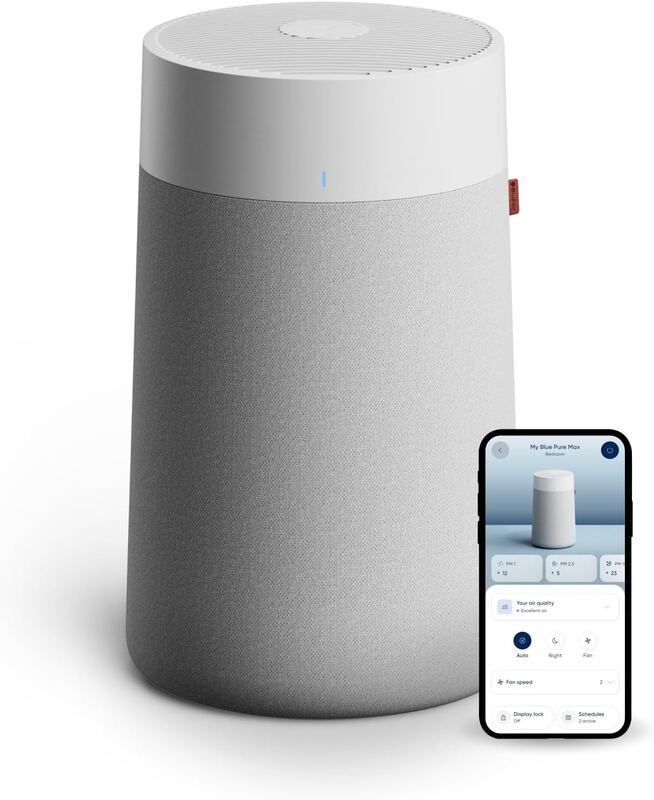
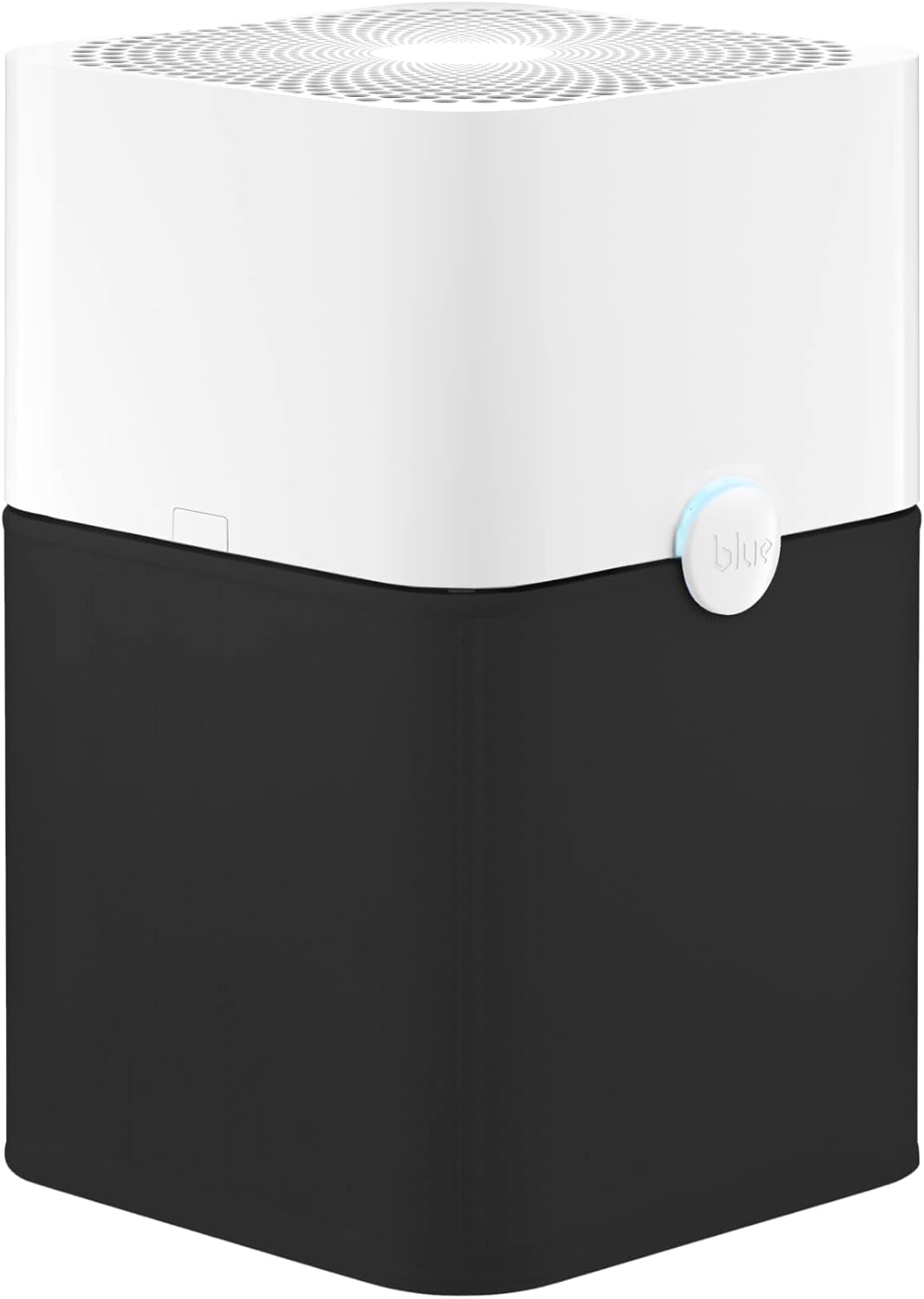
The Blueair Blue Pure 211+ clears large rooms fast and stays quiet on lower settings, in a package that looks good doing it. A one-button design and washable pre-filter keep it simple to live with and cheap over time, though the unit is heavy and has no portability features. Two real drawbacks: you cannot disable the built-in ionizer, and filters cost notably more than competitors'.
Full review
Real-World Cleaning Power
Garage Tested pushed the Blueair Blue Pure 211+ to its limits in a 700 square foot living area, confirming its 360 CFM output is genuinely built for large spaces. In their hands-on testing, the unit effectively tracked and removed dust and allergens, proving that the raw power matches the marketing claims for open-plan environments.
Filtration Technology and Ionizer Debate
A significant point of contention among reviewers concerns the filtration efficiency and the mandatory ionizer. HouseFresh founder Danny Ashton highlighted that the unit relies on HEPASilent technology, which combines mechanical filtration with a bipolar ionization process that cannot be disabled. This is a critical distinction for health-conscious users who prefer to avoid ionizers entirely. Furthermore, Blueair rates the proprietary particle filter at 99% efficiency, below the 99.97% that defines a true HEPA filter. In a theoretical scenario with 15 million particles, the 211+ allows 150,000 to pass through on the first pass, whereas a HEPA filter would only let 4,500 through. Despite this mathematical difference, Greenwashing Index reported that PM2.5 levels dropped impressively from a baseline of 15-25 µg/m³ to under 2.0 µg/m³ within 45 minutes during their 90-day test.
Design, Usability, and Portability
The Scandinavian aesthetic is widely praised, with Garage Tested noting the sleek, minimalist tower design and the customizable fabric pre-filter that adds a pop of color to any room. Setup is remarkably simple, taking roughly 60 seconds to unbox, attach the washable pre-filter, and plug in, as confirmed by Greenwashing Index. However, the physical design has notable drawbacks regarding portability. HouseFresh and Garage Tested both criticized the lack of handles or wheels, making it difficult to move the 15-pound unit between rooms. Additionally, HouseFresh reported a specific mechanical issue where the top section can easily disconnect from the base if the device is lifted by the top, a design flaw that complicates daily maintenance and relocation.
Noise Levels and Energy Efficiency
Garage Tested measured the low fan speed at 47.2 dB, describing it as quieter than a refrigerator, while Greenwashing Index recorded an even lower 23 dB on the lowest setting, calling it virtually silent for sleeping. HouseFresh provided specific decibel readings for all three speeds: 37.2 dB on speed 1, 45.8 dB on speed 2, and 55.7 dB on speed 3. Energy efficiency is another strong suit, with Greenwashing Index measuring consumption at just 4 watts on low and HouseFresh recording 16.9 watts at speed 1. This low power draw contributes to an estimated annual running cost of under $200, making it an economical choice for continuous operation.
Long-Term Costs and Maintenance
While the upfront performance is strong, the long-term ownership costs are a point of criticism. HouseFresh calculated the estimated yearly running cost, including electricity and official filter replacements, to be approximately $197.27. Greenwashing Index noted that the actual filter life was shorter than advertised, requiring more frequent replacements than expected. The washable fabric pre-filter is a cost-saving feature that catches large particles like pet hair, but the main particle and carbon filter combination must be replaced regularly. Airpurifierfirst noticed a lot of dust on the exterior fabric pre-filter after the first day of use, and recommends washing or cleaning it at least once a month for best performance.
Covers 700 square feet but skips smart features
The Blueair Blue Pure 211+ is best suited for users who prioritize raw cleaning power and simple operation over smart home integration. Garage Tested explicitly stated that if you prioritize Wi-Fi controls, this is not the right match, as the unit lacks app connectivity and advanced sensors. It is an ideal choice for large, open spaces up to 700 square feet where rapid air changes are needed, such as living rooms or open-plan offices. However, buyers should be aware of the mandatory ionizer and the proprietary filter efficiency gap compared to true HEPA units. For those who value a quiet, energy-efficient machine with a stylish design and are willing to accept the lack of smart features and higher filter costs, the 211+ remains a solid, albeit nuanced, performer.
Strengths
- +Delivers 350 CFM CADR for dust, smoke, and pollen, effectively cleaning rooms up to 540 sq. ft.
- +Runs at a measured 47.2 dB on low speed, which Garage Tested described as quieter than a refrigerator.
- +Features a washable, customizable fabric pre-filter that captures large particles like pet hair and lint.
- +Includes a simple one-button control interface for easy operation without complex settings.
- +Constructed with durable, scratch-resistant materials and a sleek Scandinavian design aesthetic.
Watch-outs
- −The built-in ionizer cannot be disabled, which may be a concern for users avoiding ionization technology.
- −The unit is bulky and lacks handles or wheels, making it difficult to move between rooms.
- −Filter replacement costs are higher compared to other air purifiers with similar performance.
How it compares
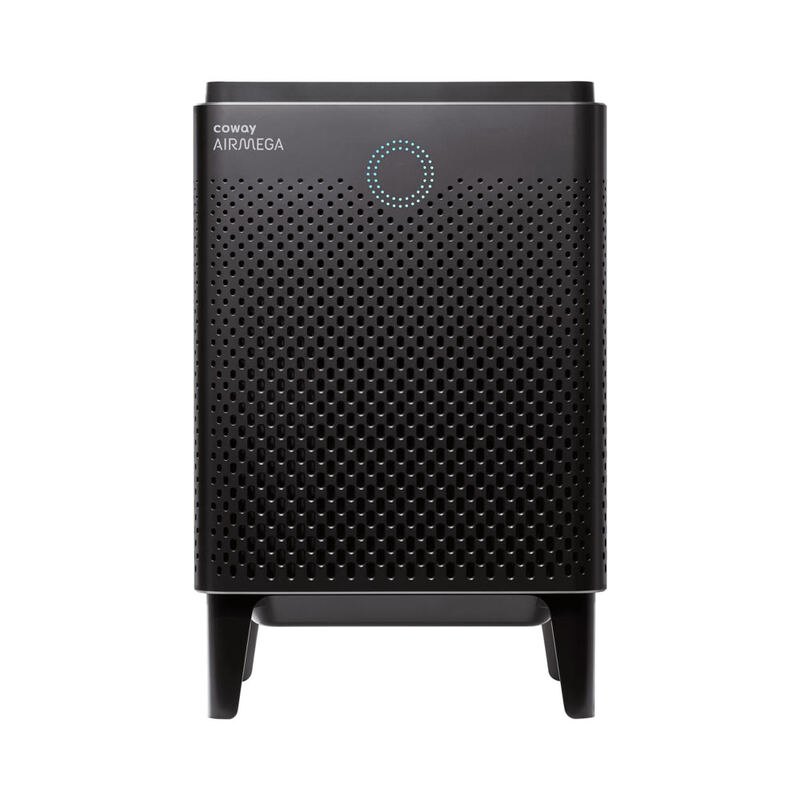
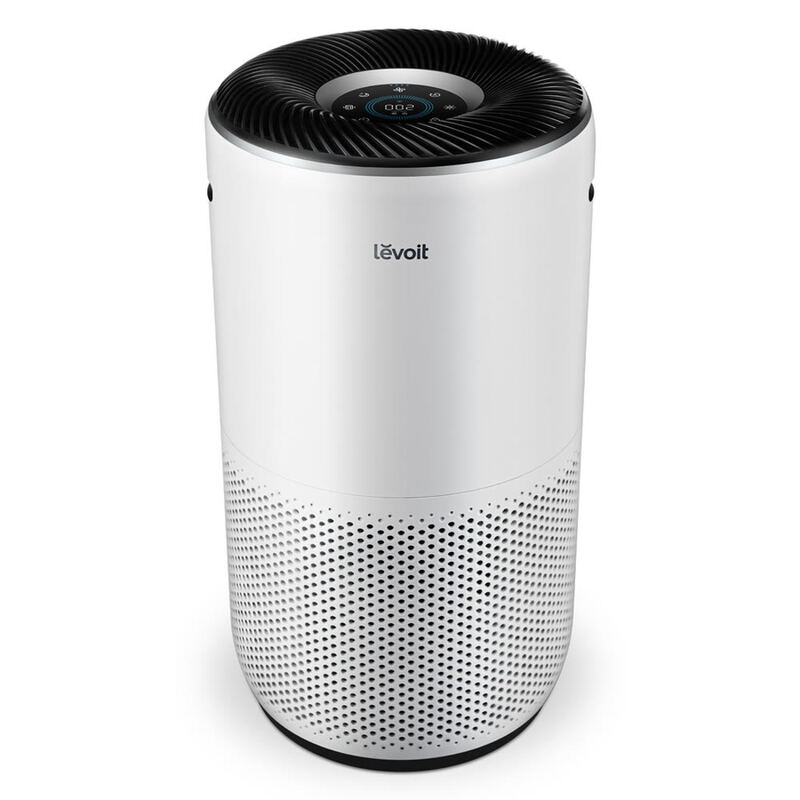
The Blueair Blue Pure 211+ stands out with its washable fabric pre-filter and minimalist one-button control, offering a simpler user experience than the app-dependent Coway Airmega 400S or Levoit Core 400S. However, it forces users to accept a built-in ionizer that cannot be disabled, a feature absent in the Coway and Levoit models, and it is less portable than the compact Levoit.
Rating sources
Counts as 4.51/5 in our score — this publisher's 6 scores on the site average 3.23, so its scores are adjusted up to compare fairly with other publishers.
Counts as 4.04/5 in our score — this publisher's 138 scores on the site average 3.66, so its scores are adjusted up to compare fairly with other publishers.
Counts as 4.47/5 in our score — this publisher's 7 scores on the site average 4.56, so its scores are adjusted down to compare fairly with other publishers.
Our 4.3 score is the average of the 3 scored reviews above, each adjusted for how strictly its publisher scores; 2 more reviewed it without printing a score and are not in the average. More about methodology.