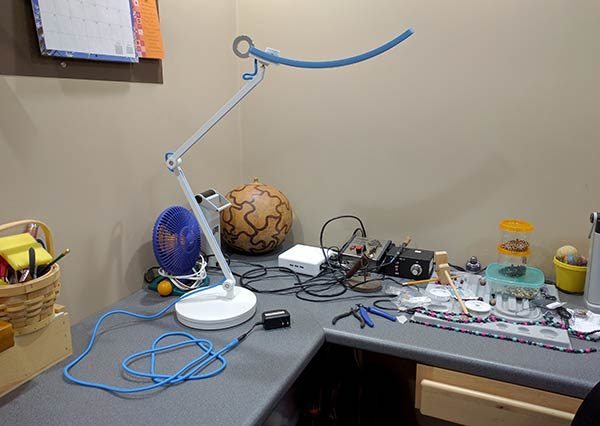
The BenQ eReading LED Desk Lamp is the traditional articulating lamp in this group, and its curved OVAL-light head is what sets it apart: it spreads light across a 35.4-inch span instead of dropping a cone on one spot. An ambient sensor auto-dims it, and CRI 95 with 13 colour temperatures covers reading, screen work and crafts. It is expensive and the base is large.
Full review
A 35.4-inch spread instead of a cone
The curved OVAL-light head is the defining feature. Rather than dropping a bright circle in one place, it spreads light across a 35.4-inch span, which is what removes the dark edges and the hot spot that cheaper lamps leave on a desk.
The Workspace Hero, rating it 4.7 out of 5, measured it lighting an entire desk 150 percent more than a standard lamp and called the result the most comfortable lighting environment it had set up for an office or workbench.
Auto-dimming from an ambient light sensor
A built-in sensor reads the light already on the desk and adjusts the lamp to keep the surface at a comfortable level, so it compensates as the room changes through the day rather than making you reach for a dial.
That auto-dimming is usually reserved for far more expensive lamps, and it is the main reason this one competes with the Dyson Solarcycle Morph on features while costing considerably less.
CRI 95 and 13 colour temperatures
With a CRI of 95 and 13 selectable colour temperatures from warm to cool, the lamp renders colour accurately and adapts to the task: warmer for relaxed reading, cooler for focused screen work.
Gathered found the curved head lights a crafting area brightly in the centre while dispersing light as wide as 110 centimetres, which is the behaviour that makes it useful for detailed hobby work as well as paperwork.
A long arm on a base that claims real desk space
The build is solid, with a long articulating arm and a pivoting head that reaches across a wide desk or angles down over a workbench, something a screen-clipping light bar cannot do at all.
The cost of that reach and stability is a large base that takes up meaningful desk space, the opposite of a zero-footprint light bar. The Gadgeteer, after extended use, still called it the best desk lamp it had used.
Priced against light bars, not against desk lamps
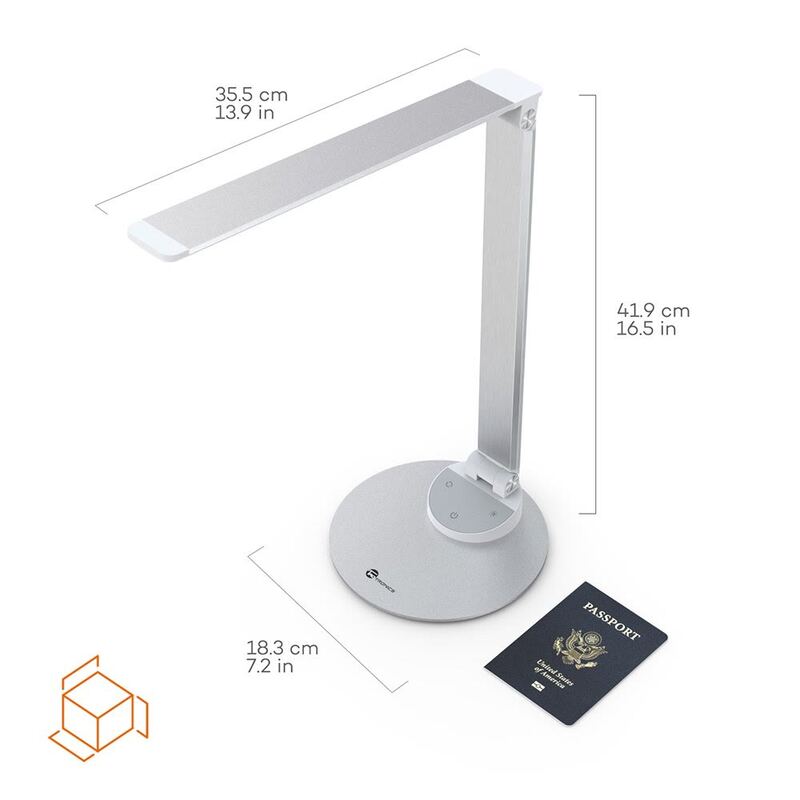
The price is the sticking point. This is expensive for a traditional desk lamp, competing with monitor light bars rather than with the budget TaoTronics, and a minimalist desk may not want to surrender the base's footprint.
The controls also take some learning next to a simple on/off switch, since the auto-dimming, the presets and the manual modes all overlap, and there is no battery, so it stays plugged in. Those are modest objections to an otherwise excellent lamp.
Strengths
- +OVAL-light head covers a 35.4-inch-wide area, far wider than a typical desk lamp
- +Ambient light sensor auto-dims to hold the desktop at a comfortable level
- +CRI of 95 and 13 selectable colour temperatures suit reading, screen work and crafts
- +Long articulating arm and pivoting head reach across a large desk or workbench
- +Flicker-free, glare-reduced light designed for working next to a monitor
Watch-outs
- −Expensive for a traditional desk lamp
- −Large base takes up meaningful desk space
- −Controls take more learning than a simple switch
- −No battery, so it has to stay plugged in
How it compares
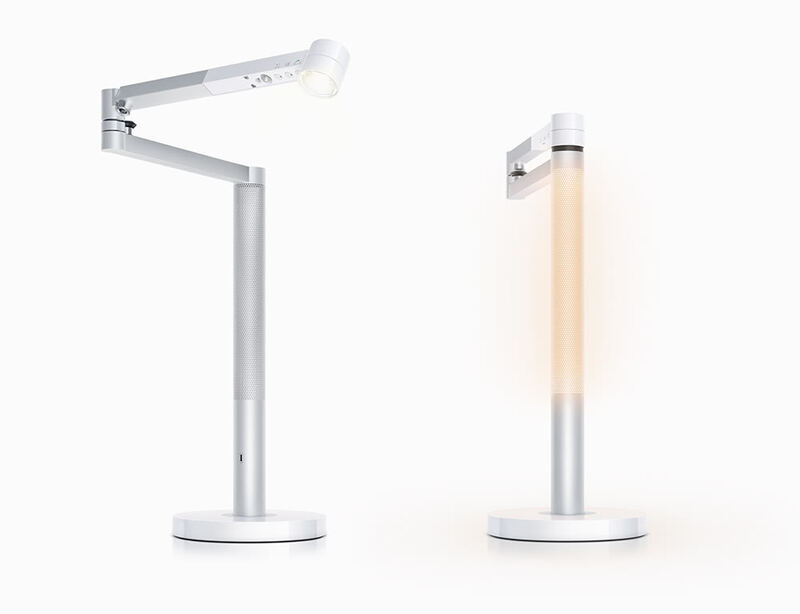
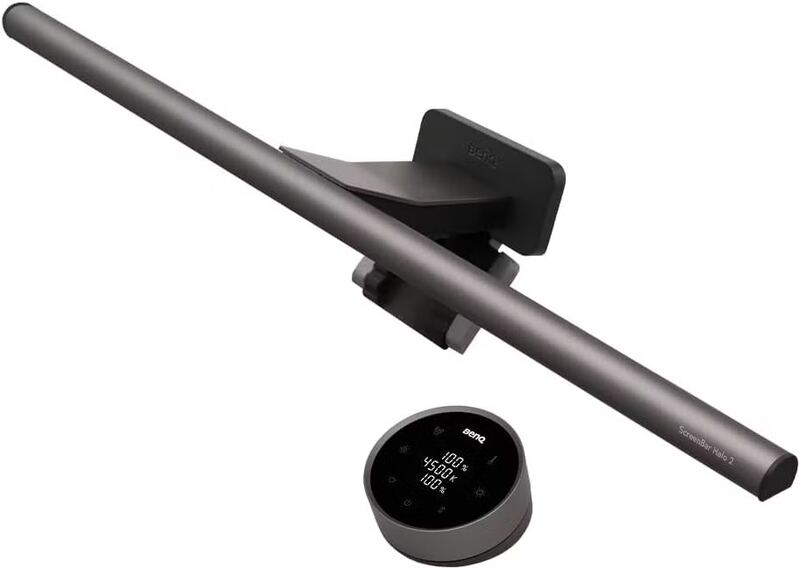
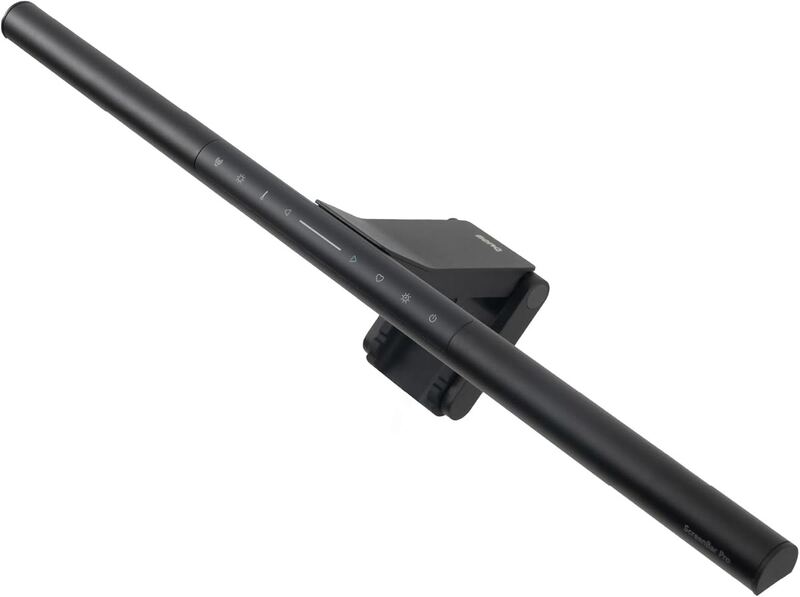
The best traditional articulating lamp here, lighting a far wider area than the budget TaoTronics LED Desk Lamp (TT-DL13). It shares the ambient-sensor auto-dimming of the pricier Dyson Solarcycle Morph for less money, and unlike the BenQ ScreenBar Halo 2 and ScreenBar Pro light bars it sits on the desk and lights a whole work surface.
Rating sources
“It lights up your entire desk 150% more, creating the most comfortable lighting environment for your office or workbench.”
“I mentioned that this lamp is the best one that I've ever used and I stick by that claim.”
“The curved head ensures a crafting area is lit up brightly in the centre, with the light dispersing as wide as 110cm.”
Our 4.6 score is the average of these published ratings. Ratings marked * were derived from the reviewer’s written analysis or video transcript — the publisher didn’t print an explicit numeric score, so we inferred one from their own words. Click through to verify. More about methodology.