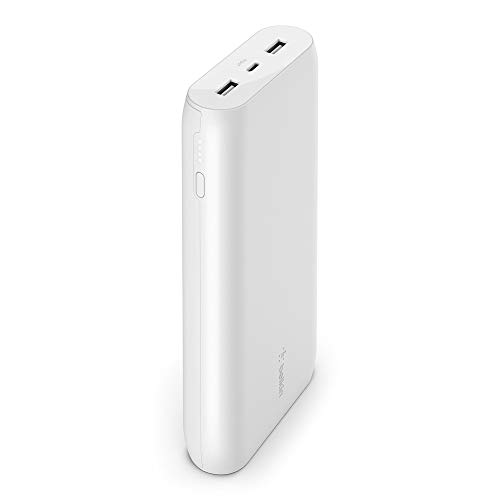
The Belkin BoostCharge 20K is the phone-and-tablet pick — solid build, Apple-friendly behavior, two-year warranty, but it's not trying to be a laptop charger. The 18W USB-C ceiling means even an iPad Pro fast-charges, but a MacBook will only trickle. If your charging life is iPhone + AirPods + iPad, this is the right tier; if you need laptop wattage, step up to the Baseus Blade or INIU 65W.
Strengths
- +Apple-trusted brand with consistent firmware behavior on iPhone and Apple Watch
- +Two USB-A ports plus one USB-C — covers older accessories well
- +Two-year limited warranty — longer than most lesser-known competitors
- +Plain, simple design — no settings to fiddle with, just plug and go
- +Bundle frequently includes a USB-A to USB-C cable
Watch-outs
- −Lower USB-C wattage (15-18W PD) — not a laptop power bank
- −No digital display — LED bar only for capacity
- −No wireless charging, no display, no premium-tier features
- −USB-C is one direction (output) — recharging uses USB-A or proprietary, slower
How it compares
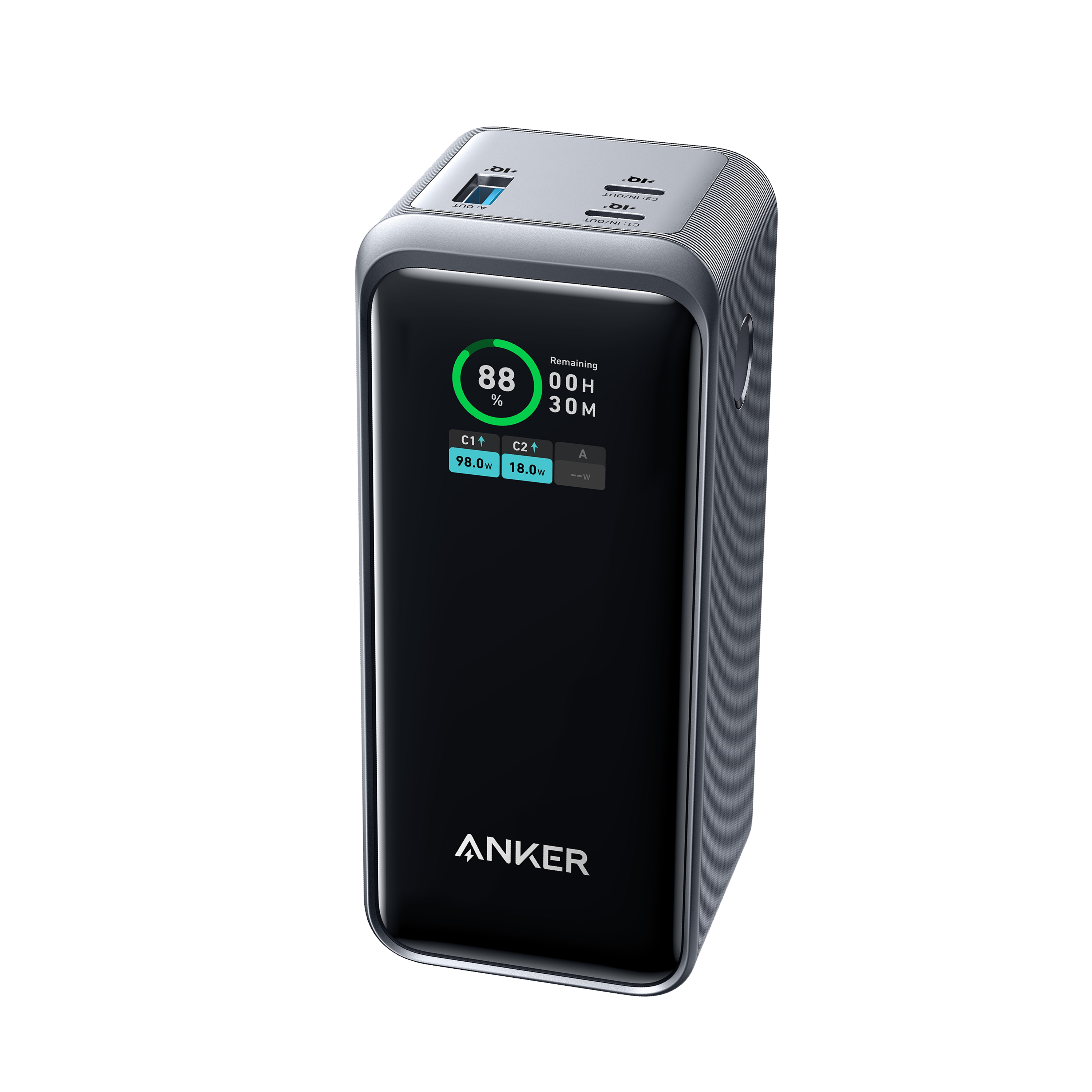
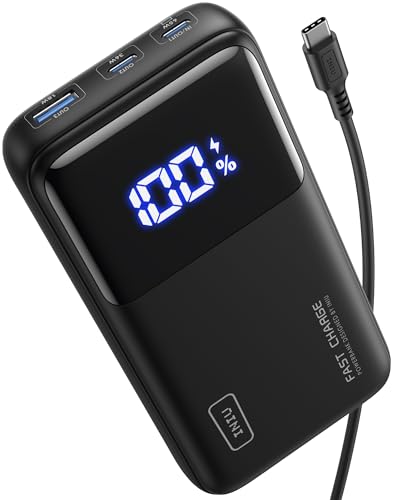
The phone-focused pick — half the wattage of the INIU 65W and a fraction of the Anker Prime 20K's 200W. Trades raw output for brand trust and Apple compatibility. Without a laptop in your kit, it's the most boring-in-a-good-way option here; with a laptop in your kit, every other pick is a better fit.
Who this is for
At a glance: iPhone-and-iPad households that want a simple, trusted phone-charging brick and don't need laptop wattage.
Why you’d buy the Belkin BoostCharge Power Bank 20000mAh USB-C
- Apple-trusted brand with consistent firmware behavior on iPhone and Apple Watch.
- Two USB-A ports plus one USB-C — covers older accessories well.
- Two-year limited warranty — longer than most lesser-known competitors.
Why you’d skip it
- Lower USB-C wattage (15-18W PD) — not a laptop power bank.
- No digital display — LED bar only for capacity.
- No wireless charging, no display, no premium-tier features.
Rating sources
Published reviews for this product are thin — the 4.1 score is synthesised from the sources our researchers read (listed in the pros & cons above) rather than a set of numeric ratings we can point to directly. See methodology for how we handle this case.