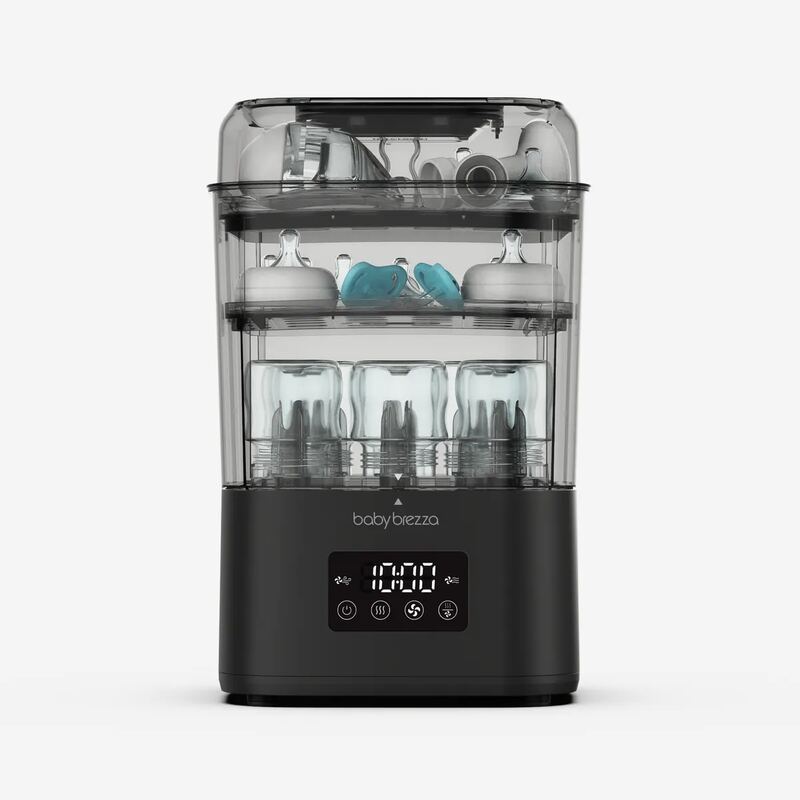
The Baby Brezza Bottle Sterilizer and Dryer Advanced offers the largest capacity in its class, holding 8 bottles and two pump part sets simultaneously to handle high-volume feeding routines efficiently. Motherandbaby found that while the modular design accommodates various bottle shapes and keeps items sterile for up to 24 hours, the full drying cycle can extend total processing time significantly. Parenthood Adventures noted that using tap water requires frequent descaling of the heating plate to prevent mineral buildup, adding maintenance effort compared to distilled water use. This unit fits heavy pumping households needing bulk capacity but may disappoint parents with limited counter space or those seeking a compact, low-maintenance appliance.
Full review
Capacity for heavy pumping households
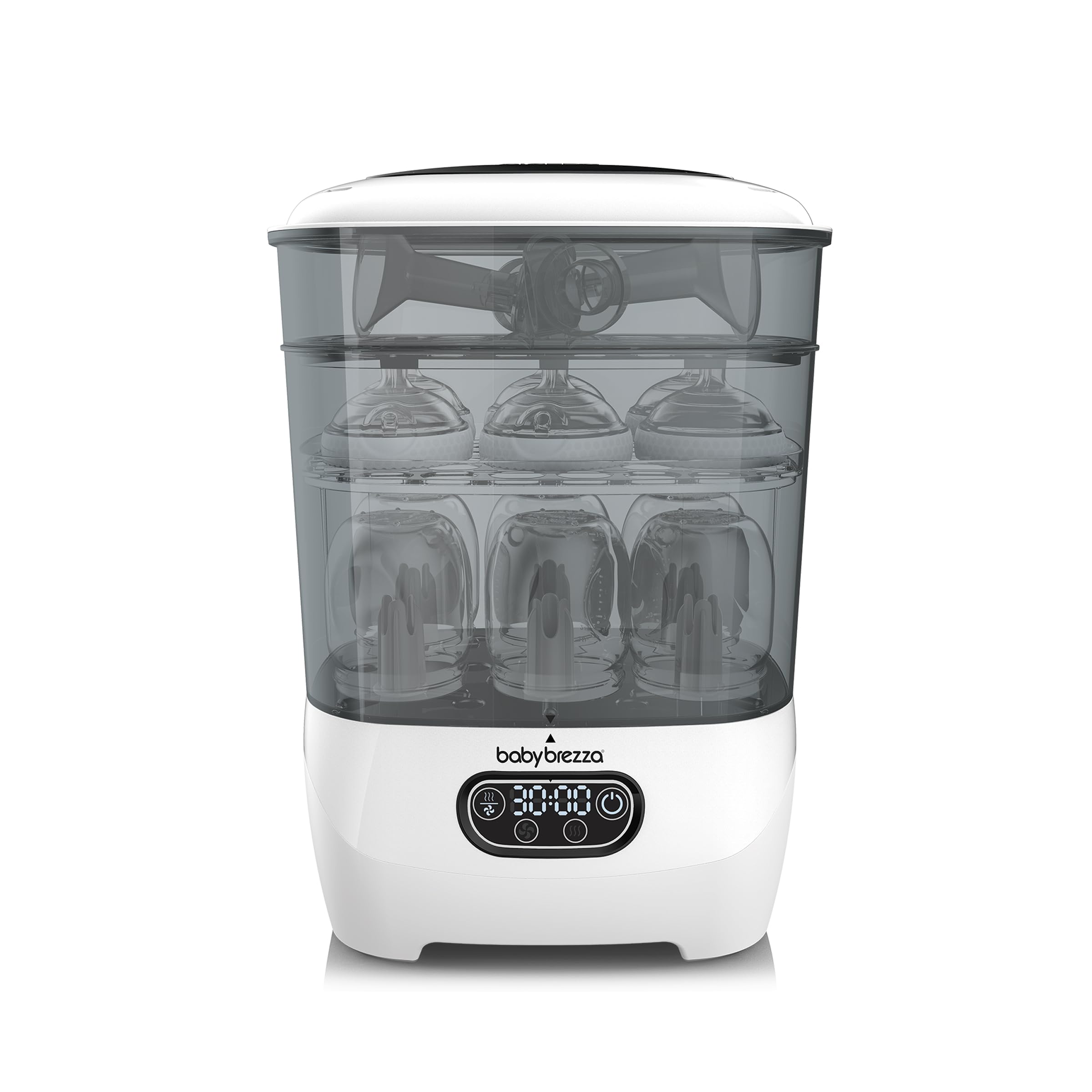
The Baby Brezza One Step Sterilizer and Dryer Advanced distinguishes itself primarily through its volumetric capacity, which the manufacturer identifies as the largest in its class. The unit is engineered to hold up to 8 bottles alongside two complete breast pump part sets simultaneously. This specific configuration targets parents managing high-volume feeding routines or those who rely heavily on wearable pumps like the Elvie and Willow Go systems. For these users, the ability to process a full day's worth of equipment in a single load eliminates the need for multiple batch cycles.
Parenthood Adventures documented this capacity advantage through firsthand experience with exclusive pumping setups. The reviewer confirmed that the bottom tier accommodates standard bottles including Comotomo designs, while the upper tiers are sized specifically for nipples, pacifiers, and small pump components. This modular stacking allows parents to clear a large backlog of sterilized gear before sleeping or heading out, ensuring a ready supply of clean equipment without manual intervention between loads.
Modular design flexibility
The internal architecture utilizes a modular system that can be configured in four distinct ways to suit varying load sizes and bottle shapes. Parents are not forced into a single rigid layout; they can stack both bins, use only the larger lower bin, utilize just the smaller top bin, or insert an accessory tray directly into the lower basket for wide-neck bottles. This adaptability ensures that awkwardly shaped items do not block steam circulation, which is critical for effective sterilization.
Motherandbaby highlighted this flexibility during their evaluation with first-time parents Jordan and Tamsin. They noted that the hollow tubes inside one compartment allow baby bottles to stand upright securely, while the separate compartments keep pump parts organized from pacifiers and teethers. The ability to strip down the unit for smaller loads or expand it for maximum capacity means the device remains functional whether a parent is sterilizing two nipple shields or eight full bottles.
Steam speed versus drying duration
The sterilization phase relies on natural steam to reach 100 degrees Celsius, which kills 99.9 percent of germs in approximately 12 minutes. While the germ-killing process is rapid, the subsequent drying cycle introduces a significant time investment. Parents must select from three drying durations: 30, 45, or 60 minutes depending on the load size.
Motherandbaby recorded that while the sterilization cycle completes in 10 to 12 minutes, adding the full dry cycle extends the total wait time considerably. For heavy loads requiring thorough moisture removal, users should anticipate a total process duration of up to 72 minutes. This extended timeline means parents cannot rely on this device for immediate bottle readiness if they are caught off guard by sudden feeding demands.
HEPA filter maintenance costs
A recurring operational expense associated with the Advanced model is the mandatory replacement of its internal HEPA filter. The manufacturer recommends changing this component every 3 months to maintain the efficacy of the germ-free drying air. This requirement introduces a continuous financial burden that does not exist in basic steam-only sterilizers or units without active filtration systems.
Parenthood Adventures pointed out that purchasing a new HEPA filter is an added expense, particularly for parents who buy the unit secondhand and must replace worn components immediately. While the filter itself is easy to swap out, the necessity of tracking replacement intervals adds another administrative task to parenting routines. Parents budgeting for long-term ownership costs must factor in these recurring supply purchases alongside the initial hardware price.
Descaling requirements and water quality
The heating plate inside the base is susceptible to mineral scale buildup, which can impair performance over time. The manufacturer strongly recommends using distilled or spring water to prevent this issue. When parents utilize standard tap water, particularly in regions with hard water characteristics, they must perform regular descaling procedures to remove accumulated deposits from the stainless steel surface.
Parenthood Adventures reported that using tap water necessitated more frequent maintenance interventions compared to distilled alternatives. Motherandbaby advised that brown spots on the heating plate can be treated by leaving a 100 mixture of vinegar and hot water on the surface for 30 minutes before wiping it clean. This requirement means parents cannot simply fill the unit with whatever water is available; they must actively manage water quality or commit to periodic deep cleaning cycles.
Counter footprint and physical bulk
The large internal volume required for 8 bottles translates directly into a substantial external footprint. The unit stands tall and occupies significant counter real estate, which can be problematic in smaller kitchens or apartments where storage space is at a premium. Parents must decide whether the convenience of hands-free sterilization outweighs the loss of valuable countertop area.
Parenthood Adventures described the device as clunky and noted that it lacks the sleek aesthetic of competing baby appliances like the Beaba Babycook. The reviewer ultimately sold the unit to free up space, illustrating that while the capacity is a major selling point for heavy users, the physical bulk can become a nuisance in compact living environments. Parents with limited kitchen storage should measure their available space carefully before purchasing.
Sterile storage duration limits
Once the sterilization and drying cycles are complete, the unit provides a sterile holding environment for up to 24 hours when the lid remains unopened. This feature allows parents to run the machine late at night or before bed and retrieve perfectly clean equipment in the morning without worrying about re-contamination.
Motherandbaby emphasized that this twenty-four-hour window is a critical convenience factor, removing the daily anxiety of whether bottles are safe to use. However, if the lid is opened prematurely, the sterile environment is broken, and items must be re-sterilized if not used immediately. This limitation requires parents to plan their sterilization cycles around feeding schedules rather than running the machine sporadically throughout the day.
Strengths
- +Holds up to 8 bottles and 2 full pump part sets, offering the largest capacity in its class.
- +Sterilizes with natural steam killing 99.9% of germs and dries contents 33% faster using a HEPA filter for germ-free air.
- +Modular design allows usage in four different configurations to accommodate various bottle types and accessories.
- +Keeps sterilized items sterile for up to 24 hours when left unopened in the closed unit.
Watch-outs
- −Requires periodic descaling of the heating plate, especially if using tap water instead of distilled water.
- −Takes up significant counter space and is described by some users as large and clunky.
How it compares
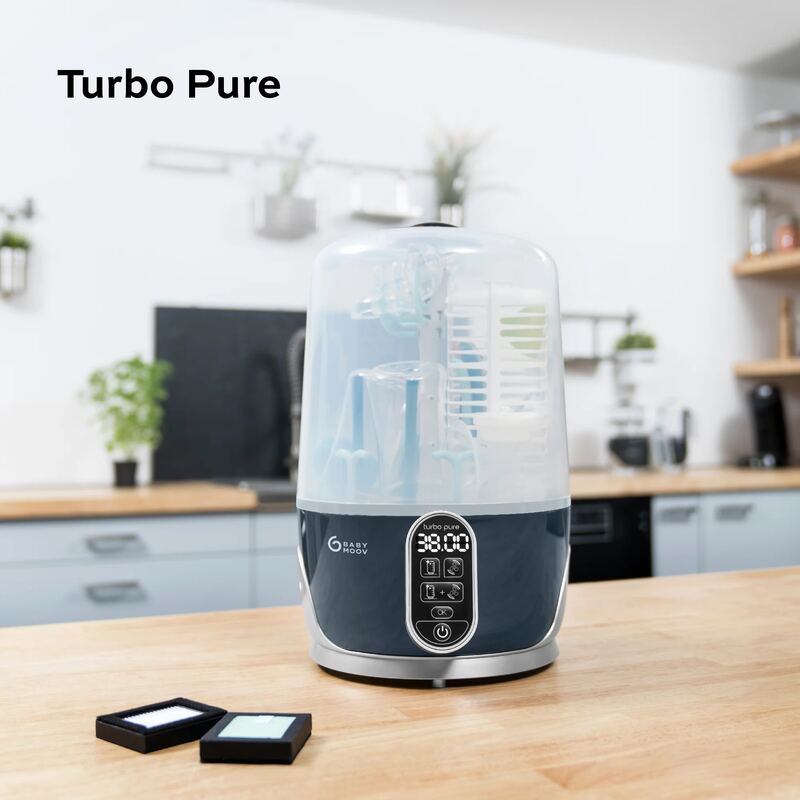
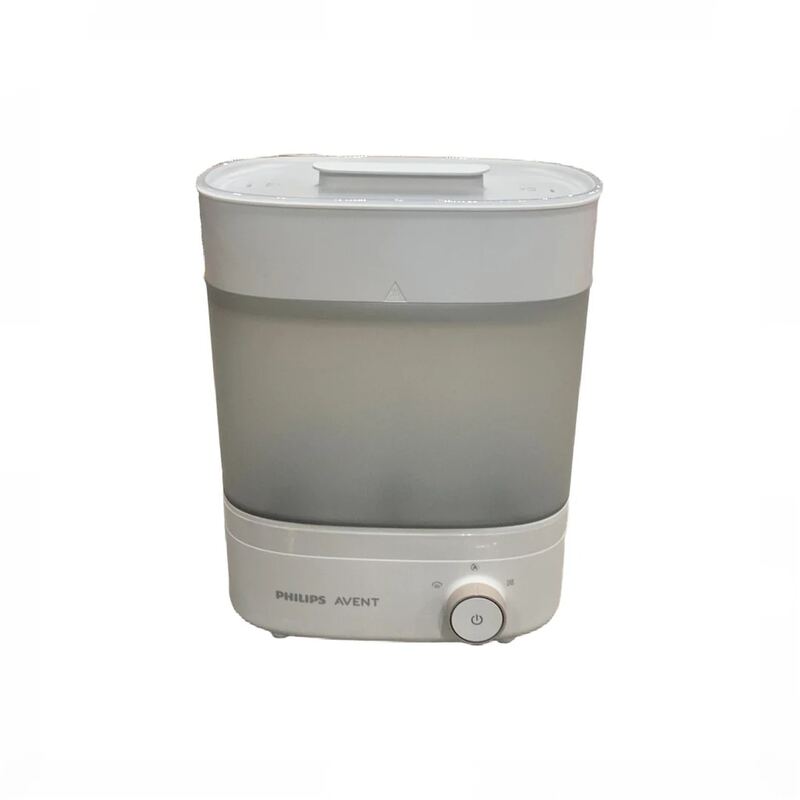
With a capacity of 8 bottles plus two pump part sets, the Baby Brezza Bottle Sterilizer and Dryer Advanced matches the Baby Brezza SuperQuick and holds two more bottles than the Philips Avent Premium and the Babymoov Turbo Pure. Its 24-hour sterile storage is half the SuperQuick's 48 hours, and its 30-to-60-minute drying cycle is far slower than the SuperQuick's 10-minute total. Its HEPA filter needs replacing every 3 months.
Rating sources
Counts as 3.88/5 in our score — this publisher's 3 scores on the site average 4.50, so its scores are adjusted down to compare fairly with other publishers.
Our 3.9 score is the average of the 1 scored review above, each adjusted for how strictly its publisher scores; 2 more reviewed it without printing a score and are not in the average. More about methodology.