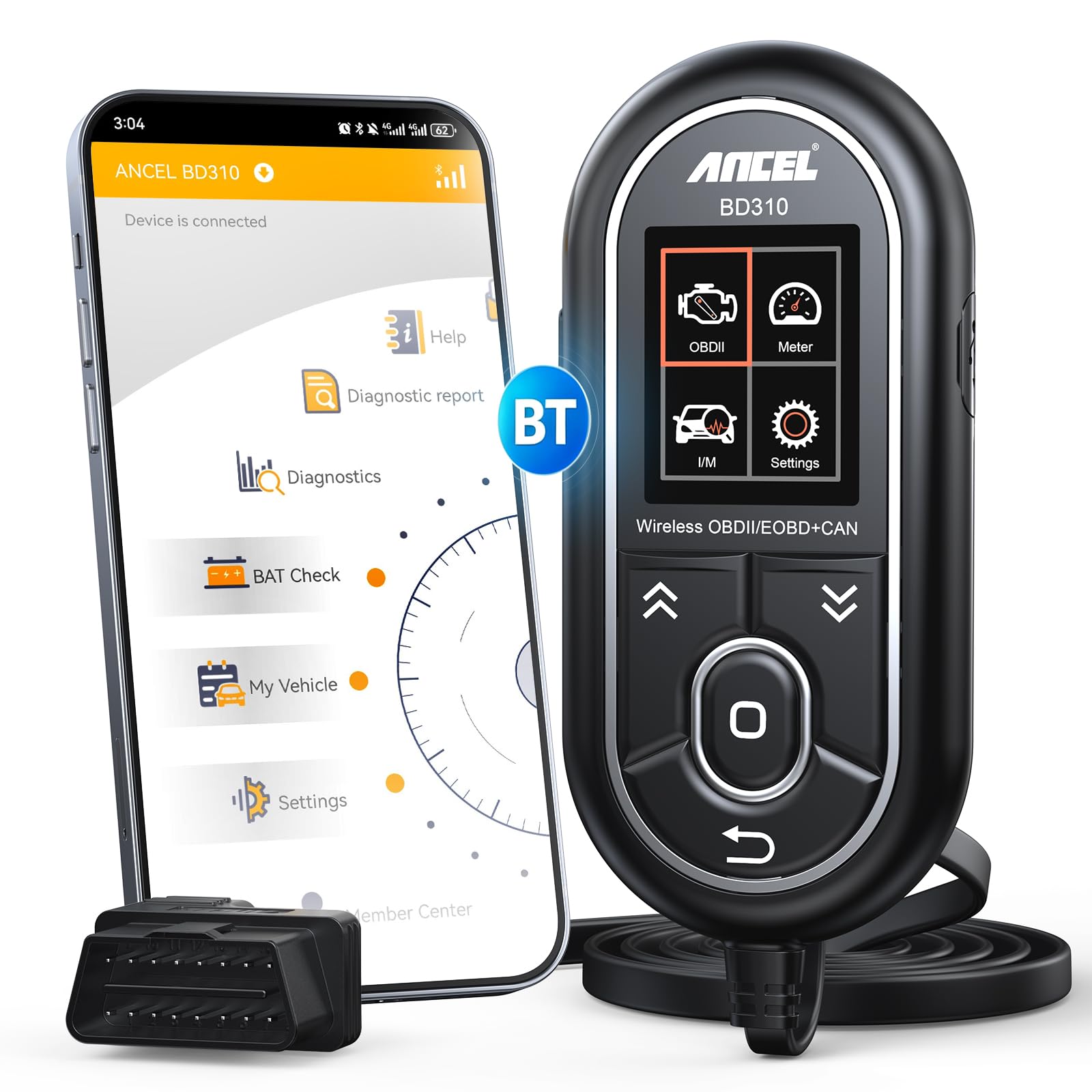
The ANCEL BD310 is a palm-sized OBD-II code reader with a 2-inch colour screen and an attached cable that also pairs over Bluetooth with a free iOS or Android app. Car and Driver named it its best overall OBD-II scanner, praising the mix of corded and Bluetooth use, an excellent app interface and an 18.6-second time to display a code. Tom's Guide found it read a deliberately introduced fault, cleared the check-engine light and doubled as a supplementary dashboard gauge. It suits DIY owners who want to read and clear codes and watch live data; anyone needing bidirectional tests or repair guidance should look at more advanced tools.
Full review
Reads codes quickly, with or without a phone
Car and Driver tested the BD310 on a 2005 Toyota Corolla with the mass-air-flow sensor unplugged, and it displayed the code 18.6 seconds after plug-in, showing 18 active live-data PIDs, 13 freeze-frame PIDs and six I/M monitors. The testers said it was quick to connect and offered many of the perks of expensive scanners, with the app adding diagnostic resources and performance testing. Tom's Guide found it connected with both of its car's computers in less than 15 seconds, caught a manually disconnected oil-temperature sensor and turned off the check-engine light, though finding the VIN took some digging.
A tiny scanner that doubles as a dash gauge
Tom's Guide measured it at 5.1 x 2.4 x 0.6 inches and 5.4 ounces, roughly half the size and weight of a typical handheld scanner. It can sit on the dashboard via an included vent mount or magnetic back plate and show live readings such as engine speed, oil temperature or voltage, and a trip-analysis mode summarised high and low speeds and rapid-braking events. The permanently attached flat cable is long enough to route under the dashboard; Car and Driver measured it at 55 inches. Car and Driver's one listed drawback is that the cord becomes redundant in Bluetooth mode.
Basic diagnostics, not a workshop tool
Both reviews describe a capable code reader rather than a professional tool. Car and Driver noted it lacks bidirectional control, calling it a strong option for those who simply want to translate a check-engine light. Tom's Guide said it has no charging-system or starter tests, cannot reset the oil-monitor light and offers no repair information or parts lookup. The small 2-inch screen and four-key menu also take some getting used to, with some tasks needing an extra keystroke.
On value, Tom's Guide called it a bargain at around $60 and highlighted the three-year warranty, while Car and Driver said it stays affordable for what it offers. Car and Driver contrasted it with bidirectional scanners such as the Autel MaxiCOM and TOPDON AD600S, which cost several times as much but can run actuator tests. Home mechanics who want repair suggestions or module-level tests will need to spend more; drivers who mainly want to know why a warning light is on are well served.
Strengths
- +Works as a wired handheld, a Bluetooth phone scanner or a dashboard gauge
- +Showed a trouble code 18.6 seconds after plug-in in Car and Driver's test
- +Car and Driver judged its companion app interface excellent
- +Half the size and weight of a typical handheld scanner at 5.4 oz
- +Three-year warranty is longer than many competitors offer
Watch-outs
- −Small 2-inch screen and four-key interface can feel limiting
- −No bidirectional control for active component tests
- −Lacks charging-system and starter tests, and gives no repair information
How it compares
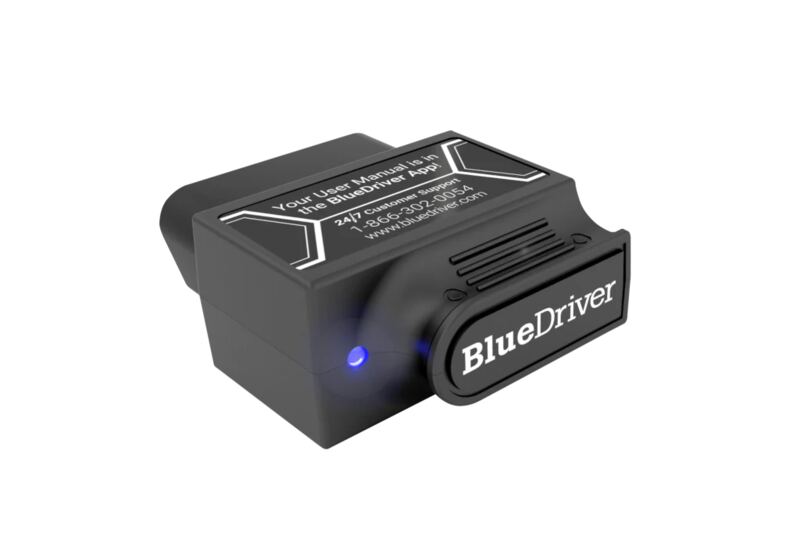
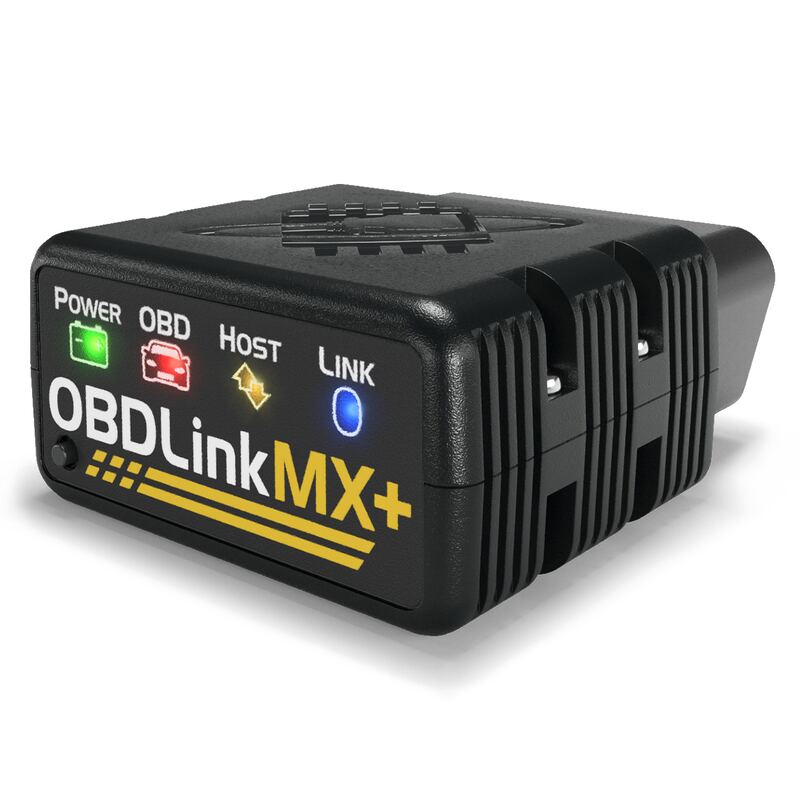
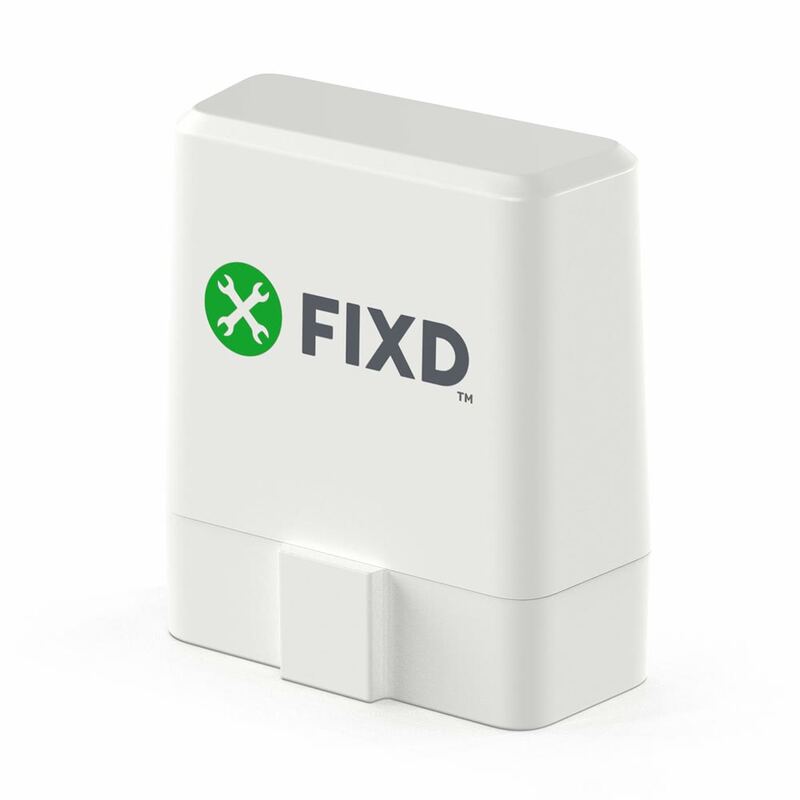
Unlike the BlueDriver Bluetooth Pro, OBDLink MX+ and Veepeak OBDCheck BLE, which are plug-in adapters read through a phone, the BD310 has its own 2-inch screen and attached cable, so it can read and clear codes without a phone. At about $60 it also comes with a free app, whereas the FIXD OBD2 Scanner's buyers are expected to manage a subscription.
Rating sources
Our 4.3 score is the average of these published ratings. Ratings marked * were derived from the reviewer’s written analysis or video transcript — the publisher didn’t print an explicit numeric score, so we inferred one from their own words. Click through to verify. More about methodology.