Verdict
Head-to-head · Best AI Workstations

NVIDIA DGX Spark vs Puget Systems Genesis II

Which is the better buy? Side-by-side on rating, price, strengths, and watch-outs — with the published ratings we averaged to get there.

The short answer

Puget Systems Genesis II comes out ahead by a narrow margin (4.6 vs 4.7). The gap is mostly about Best for enterprise — multi-GPU training and inference — read the strengths below before deciding.

NVIDIA DGX Spark
Ranked #2 in Best AI Workstations
NVIDIA DGX Spark
$4,699as of Apr 25

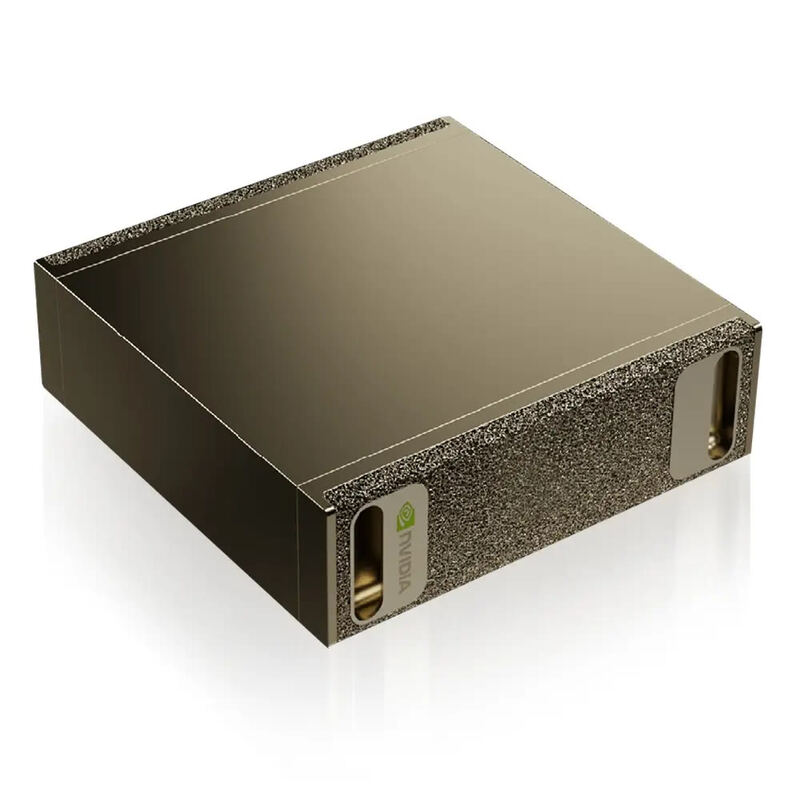
The NVIDIA DGX Spark is the productized version of Project DIGITS — a 150 mm cube housing the GB10 Grace Blackwell Superchip, 128 GB unified LPDDR5x, and the full CUDA AI stack out of the box. Tom's Hardware called it 'a well-rounded toolkit for local AI'; ServeTheHome called it 'must-have for AI developers'; LMSYS published the most thorough independent benchmarks. The 128 GB unified-memory ceiling is the headline feature: it loads models that would otherwise need a $30K+ multi-GPU rig. The catch is bandwidth-limited decode — LMSYS measured Llama-3.1 70B FP8 at 2.7 tokens/sec single-batch, while GPT-OSS 120B (MoE, ~17B active) hits ~14.5 tokens/sec per ServeTheHome. Best understood as a CUDA-native development box for buyers who need to iterate on big-model code without renting cloud GPUs.

Strengths
  • 128 GB unified LPDDR5x memory — fits 70B FP8 / 120B Q4 / 405B with two clustered units
  • Full CUDA + NVIDIA AI stack preinstalled; the most polished local-AI dev box on the market
  • Compact 150 mm cube, 240 W max — fits any desk, runs cool and quiet
Watch-outs
  • 273 GB/s LPDDR5x bandwidth caps decode tok/s on dense large models — 70B FP8 measures ~2.7 tok/s on a single unit
  • Linux-only, no Windows or gaming use; specialist hardware for AI developers
  • Price raised from $3,999 to $4,699 in February 2026 due to memory supply
Puget Systems Genesis II
Higher ratedRanked #1 in Best AI Workstations
Puget Systems Genesis II
$10,569as of Apr 25

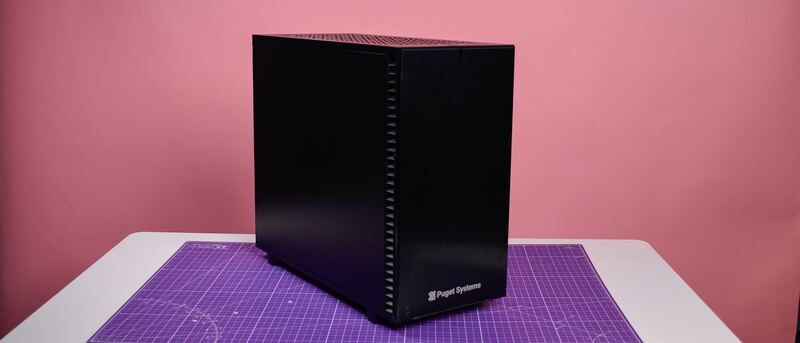
The Puget Systems Genesis II is a highly customizable, professionally built workstation aimed at enterprise buyers who need bespoke configurations the major OEMs can't match. With AMD Threadripper Pro, up to 4x RTX 4090 (or RTX Ada workstation cards), 256 GB ECC DDR4, and Puget's hand-tuned assembly process, it delivers exceptional performance and build quality with options for a quiet edition. For local LLM work specifically, a single RTX 4090 (24 GB VRAM at 1008 GB/s) handles 70B Q4 with system-RAM offload at roughly 10–20 tokens/sec; a 4x RTX 4090 configuration pools 96 GB of VRAM and easily holds 70B Q4 in VRAM at 30–40 tokens/sec via tensor parallelism. The steep entry price makes this a tool for buyers who can justify a $10K+ workstation — if you only need local LLMs, the DGX Spark below delivers comparable model-size headroom at less than half the price.

Strengths
  • Highly customizable with a wide assortment of mainstream and pro-channel components like Nvidia Ada workstation GPUs
  • Serious professional build quality with careful component selection and assembly
  • Exceptional customer experience including an easy-to-use configuration tool with detailed component comments
Watch-outs
  • Extremely expensive, with review units costing over $10,000 and configurations reaching nearly $61,000
  • Configurations with 4x RTX 4090 lose the NVLink that would have helped tensor-parallel LLM inference
  • Price can be prohibitive compared to a DGX Spark or HP Z6 G5 A for buyers whose only need is local LLMs

How they stack up

NVIDIA DGX Spark

The DGX Spark is the cheapest path to 128 GB of CUDA-addressable unified memory anywhere on the market. Versus the GMKtec EVO-X2 ($1,699) or Beelink GTR9 Pro ($2,000), it's roughly 2.5x the price but offers the full NVIDIA software stack the Strix Halo boxes can only approximate via ROCm or Vulkan. Versus the Puget Genesis II ($10K+), it's a single-purpose dev box — no multi-display creative workflow, no gaming, no general workstation duty. Pair two Sparks via the ConnectX-7 networking and you get 405B-class model coverage at roughly $9,400, the cheapest legal path to that ceiling.

Puget Systems Genesis II

The Puget Systems Genesis II is the enterprise pick. Versus the HP Z8 Fury G5, it offers comparable scale-up capability but in a quieter chassis with a more thoughtful configurator. Versus the HP Z6 G5 A, it's two tiers up in price and ceiling. Versus the NVIDIA DGX Spark, it's a different class of machine entirely — the DGX Spark is a 128 GB unified-memory dev box, the Genesis II is a multi-GPU training/inference workstation. For buyers whose only goal is running large local LLMs, the DGX Spark is the more cost-effective answer; the Genesis II earns its premium when training, fine-tuning, or multi-application workstation duty are part of the picture.

Specs side-by-side

SpecNVIDIA DGX SparkPuget Systems Genesis II
CPU20-core Arm (10x Cortex-X925 + 10x Cortex-A725)AMD Threadripper Pro 5975WX (32-core)
GPUNVIDIA GB10 Grace Blackwell SuperchipUp to 4x Nvidia RTX 4090 (96 GB pooled VRAM)
RAM128 GB unified LPDDR5x256 GB DDR4-3200 ECC
Storage4 TB NVMe M.2 (user-replaceable, self-encrypting)4 TB Sabrent Rocket 4 Plus NVMe
Memory Bandwidth273 GB/s~76 GB/s system; ~1008 GB/s per RTX 4090 VRAM
Form FactorCompact desktop (150 mm cube, 1.2 kg)Full tower (Fractal Define 7)
← See the full ranking of best ai workstations