Verdict
Head-to-head · Best Telephoto Lenses for Canon RF

Canon RF 100-400mm F5.6-8 IS USM vs Canon RF 70-200mm F2.8 L IS USM

Which is the better buy? Side-by-side on rating, price, strengths, and watch-outs — with the published ratings we averaged to get there.

The short answer

Canon RF 70-200mm F2.8 L IS USM comes out ahead by a narrow margin (4.5 vs 4.8). The gap is mostly about Portrait, wedding, event and sports shooters who need a fast constant-aperture telephoto for low light and subject separation in a lighter-than-ever body. — read the strengths below before deciding.

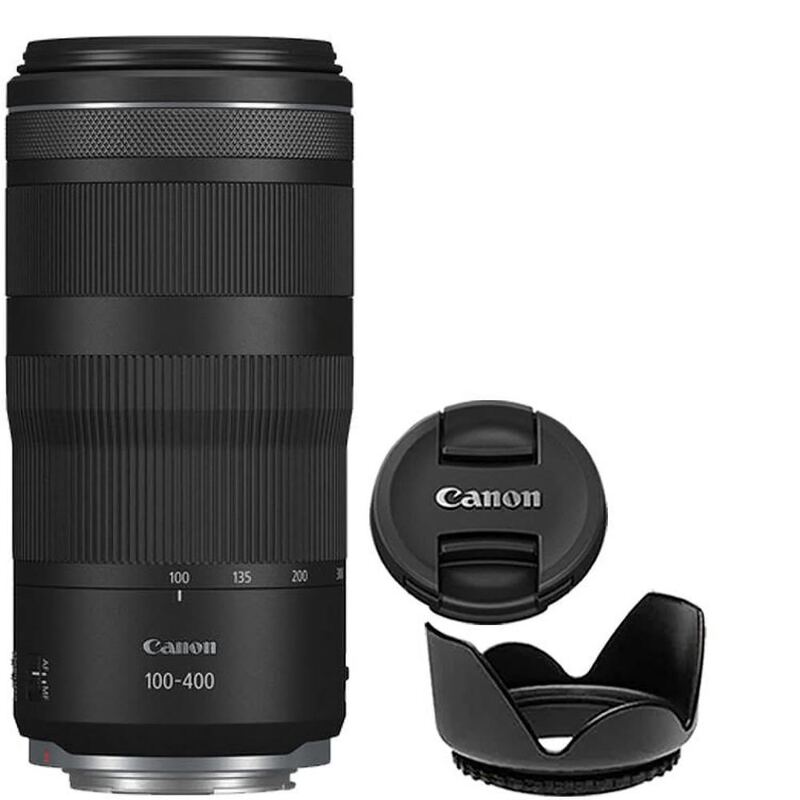
Canon RF 100-400mm F5.6-8 IS USM
Ranked #4 in Best Telephoto Lenses for Canon RF
Canon RF 100-400mm F5.6-8 IS USM
$698.99as of Jun 7

The Canon RF 100-400mm F5.6-8 IS USM punches dramatically above its price, delivering stunning sharpness across the range in a tiny 635g package for around $650. It is the lens that makes long-range telephoto reach accessible and genuinely portable. The compromises are inherent to the budget positioning: a slow variable aperture, a plastic unsealed build, and no included hood.

Strengths
  • Stunning sharpness, even wide open, throughout the entire zoom range
  • Remarkably light and compact at 635g and only about 16.5cm long
  • Excellent value at around $650, a fraction of the pricier RF telephotos
Watch-outs
  • Slow variable f/5.6-8 aperture restricts depth-of-field control and low-light use
  • Plastic barrel with a plastic mount and no weather sealing
  • No lens hood included, an obvious cost-cutting omission
Canon RF 70-200mm F2.8 L IS USM
Higher ratedRanked #2 in Best Telephoto Lenses for Canon RF
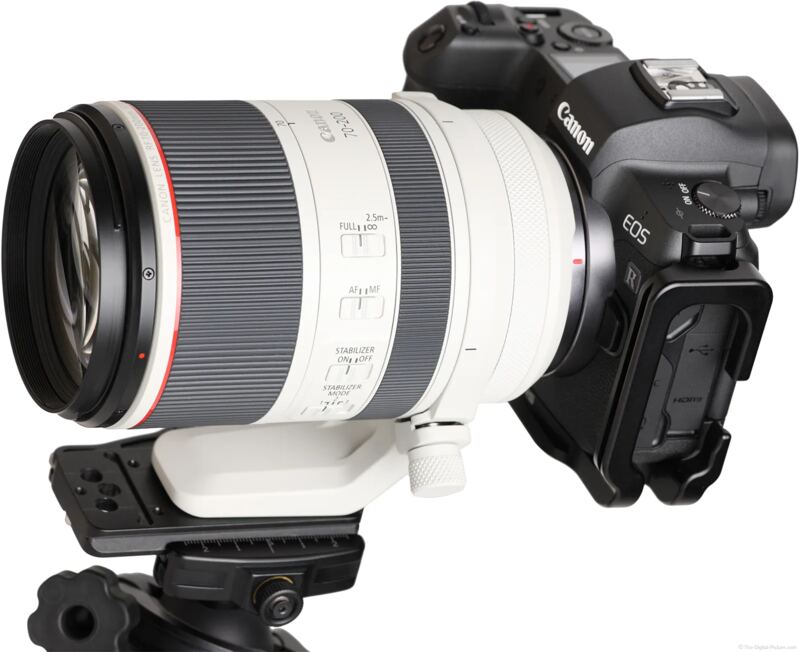
Canon RF 70-200mm F2.8 L IS USM
$2,699as of Jun 7

The Canon RF 70-200mm F2.8 L IS USM reinvents the classic pro zoom for mirrorless, delivering the performance of a full-size 70-200mm f/2.8 in a package nearly 30% lighter and shorter. It is sharp wide open across the range, has class-leading stabilization, and pairs a constant f/2.8 with gorgeous bokeh. The trade-offs for that compactness are an extending barrel and no teleconverter support.

Strengths
  • Beautifully sharp across the entire range, even wide open at f/2.8
  • Nearly 30% lighter and shorter than the EF Mark III at around 1070g
  • Exceptional image stabilization rated up to 7.5 stops with in-body IS
Watch-outs
  • Externally zooming design extends the barrel and is less weather-resistant in concept
  • Cannot accept teleconverters, so it is locked to its 70-200mm range
  • Longer minimum focus distance than some rivals

How they stack up

Canon RF 100-400mm F5.6-8 IS USM

It is the budget entry point of this group, costing roughly a quarter of the Canon RF 100-500mm F4.5-7.1 L IS USM while weighing less than half as much, but it gives up that lens's L-series build, weather sealing and last 100mm of reach. It is slower and less robust than the Canon RF 70-200mm F2.8 L IS USM and Canon RF 200-800mm F6.3-9 IS USM, but far cheaper and lighter than either.

Canon RF 70-200mm F2.8 L IS USM

It is the low-light and portrait specialist of this group, the only lens here with a constant f/2.8 aperture, far brighter than the variable-aperture Canon RF 100-500mm F4.5-7.1 L IS USM, Canon RF 200-800mm F6.3-9 IS USM or Canon RF 100-400mm F5.6-8 IS USM. The trade-off is reach: it stops at 200mm and cannot take teleconverters, so it lacks the wildlife range of the others.

Specs side-by-side

SpecCanon RF 100-400mm F5.6-8 IS USMCanon RF 70-200mm F2.8 L IS USM
Focal Length100-400mm70-200mm
Max Aperturef/5.6-8 (variable)f/2.8 (constant)
MountCanon RF (full-frame)Canon RF (full-frame)
Weight635g1070g
Filter Thread67mm77mm
Stabilization5.5 stops (lens IS)Up to 7.5 stops (with in-body IS)
Length164.7mm
AutofocusNano USM
Minimum Focus0.7m
TeleconverterNot compatible
← See the full ranking of best telephoto lenses for canon rf