The Sonos Arc Ultra is the soundbar most home theater reviewers now use as the reference point for everything else. Its 14-driver array, new Sound Motion woofer, and 9.1.4 Atmos rendering deliver one of the widest, deepest one-piece performances on the market, and the Sonos app and ecosystem make day-to-day living with it genuinely pleasant. It is not the absolute loudest or the most format-complete bar you can buy, but for most living rooms it represents the cleanest balance of sound, design, and software.
Full review
Real-World Performance
The Arc Ultra is the soundbar most reviewers reach for first when comparing flagship Atmos performance, and the testing reflects why. RTINGS measured a much wider and more cohesive front soundstage than the original Arc, with deeper low-end extension thanks to the new Sound Motion woofer that Sonos claims roughly doubles the bass output. What Hi-Fi described it as a five-star bar that improves on more than just bass, calling out the cleaner separation of effects across the 9.1.4 channel layout and the way dialogue stays anchored to the screen even during heavy action scenes.
Tom's Guide called it the best soundbar you can buy right now, with particular praise for the spacious virtual surround envelope it creates without rear speakers. The dialogue clarity at lower volumes is the most-cited improvement: TV viewing at quiet evening levels stays intelligible without needing a dialogue boost mode, which addresses one of the most common complaints about premium one-piece bars. The Atmos rendering does not have the precise overhead localization of a discrete ceiling-speaker setup, but it produces a convincing dome of sound that holds up well across movies and streaming TV.
Build Quality and Design
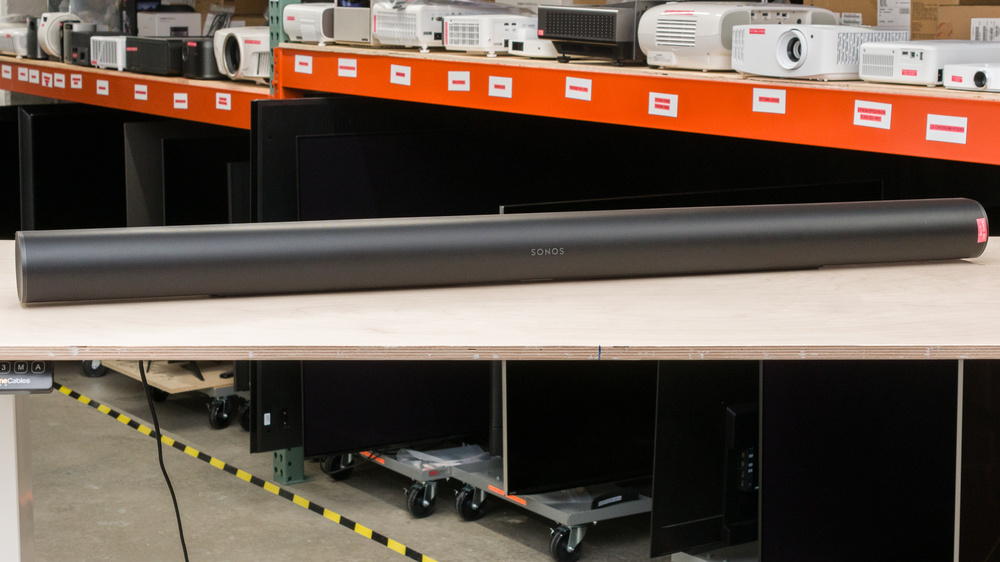
At roughly 46 inches wide and three inches tall, the Arc Ultra fits under most 55-inch and larger TVs without blocking the screen or IR sensors. The fabric and matte plastic finish is finer than the original Arc and lacks the perforated wraparound grille that defined the earlier model, giving it a cleaner profile that disappears into most living rooms. Build quality is solid and reviewers consistently note that it feels like a flagship product, weighing about 13 pounds with a substantial heft that telegraphs the internal driver count.
Wall mounting is straightforward using the official Sonos bracket, and the form factor is intentionally low-profile to clear the bottom edge of wall-mounted TVs. The single HDMI eARC port is the design choice that draws the most criticism in reviews, since competing bars in this price range often include passthrough HDMI inputs for game consoles and streamers. For most households that route everything through the TV, this is not a deal-breaker, but it is a real limitation if you prefer routing 4K/120 sources directly through the soundbar.
What Reviewers Loved
The single biggest theme in reviews is the bass leap over the original Arc. RTINGS, What Hi-Fi, and Tom's Guide all flagged that the new Sound Motion woofer produces enough low-end weight that many buyers will not need to add a separate subwoofer, which was nearly mandatory with the first-generation Arc. The Sonos app, which had been a point of contention through 2024, has matured to the point that Tom's Guide noted it now actually works reliably for daily use, with stable Bluetooth pairing, Wi-Fi handoff, and TruePlay room correction on iOS.
The other consistent positive is dialogue intelligibility. Reviewers measuring with both reference movie content and streaming TV found that voices stay centered and clear even when complex Atmos mixes are pulling sound to the surrounds and overhead channels. This is a function of the dedicated center drivers in the 9.1.4 layout, and it matters more for general TV viewing than the pure Atmos demo material does. Sonos Voice Control and Alexa work as expected; AirPlay 2 from iPhones and Macs is reliable.
Where It Falls Short
The Arc Ultra is missing DTS:X support, which Sonos has historically declined to license. For users with physical Blu-ray libraries that include DTS:X tracks, this means falling back to a Dolby fallback mix and losing the format's intended encode. The single HDMI eARC port is the other structural limitation: no passthrough inputs, no 4K/120 routing through the bar, no extra optical or analog beyond the one HDMI plus a Sonos network cable.
To unlock the full surround envelope, you really do need to add a Sub 4 and a pair of Era 300 speakers as wireless rear surrounds, which pushes the total system cost north of $2,000. At that point the Samsung HW-Q990D becomes a serious value comparison because it ships with sub and rears in the box for a similar all-in number. The Arc Ultra also lacks the format breadth of competing flagships - no IMAX Enhanced, no Auro-3D - and the bass, while excellent for a one-piece, does not compete with a system that includes a dedicated wireless subwoofer.
Who It's Best For
If your priority is the cleanest possible one-piece Atmos performance in a normal-sized living room and you value design and software polish as much as raw sound, the Arc Ultra is the bar to buy. It is also the right choice for buyers already in the Sonos ecosystem who want their soundbar to slot into a wider multi-room setup. The ability to start with just the bar and add a Sub 4 and Era 300 surrounds later is genuinely useful, since few buyers want to drop $2,000 on day one.
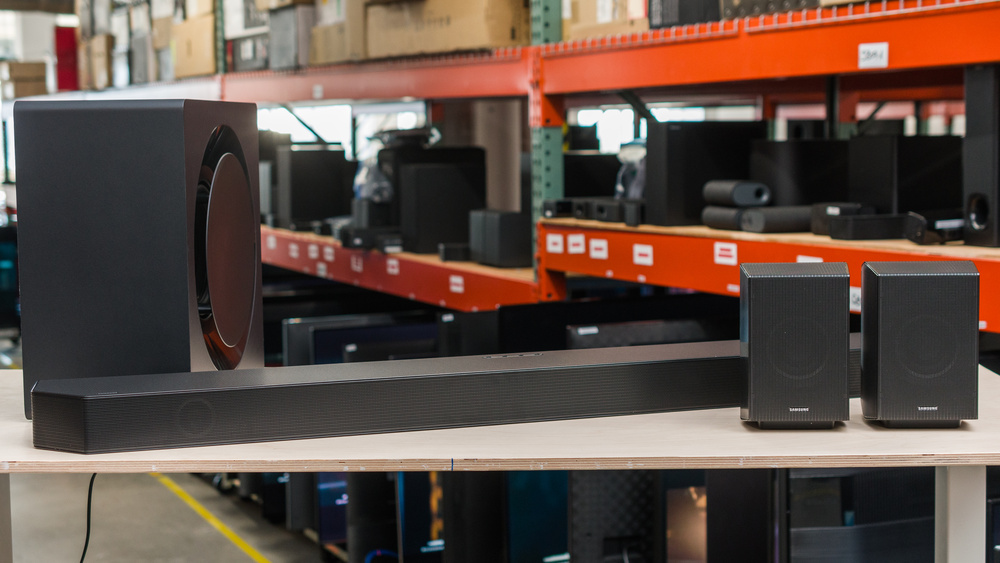
It is the wrong choice if you need maximum raw channel count and physical surround speakers out of the box, if you have a DTS-heavy Blu-ray library, or if you route multiple HDMI sources directly through the soundbar. In those cases the Samsung HW-Q990D or a discrete AVR-and-speakers system is a better structural fit.
How It Compares to Alternatives
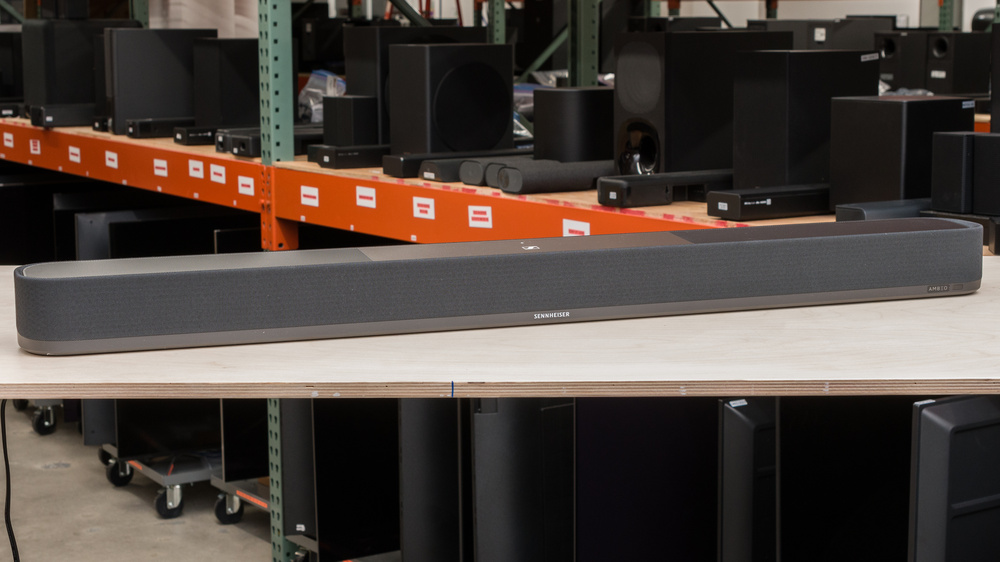
The closest one-piece competitor is the Sennheiser Ambeo Soundbar Plus, which uses dual built-in subwoofers to skip the wireless sub entirely. Reviewers consistently rate the Ambeo Plus as having more aggressive virtual height and a denser midrange, but it costs around 50 percent more and lacks the Sonos ecosystem hooks. On the multi-piece side, the Samsung HW-Q990D delivers more raw channels and more discrete envelopment but with a more cluttered installation and Samsung's less mature app experience.
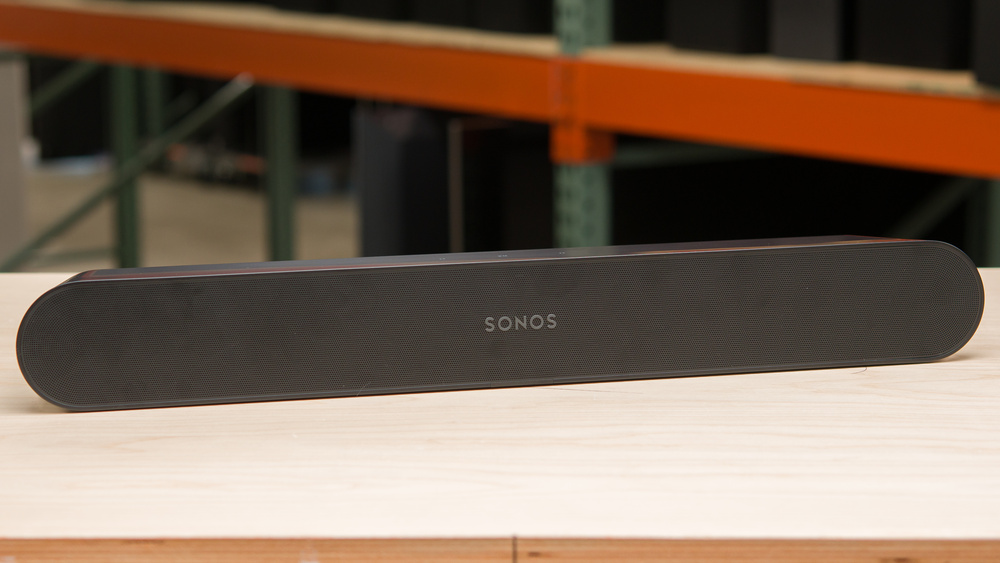
Among less expensive Sonos bars, the Beam Gen 2 covers smaller rooms well but does not approach the Arc Ultra's scale or bass extension. The Sonos Ray sits at the bottom of the lineup as a small-room dialogue upgrade without Atmos at all. None of the in-family alternatives compete with the Arc Ultra on overall capability - it is clearly positioned as the flagship.
Value at This Price
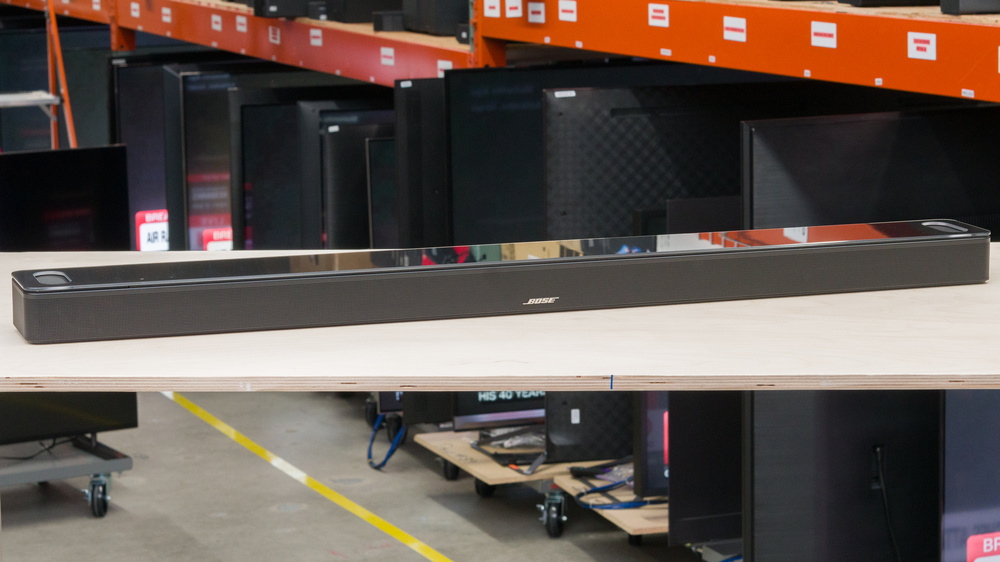
At $999 the Arc Ultra is a substantial investment, but it is competitively priced against the original Sonos Arc's launch MSRP and against the Bose Smart Ultra Soundbar, which retails for $899 and consistently rates a notch behind in pure audio quality. The Samsung HW-Q990D's $1,499-$1,999 system price includes a sub and rears, so the value comparison depends on whether you want a complete 11.1.4 system day-one or prefer the staged-purchase flexibility of the Sonos ecosystem.
If you can buy the Arc Ultra and Sub 4 together when bundle pricing surfaces, the combined cost lands close to the Samsung's all-in system and produces a tighter, more refined sound at the cost of fewer discrete surround channels. For most living rooms under about 350 square feet, that trade is the right one. Sonos has also held the Arc Ultra's price steady since launch with only modest holiday discounts, which suggests the company is not planning a quick refresh - buyers can reasonably expect the product to remain current for at least two more years.
Long-Term Durability
Sonos products historically have strong software-support tails - the original Sonos Beam from 2018 still receives firmware updates and ecosystem feature additions in 2026. That track record makes the Arc Ultra a reasonable long-term purchase, though the company's controversial 2024 app overhaul did cause months of usability complaints before the company restored most of the missing functionality. The hardware itself is overbuilt for a soundbar: the 13-pound chassis houses a Class-D amplifier stack and 14 drivers in a sealed enclosure that reviewers note feels like it could survive a decade of normal use.
The 1-year warranty is short for a $999 product, particularly compared with Sennheiser's 2-year coverage on the Ambeo Plus, but Sonos' authorized repair network is broad and the company has historically been responsive about firmware-related issues. Buyers should expect the Arc Ultra to remain a competitive product through at least 2028, with the Sonos ecosystem holding up its end of the staged-upgrade promise.
Strengths
- +9.1.4 Dolby Atmos rendering with 14-driver array sets a new benchmark for one-piece soundbars
- +New Sound Motion woofer roughly doubles the bass output of the original Arc without a separate sub
- +Wider, more cohesive Atmos soundstage with noticeably crisper dialogue at lower volumes
- +Tight integration with the wider Sonos ecosystem (Sub 4, Era 300 surrounds, multi-room) for future upgrades
- +Clean, low-profile design fits under most TVs and supports AirPlay 2, Wi-Fi, and Bluetooth
Watch-outs
- −Single HDMI eARC port limits direct device input compared to multi-HDMI rivals
- −No DTS:X support, which still matters for some Blu-ray libraries
- −True surround envelopment requires adding Era 300s and Sub 4, pushing total cost past $2,000
How it compares
If you want a true discrete-channel system out of the box, the Samsung HW-Q990D adds a wireless sub and rear satellites for more raw envelopment. If you would rather skip the sub and rear speakers entirely and live with a single elegant bar, the Sennheiser Ambeo Soundbar Plus is the closer competitor on sound but costs significantly more.
Who this is for
At a glance: Buyers who want the best one-piece Atmos performance in a living room and value Sonos' ecosystem and easy software for future expansion.
Why you’d buy the Sonos Arc Ultra
- 9.1.4 Dolby Atmos rendering with 14-driver array sets a new benchmark for one-piece soundbars.
- New Sound Motion woofer roughly doubles the bass output of the original Arc without a separate sub.
- Wider, more cohesive Atmos soundstage with noticeably crisper dialogue at lower volumes.
Why you’d skip it
- Single HDMI eARC port limits direct device input compared to multi-HDMI rivals.
- No DTS:X support, which still matters for some Blu-ray libraries.
- True surround envelopment requires adding Era 300s and Sub 4, pushing total cost past $2,000.
Rating sources
“The Sonos Arc Ultra is a very good all-in-one premium soundbar that delivers a much more immersive surround sound experience than the original Arc.”
“A superb-sounding soundbar with improvements to more than just bass.”
“The best way to watch your movies just got better.”
Our 4.7 score is the average of these published ratings. More about methodology.