Verdict
Ranked #3 of 5in Best Robot VacuumsUpdated April 2026

iRobot Roombas

4.0
Averaged from 1 published review
iRobot Roombas
The verdict

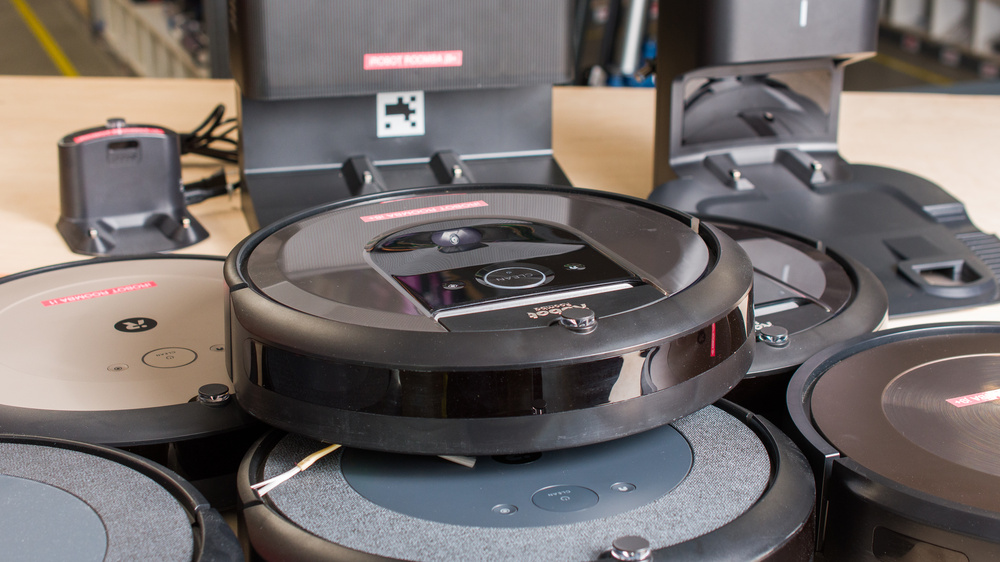
iRobot Roombas are widely recognized for their reliable navigation, effective cleaning on various floor types, and strong pet hair pickup capabilities. However, potential buyers should be aware of their premium pricing and the fact that some models lack advanced obstacle avoidance or have smaller dustbins compared to newer competitors. Despite these drawbacks, they remain a top choice for users prioritizing consistent performance and a mature smart home ecosystem.

Strengths

  • +Reliable navigation and mapping capabilities that effectively clean entire homes without getting stuck.
  • +Strong performance on carpets and hard floors, making them suitable for mixed flooring types.
  • +Effective pet hair pickup, particularly in higher-end models with specialized brush systems.
  • +User-friendly app interface that allows for easy scheduling, zone cleaning, and smart home integration.

Watch-outs

  • Higher price point compared to many competing robot vacuum brands with similar features.
  • Lack of advanced obstacle avoidance technology in some models, leading to collisions with furniture or cords.
  • Dustbin capacity is often smaller than competitors, requiring more frequent emptying in homes with pets or high debris.

How it compares

The iRobot Roombas line provides reliable navigation and strong pet hair pickup similar to the j7 and J7 models but generally lacks the advanced PrecisionVision obstacle avoidance that defines those specific units. Compared to the Samsung Powerbot and Dyson 360 Eye, these models often have smaller dustbins and may collide with furniture more frequently due to less sophisticated mapping technology. However, they offer a more mature smart home ecosystem and consistent performance across mixed flooring than the camera-dependent Samsung or the maintenance-heavy Dyson.

Rating sources

Our 4.0 score is the average of these published ratings. More about methodology.

How it compares

See all 5
Roomba j7+
#1 · Best Pick

Roomba j7+

4.5

The Roomba j7+ distinguishes itself from the iRobot Roomba J7 by offering a self-emptying Clean Base as a standard feature, whereas the J7 often requires a separate purchase for this convenience. While it shares the same advanced PrecisionVision obstacle avoidance as the J7 and the broader iRobot Roombas line, it commands a higher price point that is difficult to justify compared to the Samsung Powerbot's raw suction power or the Dyson 360 Eye's tank treads. Its primary weakness remains the struggle on dark carpets, a limitation not explicitly shared by the camera-based navigation of the Samsung or Dyson models.

iRobot Roomba J7
#2

iRobot Roomba J7

4.5

The iRobot Roomba J7 offers the same PrecisionVision obstacle avoidance as the Roomba j7+ but lacks the included self-emptying base, making it a less convenient option for users who want hands-off maintenance. Unlike the Samsung Powerbot and Dyson 360 Eye, which use camera-based mapping, the J7 relies on a less systematic random cleaning path that can be inefficient. It also shares the iRobot Roombas' general drawback of lacking a self-cleaning brushroll, requiring manual hair removal unlike some modern competitors.

Samsung Powerbot
#4

Samsung Powerbot

3.8

The Samsung Powerbot delivers significantly stronger suction for large debris than the Roomba j7+ or iRobot Roombas, and its edge-sweeping brush outperforms the round designs of the iRobot models. However, it is much louder than the Roomba j7+ and struggles in low-light conditions where the Roomba's sensors or the Dyson 360 Eye's infrared cameras would succeed. Its bulky design also prevents it from fitting under low furniture, a limitation not shared by the sleeker Roomba or Dyson units.

Dyson 360 Eye
#5

Dyson 360 Eye

3.8

The Dyson 360 Eye features unique tank treads and a 360-degree camera system that offers superior mobility across thresholds compared to the wheel-based Roomba j7+ and Samsung Powerbot. While it includes infrared cameras for low-light navigation unlike the Samsung, its maintenance is far more cumbersome, specifically regarding the post-filter reassembly which is not an issue with the self-emptying Roomba models. Ultimately, its high price point is harder to justify given that the Roomba j7+ offers better obstacle avoidance and the Samsung offers louder, more powerful suction.